| gen: 2026/07/15:04:09 in 1 min 1.0 sec (old)bias: 4 (Center-Left) |
| type: newsquality: 76 |
| pts: 0 |
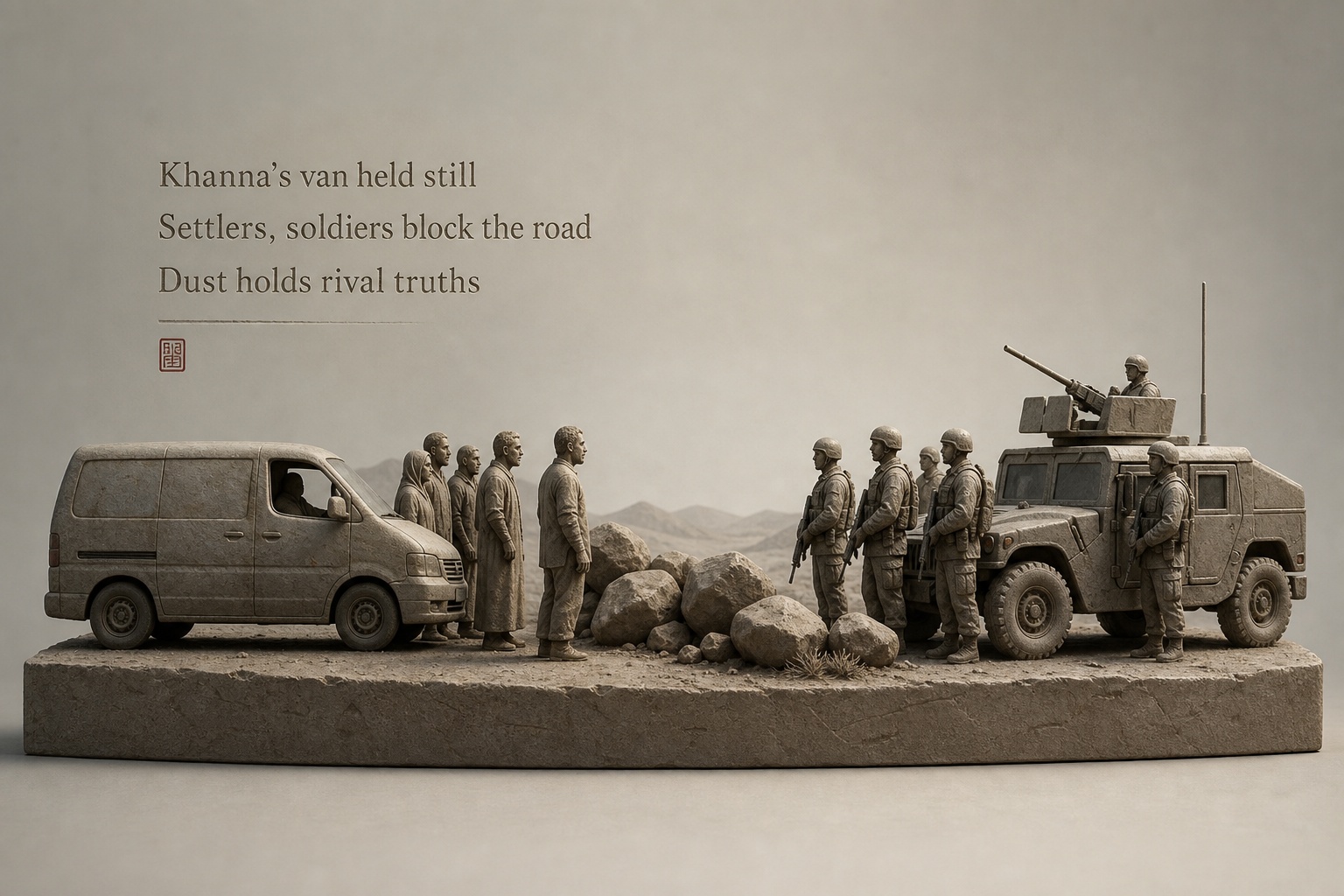
Khanna's van held still
Settlers, soldiers block the road
Dust holds rival truths
 | author: | Michelle Aslam, Patrick Jarenwattananon, and Ailsa Chang | institution: | NPR | ¿porque no los dos? |
| tl;dr | NPR interviews Rep. Ro Khanna about his reported detention during a Palestinian-led visit to the occupied West Bank. Khanna says armed Israeli settlers blocked his group, followed by Israeli soldiers who allegedly failed to clear the road and detained them for roughly 75–90 minutes. Israeli officials dispute parts of his account, describing the trip as unauthorized or a political stunt. The interview gives Khanna substantial space to explain his version, while host Ailsa Chang raises Israeli counterclaims and notes that NPR requested, but had not received, comment from the Israel Defense Forces. Khanna concludes by advocating an end to U.S. aid and military sales to Israel and accusing the Israeli government of genocide and apartheid. | ||||
| deeper: | The transcript is transparent about its format: it is an interview primarily featuring one participant rather than a fully reported article. Its strongest quality is that host Ailsa Chang directly presents opposing claims from Ambassador Mike Huckabee and the Israeli military, asks Khanna to respond, and acknowledges that video and witnesses may corroborate his account while also noting Israel's denial of genocide allegations. However, the segment gives much more airtime to Khanna than to Israeli officials or independent sources, and several serious claims—including detention details, the soldiers' conduct, and the legal status of the area—are presented without documentary evidence in the transcript. Khanna's strongly political conclusions are included with limited follow-up questioning, particularly his claims about genocide, apartheid, future U.S. policy, and public opinion. The wording uses terms such as 'occupied West Bank,' which is consistent with widely used international-law and diplomatic terminology but also places the segment within a particular framing. Overall, it is a credible and reasonably balanced interview transcript, but not a comprehensive verification of the incident. | ||||
media: | |||||
Please log in to comment