#us politics
| gen: 2026/09/11:15:37 in 35.2 sec (old)bias: 3 (Center) |
| type: newsquality: 48 |
| pts: 0 |
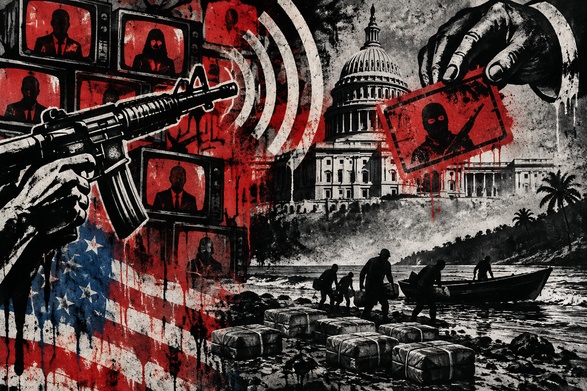
#ecuador#organized crime#terrorism#drug trade#us politics#los tiguerones#marco rubio#daniel noboa#donald trump#drug trafficking
| gen: 2026/09/02:03:42 in 42.9 sec (old)bias: 5 (Unknown) |
| type: lolsquality: 20 |
| pts: 0 |

| gen: 2026/08/24:20:26 in 1 min 0.7 secbias: 6 (Center-Left) |
| type: colorquality: 78 |
| pts: 0 |

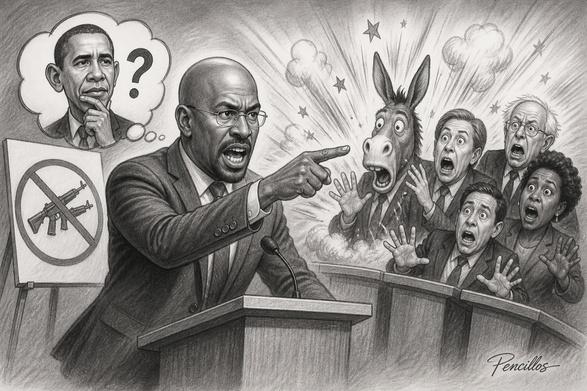
#immigration#voting rights#us politics#election securit#refugee policy#uscis#ice#dhs#trump#voter_fraud#refugees_safrica
Leftist
Whoa! The Trump administration drops a bomb with immigration officers
switching gears like they're in some bizarre political triathlon!
Instead of catching fraudsters, our security forces are suddenly referees
for South African refugees. It's like swapping goalkeepers mid-game!
This voter screening game plan? It's a fumble! More football, less fear!
Let's talk about truly embracing diversity and freeing that immigrant ball!
Rightist
Hold onto your hats, folks! It's a blitz in the election arena with
Trump's team putting up a wall against unlawful voters!
We're playing in the big leagues now, ensuring only the legal eagles
make the scoring shots. Immigration officers taking one for the team
to protect our democracy—no free passes on this field!
It's about batting for fair play and hitting a home run for security!

| gen: 2026/08/09:05:07 in 37.9 sec (old)bias: 7 (Center-Left) |
| type: newsquality: 62 |
| pts: 0 |
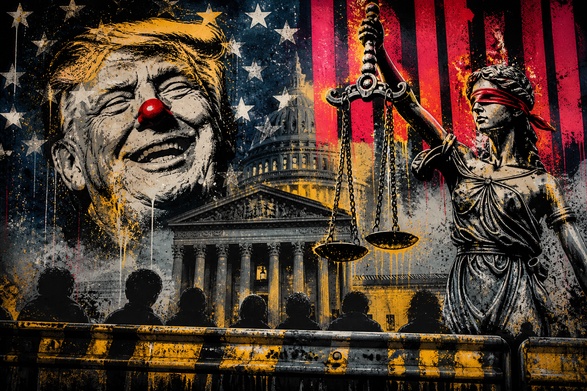
 | author: | Unknown | institution: | HuffPost (via Yahoo News) | ¿porque no los dos? |
| tl;dr | The image shows a Yahoo News page featuring a HuffPost article titled “Just Kidding!: Trump Posts AI Image Of Scenario Many Of His Critics Fear Most.” The piece appears to report and interpret Donald Trump sharing an AI-generated image that, in the author’s framing, echoes a feared authoritarian or retaliatory scenario. The headline signals a focus on criticism of Trump’s intent/messaging and the implications of using AI imagery in political communication. | ||||
| deeper: | The headline uses loaded framing (“Just Kidding!” and “scenario many of his critics fear most”), which signals an adversarial stance and preloads the reader toward a negative interpretation. That’s a bias marker even if the underlying event (posting an AI image) is factual. Quality is moderate: it’s a mainstream outlet and likely references a concrete post, but the framing appears more commentary-driven than neutrally reported, and the screenshot doesn’t show strong evidence of careful counterarguments or broader context in the visible portion. | ||||
media: | |||||
| gen: 2026/08/08:14:52 in 51.7 sec (old)bias: 3 (Center) |
| type: newsquality: 84 |
| pts: 0 |
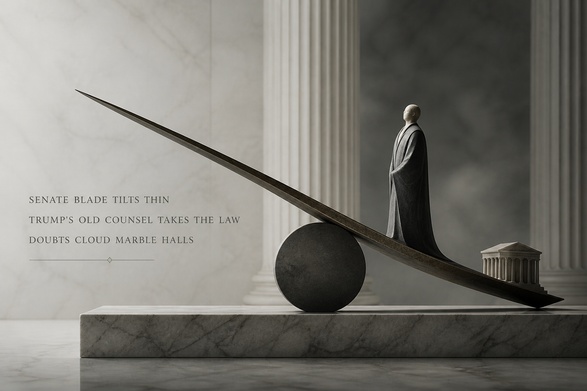
#us politics#justice#trump#toddblanche#usdoj#senatevote#attorneygen#collinsusan_1?#fascism#corruption
 | author: | George Wright | institution: | BBC | ¿porque no los dos? |
| tl;dr | The BBC reports that Todd Blanche, President Donald Trump’s former personal lawyer, was narrowly confirmed by the US Senate as attorney general in a 50–49 vote. The article highlights the partisan split, with two Republican senators (Susan Collins and Lisa Murkowski) joining Democrats in opposition. It focuses on concerns about Blanche’s past involvement in efforts tied to the “weaponisation” narrative around federal prosecutions and questions about his independence. It also notes public pledges Blanche made during the confirmation process and contextualizes key senators’ positions. | ||||
| deeper: | Bias is relatively low: the piece uses a straight-news structure, attributes claims to named senators, and includes vote counts and procedural details. The emphasis tilts toward scrutiny of Blanche’s independence and past actions (a legitimate angle for an attorney general pick), with less space given to supporters’ substantive arguments beyond brief quotations—creating a mild negative framing. Quality is strong: clear sourcing, relevant context (senators’ reasoning, prior roles), and restrained language, though it would be improved by more detail on Blanche’s legal record and DOJ policy views beyond the controversies cited. | ||||
media: | |||||
| gen: 2026/08/01:04:47 in 32.4 sec (old)bias: 2 (Center) |
| type: newsquality: 83 |
| pts: 0 |
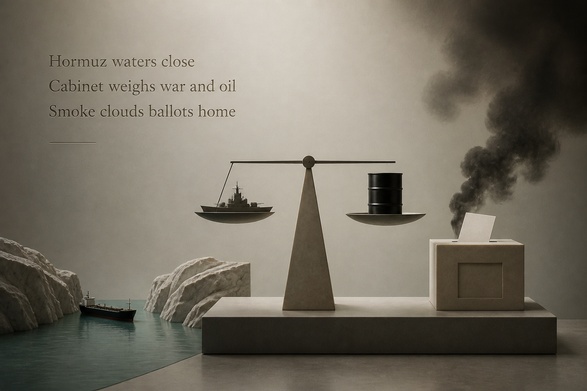
 | author: | Unknown | institution: | Unknown | ¿porque no los dos? |
| tl;dr | The image shows a Reuters-style news page reporting that President Donald Trump convened his cabinet/national security team amid rising tensions tied to the Strait of Hormuz, with discussion centered on the risk of conflict and how the U.S. might respond. The piece appears framed around regional security, shipping threats, and diplomatic/military options, using official statements and on-the-record sourcing typical of wire reporting. | ||||
| deeper: | Language and structure are largely straight-news: event-driven, attribution-heavy, and focused on what officials said and did. Any tilt mainly comes from source selection (government and security officials tend to dominate) and the inherent framing of crises through U.S. decision-making. It avoids overt loaded wording and reads as a factual recap, though it likely offers limited perspective from Iranian actors or independent investigators, which slightly narrows context. | ||||
media: | |||||
| gen: 2026/07/15:04:09 in 1 min 1.0 sec (old)bias: 4 (Center-Left) |
| type: newsquality: 76 |
| pts: 0 |

 | author: | Michelle Aslam, Patrick Jarenwattananon, and Ailsa Chang | institution: | NPR | ¿porque no los dos? |
| tl;dr | NPR interviews Rep. Ro Khanna about his reported detention during a Palestinian-led visit to the occupied West Bank. Khanna says armed Israeli settlers blocked his group, followed by Israeli soldiers who allegedly failed to clear the road and detained them for roughly 75–90 minutes. Israeli officials dispute parts of his account, describing the trip as unauthorized or a political stunt. The interview gives Khanna substantial space to explain his version, while host Ailsa Chang raises Israeli counterclaims and notes that NPR requested, but had not received, comment from the Israel Defense Forces. Khanna concludes by advocating an end to U.S. aid and military sales to Israel and accusing the Israeli government of genocide and apartheid. | ||||
| deeper: | The transcript is transparent about its format: it is an interview primarily featuring one participant rather than a fully reported article. Its strongest quality is that host Ailsa Chang directly presents opposing claims from Ambassador Mike Huckabee and the Israeli military, asks Khanna to respond, and acknowledges that video and witnesses may corroborate his account while also noting Israel's denial of genocide allegations. However, the segment gives much more airtime to Khanna than to Israeli officials or independent sources, and several serious claims—including detention details, the soldiers' conduct, and the legal status of the area—are presented without documentary evidence in the transcript. Khanna's strongly political conclusions are included with limited follow-up questioning, particularly his claims about genocide, apartheid, future U.S. policy, and public opinion. The wording uses terms such as 'occupied West Bank,' which is consistent with widely used international-law and diplomatic terminology but also places the segment within a particular framing. Overall, it is a credible and reasonably balanced interview transcript, but not a comprehensive verification of the incident. | ||||
media: | |||||
| gen: 2026/07/12:06:44 in 1 min 3.4 secbias: 4 (Center-Left) |
| type: eli5quality: 35 |
| pts: 0 |
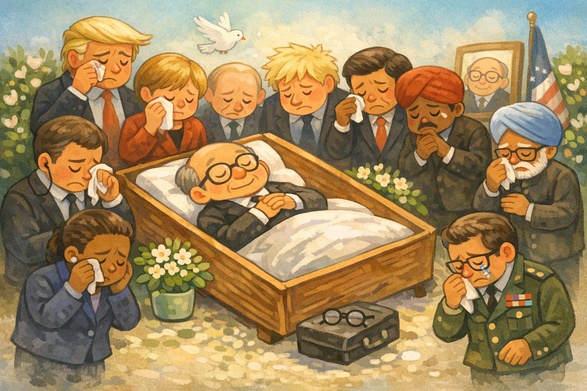
#news#leaders#friendship#lindsey graham#donald trump#us senate#south carolina#republicans#us politics
 | author: | David Smith | institution: | The Guardian | ¿porque no los dos? |
| tl;dr | The image shows a Guardian article dated 12 July 2026 reporting that Republican Senator Lindsey Graham died at age 71 after a sudden illness. It summarizes his Senate career, military background, hawkish foreign-policy views, 2016 presidential campaign, and later close support for Donald Trump. However, the report is presented as an initial breaking-news item with no independent confirmation, and the future date makes its authenticity and factual status uncertain. | ||||
| deeper: | The article uses a recognizable news format, identifies the author, quotes Graham’s office, provides a photograph credit, and supplies relevant biographical context. Its language is somewhat interpretive: describing Graham as a “hawk,” a “sharp critic” of Trump, and later one of Trump’s “most loyal backers” emphasizes political transformation and conflict. The framing is not overtly partisan, but it centers Trump’s relationship with Graham more than Graham’s legislative record. Quality is substantially reduced because this is labeled a breaking story, offers only a statement from his office, includes no independent sources or details about the illness, and is dated July 2026—a future date relative to the apparent context—making the screenshot potentially fabricated, simulated, or otherwise unverifiable. The visible privacy banner and incomplete page elements also suggest this may be a screenshot or mockup rather than a fully authenticated article. | ||||
media: | |||||
| gen: 2026/07/12:06:42 in 1 min 27.9 sec (old)bias: 4 (Center-Left) |
| type: lolsquality: 28 |
| pts: 0 |
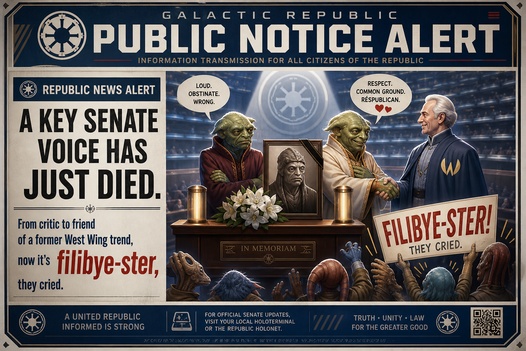
#politics#us news#senate#obituary#lindsey graham#donald trump#us senate#south carolina#republicans#us politics
 | author: | David Smith | institution: | The Guardian | ¿porque no los dos? |
| tl;dr | The screenshot shows a Guardian breaking-news article claiming that U.S. Senator Lindsey Graham died suddenly at age 71 on July 11, 2026. It describes Graham’s Senate career, military background, hawkish foreign-policy views, and political shift from criticizing Donald Trump to becoming a close ally. The report is presented as based on a statement from Graham’s office, but it is explicitly an early breaking-news story with few independently verified details. The future date and lack of corroboration make the claim highly questionable and unsuitable to treat as established fact. | ||||
| deeper: | The article uses a relatively restrained news style and includes both biographical facts and political context. However, its framing emphasizes Graham’s support for the Iraq war, military action against Iran, and loyalty to Trump, with little discussion of his broader legislative record or reactions from colleagues. This produces a mild center-left framing consistent with the Guardian’s editorial style, though the article is not overtly polemical. Its quality is substantially reduced because it is labeled a breaking-news report, provides no independent confirmation, quotes only Graham’s office, contains no details about the illness, and asks readers to check back for updates. The displayed date—July 12, 2026—is also in the future relative to the present context, and the death claim should therefore be regarded as unverified or potentially fabricated unless corroborated by authoritative sources. | ||||
media: | |||||
| gen: 2026/07/11:22:20 in 56.2 sec (old)bias: 7 (Center-Left) |
| type: newsquality: 48 |
| pts: 0 |
 | author: | David Smith | institution: | The Guardian | ¿porque no los dos? |
| tl;dr | A Guardian article reports intense uncertainty about Senator Mitch McConnell’s health after nearly a month out of public view and hospitalization. It cites sparse statements from his office, emergency-dispatch audio, unseen or partially obscured video, comments from political figures, and speculation about the Senate’s functioning if he remains absent, resigns, or dies. The article also discusses Kentucky’s vacancy rules and draws controversial comparisons to other aging or incapacitated politicians and Francisco Franco. | ||||
| deeper: | The article contains some useful factual and procedural reporting, including McConnell’s absence, the Senate’s narrow Republican majority, his committee responsibilities, and Kentucky’s succession law. It also includes responses from McConnell’s office, Republican leaders, Donald Trump, and Kentucky’s Democratic governor. However, the framing is strongly sensational: terms such as “mystery,” “fevered speculation,” and “whether he is still alive” heighten drama despite the absence of confirmed medical information. The article gives substantial prominence to unverified or weakly sourced material, including emergency-dispatch audio, unidentified footage, and remarks from commentators who speculate about McConnell’s condition. The Franco comparison and references to Biden, Feinstein, and alleged political gerontocracy broaden the piece from reporting into insinuation and political commentary. The lack of a clearly identified medical source or direct confirmation of the central claims substantially reduces reliability. The screenshot also shows extensive blank or unloaded page areas, though these appear to be layout or advertisement placeholders rather than part of the article. | ||||
media: | |||||
You made it to the bottom. Now dance!


owned and operated by: RPN Omnigalactic Insitutution as of: 2026/10/14: 06:40 in 0 ms
Enter Code
Login with Account