It is a Common purslane.

Scientific name: Portulaca oleracea.

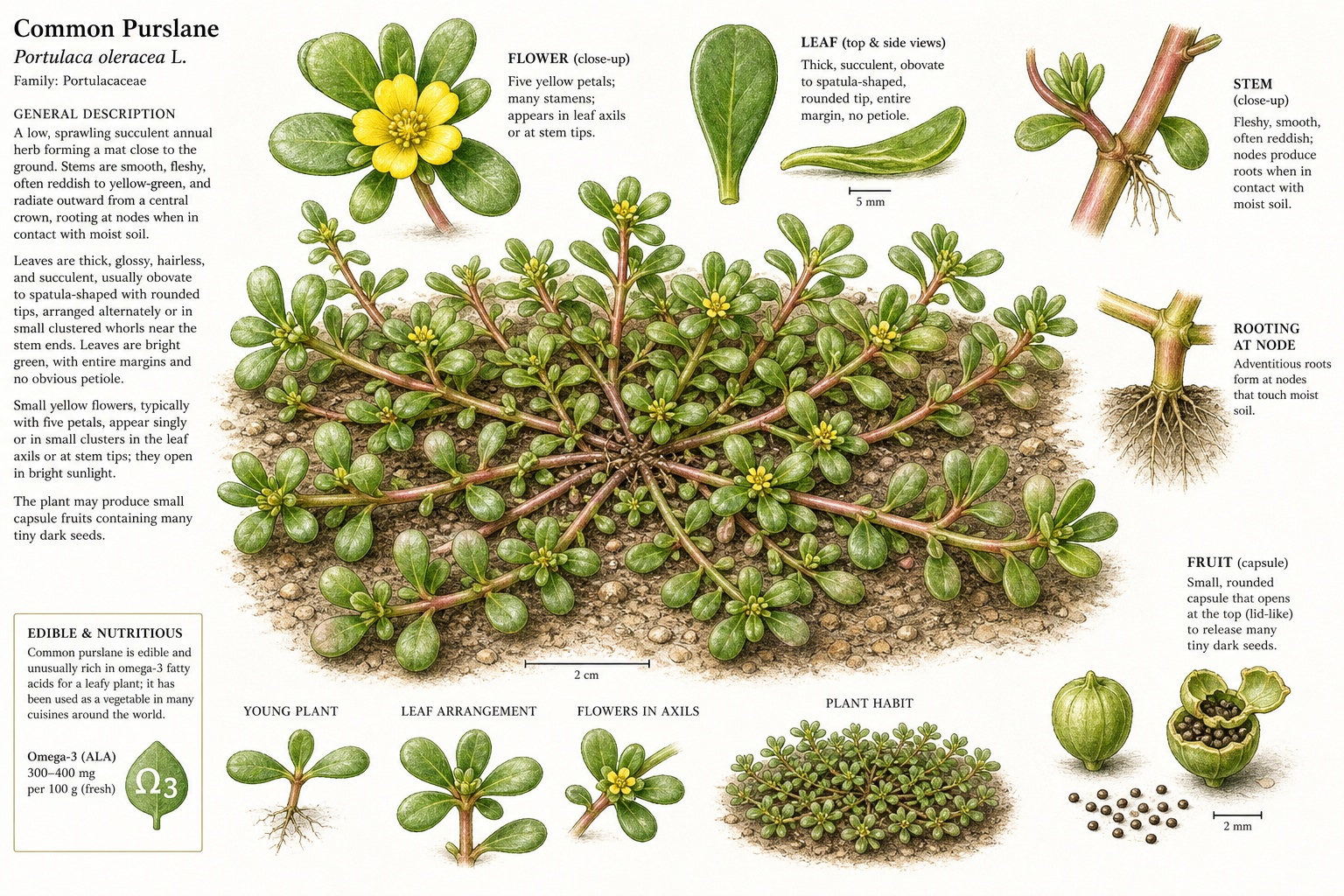
A low, sprawling succulent annual herb forming a mat close to the ground. Stems are smooth, fleshy, often reddish to yellow-green, and radiate outward from a central crown, rooting at nodes when in contact with moist soil. Leaves are thick, glossy, hairless, and succulent, usually obovate to spatula-shaped with rounded tips, arranged alternately or in small clustered whorls near the stem ends. Leaves are bright green, with entire margins and no obvious petiole. Small yellow flowers, typically with five petals, appear singly or in small clusters in the leaf axils or at stem tips; they open in bright sunlight. The plant may produce small capsule fruits containing many tiny dark seeds..

Common purslane is edible and unusually rich in omega-3 fatty acids for a leafy plant; it has been used as a vegetable in many cuisines around the world..

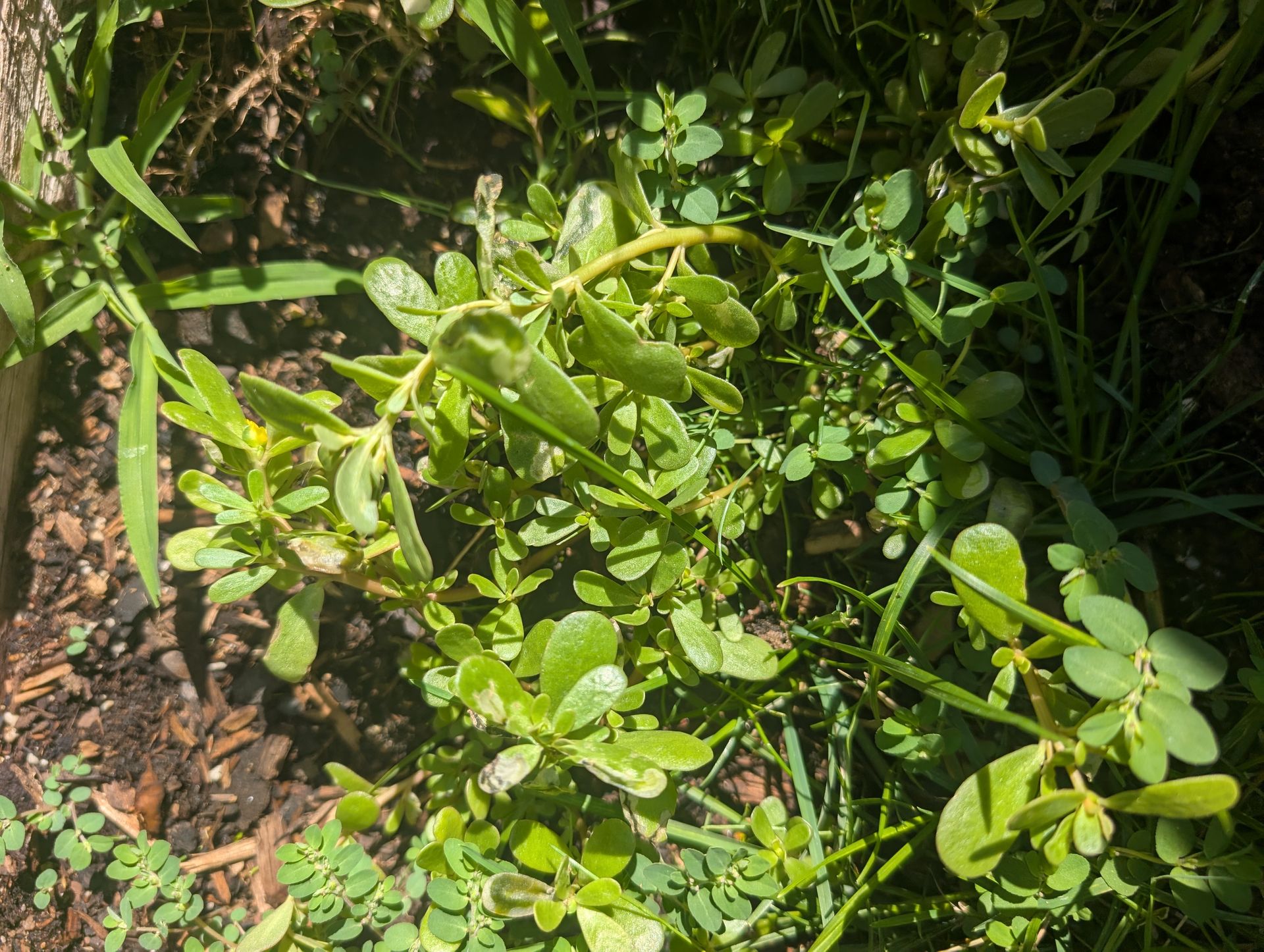
The plant in the image has the key traits of common purslane: prostrate, fleshy, smooth stems; glossy succulent oval-to-spatulate leaves; clustered leaf arrangement at the nodes; and a small yellow flower visible near the lower left. These features distinguish it from similar lawn weeds such as spotted spurge, which has thinner, non-succulent leaves and milky sap, and from clovers or oxalis, which have compound leaves rather than thick single succulent leaves. The mat-forming growth habit in disturbed garden soil is also typical of Portulaca oleracea.
Please log in to comment