| gen: 2026/09/02:18:18 in 1 min 3.5 secbias: 3 (Center-Left) |
| type: colorquality: 86 |
| pts: 0 |
#climate change#disaster relief#community resili#environment#infrastructure#nepal#tibet#betrwati#rasuwa#trishuli#bhotekoshi
Leftist
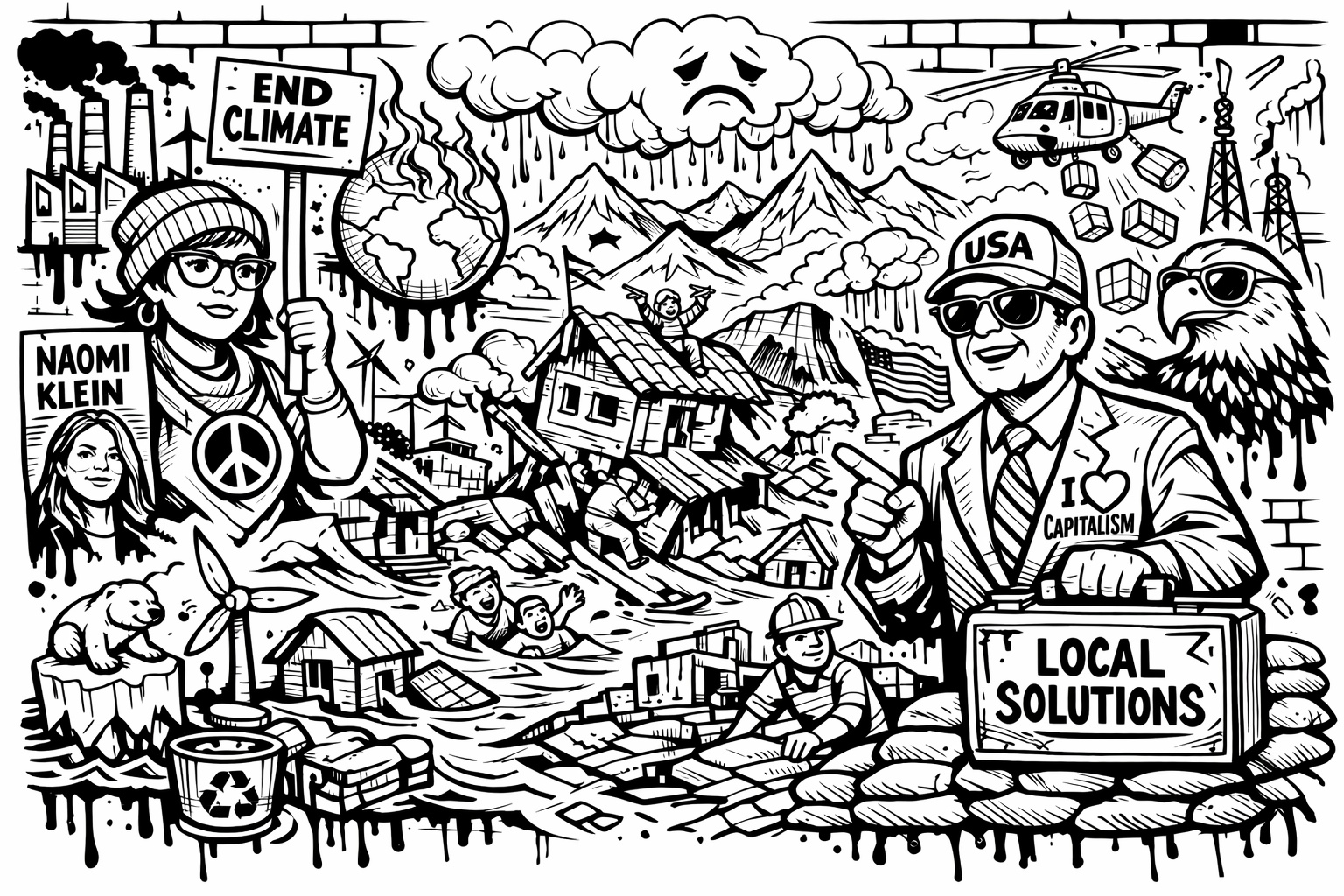
This catastrophic event exemplifies the brutal impact of climate change on vulnerable communities. Nepal's tragedy, reminiscent of past environmental disasters, highlights the failure of global leaders to address climate change. Human lives are reduced to statistics; their homes and dreams washed away. We must demand accountability and push for a sustainable future, echoing the warnings of experts like Naomi Klein on the urgent need for environmental justice.
Rightist
This disaster underscores the need for self-reliance and efficient disaster management. While the tragedy in Nepal is heart-wrenching, we must focus on building resilient infrastructures. Prioritizing national interests and empowering local communities aligns with a strategy similar to the Reagan-era emphasis on strong national policies. International aid should facilitate local empowerment, ensuring communities aren't reliant on unpredictable foreign assistance.
 | author: | Hannah Ellis-Petersen and Gaurav Pokharel | institution: | The Guardian | ¿porque no los dos? |
| tl;dr | A Guardian feature reports on catastrophic flash floods in Nepal’s Betrawati and Rasuwa district, triggered by a glacier collapse in the Himalayas near the Nepal–Tibet border. It describes communities buried in mud or swept away, with survivors searching for missing relatives and aid struggling to reach remote areas due to washed-out roads. The piece cites death and missing counts across Nepal and Tibet/China, highlights overwhelmed recovery efforts, and uses firsthand accounts and vivid scene-setting to convey the scale of loss. | ||||
| deeper: | The reporting is largely factual and field-based, mixing specific figures (dead/missing), time-stamped event details, and on-the-ground observations with survivor quotes. Bias is mostly emotional framing—highly evocative language (“unfathomable,” “turned into hell”) and a human-interest focus that foregrounds suffering more than official responses or competing interpretations. Quality is high due to original reporting, named locations/people, and corroborating details, but would be stronger with clearer sourcing for casualty numbers and more explicit attribution/uncertainty ranges. | ||||
media: | |||||
Please log in to comment