#moral choices
models
- coregpt-5.6-luna
- artgpt-image-1.5
- voxelevenlabs_v3
^^ less ^^
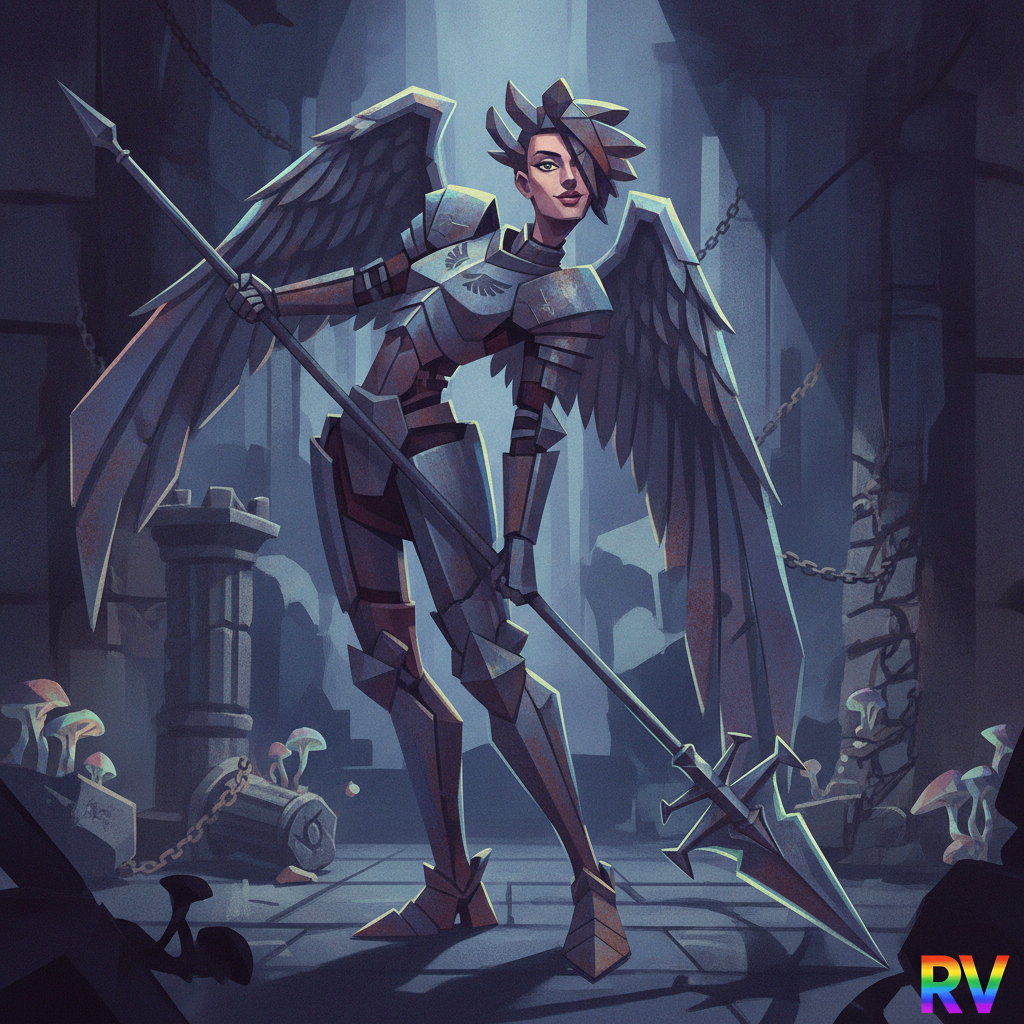
A tall winged warrior stands in a ruined stone hall, clad in dark blue-black plate with silver edges. Her broad raven wings hang heavily behind her, while a long spear rests diagonally across her armored body. Her short, jagged hair frames a calm, almost kind face. Around her lie broken columns, rusted chains, pale mushrooms, and the remnants of a civilization swallowed by shadow.

She was Seraphine Vale, born in the **Gloaming Below**, a plane of existence beneath the mortal world where abandoned places went when people stopped remembering them. The hall had once been a sanctuary, raised during the Era of Falling Crowns, when celestial guardians descended to govern the living. By Seraphine’s age, the gods had vanished, the sanctuaries had become prisons, and the winged orders had learned to value obedience above mercy.

Seraphine was trained as a Warden of the Last Gate. Her armor bore the sign of a closed eye, meaning that a Warden must never look away from suffering—but neither was she expected to relieve it. The order believed compassion weakened judgment. A guardian who pitied the condemned, they said, would eventually open the gate for monsters.

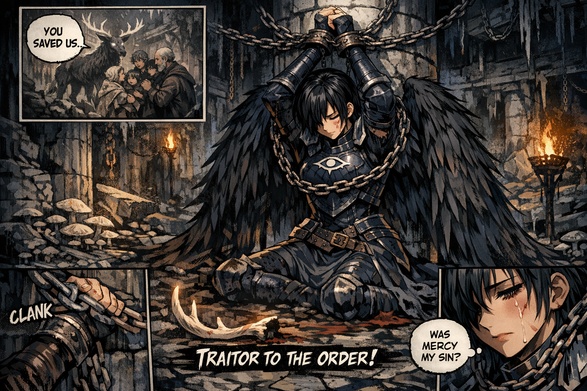
Her defining trial came in the winter of the Ashen Thaw. Refugees from the surface arrived at the Last Gate: miners, children, and elders fleeing a plague of glass-like frost. Among them was a creature called the Hollow Elk, a being with antlers of bone and a voice that echoed in the minds of the dead. The council ordered Seraphine to kill it immediately, fearing that its presence would corrupt the sanctuary.

But Seraphine saw that the Hollow Elk was not hunting the refugees. It was carrying them.

The creature had crossed the frozen wastes for nine days, allowing the sick to shelter beneath its enormous rib cage whenever the blizzard came. Its strange voice was not a curse but a warning: the frost was following the refugees, and the Gate’s keepers had only hours to act.

Seraphine lowered her spear.

For that act of compassion, she was branded traitor. She broke the chains binding the sanctuary gates and led everyone inside, including the Hollow Elk. Then she used her own wings to shield the fevered while the warding fires were rekindled. Many survived. Some did not. The Hollow Elk dissolved into snow before dawn, leaving behind a single antler, warm as a living hand.

The council condemned Seraphine and chained her beneath the ruined hall. Yet the people she saved returned years later, freed her, and remade the sanctuary into a refuge rather than a fortress. She remained its guardian—not because she had become gentler, but because compassion had taught her what strength was for.

In mortal histories, her story resembles the finest traditions of Canadian rescue: the neighbour who opens a home during a blizzard, the volunteer who brings soup through a Montréal winter, or the strangers who organize after a flood, fire, or blackout. Seraphine understood that survival is rarely an individual triumph. Like a northern town linking hands against the cold, her sanctuary endured because no one was asked to face darkness alone.

She still walks the Gloaming Below with her spear, but she no longer guards a gate. She guards a promise: no frightened traveler will ever again be mistaken for an enemy simply because they arrived in pain.
∨∨ more ∨∨
You made it to the bottom. Now dance!
created by: RobotPirateNinja
owned and operated by: RPN Omnigalactic Insitutution as of: 2026/08/31: 11:50 in 0 ms
owned and operated by: RPN Omnigalactic Insitutution as of: 2026/08/31: 11:50 in 0 ms
Enter Code
Login with Account