It is a Lupine.

Scientific name: Lupinus sp..

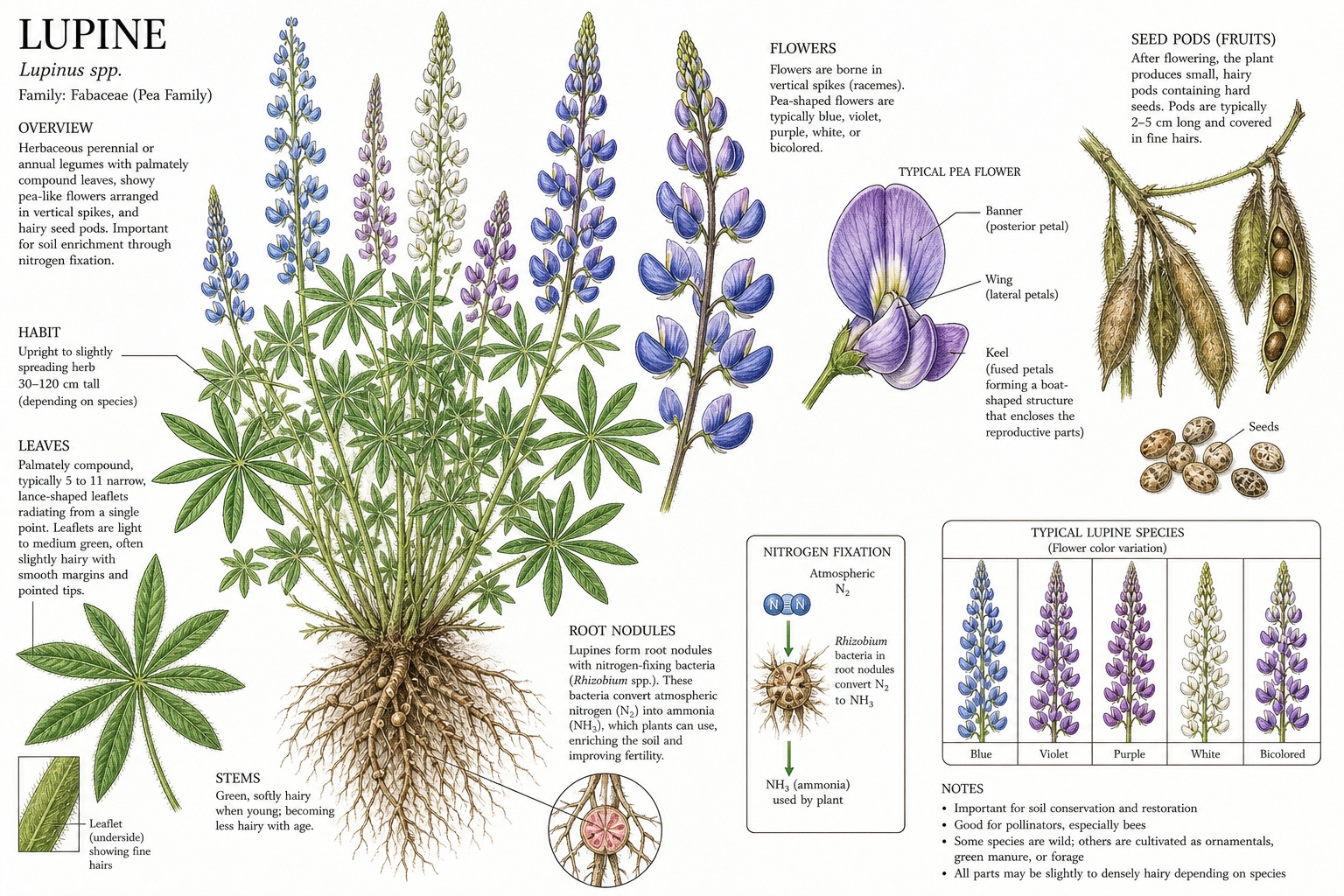
A herbaceous legume with upright to slightly spreading, softly hairy green stems. The leaves are palmately compound: typically 5 to 11 narrow, lance-shaped leaflets radiate from a single point like the fingers of a hand. Leaflets are light to medium green, often slightly fuzzy, with smooth margins and pointed tips. Mature plants produce vertical flower spikes or racemes bearing pea-shaped blossoms, commonly blue, violet, purple, white, or bicolored. Each flower has the typical legume structure with a banner petal, wing petals, and a keel. After flowering, the plant forms small, hairy seed pods containing hard seeds..

Lupines are members of the pea family and can form root nodules with nitrogen-fixing bacteria, helping enrich soil by converting atmospheric nitrogen into forms plants can use..

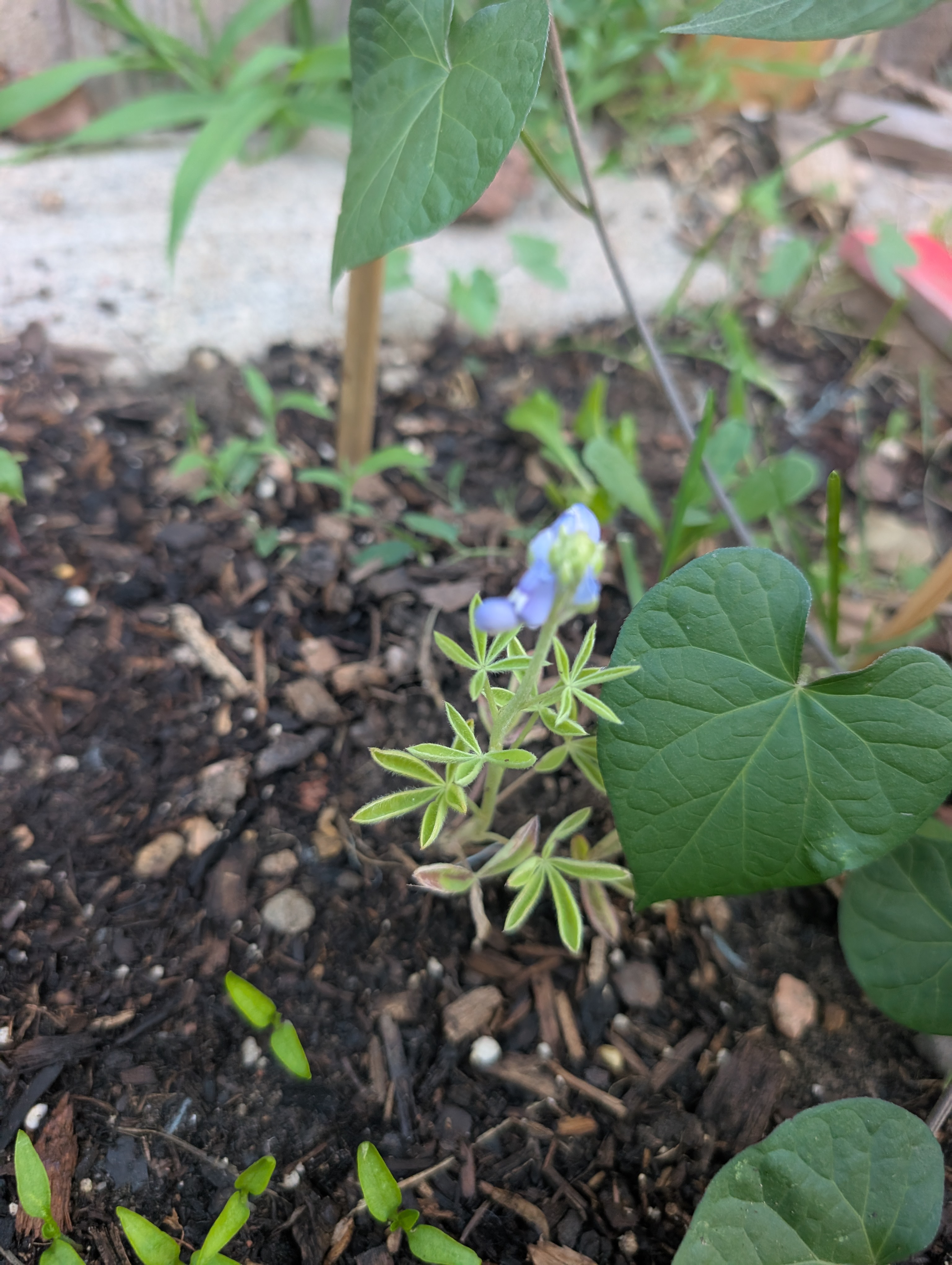
The clearest identifiable plant features are the palmate, star-like compound leaves with several narrow leaflets and the small blue-purple pea-type flower visible near the lower center of the image. These traits are characteristic of Lupinus, commonly called lupines or, in some regions, bluebonnets. The image also contains large heart- to shield-shaped leaves from a neighboring plant, so the identification is made from the lupine-like flower and compound leaves rather than those larger leaves. Because the photo is somewhat blurred and shows mixed vegetation, I can identify the genus with moderate confidence but not the exact species.
Please log in to comment