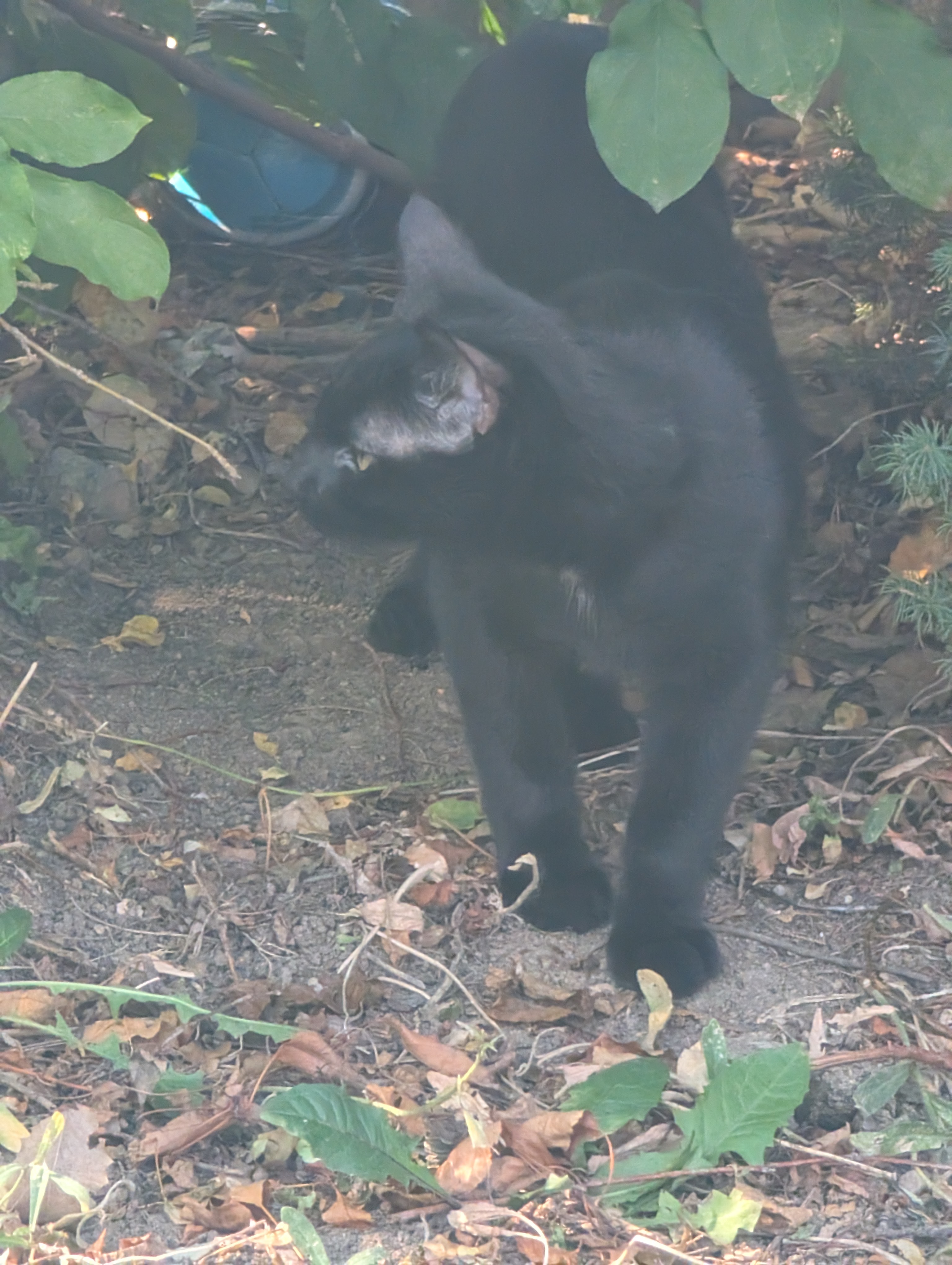
A broad, charcoal-black waterbird crouches among damp leaves and round lily pads, its body softened by the humid haze. Beneath one folded wing flashes an impossible turquoise-blue, while its lowered head bears hints of emerald, gold, and violet. The creature looks like a purple gallinule—an elegant marsh bird of long toes and jewel-bright feathers—though in this image it seems less like an ordinary animal than a small custodian of hidden waters.

It comes from the **Verdant Plane**, a neighbouring reality where wetlands remember every footstep. The image belongs to the late **Leaf-Fall Era**, a time when the great marshes were shrinking and the animals had begun to quarrel over the last safe islands of mud.

The bird was called **Morrow-of-Reeds**. In youth, Morrow had been mocked for being cautious. While the other birds darted between lily pads, Morrow tested each stem first, listening for the tremor that meant a submerged root—or a waiting predator. “Too soft-hearted,” the marsh kingfisher scoffed. “You’ll never survive by worrying about everyone.”

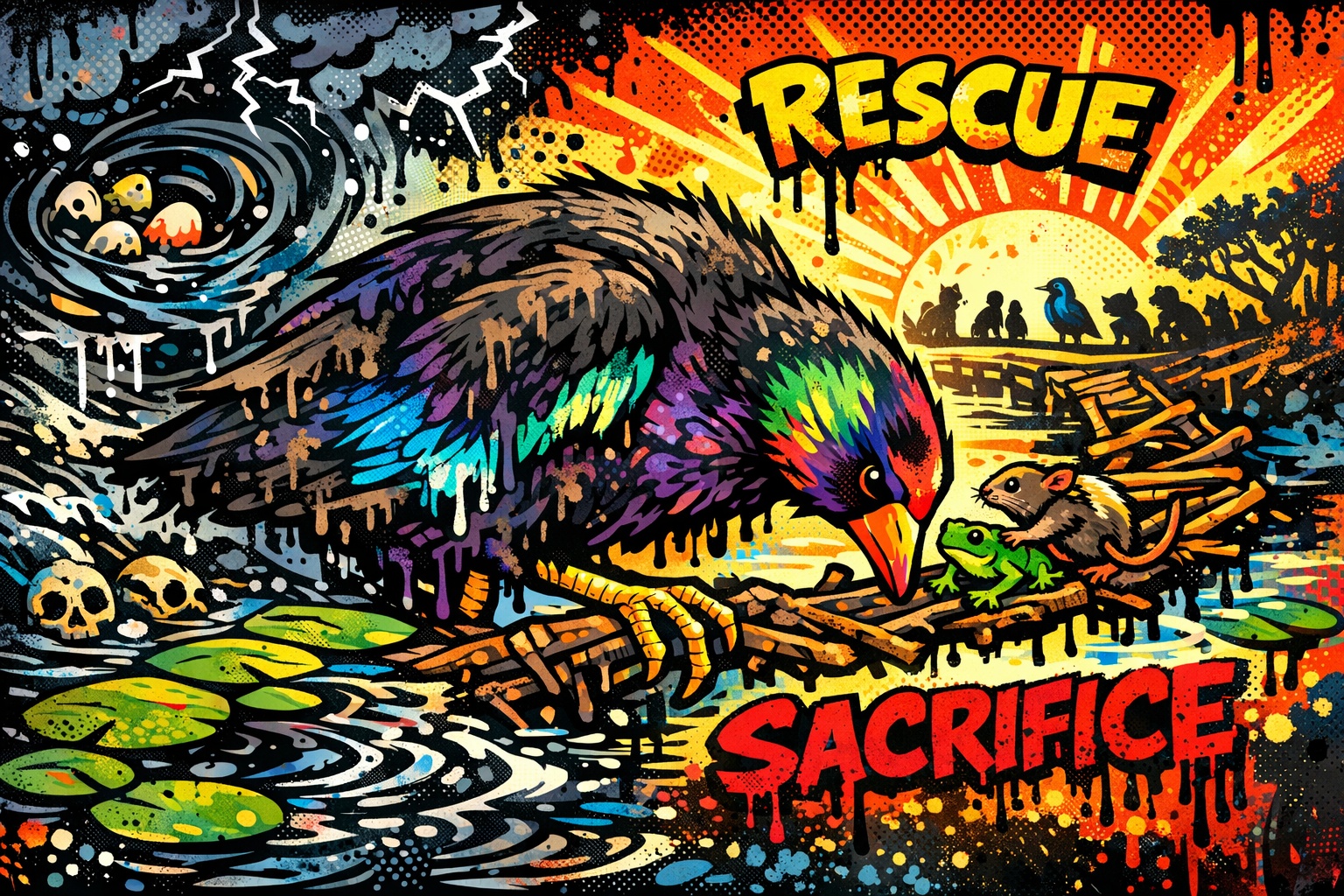
Then came the Night of the Black Current. A flash flood tore through the wetland, carrying eggs, hatchlings, beetles, and floating nests into a whirlpool beneath the reeds. Morrow could have flown to dry ground. Instead, the bird returned again and again, using its long toes to hook branches into a living bridge. It guided the smallest creatures across first: frogs, snails, and a shivering water rat that had once stolen food from Morrow’s nest.

By dawn, Morrow’s bright feathers were plastered with mud. One wing was injured, and the kingfisher—who had escaped alone—was trapped on the wrong side of the current. Morrow crossed once more and brought him back.

The act changed the marsh. Compassion did not make Morrow invulnerable; the damaged wing never opened as widely again. But the other creatures began copying Morrow’s patient habits. They left food beside the nests of strangers. They widened the reed bridges. They stopped measuring worth by speed or strength.

In that way, the bird’s story echoes an Australian truth: survival is rarely a solo performance. It is the neighbourly “no worries, mate” offered during a flood, the SES volunteer hauling sandbags through the night, and the quiet care found in a suburban backyard where someone leaves water out during a heatwave. Morrow-of-Reeds understood that a wetland, like a community, is only as safe as its most vulnerable inhabitant.

And so the bird still lowers its head among the leaves—not in shame, but in attention. It is listening for anyone who has fallen into the dark water.
Please log in to comment