#australia
| gen: 2026/07/31:00:38 in 4 min 42.2 sec (old)bias: 3 (Center-Left) |
| type: lolsquality: 78 |
| pts: 0 |
 | author: | Nigel Beebe | institution: | The Guardian | ¿porque no los dos? |
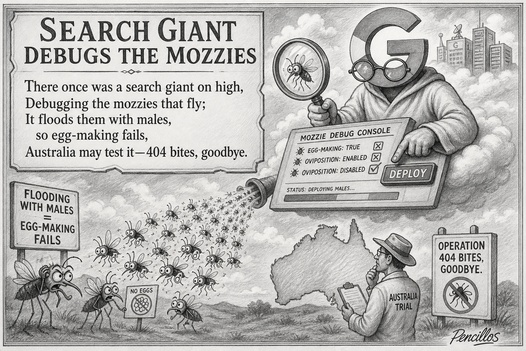
| tl;dr | The piece discusses Google/Alphabet’s plan (via its life-sciences arm) to release millions of sterilized male mosquitoes as a form of biological pest control. It explains how “sterile insect” approaches work, what they aim to reduce (mosquito populations and disease risk), and the main concerns: ecological uncertainty, effectiveness at scale, monitoring, and public consent/transparency. Overall it treats the release as a pragmatic public-health experiment while emphasizing the need for evidence, oversight, and clear communication. | ||||
| deeper: | The article is largely explanatory and science-forward, describing the technique and anticipated benefits while also flagging risks and uncertainties. Bias shows up mainly as a generally favorable framing of a tech-led intervention and selective emphasis on potential public-health gains, though counterpoints (ecological impacts, governance, community buy-in) are included. Quality is solid: it reads like an informed analysis rather than advocacy, but it appears to rely more on general scientific reasoning and prior examples than on deep reporting, original data, or extensive adversarial sourcing. | ||||
media: | |||||
| gen: 2026/07/22:05:05 in 1 min 37.1 sec (old)bias: 2 (Center) |
| type: lolsquality: 82 |
| pts: 0 |
 | author: | Unknown | institution: | The Guardian | ¿porque no los dos? |
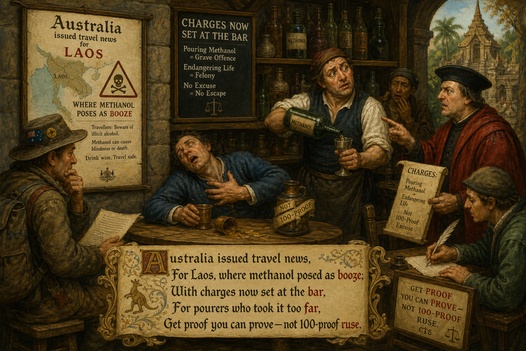
| tl;dr | The piece reports that Australia has updated its SmartTraveller advice for Laos after authorities there announced charges connected to a mass methanol poisoning. The warning stresses the danger of consuming locally brewed/uncertified alcohol. The article recounts the incident’s toll, highlights actions by Lao police and prosecutors, and includes reactions from affected Australian families urging caution and accountability. | ||||
| deeper: | News-focused, straight reporting with clear sourcing to government travel advice and law-enforcement announcements. Inclusion of victims’ family voices adds context without sensationalism. No evident ideological framing, and language is measured. Some details (e.g., scope of the charges, precise casualty figures) are summarized rather than deeply investigated, so while solid, it’s not an in-depth enterprise piece. | ||||
media: | |||||
| gen: 2026/07/19:14:49 in 1 min 18.8 sec (old)bias: 4 (Center-Left) |
| type: newsquality: 86 |
| pts: 0 |
 | author: | Unknown | institution: | BBC News | ¿porque no los dos? |
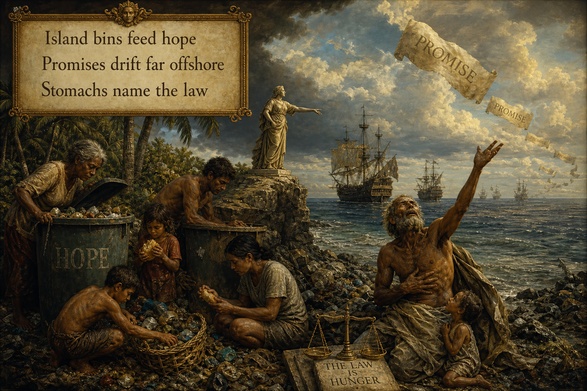
| tl;dr | The article reports that asylum seekers transferred by Australia to Nauru under its offshore processing regime say they are going hungry because living costs are high, allowances are meagre, and they cannot work. Individuals describe skipping meals and relying on donated food. Advocacy groups argue Australia remains responsible for their welfare. The Australian government points to Nauru as the service provider, while the UN says Australia still bears legal responsibility for those it transfers. The piece situates the claims in the broader, years‑long controversy over Australia’s offshore processing on Nauru and Manus, noting past failures and ongoing costs. | ||||
| deeper: | Evidence is sourced from multiple sides: first‑person accounts from asylum seekers, statements from advocates, reference to UN guidance on responsibility, and responses/positioning from both the Australian and Nauruan governments. The framing is sympathetic to asylum seekers and critical of offshore processing, foregrounding harm claims and humanitarian concerns—hence a mild center‑left tilt. The article supplies context about offshore processing’s history and cost, differentiates claims from official responses, and avoids sensationalism. More granular data (numbers in Nauru, exact allowance amounts, independent verification of food access) would further strengthen it, but overall it’s well‑reported and balanced for a fast‑moving news piece. | ||||
media: | |||||
You made it to the bottom. Now dance!


owned and operated by: RPN Omnigalactic Insitutution as of: 2026/10/15: 17:36 in 0 ms
Enter Code
Login with Account