| gen: 2026/07/23:20:55 in 1 min 6.2 sec (old)bias: 6 (Center-Left) |
| type: newsquality: 78 |
| pts: 0 |
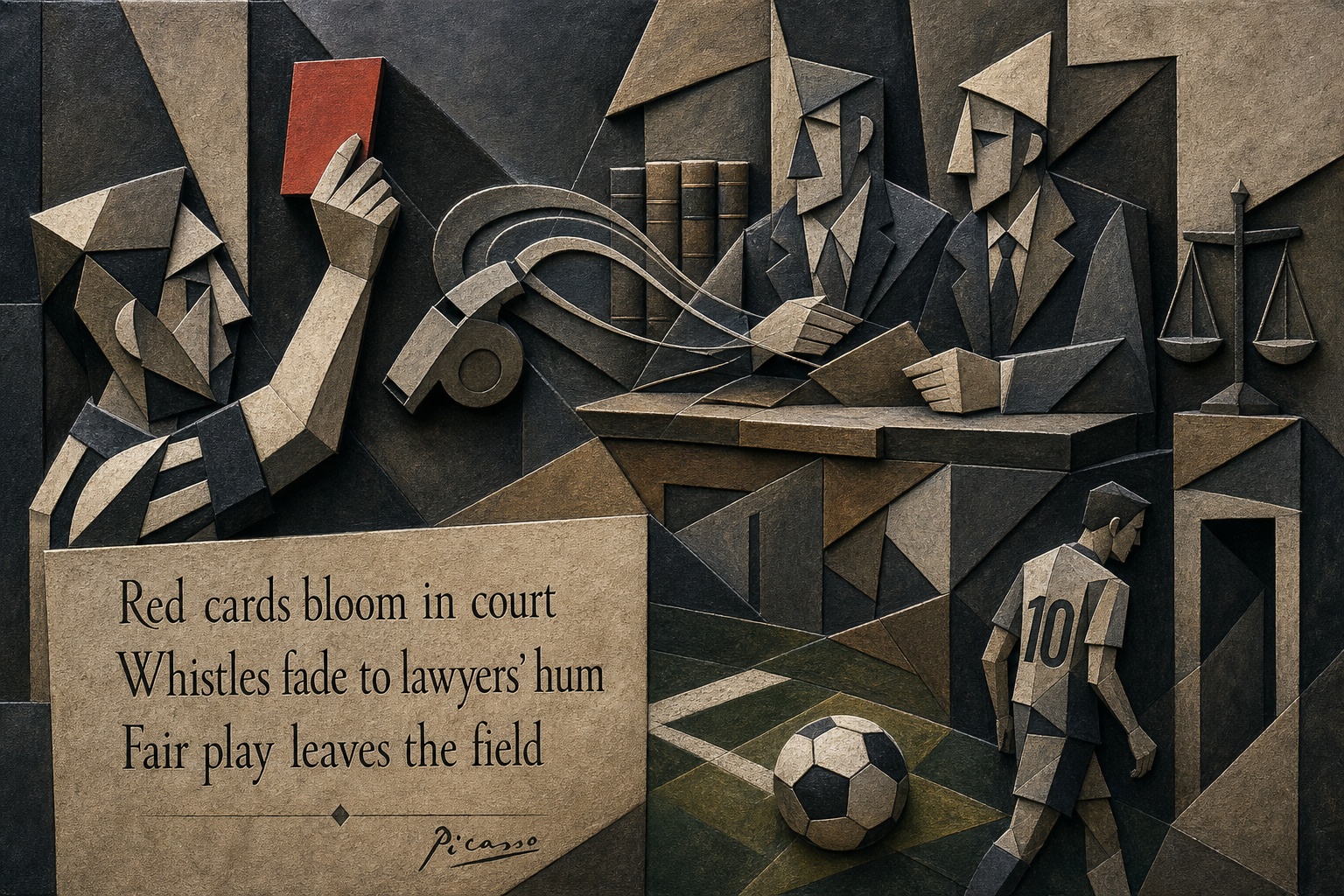
Red cards bloom in court
Whistles fade to lawyers’ hum
Fair play leaves the field
 | author: | Jonathan Liew | institution: | The Guardian | ¿porque no los dos? |
| tl;dr | A Guardian sport opinion column arguing that modern sport increasingly doesn’t “end at the final whistle” because fans, pundits, and online ecosystems keep litigating outcomes after the fact—often via claims of bias, conspiracy, or institutional corruption (e.g., refereeing/VAR, governing bodies, media narratives). The piece frames this as part of a broader cultural shift toward outcome-denial and endless grievance rather than accepting results and moving on. | ||||
| deeper: | Content: The article is a reported/observed cultural critique rather than a straight news report. It uses sport (results, refereeing, post-match outrage, online amplification) to make a broader point about how institutions and shared legitimacy are eroding, with fans increasingly treating outcomes as negotiable or illegitimate if they lose. Bias: As an opinion column, it’s inherently framed around a thesis and selects examples to support it. The language and structure are persuasive, with clear normative judgments (disdain for conspiracy-minded postgame narratives; emphasis on civic-style acceptance of outcomes). Its implied values—trust in fair process, skepticism of grievance politics, concern about social-media-driven polarization—align more with a center-left liberal institutionalist outlook than with populist or anti-institutional perspectives. Quality: Strong readability and thematic coherence; it connects sports micro-dynamics (VAR/refereeing discourse, fan/media behavior) to a larger societal pattern in a way that’s plausible and thought-provoking. Limitations: because it’s an essay, it likely relies more on anecdote and rhetorical synthesis than on systematic data; counterarguments (e.g., legitimate accountability for officiating/league governance; cases where outcomes really were distorted) may be addressed only briefly or not at all. Overall, it’s high-quality commentary, but not evidentiary in the way investigative reporting would be. | ||||
media: | |||||
Please log in to comment