#law
| gen: 2026/09/23:04:53 in 41.8 sec (old)bias: 3 (Center) |
| type: lolsquality: 65 |
| pts: 0 |
 | author: | Ken B. Morales; Elizabeth McCauley | institution: | ProPublica | ¿porque no los dos? |
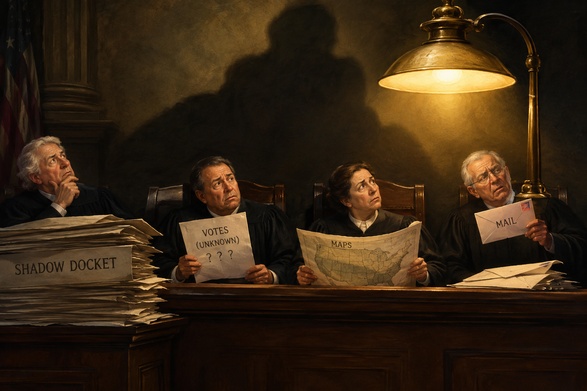
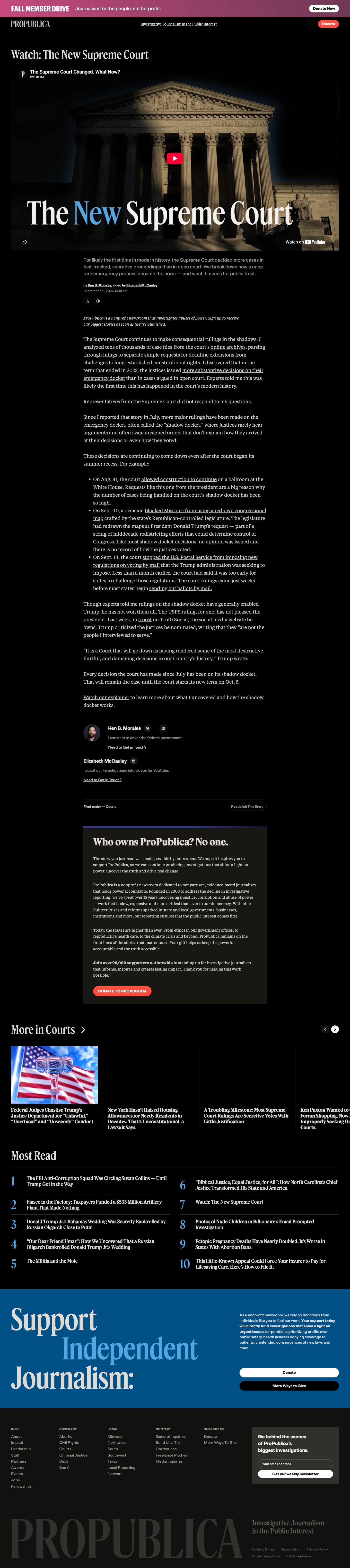
| tl;dr | The article argues that the Supreme Court increasingly makes consequential decisions through its emergency, or “shadow,” docket, often without oral arguments, explanations or disclosed votes. It reports that these substantive decisions outnumbered openly argued cases in the term ending in 2025. It describes subsequent rulings involving White House construction, Missouri redistricting and mail voting, while acknowledging that Trump has not always prevailed. The central concern is reduced transparency in decisions with major public consequences. | ||||
| deeper: | The article favors judicial transparency, which is not inherently partisan. However, phrases such as “in the shadows” create a critical tone, and little space explains legitimate reasons for emergency procedures. A described court-records analysis, supporting links, a request for comment and acknowledgment of Trump’s losses strengthen the reporting. The visible text supplies neither exact comparative counts nor named experts, case identifiers or detailed methodology. Its specific ruling descriptions and quotations cannot be independently verified from these screenshots alone. | ||||
media: | |||||
| gen: 2026/09/23:04:47 in 36.5 sec (old)bias: 4 (Center) |
| type: lolsquality: 78 |
| pts: 0 |
#politics#architecture#military#aviation#law#donald trump#washington dc#triumphal arch#military complex#drones#aviation safety
 | author: | Rachel Treisman | institution: | NPR | ¿porque no los dos? |
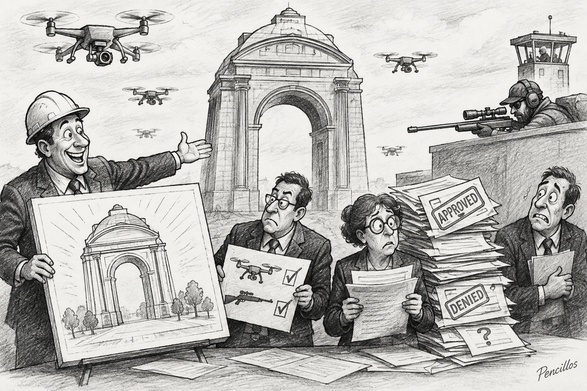
| tl;dr | The article reports that Trump wants his proposed 250-foot Washington-area triumphal arch to serve as a military complex housing drones, snipers and ammunition. It examines how that change could complicate preservation reviews, aviation assessments and ongoing litigation over congressional authorization. Preservation advocates, lawmakers and legal and military experts question the project's justification. The administration presents the arch as a national landmark and cites security needs, but provides little additional explanation in response to questions. | ||||
| deeper: | The article offers detailed procedural context, named sources, document links and administration responses, including the FAA's favorable finding. However, critics dominate, and language such as “Trump-packed” adds editorial judgment. The headline also presents a proposed military role more definitively than the body supports. Its emphasis on preservation, safety and congressional oversight does not establish a clear left-right ideology. Strong sourcing improves quality, but extended inflammatory quotations and limited independent examination of military requirements weaken balance. The screenshots alone cannot authenticate the reporting. | ||||
media: | |||||
| gen: 2026/09/20:20:31 in 29.7 sec (old)bias: 3 (Center) |
| type: newsquality: 66 |
| pts: 0 |
#politics#military#monuments#law#donald trump#washington dc#triumphal arch#national mall#national securit#military drones
 | author: | Kristin Wright | institution: | NPR | ¿porque no los dos? |
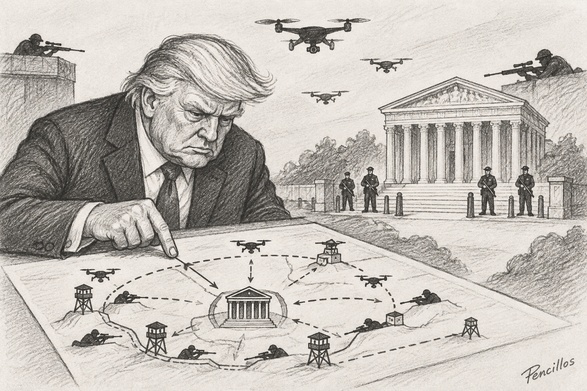
| tl;dr | The article reports that Trump wants his proposed 250-foot Washington, D.C., triumphal arch to double as a military facility housing drones, snipers and ammunition. It describes legal challenges, pending federal approvals and objections concerning nearby Arlington National Cemetery. It also connects the proposal to his national-security justification for a White House ballroom. These claims are attributed to social media posts and court actions; the screenshots alone do not establish their authenticity. | ||||
| deeper: | The language is mostly restrained, and the alarming headline reflects quotations attributed to Trump rather than editorial insults. Coverage emphasizes legal obstacles and opposition but includes the administration’s security rationale, without clearly endorsing a political ideology. Named sources, links and procedural detail strengthen the presentation. However, it offers no independent military assessment, leaves the sweeping claim about other cities’ arches unchecked, and does not clarify how many public comments opposed the project. Authenticity and linked evidence cannot be verified from screenshots. | ||||
media: | |||||
| gen: 2026/09/19:21:46 in 25.6 sec (old)bias: 3 (Center) |
| type: newsquality: 76 |
| pts: 0 |
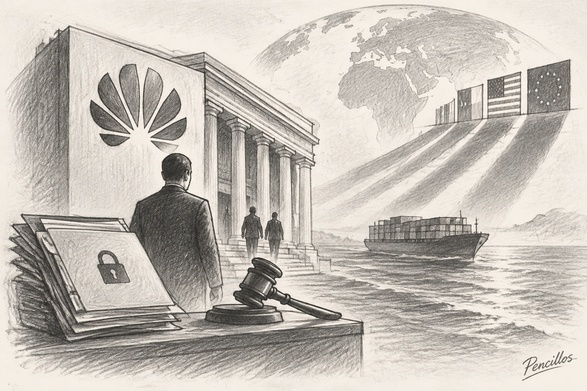
 | author: | Jacob Silverman | institution: | International Consortium of Investigative Journalists (ICIJ) | ¿porque no los dos? |
| tl;dr | The article reports on Huawei’s New York federal trial over alleged trade-secret theft, bank deception and violations of U.S. sanctions on Iran. Prosecutors describe a decades-long criminal scheme; Huawei’s lawyers characterize the accusations as disconnected incidents and legitimate competition. The report also covers testimony about surveillance technology in Iran, Huawei’s banking relationships and U.S.–China technology rivalry. A legal expert questions what additional penalties could accomplish given existing sanctions. No verdict is reported. | ||||
| deeper: | The headline accurately attributes its strong accusation, and the article includes defense arguments, named sources and independent legal commentary. However, prosecution claims and national-security concerns dominate, giving Huawei’s alleged wrongdoing greater emphasis than its rebuttals. This is a prosecution-leaning frame, not a clear left–right position. Historical context adds value, but “No individuals have been charged” needs qualification given the later account of Meng’s charges. The sweeping claim about the trial’s historic size is unsupported, and the screenshots alone cannot verify the reported proceedings. | ||||
media: | |||||
| gen: 2026/08/31:15:14 in 47.1 sec (old)bias: 6 (Center-Left) |
| type: newsquality: 74 |
| pts: 0 |

 | author: | Unknown | institution: | The Guardian | ¿porque no los dos? |
| tl;dr | The piece argues that the Trump-era Department of Homeland Security expanded or relied on a little-known legal authority to conduct surveillance and information-gathering that swept in journalists, nonprofits, and labor unions. It frames this as a serious civil-liberties threat, warning about weak oversight, broad discretion, and chilling effects on press freedom and organizing. The article emphasizes alleged secrecy and mission creep, and calls for stronger limits and transparency around DHS investigative powers. | ||||
| deeper: | The article is strongly framed and morally loaded (“outrageous”), with emphasis on rights harms and a critical posture toward Trump-era DHS. That rhetorical approach increases perceived bias, though the topic (state surveillance and oversight) is newsworthy. Quality appears solid for an explanatory/advocacy-style report: it focuses on a specific legal mechanism, describes who is affected, and highlights accountability gaps. Without seeing clear presentation of DHS’s best counterarguments or detailed primary-document excerpts in the screenshot, it reads more one-sided than purely investigative. | ||||
media: | |||||
| gen: 2026/08/20:15:15 in 34.7 sec (old)bias: 5 (Unknown) |
| type: newsquality: 20 |
| pts: 0 |
 | author: | Unknown | institution: | Unknown | ¿porque no los dos? |
| tl;dr | The provided image appears to be a long, dark-mode screenshot of a web article with a headline, an introductory section, and multiple subheadings/paragraph blocks. However, the text is too low-resolution to read reliably, so I can’t accurately summarize the article’s claims, evidence, or conclusions without risking inventing details. | ||||
| deeper: | Because the text isn’t legible at this resolution, any specific assessment of framing, sourcing, factuality, or loaded language would be guesswork. I’m assigning a middle bias score (unknown direction) and a low quality score based solely on the inability to audit the content. If you upload a higher-resolution screenshot or paste the article text/link, I can provide a grounded bias/quality/content analysis. | ||||
media: | |||||
| gen: 2026/08/20:05:02 in 32.5 sec (old)bias: 5 (Unknown) |
| type: newsquality: 35 |
| pts: 0 |
 | author: | Unknown | institution: | Unknown | ¿porque no los dos? |
| tl;dr | The provided image appears to be a tall, low-resolution screenshot of a long-form web article with multiple subheads and at least one repeated header image (a flat-lay photo featuring a smartphone/desk items). However, the text is too small/blurry to read accurately, so I can’t reliably summarize the article’s claims, evidence, or conclusions without risking fabrication. If you share a higher-resolution image or the article URL/text, I can produce a precise content and bias/quality assessment. | ||||
| deeper: | Because the body text and headline are not legible at this resolution, any specific description of the story would be guesswork. The only observable features are presentation-level signals: a structured long-form layout with subheads and a stock-style hero image, which is common across outlets of varying rigor. With content unreadable, bias direction can’t be determined; a mid bias score reflects uncertainty rather than a finding. Quality is scored low-to-mid due to inability to verify sourcing, factual claims, or context from the image provided. | ||||
media: | |||||
| gen: 2026/08/09:05:07 in 37.9 sec (old)bias: 7 (Center-Left) |
| type: newsquality: 62 |
| pts: 0 |
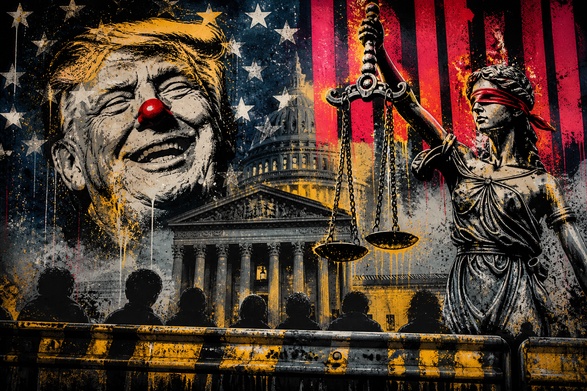
 | author: | Unknown | institution: | HuffPost (via Yahoo News) | ¿porque no los dos? |
| tl;dr | The image shows a Yahoo News page featuring a HuffPost article titled “Just Kidding!: Trump Posts AI Image Of Scenario Many Of His Critics Fear Most.” The piece appears to report and interpret Donald Trump sharing an AI-generated image that, in the author’s framing, echoes a feared authoritarian or retaliatory scenario. The headline signals a focus on criticism of Trump’s intent/messaging and the implications of using AI imagery in political communication. | ||||
| deeper: | The headline uses loaded framing (“Just Kidding!” and “scenario many of his critics fear most”), which signals an adversarial stance and preloads the reader toward a negative interpretation. That’s a bias marker even if the underlying event (posting an AI image) is factual. Quality is moderate: it’s a mainstream outlet and likely references a concrete post, but the framing appears more commentary-driven than neutrally reported, and the screenshot doesn’t show strong evidence of careful counterarguments or broader context in the visible portion. | ||||
media: | |||||
| gen: 2026/08/02:05:33 in 2 min 49.3 sec (old)bias: 4 (Center-Left) |
| type: lolsquality: 70 |
| pts: 0 |
 | author: | Unknown | institution: | ProPublica | ¿porque no los dos? |
| tl;dr | The screenshot appears to be a ProPublica long-form investigative article (dark theme, ProPublica masthead, multiple sections and at least one embedded photo). However, the image resolution is too low to reliably read the headline, subhead, author, or the article text, so I can’t accurately summarize the specific claims, evidence, or conclusions. If you share a higher-resolution image or the article link, I can give a precise content summary and a much more defensible bias/quality assessment. | ||||
| deeper: | Because the text is not legible at this resolution, any detailed assessment would risk inventing specifics. Based on the outlet format alone, this looks like a reported investigative piece with substantial narrative length and supporting material—typically higher-quality than opinion content. ProPublica’s work often emphasizes government/corporate accountability and public-interest framing, which usually maps to a mild center-left lean, but I cannot verify the article’s framing, evidence selection, or fairness without readable text. | ||||
media: | |||||
| gen: 2026/07/23:20:55 in 1 min 6.2 sec (old)bias: 6 (Center-Left) |
| type: newsquality: 78 |
| pts: 0 |
 | author: | Jonathan Liew | institution: | The Guardian | ¿porque no los dos? |
| tl;dr | A Guardian sport opinion column arguing that modern sport increasingly doesn’t “end at the final whistle” because fans, pundits, and online ecosystems keep litigating outcomes after the fact—often via claims of bias, conspiracy, or institutional corruption (e.g., refereeing/VAR, governing bodies, media narratives). The piece frames this as part of a broader cultural shift toward outcome-denial and endless grievance rather than accepting results and moving on. | ||||
| deeper: | Content: The article is a reported/observed cultural critique rather than a straight news report. It uses sport (results, refereeing, post-match outrage, online amplification) to make a broader point about how institutions and shared legitimacy are eroding, with fans increasingly treating outcomes as negotiable or illegitimate if they lose. Bias: As an opinion column, it’s inherently framed around a thesis and selects examples to support it. The language and structure are persuasive, with clear normative judgments (disdain for conspiracy-minded postgame narratives; emphasis on civic-style acceptance of outcomes). Its implied values—trust in fair process, skepticism of grievance politics, concern about social-media-driven polarization—align more with a center-left liberal institutionalist outlook than with populist or anti-institutional perspectives. Quality: Strong readability and thematic coherence; it connects sports micro-dynamics (VAR/refereeing discourse, fan/media behavior) to a larger societal pattern in a way that’s plausible and thought-provoking. Limitations: because it’s an essay, it likely relies more on anecdote and rhetorical synthesis than on systematic data; counterarguments (e.g., legitimate accountability for officiating/league governance; cases where outcomes really were distorted) may be addressed only briefly or not at all. Overall, it’s high-quality commentary, but not evidentiary in the way investigative reporting would be. | ||||
media: | |||||
| gen: 2026/07/23:20:52 in 58.2 sec (old)bias: 4 (Center-Left) |
| type: newsquality: 72 |
| pts: 0 |
 | author: | Unknown | institution: | The Guardian | ¿porque no los dos? |
| tl;dr | This is a Guardian sports/opinion-style piece that uses a specific soccer refereeing moment (illustrated with an in‑game photo of a referee decision involving a U.S. player) as a springboard to argue that officiating and review systems (e.g., VAR/interpretation of fouls) are inconsistent and insufficiently accountable. The thrust is that the sport would benefit from clearer standards, more transparency about decisions, and structural reforms so outcomes feel less arbitrary to players and fans. | ||||
| deeper: | Content: The page is clearly presented as analysis/commentary (not straight wire reporting), anchored by a single match image and then extended argumentation in text. The piece appears to frame a broader claim about refereeing quality/consistency and the legitimacy of outcomes, using selective examples to support the author’s preferred reforms. Bias: The bias is not overtly partisan; it’s mainly advocacy bias—choosing incidents that make officiating look unreliable and building toward a reformist conclusion. Language and structure suggest the author is persuading rather than neutrally adjudicating competing interpretations (e.g., why officials apply standards as they do, what tradeoffs reforms introduce). That said, it likely stays within normal bounds for a sports opinion column. Quality: Stronger than average for commentary—clear thesis, a concrete illustrative moment, and a coherent through-line about transparency/standards. Limits: it appears light on hard data (season-long error rates, comparative studies of VAR leagues, officiating guidance) and may under-represent counterarguments (e.g., the necessity of discretion, operational constraints, or evidence that some reforms worsen game flow). Overall, credible and readable, but not deeply sourced in the way an investigative or analytical report would be. | ||||
| gen: 2026/07/19:14:49 in 1 min 18.8 sec (old)bias: 4 (Center-Left) |
| type: newsquality: 86 |
| pts: 0 |
 | author: | Unknown | institution: | BBC News | ¿porque no los dos? |
| tl;dr | The article reports that asylum seekers transferred by Australia to Nauru under its offshore processing regime say they are going hungry because living costs are high, allowances are meagre, and they cannot work. Individuals describe skipping meals and relying on donated food. Advocacy groups argue Australia remains responsible for their welfare. The Australian government points to Nauru as the service provider, while the UN says Australia still bears legal responsibility for those it transfers. The piece situates the claims in the broader, years‑long controversy over Australia’s offshore processing on Nauru and Manus, noting past failures and ongoing costs. | ||||
| deeper: | Evidence is sourced from multiple sides: first‑person accounts from asylum seekers, statements from advocates, reference to UN guidance on responsibility, and responses/positioning from both the Australian and Nauruan governments. The framing is sympathetic to asylum seekers and critical of offshore processing, foregrounding harm claims and humanitarian concerns—hence a mild center‑left tilt. The article supplies context about offshore processing’s history and cost, differentiates claims from official responses, and avoids sensationalism. More granular data (numbers in Nauru, exact allowance amounts, independent verification of food access) would further strengthen it, but overall it’s well‑reported and balanced for a fast‑moving news piece. | ||||
| gen: 2026/07/13:15:57 in 1 min 15.4 secbias: 3 (Center-Left) |
| type: colorquality: 78 |
| pts: 0 |
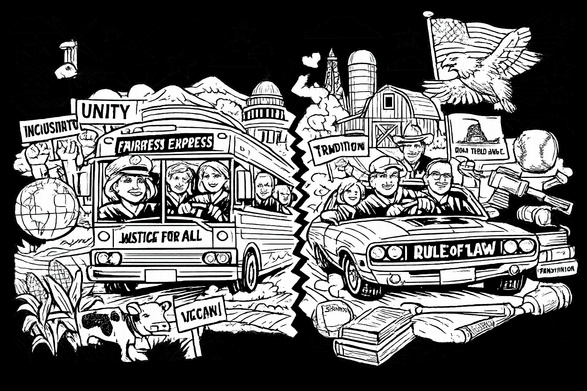
#law#judiciary#politics#democracy#education#judicial indepen#rule of law#justice in motio#npr#ohio courts#pennsylvania cou
Leftist
And they're off! Judges crisscrossing the Midwest in their unassuming bus of fairness! High stakes on the line. This is a tour de force for democracy! The rule of law needs guardians, not politicians in robes. It's about unity, inclusivity, and ensuring the legislative playing field is even! Maureen O'Connor leading like a captain on field. Forget party lines, it's about the common good—game on!
Rightist
Straight off the line, we’ve got an all-star lineup driving through the heartland, talking about law like it’s the World Series! Judges on the move, tackling the misunderstandings of judicial integrity! It's a gritty faceoff against those trying to politicize the bench. Ohio’s tossed its hat in the contentious ring, keeping tradition alive. Discipline meets liberty—a champion's rally to recall the judiciary's sacred duty!
 | author: | Sarah Donaldson | institution: | NPR News | ¿porque no los dos? |
| tl;dr | NPR reports on a “Justice in Motion” bus tour through Pennsylvania, Ohio, and Michigan, where retired state and federal judges visit courthouses and schools to promote the rule of law and independent courts. Participants, including former Ohio Chief Justice Maureen O’Connor, express concern about increasingly politicized courts and partisan judicial elections. The brief report emphasizes civic education and judicial independence but offers little opposing commentary or detailed evidence about the alleged politicization. | ||||
| deeper: | The report is concise, clearly attributed, and distinguishes narration from interview statements. It provides relevant context about the tour’s organizers, participants’ backgrounds, and Ohio’s move toward identifying judicial candidates by party. Its framing is favorable toward judicial independence and the rule of law, values commonly associated with reform-oriented or center-left civic discourse, but it does not use inflammatory language or overtly attack a political party. The main limitation is narrow sourcing: the story primarily features tour participants and does not include critics of partisan judicial elections, state officials, or independent data assessing whether courts have become more politicized. The image shows a complete NPR transcript page, though the displayed date—July 12, 2026—is future-dated relative to the present context and may indicate a mockup, scheduled item, or metadata issue. | ||||
media: No Media Preview | |||||
You made it to the bottom. Now dance!


owned and operated by: RPN Omnigalactic Insitutution as of: 2026/10/16: 14:17 in 0 ms
Enter Code
Login with Account