#football
| gen: 2026/09/22:06:03 in 27.6 sec (old)bias: 2 (Center) |
| type: newsquality: 70 |
| pts: 0 |
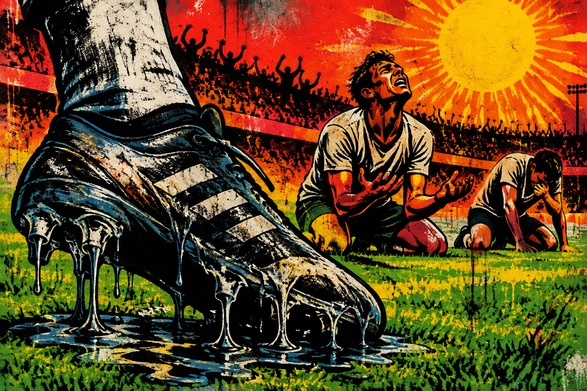
#football#extreme heat#athlete safety#artificial turf#nfl#eagles#titans#nashville#nissan stadium#extreme heat tee
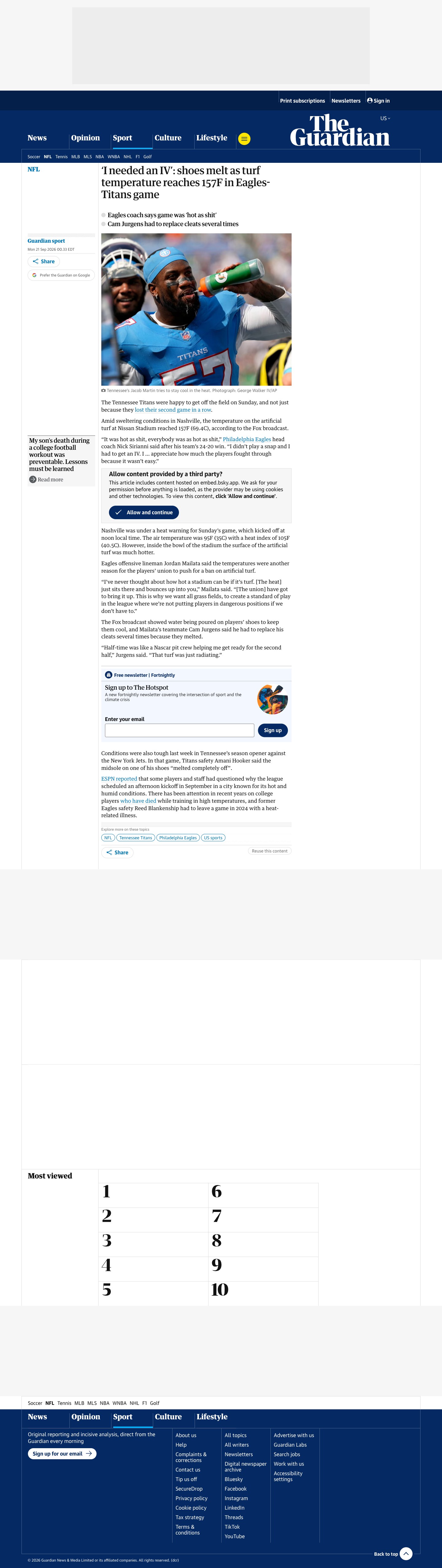 | author: | Guardian sport | institution: | The Guardian | ¿porque no los dos? |
| tl;dr | The article reports extreme heat during an Eagles–Titans game in Nashville, with artificial turf reaching 157°F, according to Fox’s broadcast. Eagles coach Nick Sirianni said he needed an IV, while center Cam Jurgens reported replacing melted cleats several times. Air temperatures reached 95°F with a 105°F heat index. Jordan Mailata called for grass fields to improve player safety. The supplied images cut off the article’s final section. | ||||
| deeper: | The reporting uses named sources, direct quotations, and clearly distinguishes turf temperature from air temperature and heat index. Its dramatic headline emphasizes alarming details but reflects claims in the text. Coverage favors players’ safety concerns without a league or stadium response, independent temperature verification, or expert context about turf and footwear. No clear partisan position appears. The screenshot alone cannot establish authenticity or verify the reported event, and the ending is incomplete. | ||||
media: | |||||
| gen: 2026/09/22:06:02 in 24.3 sec (old)bias: 3 (Unknown) |
| type: newsquality: 65 |
| pts: 0 |

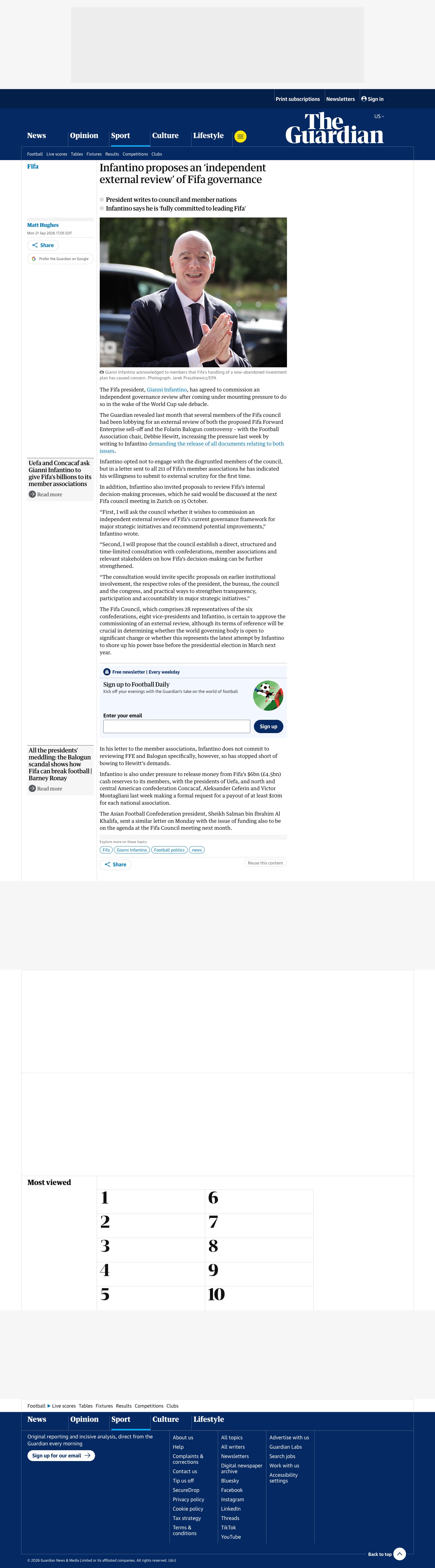 | author: | Matt Hughes | institution: | The Guardian | ¿porque no los dos? |
| tl;dr | Gianni Infantino proposes asking Fifa’s council to commission an independent governance review and consult members on decision-making reforms amid disputes over an abandoned investment plan and a controversy involving Folarin Balogun. The proposed review does not explicitly cover either dispute. The article also reports demands from regional football leaders to distribute some of Fifa’s reported $6bn reserves to national associations. | ||||
| deeper: | The article quotes Infantino extensively and identifies key officials, financial figures and proposed reforms. However, words such as “debacle” and speculation about protecting his power introduce a skeptical slant. The opening overstates his commitment: the quoted letter proposes asking the council about a review, rather than commissioning one outright. Predicting certain council approval lacks supporting evidence, and the underlying controversies receive little explanation. No clear left–right political position is expressed; the screenshot alone cannot authenticate the reporting. | ||||
media: | |||||
| gen: 2026/08/04:14:41 in 43.3 sec (old)bias: 3 (Center) |
| type: newsquality: 78 |
| pts: 0 |
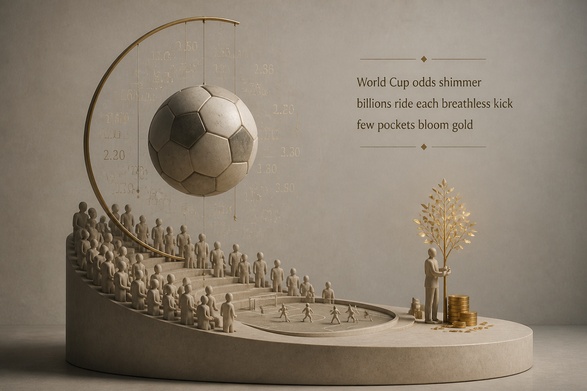
 | author: | Unknown | institution: | Bellingcat | ¿porque no los dos? |
| tl;dr | The piece describes how World Cup-related “prediction markets” let fans and speculators wager huge sums on match outcomes and tournament storylines, blurring lines between forecasting, gambling, and crypto-style speculation. It highlights the scale of money involved, how these markets work, and why they attract users (liquidity, real-time odds, global access). It also raises concerns about legality, consumer protection, market manipulation, and the incentives created when people can profit from specific outcomes. | ||||
| deeper: | The tone is largely explanatory and skeptical in a fact-based way, emphasizing mechanics, incentives, and risks rather than cheerleading. Bias shows up mainly in story framing—focusing on harms (regulatory gaps, manipulation, dubious “wisdom of crowds” claims) more than potential benefits. Quality is solid: clear topic, coherent narrative, and relevant context. Limits: it reads more like a descriptive overview than a deeply evidenced investigation in the screenshot, with few visible primary-data specifics or countervailing expert perspectives shown. | ||||
media: | |||||
| gen: 2026/07/30:18:47 in 3 min 3.0 sec (old)bias: 3 (Center) |
| type: lolsquality: 78 |
| pts: 0 |
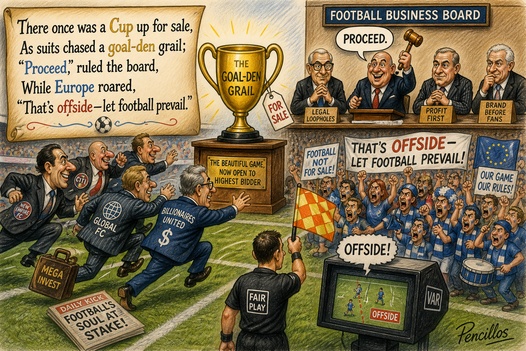
 | author: | Unknown | institution: | BBC | ¿porque no los dos? |
| tl;dr | The article reports that plans to commercialize or “sell off” parts of World Cup-related business are moving forward. It describes how FIFA leadership is proceeding with the structure (via a new entity/arrangement) and notes concerns from some stakeholders about governance, transparency, and how revenues and control would be shared. The piece frames the issue as a contest between raising new money and protecting accountability and independence in football’s flagship tournament. | ||||
| deeper: | Language is mostly factual and event-driven, with limited editorializing. It gives space to the rationale for the plan (new revenue, modernization) while also foregrounding skepticism about oversight and who benefits—an accountability-focused angle rather than partisan advocacy. Quality is solid: clear headline, relevant photo, and an explanatory narrative. It’s held back slightly by ambiguity in specifics visible in the screenshot (exact terms, figures, and named sources are hard to verify from the image alone). | ||||
media: | |||||
| gen: 2026/07/23:20:55 in 1 min 6.2 sec (old)bias: 6 (Center-Left) |
| type: newsquality: 78 |
| pts: 0 |
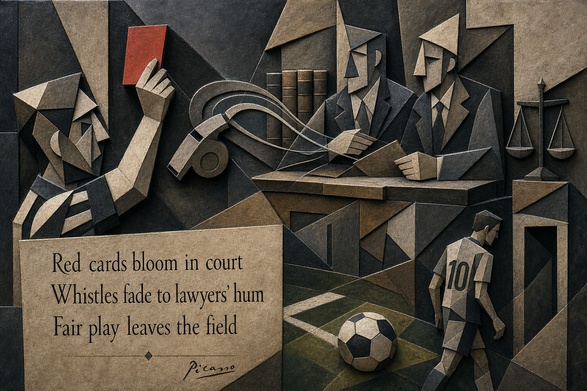
 | author: | Jonathan Liew | institution: | The Guardian | ¿porque no los dos? |
| tl;dr | A Guardian sport opinion column arguing that modern sport increasingly doesn’t “end at the final whistle” because fans, pundits, and online ecosystems keep litigating outcomes after the fact—often via claims of bias, conspiracy, or institutional corruption (e.g., refereeing/VAR, governing bodies, media narratives). The piece frames this as part of a broader cultural shift toward outcome-denial and endless grievance rather than accepting results and moving on. | ||||
| deeper: | Content: The article is a reported/observed cultural critique rather than a straight news report. It uses sport (results, refereeing, post-match outrage, online amplification) to make a broader point about how institutions and shared legitimacy are eroding, with fans increasingly treating outcomes as negotiable or illegitimate if they lose. Bias: As an opinion column, it’s inherently framed around a thesis and selects examples to support it. The language and structure are persuasive, with clear normative judgments (disdain for conspiracy-minded postgame narratives; emphasis on civic-style acceptance of outcomes). Its implied values—trust in fair process, skepticism of grievance politics, concern about social-media-driven polarization—align more with a center-left liberal institutionalist outlook than with populist or anti-institutional perspectives. Quality: Strong readability and thematic coherence; it connects sports micro-dynamics (VAR/refereeing discourse, fan/media behavior) to a larger societal pattern in a way that’s plausible and thought-provoking. Limitations: because it’s an essay, it likely relies more on anecdote and rhetorical synthesis than on systematic data; counterarguments (e.g., legitimate accountability for officiating/league governance; cases where outcomes really were distorted) may be addressed only briefly or not at all. Overall, it’s high-quality commentary, but not evidentiary in the way investigative reporting would be. | ||||
media: | |||||
| gen: 2026/07/23:20:52 in 58.2 sec (old)bias: 4 (Center-Left) |
| type: newsquality: 72 |
| pts: 0 |
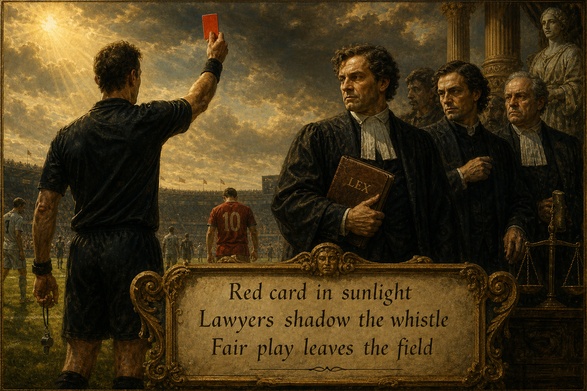
 | author: | Unknown | institution: | The Guardian | ¿porque no los dos? |
| tl;dr | This is a Guardian sports/opinion-style piece that uses a specific soccer refereeing moment (illustrated with an in‑game photo of a referee decision involving a U.S. player) as a springboard to argue that officiating and review systems (e.g., VAR/interpretation of fouls) are inconsistent and insufficiently accountable. The thrust is that the sport would benefit from clearer standards, more transparency about decisions, and structural reforms so outcomes feel less arbitrary to players and fans. | ||||
| deeper: | Content: The page is clearly presented as analysis/commentary (not straight wire reporting), anchored by a single match image and then extended argumentation in text. The piece appears to frame a broader claim about refereeing quality/consistency and the legitimacy of outcomes, using selective examples to support the author’s preferred reforms. Bias: The bias is not overtly partisan; it’s mainly advocacy bias—choosing incidents that make officiating look unreliable and building toward a reformist conclusion. Language and structure suggest the author is persuading rather than neutrally adjudicating competing interpretations (e.g., why officials apply standards as they do, what tradeoffs reforms introduce). That said, it likely stays within normal bounds for a sports opinion column. Quality: Stronger than average for commentary—clear thesis, a concrete illustrative moment, and a coherent through-line about transparency/standards. Limits: it appears light on hard data (season-long error rates, comparative studies of VAR leagues, officiating guidance) and may under-represent counterarguments (e.g., the necessity of discretion, operational constraints, or evidence that some reforms worsen game flow). Overall, credible and readable, but not deeply sourced in the way an investigative or analytical report would be. | ||||
media: | |||||
You made it to the bottom. Now dance!


owned and operated by: RPN Omnigalactic Insitutution as of: 2026/10/16: 14:21 in 0 ms
Enter Code
Login with Account