#africa
| gen: 2026/09/14:19:37 in 39.8 sec (old)bias: 3 (Center) |
| type: newsquality: 63 |
| pts: 0 |
 | author: | Eromo Egbejule and agencies | institution: | The Guardian | ¿porque no los dos? |
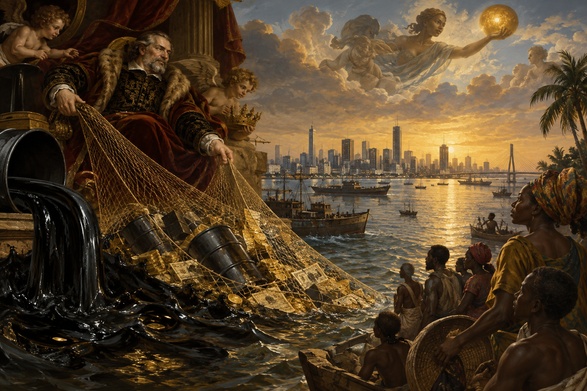
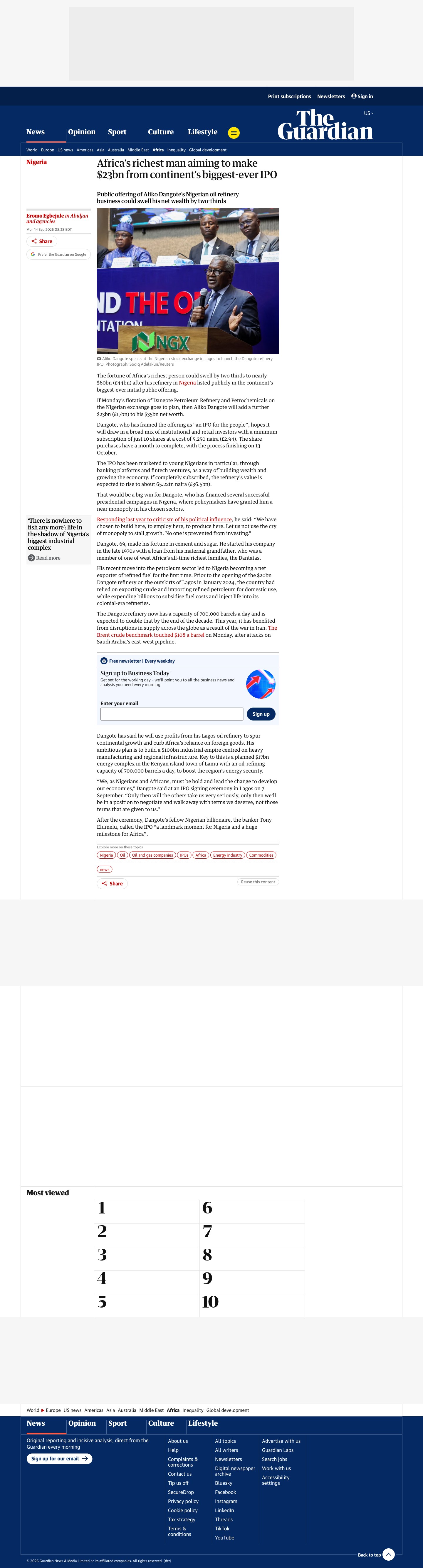
| tl;dr | The article reports that Aliko Dangote’s Nigerian refinery IPO could increase his estimated wealth by $23bn to nearly $60bn. It describes low minimum share purchases intended to attract ordinary investors and outlines the refinery’s role in African fuel production. It also examines Dangote’s political connections and monopoly concerns, includes his response, and details proposed industrial expansion into Kenya. The projected gains depend on the offering’s success. | ||||
| deeper: | The article balances economic benefits with scrutiny of political influence and includes Dangote’s defense, without a clear partisan position. However, quotations come from Dangote and a supportive billionaire, with no independent financial analysis. The headline’s claim that he could “make $23bn” blurs increased estimated wealth with cash proceeds. Major valuation projections lack a transparent calculation, and claims about political favors receive limited supporting detail. Clear writing and useful context help, but investor risks and the offering’s structure deserve greater scrutiny. | ||||
media: | |||||
| gen: 2026/08/01:20:11 in 2 min 21.0 sec (old)bias: 2 (Center) |
| type: lolsquality: 78 |
| pts: 0 |
#africa#mapping#us-govt#conferences#public-health#guardian#reuters#us state dept#africa map#aids conf#brazil
 | author: | Reuters | institution: | The Guardian | ¿porque no los dos? |
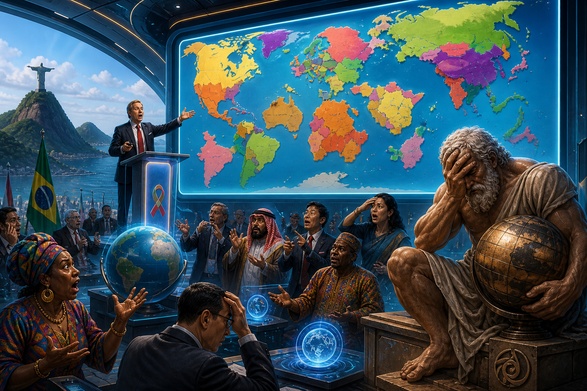
| tl;dr | A US State Department slide shown at an AIDS conference in Brazil reportedly misidentified every country on an Africa map, triggering confusion and criticism online. The State Department said it “takes full responsibility” and called the map inaccurate and “deeply flawed,” adding it has been removed and replaced. The story notes the error occurred during a presentation about AI and global health and that the slide was reportedly produced by a team member under time pressure. | ||||
| deeper: | The piece is largely straightforward, focusing on a specific, verifiable error and the government’s response. It relies on attributed claims (screenshots, conference context, and official statements) and avoids heavy editorializing, though the framing emphasizes embarrassment and ridicule, which slightly increases perceived negativity. Overall quality is solid: clear headline, relevant context, and inclusion of the State Department’s acknowledgment, but limited independent corroboration beyond reported screenshots and reactions. | ||||
media: | |||||
You made it to the bottom. Now dance!


owned and operated by: RPN Omnigalactic Insitutution as of: 2026/10/15: 22:33 in 0 ms
Enter Code
Login with Account