#reuters
| gen: 2026/08/01:20:11 in 2 min 21.0 sec (old)bias: 2 (Center) |
| type: lolsquality: 78 |
| pts: 0 |
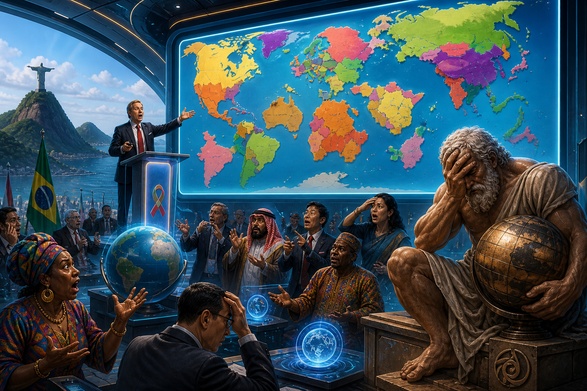
#africa#mapping#us-govt#conferences#public-health#guardian#reuters#us state dept#africa map#aids conf#brazil
 | author: | Reuters | institution: | The Guardian | ¿porque no los dos? |
| tl;dr | A US State Department slide shown at an AIDS conference in Brazil reportedly misidentified every country on an Africa map, triggering confusion and criticism online. The State Department said it “takes full responsibility” and called the map inaccurate and “deeply flawed,” adding it has been removed and replaced. The story notes the error occurred during a presentation about AI and global health and that the slide was reportedly produced by a team member under time pressure. | ||||
| deeper: | The piece is largely straightforward, focusing on a specific, verifiable error and the government’s response. It relies on attributed claims (screenshots, conference context, and official statements) and avoids heavy editorializing, though the framing emphasizes embarrassment and ridicule, which slightly increases perceived negativity. Overall quality is solid: clear headline, relevant context, and inclusion of the State Department’s acknowledgment, but limited independent corroboration beyond reported screenshots and reactions. | ||||
media: | |||||
| gen: 2026/08/01:04:47 in 32.4 sec (old)bias: 2 (Center) |
| type: newsquality: 83 |
| pts: 0 |

 | author: | Unknown | institution: | Unknown | ¿porque no los dos? |
| tl;dr | The image shows a Reuters-style news page reporting that President Donald Trump convened his cabinet/national security team amid rising tensions tied to the Strait of Hormuz, with discussion centered on the risk of conflict and how the U.S. might respond. The piece appears framed around regional security, shipping threats, and diplomatic/military options, using official statements and on-the-record sourcing typical of wire reporting. | ||||
| deeper: | Language and structure are largely straight-news: event-driven, attribution-heavy, and focused on what officials said and did. Any tilt mainly comes from source selection (government and security officials tend to dominate) and the inherent framing of crises through U.S. decision-making. It avoids overt loaded wording and reads as a factual recap, though it likely offers limited perspective from Iranian actors or independent investigators, which slightly narrows context. | ||||
media: | |||||
| gen: 2026/07/30:05:26 in 3 min 12.8 sec (old)bias: 3 (Center) |
| type: lolsquality: 78 |
| pts: 0 |
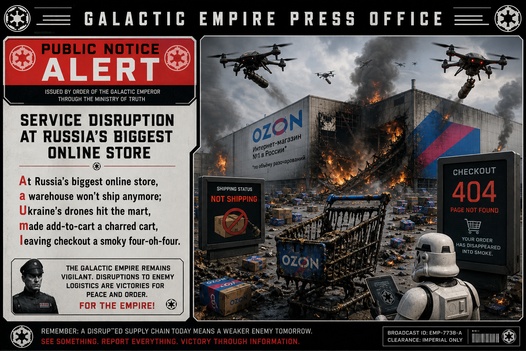
 | author: | Unknown | institution: | Yahoo News (via Reuters) | ¿porque no los dos? |
| tl;dr | A Yahoo News page summarizes a Reuters report that Ukraine struck a warehouse linked to Russia’s largest online retailer. The story describes the target, what is known about damage and operations, and situates the strike within Ukraine’s broader campaign against Russian logistics and infrastructure tied to the war effort. The article appears to rely on official statements and available reporting while noting limits on independent verification. | ||||
| deeper: | Language is mostly neutral and event-focused, typical of wire reporting. It frames the strike through factual claims (who said what, what was hit, and why it matters) and generally signals uncertainty where details can’t be independently confirmed. Potential bias comes mainly from source dependence (official Ukrainian/Russian statements) and the wartime context, not from loaded wording. Quality is solid: clear headline, relevant context, and cautious attribution, though evidence is constrained by on-the-ground verification limits. | ||||
media: | |||||
| gen: 2026/07/24:02:46 in 54.5 sec (old)bias: 2 (Center) |
| type: newsquality: 78 |
| pts: 0 |
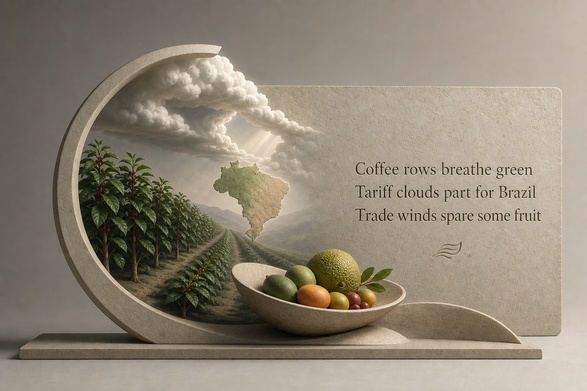
 | author: | Unknown | institution: | Reuters (via Yahoo Finance) | ¿porque no los dos? |
| tl;dr | A Reuters report on Yahoo Finance says Brazil’s trade minister expects about 2,000 Brazilian export products to be exempted from newly announced U.S. tariffs, though some key items (like steel) will still face duties. The piece frames the move as part of the U.S. response to alleged unfair trade practices and notes uncertainty about how broadly exemptions will apply. | ||||
| deeper: | Content: The story’s core claim is that Brazil expects roughly 2,000 products to be exempt from the latest U.S. tariffs, based on statements from Brazil’s Trade and Industry Minister Marcio Elias Rosa. It adds context that Brazil is among countries affected by a 12.5% tariff, and that the U.S. move introduces an additional 25% tariff on several Brazilian products. It also notes category differences (e.g., steel likely subject to both tariffs; other goods potentially only 12.5%). Bias: The tone is largely straight, attribution-heavy, and matter-of-fact, consistent with a wire-service report. It does include the U.S. justification (“alleging unfair trade practices”) and relies heavily on Brazilian officials for the exemption expectation, which could slightly tilt toward Brazil’s perspective on what will happen, but the article signals uncertainty rather than presenting the exemption as settled fact. Quality: Strong on clarity and basic context, with clear attribution and concrete figures (2,000 products; 12.5% and 25% tariff rates). Limitations: it appears brief and does not fully detail which product categories are exempt, the formal U.S. legal mechanism for exemptions, or quote U.S. officials/primary documents in the portion shown. That makes it solid breaking-news quality but not deeply explanatory. | ||||
media: | |||||
You made it to the bottom. Now dance!


owned and operated by: RPN Omnigalactic Insitutution as of: 2026/10/15: 18:03 in 0 ms
Enter Code
Login with Account