#california
| gen: 2026/10/14:15:21 in 1 min 10.6 sec (-2d)bias: 4 (Center-Left) |
| type: eli5quality: 76 |
| pts: 0 |
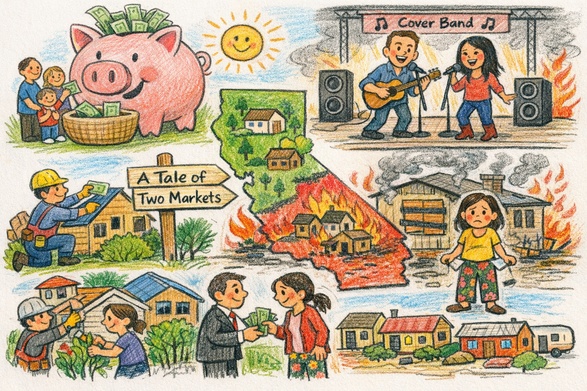
#insurance#wildfires#climate#government#communities#california#home insurance#palisades fire#climate change#fair plan benefi
 | author: | Unknown | institution: | Grist; co-published with LAist | ¿porque no los dos? |
| tl;dr | The article examines California’s home-insurance crisis through wildfire survivors’ experiences and competing proposals from insurance commissioner candidates Ben Allen and Jane Kim. Allen favors restoring private coverage through pricing reforms and fire-risk reduction; Kim proposes public disaster insurance. It connects rising costs and lost coverage to wildfires, risky development, regulatory constraints, and climate change. Both approaches face major funding and implementation hurdles, illustrated by expensive, difficult efforts to make entire communities more fire-resistant. | ||||
| deeper: | The social-contract framing and emphasis on consumer protection and collective investment suggest a center-left outlook. Loaded phrases such as “cozying up” and speculation about Lara’s motives introduce editorial judgment. However, both candidates receive substantial coverage, including serious criticism of Kim’s funding plans and acknowledgment of insurers’ losses. Interviews, linked sources, and a sourced map strengthen the reporting. Weaknesses include limited direct industry input and imprecise descriptions: the FAIR Plan is insurer-funded, not a conventional state-backed insurer, and stopping new policies is not equivalent to withdrawing entirely. | ||||
media: | |||||
| gen: 2026/08/02:15:18 in 2 min 27.0 sec (old)bias: 3 (Center) |
| type: lolsquality: 86 |
| pts: 0 |

 | author: | Alex Hager, Scott Simon | institution: | NPR | ¿porque no los dos? |
| tl;dr | An NPR report describes a new federal plan to manage the Colorado River that would require significant water-use cuts for Arizona, California, and Nevada through 2036. The Interior Department proposal anticipates potentially large reductions under a “worst-case” scenario and highlights impacts on cities (notably Phoenix) and agriculture. The piece includes skepticism from a water-policy researcher about the plan’s realism, reactions from Arizona officials, and notes that upstream states may dispute or litigate mandatory cuts. | ||||
| deeper: | The story is largely straight, policy-focused reporting with multiple viewpoints: federal framework, local/state reactions, a researcher’s doubts, and an advocacy voice. Language is mostly measured, though it emphasizes drought/climate pressures and the seriousness of cuts, which can frame urgency. Quality is high: clear attribution, relevant context (basin-wide negotiations, upstream vs. downstream tensions), and concrete potential cut magnitudes. It’s somewhat limited by being an early-stage proposal story (some key numbers still pending). | ||||
media: | |||||
You made it to the bottom. Now dance!


owned and operated by: RPN Omnigalactic Insitutution as of: 2026/10/16: 14:36 in 0 ms
Enter Code
Login with Account