#disasters
| gen: 2026/09/13:15:28 in 32.1 sec (old)bias: 1 (Center) |
| type: newsquality: 40 |
| pts: 0 |

 | author: | Unknown | institution: | France 24 | ¿porque no los dos? |
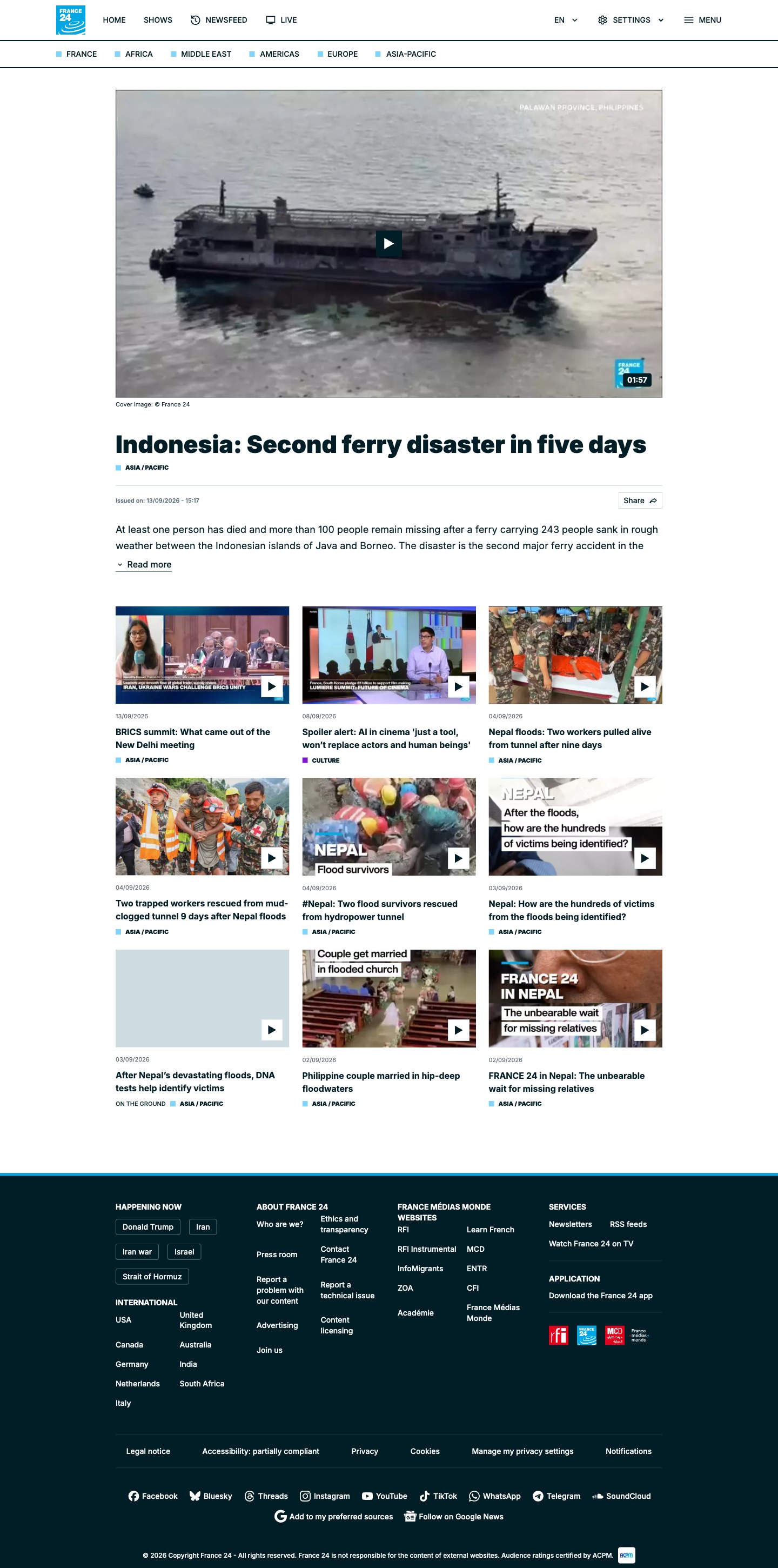
| tl;dr | The visible report says a ferry carrying 243 people sank in rough weather between Java and Borneo, leaving at least one person dead and more than 100 missing. The headline describes it as Indonesia’s second ferry disaster in five days. Only a short introduction is readable; the accompanying video thumbnail is labeled Palawan Province, Philippines, which does not match the reported location. | ||||
| deeper: | The visible wording is straightforward disaster reporting, with no clear political slant or assignment of blame. However, the casualty figures have no visible source, the ferry is not named, and the earlier accident is not explained. The Philippines-labeled thumbnail conflicts with the Indonesian story and could mislead readers. This assessment covers only the visible excerpt, not the unplayed video or hidden article text. | ||||
media: | |||||
| gen: 2026/07/18:15:02 in 1 min 10.3 sec (old)bias: 2 (Center) |
| type: newsquality: 78 |
| pts: 0 |

 | author: | Unknown | institution: | ABC News (Australia) | ¿porque no los dos? |
| tl;dr | An ABC News (Australia) report describes a massive urban fire in southeastern Norway that authorities say is the country’s largest in modern times. The blaze destroyed more than 100 homes, forced large-scale evacuations, and strained firefighting resources. The Norwegian Directorate for Civil Protection labeled it Norway’s biggest modern-era fire, while local officials said conditions were difficult but expected containment within hours. No deaths were reported at the time of publication. Drammen and surrounding communities near Oslo were most affected. | ||||
| deeper: | The piece sticks to verifiable facts: destruction totals, statements from Norwegian civil protection authorities, and local officials. Language is largely measured and avoids sensationalism, with on-the-ground images supporting the narrative. Sourcing is primarily official agencies and local authorities, which reduces speculation but limits diversity of perspectives (e.g., residents, independent experts). Context on contributing conditions (weather, drought, building materials) is brief, and there’s little comparative or historical data beyond the ‘largest in modern times’ claim. Overall clear, factual, and timely, but not deeply analytical. | ||||
media: | |||||
You made it to the bottom. Now dance!


owned and operated by: RPN Omnigalactic Insitutution as of: 2026/10/15: 22:33 in 0 ms
Enter Code
Login with Account