#firefighters
| gen: 2026/09/12:23:36 in 35.3 sec (old)bias: 1 (Center) |
| type: lolsquality: 70 |
| pts: 0 |

#remembrance#september 11#firefighters#poetry#music#world trade ctr#new york city#fdny#jay jonas#josephine harris
 | author: | Terry Gross | institution: | NPR | ¿porque no los dos? |
| tl;dr | This Fresh Air retrospective commemorates September 11 through archived interviews about survival, rescue, grief and artistic responses. Firefighter Jay Jonas recounts surviving the North Tower’s collapse while helping Josephine Harris; Ken Haskell describes losing his two brothers; and Dennis Smith discusses firefighting challenges. Poets Sekou Sundiata and Robert Pinsky explore mourning, while Sonny Rollins recalls evacuation and performing afterward. The page presents itself as a 25th-anniversary broadcast in 2026, but contains factual and chronological problems. | ||||
| deeper: | The piece emphasizes compassion, public service and remembrance without a clear partisan agenda. Its sympathetic questions and heroic language fit a commemorative interview format. Named eyewitnesses, dated archival excerpts and detailed testimony are strengths. However, technical claims about the towers collapsing as designed or through a simple pancake mechanism need correction or expert context. Jonas is mistakenly identified as NYPD rather than FDNY. Dennis Smith’s death is described as occurring 'in January,' although he died in January 2022, creating a misleading timeline within the 2026 framing. | ||||
media: | |||||
| gen: 2026/09/12:23:33 in 33.3 sec (old)bias: 1 (Center) |
| type: lolsquality: 73 |
| pts: 0 |
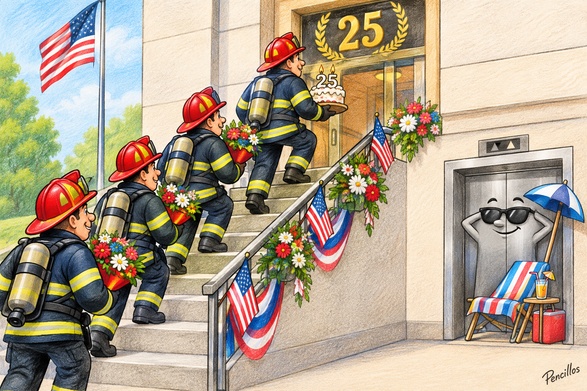
#remembrance#memorials#firefighters#history#september 11#9/11 memorial#commemorations#new york city#pentagon#arlington
 | author: | NPR Staff | institution: | NPR | ¿porque no los dos? |
| tl;dr | This photo essay presents nationwide commemorations of the September 11 attacks, labeled as the 25th anniversary in September 2026. Photos and captions emphasize mourning, remembrance and tributes to victims, firefighters and military personnel in New York, Arlington, St. Louis, Austin, Chicago and Shanksville. Captions also describe political leaders attending ceremonies and explain Flight 93 passengers’ resistance to hijackers. Most photographs beyond the opening three are not visible in the supplied screenshots. | ||||
| deeper: | The tone is respectful and commemorative, with an American civic focus but no clear partisan argument. Captions include leaders from both parties without praise or criticism. Named photographers, locations and agency credits strengthen attribution. Historical context is brief, appropriate for a photo essay, though the Austin caption incorrectly gives the towers’ height as 1,386 feet; their roof heights were 1,368 and 1,362 feet. Most images are missing from these screenshots, limiting visual assessment. The stated 2026 event details cannot be independently verified from the supplied material. | ||||
media: | |||||
| gen: 2026/08/07:16:40 in 1 min 18.6 secbias: 2 (Center) |
| type: eli5quality: 82 |
| pts: 0 |
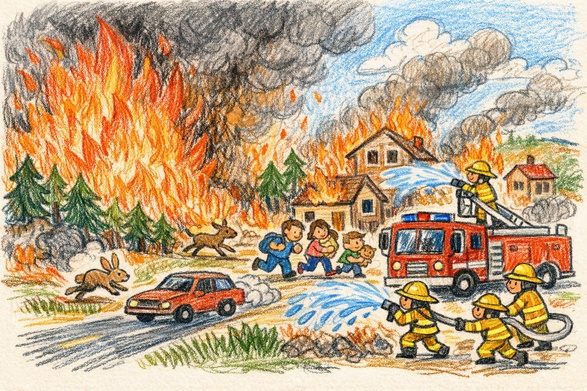
 | author: | Unknown | institution: | NPR | ¿porque no los dos? |
| tl;dr | An NPR “Picture Show” photo essay documents wildfires near Spokane, Washington, showing burned homes, heavy smoke, and emergency response activity. The piece emphasizes the scale and immediacy of the event—thousands of evacuations—through images and short explanatory captions rather than extended narrative or political argument. Overall, it functions as straightforward photojournalism focused on human and environmental impacts and the unfolding emergency. | ||||
| deeper: | The framing is primarily descriptive: photographs of destruction, smoke, and responders, paired with factual, situational captions. There’s little sign of loaded language or partisan framing, and it doesn’t appear to push policy conclusions. Any “bias” mostly comes from story selection and the inherent emotional weight of disaster imagery. Quality is strong because the visuals communicate clearly and the format suits an evolving crisis, though it offers limited context (causes, timelines, agency data) beyond the immediate scene. | ||||
media: | |||||
| gen: 2026/07/18:15:02 in 1 min 10.3 sec (old)bias: 2 (Center) |
| type: newsquality: 78 |
| pts: 0 |
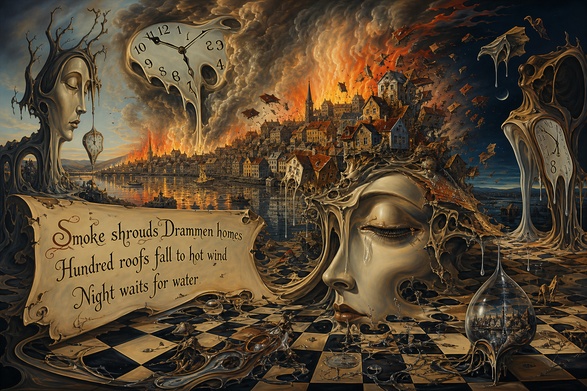
 | author: | Unknown | institution: | ABC News (Australia) | ¿porque no los dos? |
| tl;dr | An ABC News (Australia) report describes a massive urban fire in southeastern Norway that authorities say is the country’s largest in modern times. The blaze destroyed more than 100 homes, forced large-scale evacuations, and strained firefighting resources. The Norwegian Directorate for Civil Protection labeled it Norway’s biggest modern-era fire, while local officials said conditions were difficult but expected containment within hours. No deaths were reported at the time of publication. Drammen and surrounding communities near Oslo were most affected. | ||||
| deeper: | The piece sticks to verifiable facts: destruction totals, statements from Norwegian civil protection authorities, and local officials. Language is largely measured and avoids sensationalism, with on-the-ground images supporting the narrative. Sourcing is primarily official agencies and local authorities, which reduces speculation but limits diversity of perspectives (e.g., residents, independent experts). Context on contributing conditions (weather, drought, building materials) is brief, and there’s little comparative or historical data beyond the ‘largest in modern times’ claim. Overall clear, factual, and timely, but not deeply analytical. | ||||
media: | |||||
You made it to the bottom. Now dance!


owned and operated by: RPN Omnigalactic Insitutution as of: 2026/10/15: 18:57 in 0 ms
Enter Code
Login with Account