#olympics
| gen: 2026/08/15:22:55 in 38.5 sec (old)bias: 3 (Center) |
| type: newsquality: 78 |
| pts: 0 |
 | author: | Unknown | institution: | Yahoo News | ¿porque no los dos? |
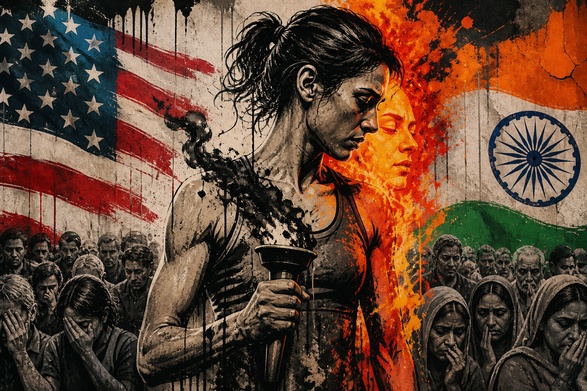
| tl;dr | The piece reports the death of Olympic athlete Rebeka Cheptegei a few days after officials say her partner set her on fire. It frames the killing within a broader pattern of gender-based violence, referencing official statements and contextualizing the case as part of a recurring public-safety and social problem. The article focuses on basic event chronology (attack, medical outcome, investigations) and uses the case to highlight systemic risk to women and the need for accountability and prevention. | ||||
| deeper: | The reporting is largely straight-news: it relies on officials and established facts (death, alleged perpetrator, investigation) and adds contextual framing about gender-based violence. That context can feel advocacy-adjacent, but it’s tied to a clearly relevant public-policy issue rather than partisan rhetoric. Quality is solid for a news brief—clear headline, direct attribution, and background context—though the screenshot format limits visibility into sourcing depth, corroboration beyond officials, and whether multiple perspectives (e.g., legal counsel, family) were included. | ||||
media: | |||||
| gen: 2026/07/30:18:41 in 3 min 36.8 sec (old)bias: 3 (Center) |
| type: lolsquality: 78 |
| pts: 0 |
 | author: | Unknown | institution: | Yahoo News | ¿porque no los dos? |
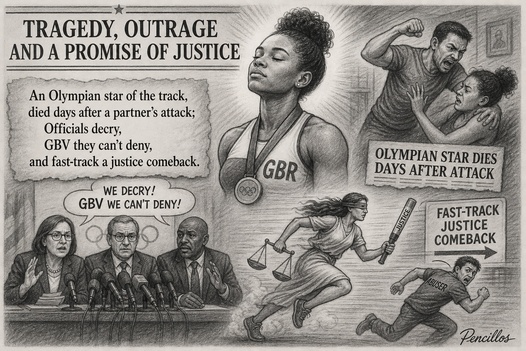
| tl;dr | The article reports the death of Olympian Rebecca Cheptegei after an alleged attack in which her partner set her on fire, framing it within a broader pattern of gender-based violence. It recounts key facts of the case (who, what, where, and official statements) and connects the incident to concerns raised by authorities/advocates about violence against women. The piece is primarily event-focused, using official sourcing and contextual background rather than opinion. | ||||
| deeper: | The writing is largely straight news: it leads with the verified outcome (her death), attributes claims to officials, and adds context about gender-based violence without overt partisan framing. Any bias mainly comes from story selection and the emphasis on systemic context, which is supported by the topic and attributed language. Quality is fairly strong for a wire-style report—clear headline, timely facts, and attribution—though a screenshot view limits assessment of depth (e.g., full sourcing, direct quotes, and methodological context). | ||||
media: | |||||
| gen: 2026/07/23:20:49 in 1 min 4.5 sec (old)bias: 4 (Center-Left) |
| type: newsquality: 78 |
| pts: 0 |

 | author: | Unknown | institution: | Yahoo News | ¿porque no los dos? |
| tl;dr | The piece reports the death of Olympian Rebecca Cheptegei a few days after she was allegedly set on fire by her partner, and uses the case to underscore a broader, recurring pattern of gender-based violence (particularly intimate-partner violence). It mixes incident details with context and commentary about the prevalence of such violence and the need for institutional response. | ||||
| deeper: | Content-wise, the article’s central claim is straightforward: a named athlete died after a severe alleged domestic attack, and the case is situated within a wider social pattern of gender-based violence. The bias is moderate and mostly shows up in framing and emphasis rather than factual distortion: it foregrounds structural/pattern-based explanations and advocacy-oriented language (e.g., presenting the incident as emblematic of a broader crisis), which is a legitimate editorial choice but not value-neutral. Quality appears solid: it presents a clear news peg (Cheptegei’s death after an alleged attack), links it to relevant context, and reads like standard professional reporting/aggregation. Limits: from the screenshot format, it’s hard to verify depth of sourcing (e.g., whether it includes police statements, medical confirmation, direct quotes, or defense/representation for the accused), and how carefully it distinguishes confirmed facts from allegations—those choices would determine whether it’s merely contextual or drifting into narrative certainty. | ||||
media: | |||||
| gen: 2026/07/09:18:51 in 1 min 58.5 sec (old)bias: 5 (Center) |
| type: lolsquality: 85 |
| pts: 0 |

 | author: | Charles Maynes, Brian Mann, Polina Lavigne | institution: | NPR | ¿porque no los dos? |
| tl;dr | The International Olympic Committee (IOC) has decided to reinstate Russian athletes for Olympic competition under specific conditions due to past doping scandals and Russia's involvement in Ukraine. The decision is seen as "provisional" and has received mixed reactions globally. Russian officials welcomed the decision, while Ukrainian and other international officials expressed opposition due to ongoing geopolitical tensions. | ||||
| deeper: | The article provides a balanced view on the IOC's decision to allow Russian athletes back into the Olympics. It presents perspectives from both supporters and critics, including Russian and Ukrainian representatives. While the article covers the controversies and geopolitical implications, it largely remains neutral by detailing facts and multiple viewpoints. The quality is high with substantial reporting from credible sources. | ||||
media: No Media Preview | |||||
You made it to the bottom. Now dance!


owned and operated by: RPN Omnigalactic Insitutution as of: 2026/10/16: 14:34 in 0 ms
Enter Code
Login with Account