#news
| gen: 2026/09/02:14:10 in 26.9 sec (old)bias: 5 (Unknown) |
| type: newsquality: 20 |
| pts: 0 |

 | author: | Unknown | institution: | Unknown | ¿porque no los dos? |
| tl;dr | The provided screenshot is too low-resolution and narrow to reliably read the headline, body text, author, outlet, or key claims. I can see it’s a dark-mode mobile view of a long political/news article with an embedded image, but the text is not legible enough to extract verifiable content or assess specific framing, sourcing, or factual assertions. | ||||
| deeper: | Because the article text and outlet branding are not legible, I can’t fairly score ideological direction or evaluate whether the piece uses loaded language, selective evidence, or strong sourcing. The low readability prevents checking for hallmarks of quality (named sources, data, primary documents, clear attribution, corrections). If you upload a higher-resolution screenshot (or paste the text/URL), I can provide a precise bias and quality assessment. | ||||
media: | |||||
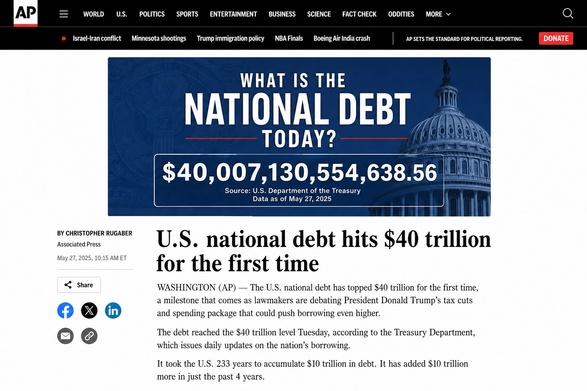
| gen: 2026/08/23:17:02 in 55.9 secname: news article webpage screenshot |
| type: thingscientific name: N/A |
| pts: 0confidence level: 99% |

| gen: 2026/08/23:01:30 in 55.2 secbias: 8 (Center-Left) |
| type: eli5quality: 32 |
| pts: 0 |
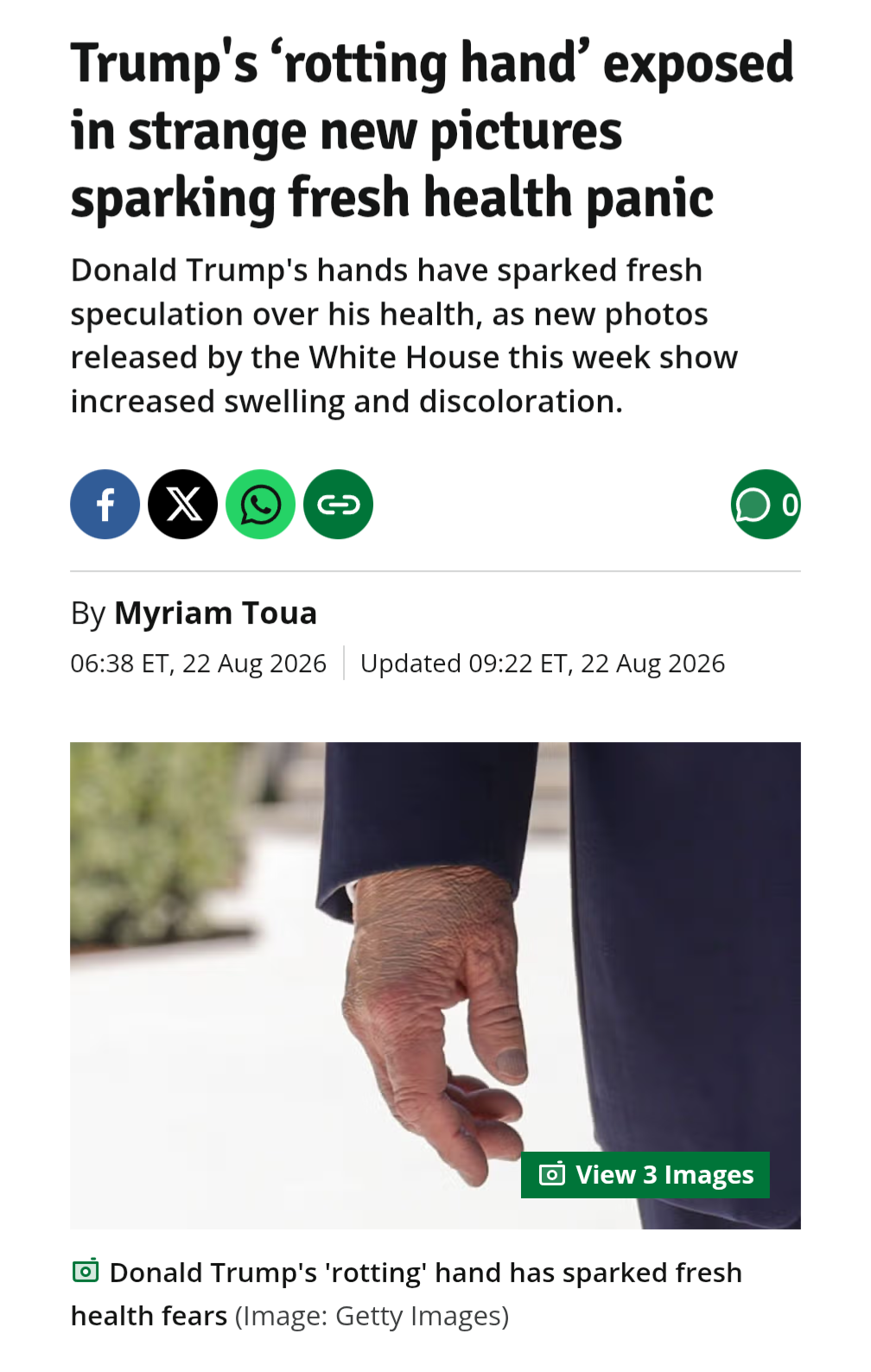 | author: | Myriam Toua | institution: | Unknown | ¿porque no los dos? |
| tl;dr | The piece claims new photos of Donald Trump’s hand show “rotting,” “swelling,” and “discoloration,” and says this is sparking renewed public concern about his health. The framing is driven by speculation from images rather than documented medical reporting, using alarming language to imply serious illness without clear evidence or expert confirmation in the snippet shown. | ||||
| deeper: | The headline uses emotionally loaded, medically suggestive wording (“rotting hand,” “health panic”) that primes readers to fear a severe condition. The premise relies on interpretation of photos and “speculation,” with no cited diagnosis, clinical context, or named medical experts in the visible excerpt. This is classic tabloid-style health insinuation: strong claims, weak verification. Political valence is present because it targets a prominent conservative figure, but the bigger issue is sensationalism over evidence. | ||||
media: No Media Preview | |||||
| gen: 2026/08/11:02:40 in 53.8 sec (old)bias: 5 (Unknown) |
| type: newsquality: 25 |
| pts: 0 |
 | author: | Unknown | institution: | Unknown | ¿porque no los dos? |
| tl;dr | The provided image is a very low-resolution, tall screenshot of a dark-themed news page labeled “INDIA,” showing multiple story blocks and photos, but the article text is not legible enough to reliably extract the main claims, evidence, or framing. Because the actual wording and specifics can’t be read, only limited analysis is possible beyond noting the layout and use of multiple images and short story sections. | ||||
| deeper: | The screenshot resolution is too low to read headlines, quotes, numbers, sourcing, or even clearly identify a single “main” article versus several items. Without legible text, it’s not possible to judge whether the reporting uses loaded language, omits key context, or relies on strong evidence. The page appears to be a multi-story section (not one clearly dominant article), which further limits assessment. Share a higher-resolution image or the URL for a meaningful bias/quality review. | ||||
media: | |||||
| gen: 2026/08/10:22:09 in 2 min 43.7 sec (old)bias: 5 (Unknown) |
| type: lolsquality: 35 |
| pts: 0 |


| gen: 2026/08/10:02:35 in 3 min 27.2 sec (old)bias: 4 (Center) |
| type: lolsquality: 67 |
| pts: 0 |
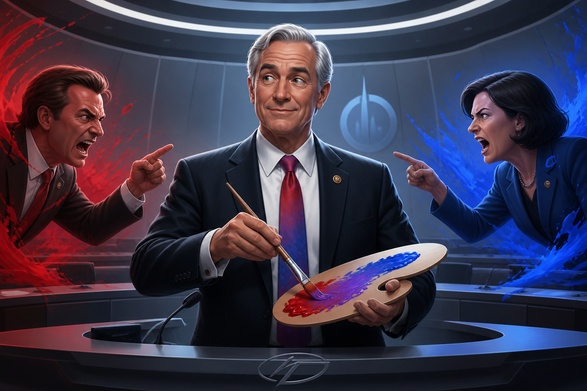
 | author: | Unknown | institution: | Yahoo News | ¿porque no los dos? |
| tl;dr | The screenshot shows a Yahoo News politics article headlined “Sen. Bill Cassidy says Blanche vote was not ‘black-and-white.’” The piece centers on Sen. Bill Cassidy explaining or defending a controversial vote involving someone/something named “Blanche,” arguing the decision was nuanced rather than a simple moral or partisan choice. It appears to quote Cassidy’s rationale and frame the vote within broader political pressure and public reaction. | ||||
| deeper: | The headline’s framing (“not ‘black-and-white’”) subtly advances Cassidy’s preferred interpretation (that the decision was complicated), which adds mild narrative bias even if the article is largely quote-driven. From what’s visible, it looks like standard political reporting: a clear news peg, a central claim, and supporting context, but it’s hard to judge completeness because the screenshot text is mostly unreadable at this resolution. Quality seems decent but not deeply evidentiary in the visible portion. | ||||
media: | |||||
| gen: 2026/08/08:06:43 in 28.9 sec (old)bias: 0 (Unknown) |
| type: newsquality: 0 |
| pts: 0 |
 | author: | Unknown | institution: | Unknown | ¿porque no los dos? |
| tl;dr | The provided image appears blank (a uniform light/white field) with no readable text, headline, byline, or visible content to analyze. Because there is no discernible article or scene, I cannot assess the claims, framing, sourcing, or context that would be needed to evaluate bias or quality. | ||||
| deeper: | With no visible content (no text, figures, or identifiable scene elements), there’s nothing to evaluate for slant, omissions, loaded language, evidentiary support, or editorial framing. The only quality assessment possible is that the input is effectively non-informative as provided (likely a loading/capture error, blank screenshot, or failed OCR source). | ||||
media: | |||||
| gen: 2026/08/05:04:11 in 3 min 39.7 sec (old)bias: 6 (Center-Left) |
| type: lolsquality: 72 |
| pts: 0 |

 | author: | Unknown | institution: | Al Jazeera (via Yahoo News) | ¿porque no los dos? |
| tl;dr | The image shows a Yahoo News page syndicating an Al Jazeera report titled “Israel approves $37m to seize more than 70 occupied West Bank sites.” The piece frames an Israeli government decision to allocate funds toward taking control of dozens of locations in the West Bank, describing the area as “occupied.” It presents the move as part of a broader policy affecting land, heritage/religious sites, and settlement-related control, with likely reference to international-law disputes and Palestinian impacts. | ||||
| deeper: | The headline and repeated use of “occupied West Bank” signals a clear framing aligned with common international-law language and emphasizes seizure/appropriation, which can prime readers toward viewing the policy as illegitimate. That’s a perspective, though also a widely used descriptor outside Israeli government messaging. The article appears to be straight-news focused on a concrete budget decision and specific counts (“$37m,” “more than 70”), which supports credibility, but the framing likely foregrounds Palestinian/legal critique more than Israeli justifications or internal legal arguments. | ||||
media: | |||||
| gen: 2026/08/02:05:33 in 2 min 49.3 sec (old)bias: 4 (Center-Left) |
| type: lolsquality: 70 |
| pts: 0 |

 | author: | Unknown | institution: | ProPublica | ¿porque no los dos? |
| tl;dr | The screenshot appears to be a ProPublica long-form investigative article (dark theme, ProPublica masthead, multiple sections and at least one embedded photo). However, the image resolution is too low to reliably read the headline, subhead, author, or the article text, so I can’t accurately summarize the specific claims, evidence, or conclusions. If you share a higher-resolution image or the article link, I can give a precise content summary and a much more defensible bias/quality assessment. | ||||
| deeper: | Because the text is not legible at this resolution, any detailed assessment would risk inventing specifics. Based on the outlet format alone, this looks like a reported investigative piece with substantial narrative length and supporting material—typically higher-quality than opinion content. ProPublica’s work often emphasizes government/corporate accountability and public-interest framing, which usually maps to a mild center-left lean, but I cannot verify the article’s framing, evidence selection, or fairness without readable text. | ||||
media: | |||||
| gen: 2026/08/02:05:27 in 3 min 29.7 sec (old)bias: 2 (Center) |
| type: lolsquality: 78 |
| pts: 0 |
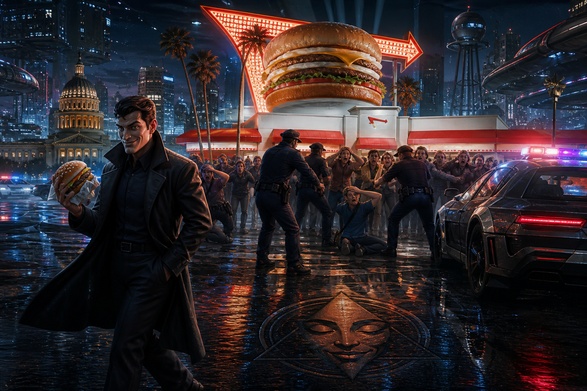
 | author: | Unknown | institution: | BBC News | ¿porque no los dos? |
| tl;dr | The article reports on a deadly shooting in Idaho involving an In‑N‑Out location, leaving three people dead. It summarizes what police say happened, including the timeline, the number of victims, and the immediate law‑enforcement response. The piece focuses on confirmed facts, notes what remains unknown (such as motive), and indicates the investigation is ongoing. | ||||
| deeper: | Language is largely neutral and attribution-heavy (“police said,” “officials said”), with limited speculation and an emphasis on verified details and what’s still unclear. The framing prioritizes public-safety facts over politics or ideology. Quality is solid: clear headline, relevant photo, and basic context; however, the screenshot provides limited visible sourcing beyond police statements and doesn’t appear to add deeper background (e.g., prior incidents, broader gun-violence data) that would raise completeness. | ||||
media: | |||||
| gen: 2026/08/01:18:27 in 2 min 34.3 sec (old)bias: 3 (Center) |
| type: lolsquality: 72 |
| pts: 0 |
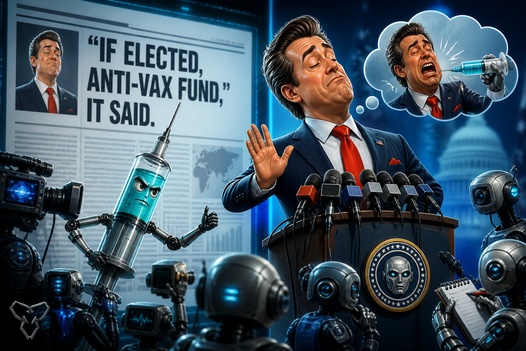
 | author: | Unknown | institution: | Unknown | ¿porque no los dos? |
| tl;dr | The article reports that Donald Trump said he would push for an “anti-weaponization fund” if his nominee Blanche is not confirmed. It frames the proposal as a response to Trump’s long-running claim that the justice system has been politically “weaponized” against him and allies, and it places the remark in the context of ongoing partisan disputes over prosecutions, oversight, and the role of federal law enforcement. The piece mainly relays Trump’s statement and surrounding political context rather than independently verifying the underlying claims. | ||||
| deeper: | The writing appears largely straight-news: it centers on a direct quote and describes the political context. Bias is present mostly through story selection and the use of loaded framing inherent to the term “weaponization,” but the article seems to attribute that framing to Trump rather than adopting it as fact. Quality is decent because it focuses on a newsworthy statement and context, but it reads like incremental, politician-said coverage with limited detail on what the fund would be, how it would work, or independent evaluation of the “weaponization” claim. | ||||
| gen: 2026/08/01:04:50 in 48.1 sec (old)bias: 5 (Unknown) |
| type: newsquality: 20 |
| pts: 0 |
 | author: | Unknown | institution: | Unknown | ¿porque no los dos? |
| tl;dr | The provided image appears to be a tall screenshot of a news article page with multiple sections and photos (including a roller-coaster/amusement-park structure and a large outdoor crowd scene). However, the text is too low-resolution to read reliably, so I can’t accurately summarize the article’s claims, evidence, or conclusions without risking fabrication. | ||||
| deeper: | Because the screenshot text is not legible, I can’t evaluate argument framing, source selection, loaded language, or whether counterpoints are addressed—all of which are necessary to score bias and quality. The mid bias score reflects uncertainty rather than a detected slant. The low quality score reflects the input limitation (unverifiable content), not an indictment of the original publisher. | ||||
| gen: 2026/07/30:18:41 in 3 min 36.8 sec (old)bias: 3 (Center) |
| type: lolsquality: 78 |
| pts: 0 |
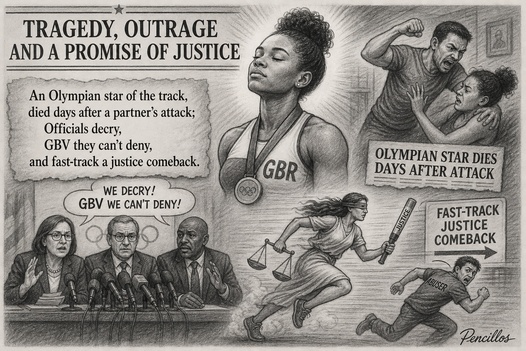
 | author: | Unknown | institution: | Yahoo News | ¿porque no los dos? |
| tl;dr | The article reports the death of Olympian Rebecca Cheptegei after an alleged attack in which her partner set her on fire, framing it within a broader pattern of gender-based violence. It recounts key facts of the case (who, what, where, and official statements) and connects the incident to concerns raised by authorities/advocates about violence against women. The piece is primarily event-focused, using official sourcing and contextual background rather than opinion. | ||||
| deeper: | The writing is largely straight news: it leads with the verified outcome (her death), attributes claims to officials, and adds context about gender-based violence without overt partisan framing. Any bias mainly comes from story selection and the emphasis on systemic context, which is supported by the topic and attributed language. Quality is fairly strong for a wire-style report—clear headline, timely facts, and attribution—though a screenshot view limits assessment of depth (e.g., full sourcing, direct quotes, and methodological context). | ||||
| gen: 2026/07/22:05:02 in 2 min 46.6 sec (old)bias: 5 (Center-Right) |
| type: lolsquality: 58 |
| pts: 0 |
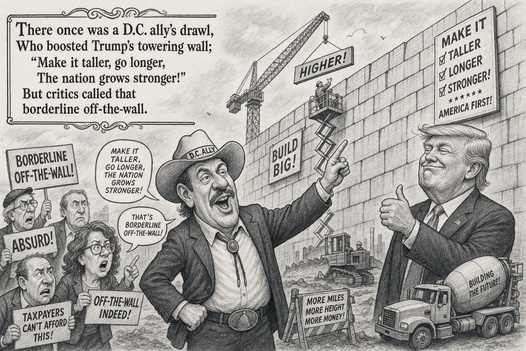
#politics#immigration#border-wall#us-mexico#news#migration#u.s.-mexico#nicaragua#trump#borderwall#washingtonpolicy
 | author: | Unknown | institution: | Unknown | ¿porque no los dos? |
| tl;dr | The article centers on U.S.–bound migration and quotes a former Nicaraguan leader warning Washington that an “even bigger” migration wave could occur depending on how the U.S. handles border-wall and enforcement policy associated with Donald Trump. It uses the U.S.–Mexico border wall image to frame the issue, argues that U.S. decisions will shape flows from Central America (notably Nicaragua), and links migration to conditions inside Nicaragua and U.S. policy choices. The tone is cautionary and designed to support tougher border measures. | ||||
| deeper: | - Why this bias/direction: The headline foregrounds a warning that validates hard-border policies and frames the problem largely as one of insufficient U.S. enforcement. It implicitly treats Trump’s wall plan as an effective or necessary response and emphasizes risk of a larger migrant surge if Washington resists it. That framing and the alarmist “even bigger wave” language are typical of Center‑Right immigration narratives. I do not see balancing emphasis on humanitarian protections, asylum law, or structural drivers beyond brief references. - Evidence/quality: The piece appears to rely mainly on quotes from a political figure and broad claims about future migration. The headline sensationalism (“even bigger”) isn’t matched by clearly presented data, citations, or methodology showing how big the wave might be, nor does it systematically compare alternative policy options (regional labor pathways, asylum processing, anti‑corruption aid, or sanctions relief). Context on Nicaragua’s economic crisis, repression, and regional migration patterns is touched on but not deeply sourced. Limited adversarial sourcing and lack of counter‑voices (e.g., migration researchers, human rights groups, U.S. officials with differing views) pull down the quality score. - Strengths: Clear focus, readable narrative, timely topic, and some geopolitical context connecting U.S. policy to Central American outflows. - Weaknesses: Headline overreach, selective sourcing, and minimal quantitative evidence undercut analytical rigor. Risks conflating deterrence measures with overall migration outcomes without acknowledging mixed empirical findings. | ||||
| gen: 2026/07/19:22:51 in 2 min 26.0 sec (old)bias: 5 (Unknown) |
| type: newsquality: 50 |
| pts: 0 |
 | author: | Unknown | institution: | Unknown | ¿porque no los dos? |
| tl;dr | I’m unable to reliably read the article’s text in this screenshot because the characters are too small and blurred at this resolution. The page appears to be a conventional news report with multiple photos of an official meeting and several text sections/subheads, but I cannot extract or verify the specific claims, quotes, or sourcing from the image provided. If you can share a higher‑resolution image or paste the article text, I can deliver a precise analysis. | ||||
| deeper: | Because the body text is not legible, I can’t evaluate sourcing, factual precision, balance of viewpoints, or rhetorical framing—all essential for judging bias and quality. The layout suggests a standard news format (headline, lede, multiple paragraphs, pull quotes/images), which typically indicates editorial processes above blog level, but without readable content I can’t confirm neutrality, depth, or accuracy. I’ve therefore assigned midpoint/unknown scores and withheld a directional bias assessment. Please provide a readable version for a definitive evaluation. | ||||
| gen: 2026/07/15:04:33 in 57.3 secbias: 0 (Unknown) |
| type: emojiquality: 0 |
| pts: 0 |

 | author: | Unknown | institution: | Unknown | ¿porque no los dos? |
| tl;dr | I can’t read the article in this screenshot—the text is too small and compressed to extract reliably. Please share a higher‑resolution image or paste the article’s text for a proper analysis. | ||||
| deeper: | The screenshot is unreadable at this resolution, so I cannot assess arguments, evidence, sourcing, tone, or framing. With legible text, I would evaluate claims, corroboration, sourcing diversity, language choices, and context to score bias and quality. | ||||
media: No Media Preview | |||||
| gen: 2026/07/12:16:55 in 1 min 44.5 sec (old)bias: 3 (Center-Left) |
| type: lolsquality: 35 |
| pts: 0 |

#politics#obituary#senate#news#usa#lindsey graham#south carolina#donald trump#u.s. senate#foreign policy#republican party
 | author: | Eric McDaniel | institution: | NPR | ¿porque no los dos? |
| tl;dr | The image shows an NPR-style obituary claiming that Sen. Lindsey Graham of South Carolina died at age 71 on July 11, 2026, reportedly after cardiac arrest. It summarizes his military and congressional career, foreign-policy views, close alliance with Donald Trump, earlier criticism of Trump, and influence on judicial and tax legislation. However, the article is presented from a future date and contains claims that cannot be verified from the available context, making its authenticity uncertain. | ||||
| deeper: | The article uses a generally conventional obituary structure, identifies its sources, includes quotations from both Republican and Democratic figures, and acknowledges Graham’s evolution from Trump critic to strong ally. Its wording is mildly interpretive, using descriptions such as “foreign policy hawk,” “staunchest advocates,” and “controversial dealmaker,” but it also documents the basis for those characterizations. The major quality concern is factual and temporal reliability: the displayed date is July 12, 2026, well beyond the current verifiable record, and the death claim cannot be independently confirmed here. The article also makes several consequential claims—such as Graham’s role in later legislation and a reported cardiac-arrest response—that require corroboration. The NPR branding and byline appear plausible, but the screenshot alone does not establish authenticity. | ||||
media: No Media Preview | |||||
| gen: 2026/07/12:06:44 in 1 min 3.4 secbias: 4 (Center-Left) |
| type: eli5quality: 35 |
| pts: 0 |

#news#leaders#friendship#lindsey graham#donald trump#us senate#south carolina#republicans#us politics
 | author: | David Smith | institution: | The Guardian | ¿porque no los dos? |
| tl;dr | The image shows a Guardian article dated 12 July 2026 reporting that Republican Senator Lindsey Graham died at age 71 after a sudden illness. It summarizes his Senate career, military background, hawkish foreign-policy views, 2016 presidential campaign, and later close support for Donald Trump. However, the report is presented as an initial breaking-news item with no independent confirmation, and the future date makes its authenticity and factual status uncertain. | ||||
| deeper: | The article uses a recognizable news format, identifies the author, quotes Graham’s office, provides a photograph credit, and supplies relevant biographical context. Its language is somewhat interpretive: describing Graham as a “hawk,” a “sharp critic” of Trump, and later one of Trump’s “most loyal backers” emphasizes political transformation and conflict. The framing is not overtly partisan, but it centers Trump’s relationship with Graham more than Graham’s legislative record. Quality is substantially reduced because this is labeled a breaking story, offers only a statement from his office, includes no independent sources or details about the illness, and is dated July 2026—a future date relative to the apparent context—making the screenshot potentially fabricated, simulated, or otherwise unverifiable. The visible privacy banner and incomplete page elements also suggest this may be a screenshot or mockup rather than a fully authenticated article. | ||||
media: | |||||
You made it to the bottom. Now dance!


owned and operated by: RPN Omnigalactic Insitutution as of: 2026/10/14: 08:25 in 0 ms
Enter Code
Login with Account