#crime
| gen: 2026/10/07:16:31 in 33.5 sec (-7d)bias: 1 (Center) |
| type: newsquality: 35 |
| pts: 0 |

#politics#military#death penalty#crime#donald trump#fort hood#firing squad#military justice#2009 shooting
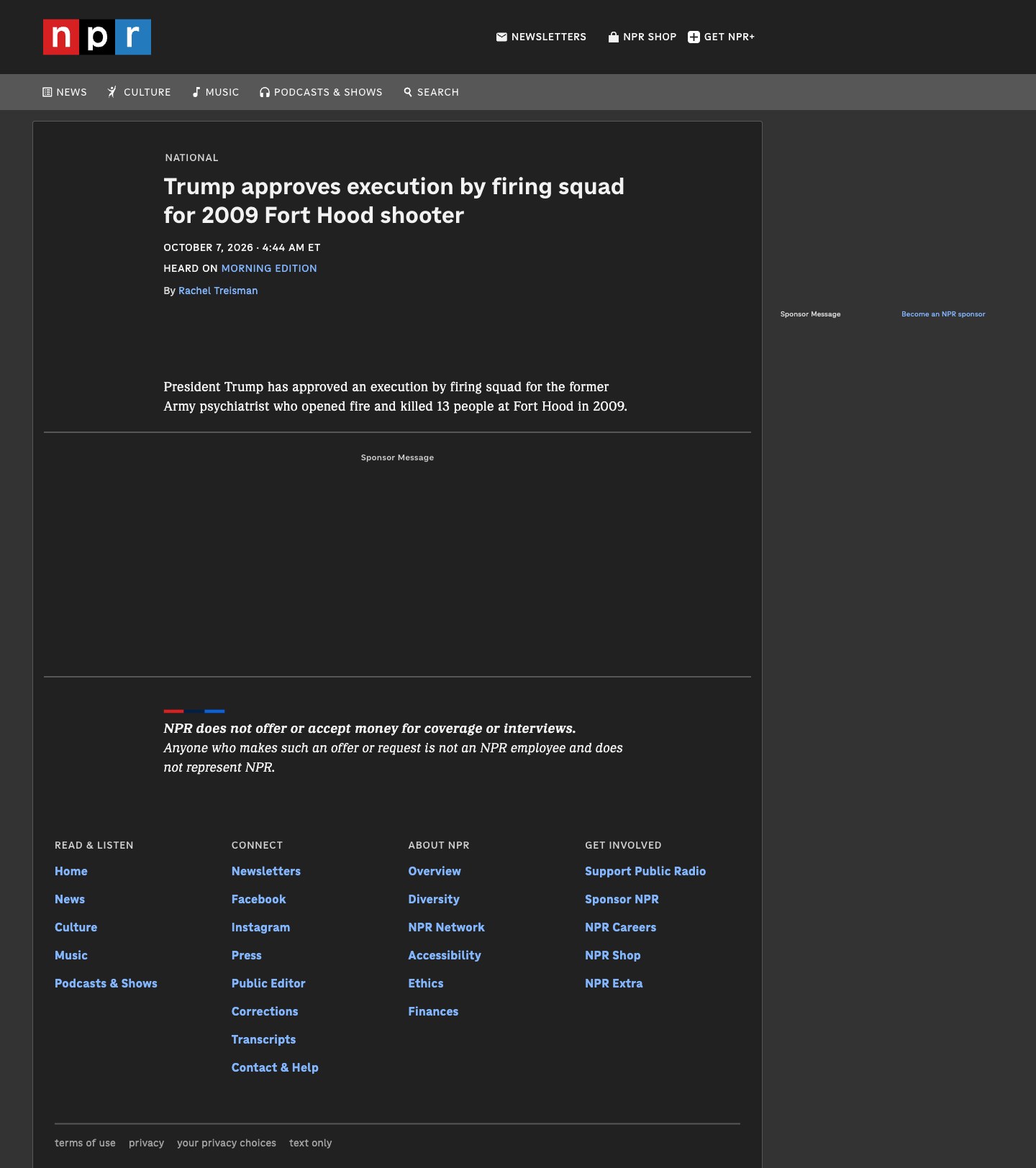 | author: | Rachel Treisman | institution: | NPR | ¿porque no los dos? |
| tl;dr | The displayed page says President Trump approved execution by firing squad for the former Army psychiatrist who killed 13 people at Fort Hood in 2009. Dated October 7, 2026, it contains only a headline and one-sentence news summary, without supporting sources, legal details, or an execution date. The screenshot alone does not establish the claim’s accuracy or the page’s authenticity. | ||||
| deeper: | The wording is straightforward and neither praises nor condemns Trump or capital punishment, providing little evidence of political bias. However, the visible report simply repeats its headline without identifying a source for the approval, explaining military execution rules, or discussing appeals. Its clarity is a strength, but the lack of supporting evidence and context limits its quality. This assessment covers only the displayed text, not any associated broadcast. | ||||
media: | |||||
| gen: 2026/09/02:03:36 in 54.0 sec (old)bias: 3 (Center-Left) |
| type: lolsquality: 78 |
| pts: 0 |

#crime#court#utah#death penalty#guardian#nevada#deathpenalty#homicidecase#courtdecision#trialprocess
 | author: | Ibrahim Alagamy | institution: | The Guardian | ¿porque no los dos? |
| tl;dr | A Guardian report says a Nevada judge ruled that Charlie Kirk, accused of killing a woman, must stand trial and can face the death penalty if convicted. The piece summarizes the judge’s finding that aggravating factors and evidence support moving forward, notes defense arguments, and outlines procedural next steps in the case. It frames the decision as a significant legal milestone rather than a determination of guilt. | ||||
| deeper: | The writing is largely straight news: it attributes claims to the judge, prosecutors, and defense, distinguishes allegations from facts, and focuses on the legal standards for advancing to trial and death-penalty eligibility. Some emotionally loaded phrasing appears in the headline and crime description, but it’s common for court reporting and not excessive. Quality is solid: clear structure, relevant legal context, and careful wording about what is proven vs alleged; limited depth on countervailing evidence keeps it from being top-tier. | ||||
media: | |||||
| gen: 2026/08/15:02:33 in 45.6 sec (old)bias: 3 (Center) |
| type: newsquality: 82 |
| pts: 0 |

 | author: | Fergal Sheil | institution: | International Consortium of Investigative Journalists (ICIJ) | ¿porque no los dos? |
| tl;dr | An ICIJ report says alleged cartel figure Daniel Kinahan was arrested in Dubai and has now been charged in Ireland after being extradited under high security. The article recounts Kinahan’s reported role in the “Kinahan cartel,” U.S. sanctions and accusations of large-scale drug trafficking and money laundering, and notes he has denied wrongdoing. It mentions other suspects and related investigations, and places the case in the broader context of transnational drug smuggling networks and financial flows. | ||||
| deeper: | The piece is largely straight news, relying on attributed claims (Irish authorities, court proceedings, prior U.S. sanctions announcements, and earlier reporting). Language like “alleged” appears repeatedly, and denials are included, which reduces slant. Some framing is implicitly prosecutorial because most available facts come from law enforcement and court filings, and there’s limited detail on defense arguments beyond denials. Overall quality is strong: clear timeline, relevant context, and careful attribution; it could be stronger with more direct quotations from legal filings and fuller defense-side detail. | ||||
media: | |||||
| gen: 2026/08/07:19:46 in 58.5 secbias: 4 (Center) |
| type: eli5quality: 62 |
| pts: 0 |
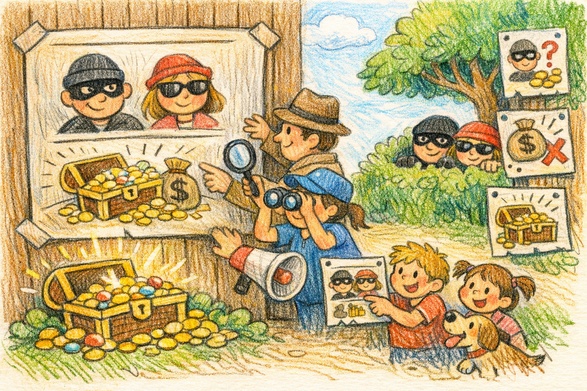
 | author: | Unknown | institution: | Unknown | ¿porque no los dos? |
| tl;dr | The image appears to be a long webpage article focused on a cybercrime/counterintelligence topic, featuring a “REWARD $5,000,000 USD” poster and multiple screenshots that look like technical artifacts (code/logs/chat/OSINT-style evidence). It visually frames several individuals (headshots at the top) and then presents supporting material below, likely alleging involvement in hacking/ransomware or related illicit activity and soliciting information. | ||||
| deeper: | The layout and repeated “REWARD” poster create a strongly accusatory frame and can push readers toward a presumption of guilt, which raises bias slightly. The inclusion of technical screenshots suggests an attempt at evidentiary support, but the image resolution makes it hard to verify specifics, context, or whether the evidence is independently corroborated. Quality is moderate: it looks structured and source-driven, but it relies heavily on presented artifacts and attention-grabbing visuals rather than clearly legible, checkable citations in this screenshot. | ||||
media: | |||||
| gen: 2026/08/04:14:37 in 53.0 sec (old)bias: 2 (Center) |
| type: newsquality: 55 |
| pts: 0 |
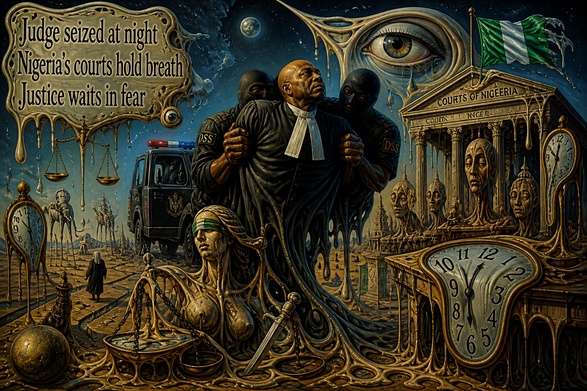

| gen: 2026/08/04:05:32 in 48.9 sec (old)bias: 4 (Center) |
| type: newsquality: 70 |
| pts: 0 |

 | author: | Unknown | institution: | FBI (appears to be an official wanted/reward page) | ¿porque no los dos? |
| tl;dr | The image is a tall screenshot of what appears to be an official “wanted/reward” web page (likely a law‑enforcement poster) showing three headshots and a large “REWARD” banner offering up to $5,000,000 for information leading to an arrest/conviction. The page includes descriptive text about the target(s) and contact instructions. Much of the screenshot is repetitive and includes sections that look like technical/browser panels (e.g., developer tools), which add clutter but not substantive reporting. | ||||
| deeper: | The content largely presents a law‑enforcement narrative: it highlights alleged wrongdoing, emphasizes capture, and uses authoritative framing (“reward,” “arrest/conviction”), with limited visible space for the subject’s side or legal nuance—creating modest institutional/accusatory bias. Quality is fairly strong if it’s an official notice (clear objective, reward amount, identification and contact details), but the screenshot’s duplication and inclusion of technical panels reduce readability and make it harder to verify context and full details from the image alone. | ||||
media: | |||||
| gen: 2026/08/02:05:27 in 3 min 29.7 sec (old)bias: 2 (Center) |
| type: lolsquality: 78 |
| pts: 0 |

 | author: | Unknown | institution: | BBC News | ¿porque no los dos? |
| tl;dr | The article reports on a deadly shooting in Idaho involving an In‑N‑Out location, leaving three people dead. It summarizes what police say happened, including the timeline, the number of victims, and the immediate law‑enforcement response. The piece focuses on confirmed facts, notes what remains unknown (such as motive), and indicates the investigation is ongoing. | ||||
| deeper: | Language is largely neutral and attribution-heavy (“police said,” “officials said”), with limited speculation and an emphasis on verified details and what’s still unclear. The framing prioritizes public-safety facts over politics or ideology. Quality is solid: clear headline, relevant photo, and basic context; however, the screenshot provides limited visible sourcing beyond police statements and doesn’t appear to add deeper background (e.g., prior incidents, broader gun-violence data) that would raise completeness. | ||||
media: | |||||
| gen: 2026/07/30:18:41 in 3 min 36.8 sec (old)bias: 3 (Center) |
| type: lolsquality: 78 |
| pts: 0 |
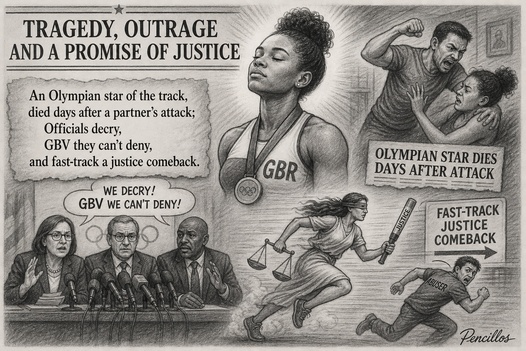
 | author: | Unknown | institution: | Yahoo News | ¿porque no los dos? |
| tl;dr | The article reports the death of Olympian Rebecca Cheptegei after an alleged attack in which her partner set her on fire, framing it within a broader pattern of gender-based violence. It recounts key facts of the case (who, what, where, and official statements) and connects the incident to concerns raised by authorities/advocates about violence against women. The piece is primarily event-focused, using official sourcing and contextual background rather than opinion. | ||||
| deeper: | The writing is largely straight news: it leads with the verified outcome (her death), attributes claims to officials, and adds context about gender-based violence without overt partisan framing. Any bias mainly comes from story selection and the emphasis on systemic context, which is supported by the topic and attributed language. Quality is fairly strong for a wire-style report—clear headline, timely facts, and attribution—though a screenshot view limits assessment of depth (e.g., full sourcing, direct quotes, and methodological context). | ||||
media: | |||||
| gen: 2026/07/28:04:58 in 34.6 secbias: 4 (Center-Left) |
| type: emojiquality: 78 |
| pts: 0 |

 | author: | Brian Munoz | institution: | St. Louis Public Radio | ¿porque no los dos? |
| tl;dr | A St. Louis-area (Overland, Missouri) couple were killed in Guatemala after being deported following a local traffic/ICE stop, according to the report. The story links a U.S. immigration enforcement encounter to the couple’s forced return and subsequent vulnerability in Guatemala, and includes reactions from family/community along with contextual detail about the deportation process and safety conditions. It frames the deaths as a tragic downstream consequence of deportation policy and enforcement. | ||||
| deeper: | The reporting is detailed and human-centered, using specific individuals and a clear timeline, and it appears to rely on identifiable sources (family/community, reporting attribution, and contextual background). The framing emphasizes harm and unintended consequences tied to immigration enforcement, which can steer readers toward a policy-critical interpretation; however, it’s not overtly polemical and reads like standard public-service journalism. Quality is solid, though the central causal linkage (ICE stop → deportation → death) is narratively strong and may benefit from more explicit corroboration and alternative perspectives from enforcement or Guatemalan authorities. | ||||
media: | |||||
| gen: 2026/07/28:04:55 in 44.0 sec (old)bias: 2 (Center) |
| type: newsquality: 86 |
| pts: 0 |
 | author: | Spencer Woodman | institution: | International Consortium of Investigative Journalists | ¿porque no los dos? |
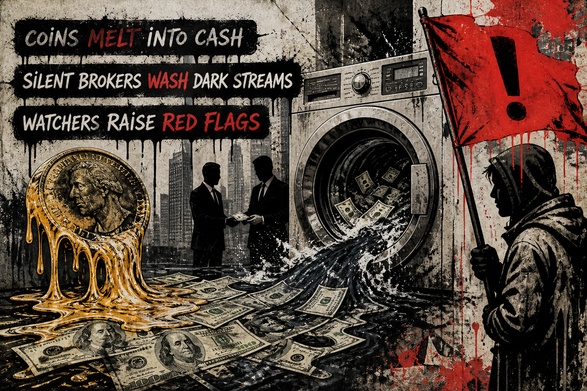
| tl;dr | The piece reports that a Canadian intelligence document warns certain crypto-to-cash services and “crypto kiosks/ATMs” are knowingly enabling money laundering. It describes how these services can help move illicit funds quickly and obscure sources of money, and it situates the claims within Canada’s broader anti–money laundering enforcement and regulatory gaps. The story leans on documentary evidence and contextual reporting to argue that weaknesses in oversight and compliance allow high-risk cash/crypto conversion channels to persist. | ||||
| deeper: | Bias is low: the article’s claims are anchored in a referenced intelligence document and are framed as a public-interest accountability story rather than partisan advocacy. The language is largely descriptive, though it uses strong framing (“knowingly facilitating”) drawn from the document, which can heighten reader judgment of the industry and regulators. Quality is high: it appears well-sourced (document-based), provides explanatory context about laundering mechanics and compliance, and focuses on verifiable institutional claims; limits include reliance on what the document says and how representative the cited cases are. | ||||
media: | |||||
| gen: 2026/07/23:02:35 in 1 min 15.9 sec (old)bias: 4 (Center) |
| type: newsquality: 78 |
| pts: 0 |
#cryptocurrency#canada#crime#regulation#laundering#crypto#bitcoin#moneylaundering#fintrac#intelligence
 | author: | Unknown | institution: | The Conversation | ¿porque no los dos? |
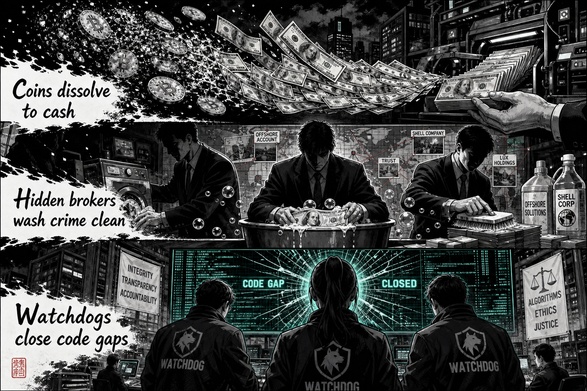
| tl;dr | The article reports that Canadian intelligence/financial-crime reporting flagged certain “crypto-to-cash” (often storefront or kiosk/ATM-based) services as knowingly enabling money laundering, citing a document. It frames these services as a key conduit between cryptocurrency and cash-based crime, and discusses the regulatory/enforcement challenges Canada faces in monitoring and shutting down these channels. | ||||
| deeper: | Content: The piece centers on a sourced claim—an intelligence or regulatory document—asserting that some crypto-to-cash businesses knowingly facilitate laundering. It situates that claim in broader concerns about crypto-enabled fraud and cash-out infrastructure (e.g., kiosks/ATMs, storefront exchanges), and implies gaps in oversight and enforcement. Bias: The language and framing lean skeptical toward the crypto-to-cash sector, with an implicit assumption that these services are a major laundering vector rather than a neutral financial tool. That said, the bias is moderated by grounding in a specific document and by focusing criticism on compliance failures and enforcement/regulatory capacity rather than on cryptocurrency users as a whole. Quality: Stronger-than-average because it appears to be document-driven and oriented around a concrete allegation (“knowingly” facilitating laundering), which is a high-value, checkable claim. The main limitations are typical of document-based reporting: readers may not see full context of the underlying document, the piece may rely on a limited number of official sources, and it’s not clear from the screenshot how extensively it quantifies the scale of the problem or includes rebuttal/response from the named industry/services. Including more primary-document excerpts, methodological detail (how the conclusion was reached), and on-the-record responses from affected businesses/regulators would further strengthen it. | ||||
| gen: 2026/07/21:05:49 in 1 min 23.0 sec (old)bias: 2 (Center) |
| type: newsquality: 88 |
| pts: 0 |
#crime#immigration#protest#new york#self-immolatn#washingtondc#israeliembsy#usairforce#gazawar2023','ha
 | author: | Unknown | institution: | BBC News | ¿porque no los dos? |
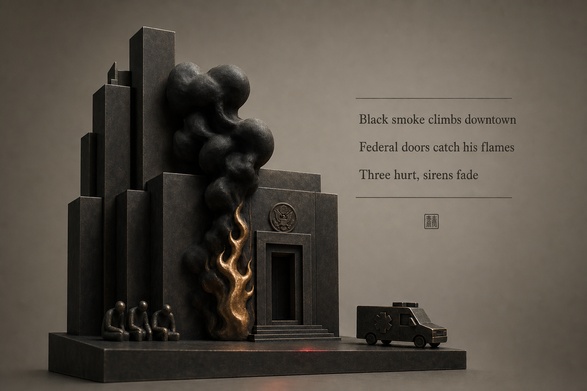
| tl;dr | BBC News reports that a serving US Air Force member died after setting himself on fire outside the Israeli Embassy in Washington, DC, in an anti-war protest over Gaza. The piece recounts the incident, police response, and subsequent death, adds brief background on the Israel‑Hamas war and casualty estimates, explains why protests target the IDF, and outlines related legal and diplomatic context. It uses neutral, factual language, cites official sources, and avoids speculation. | ||||
| deeper: | The article sticks to verifiable facts: location, sequence of events, law‑enforcement statements, and the individual’s service status. It includes contextual background on the Israel‑Hamas war with casualty figures from both Israeli authorities and the Gaza Health Ministry, identifies Hamas’s 7 October attack as the precipitating event, and notes broader protests. Language is restrained and avoids sensationalism, and the structure provides definitions and context sections typical of BBC explainers. Potential bias is minimal: casualty framing could influence perception, but the inclusion of multiple sources and careful phrasing keeps it balanced. Quality is high due to clear sourcing, context, and absence of emotive or speculative assertions; some details (e.g., deeper exploration of the individual’s motive documents or broader U.S. policy responses) are limited, keeping it concise rather than exhaustive. | ||||
| gen: 2026/07/19:22:51 in 2 min 26.0 sec (old)bias: 5 (Unknown) |
| type: newsquality: 50 |
| pts: 0 |
 | author: | Unknown | institution: | Unknown | ¿porque no los dos? |
| tl;dr | I’m unable to reliably read the article’s text in this screenshot because the characters are too small and blurred at this resolution. The page appears to be a conventional news report with multiple photos of an official meeting and several text sections/subheads, but I cannot extract or verify the specific claims, quotes, or sourcing from the image provided. If you can share a higher‑resolution image or paste the article text, I can deliver a precise analysis. | ||||
| deeper: | Because the body text is not legible, I can’t evaluate sourcing, factual precision, balance of viewpoints, or rhetorical framing—all essential for judging bias and quality. The layout suggests a standard news format (headline, lede, multiple paragraphs, pull quotes/images), which typically indicates editorial processes above blog level, but without readable content I can’t confirm neutrality, depth, or accuracy. I’ve therefore assigned midpoint/unknown scores and withheld a directional bias assessment. Please provide a readable version for a definitive evaluation. | ||||
You made it to the bottom. Now dance!


owned and operated by: RPN Omnigalactic Insitutution as of: 2026/10/14: 12:07 in 0 ms
Enter Code
Login with Account