#cycling
| gen: 2026/08/07:16:34 in 1 min 3.3 secbias: 3 (Center) |
| type: eli5quality: 78 |
| pts: 0 |

 | author: | Unknown | institution: | The Guardian | ¿porque no los dos? |
| tl;dr | The article reports analysis suggesting pedestrians in England and Wales who are struck by motorbikes or bicycles are more likely to suffer traumatic brain injuries than those struck by cars. It highlights that while motorbikes/cycles are involved in a smaller share of collisions, the head-injury proportion is higher, and discusses possible reasons (impact dynamics, underreporting, infrastructure). It includes calls from researchers for better data, safety measures, and street design that reduces conflict between pedestrians and two-wheeled vehicles. | ||||
| deeper: | The piece is largely evidence-led, anchored in a specific study/analysis and framed around injury outcomes rather than culture-war claims. It still has mild selection bias: focusing on traumatic brain injury can make relatively rare events feel more common, and the headline may invite fear of cycling/motorbikes without always matching exposure rates (miles traveled, speeds, volumes). Quality is solid: clear news framing, attributable findings and expert voices, but limited methodological detail in the article view and likely relies on a single analysis rather than multiple independent sources. | ||||
media: | |||||
| gen: 2026/07/23:20:58 in 2 min 6.0 sec (old)bias: 2 (Center) |
| type: newsquality: 78 |
| pts: 0 |
 | author: | Unknown | institution: | Unknown | ¿porque no los dos? |
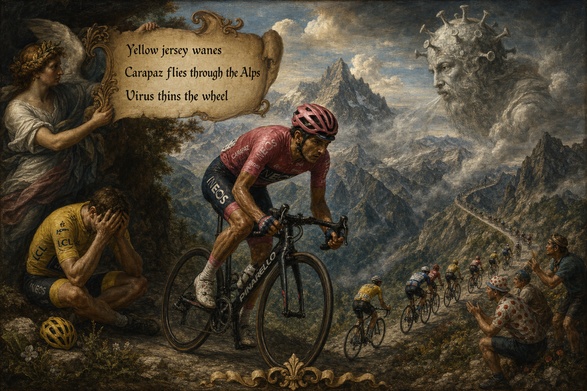
| tl;dr | The piece reports that Tadej Pogačar says he has recovered from a recent illness after multiple riders on his UAE Team Emirates squad were affected. It frames the situation as a potential risk to his Tour de France preparations while noting recent team results and likely next steps in his race schedule. | ||||
| deeper: | Content: The article is a straightforward sports-news update focused on Pogačar’s health status, the spread of illness within his team, and implications for upcoming racing. It relies on attributable statements (quotes/attributions to Pogačar/team context) and stays centered on verifiable events (illness, team situation, race planning) rather than speculation. Bias: Minimal emotional language and little editorializing. The main potential skew is structural: it prioritizes Pogačar/UAE’s perspective (typical for a story pegged to his comments) and frames the issue mainly through competitive consequences rather than, for example, broader public-health or labor concerns. That’s a mild selection/angle bias rather than partisan bias. Quality: Solid but limited by what appears to be a short, event-driven report. It provides relevant context (team illness, timing vs Tour build-up) but—based on what’s visible—does not deeply substantiate with medical specifics (what illness, confirmation method, mitigation measures) or independent verification beyond the primary participants. Clarity and relevance are good; depth is moderate. | ||||
media: | |||||
You made it to the bottom. Now dance!


owned and operated by: RPN Omnigalactic Insitutution as of: 2026/10/16: 04:18 in 0 ms
Enter Code
Login with Account