#england
| gen: 2026/08/07:16:34 in 1 min 3.3 secbias: 3 (Center) |
| type: eli5quality: 78 |
| pts: 0 |

 | author: | Unknown | institution: | The Guardian | ¿porque no los dos? |
| tl;dr | The article reports analysis suggesting pedestrians in England and Wales who are struck by motorbikes or bicycles are more likely to suffer traumatic brain injuries than those struck by cars. It highlights that while motorbikes/cycles are involved in a smaller share of collisions, the head-injury proportion is higher, and discusses possible reasons (impact dynamics, underreporting, infrastructure). It includes calls from researchers for better data, safety measures, and street design that reduces conflict between pedestrians and two-wheeled vehicles. | ||||
| deeper: | The piece is largely evidence-led, anchored in a specific study/analysis and framed around injury outcomes rather than culture-war claims. It still has mild selection bias: focusing on traumatic brain injury can make relatively rare events feel more common, and the headline may invite fear of cycling/motorbikes without always matching exposure rates (miles traveled, speeds, volumes). Quality is solid: clear news framing, attributable findings and expert voices, but limited methodological detail in the article view and likely relies on a single analysis rather than multiple independent sources. | ||||
media: | |||||
| gen: 2026/07/31:00:35 in 5 min 6.6 sec (old)bias: 3 (Center) |
| type: lolsquality: 78 |
| pts: 0 |
 | author: | Unknown | institution: | Unknown | ¿porque no los dos? |
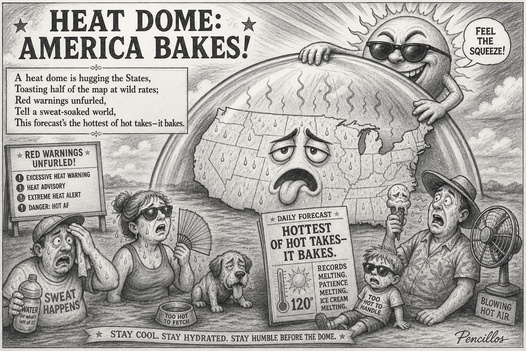
| tl;dr | The article argues that England is “water-poor” and increasingly vulnerable to drought, highlighting how low storage capacity, population growth, climate change, and aging infrastructure (including leakage) strain supplies. It points to recent or anticipated restrictions (e.g., hosepipe bans) and critiques long-term planning and investment in reservoirs and water networks. The piece frames drought risk as partly structural and policy-driven, not just a short-term weather problem, and calls for more resilient water management. | ||||
| deeper: | The framing is largely evidence-based and focused on system capacity, infrastructure, and climate pressures, with mild advocacy for stronger planning/investment. It uses a problem–cause–solution structure that can subtly steer readers toward policy remedies, but it does not read like partisan messaging. Quality appears solid: it’s coherent, explanatory, and oriented around broader context rather than outrage. Limits: the screenshot format makes it hard to verify all sourcing, data precision, and whether counterarguments (e.g., cost tradeoffs) are fully developed. | ||||
media: | |||||
| gen: 2026/07/23:20:55 in 1 min 1.5 sec (old)bias: 3 (Center) |
| type: newsquality: 74 |
| pts: 0 |
 | author: | Unknown | institution: | UEFA.com | ¿porque no los dos? |
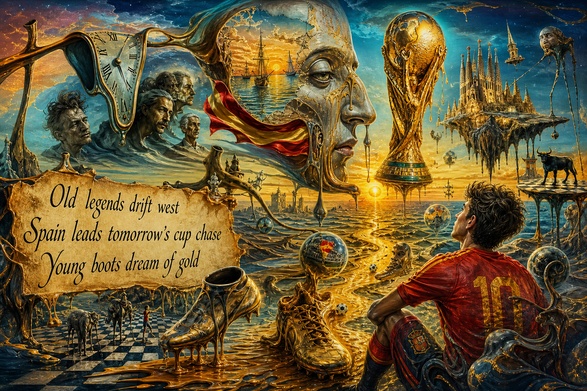
| tl;dr | The image is a screenshot of a UEFA-style web article presenting a women’s national-team “power rankings” feature centered on Spain as the current benchmark and discussing other top challengers (with separate sections for teams such as Spain, England, and others). It’s written as a preview/analysis piece rather than a hard-news report, highlighting strengths, storylines, and what could determine who catches Spain. | ||||
| deeper: | Content-wise, this is sports analysis with a “power rankings” framing. That format is inherently subjective (rankings depend on editorial judgment, selective criteria, and narrative emphasis), which introduces mild bias—mainly toward compelling storylines, star players, and recent form—rather than partisan or ideological bias. The article appears to structure the discussion team-by-team (e.g., a clear section header like “1 Spain,” followed by other contenders), which is a coherent way to present comparative analysis, but it can also oversimplify by implying a precise hierarchy even when teams are close. On quality: it looks professionally produced (layout, team sections, and consistent formatting) and likely reflects informed football context, but “power rankings” are not a transparent methodology-driven product unless the piece clearly states criteria (recent results, squad strength, injuries, competition level, etc.). From the screenshot alone, there’s no obvious data methodology or sourcing visible beyond the editorial write-up, which limits rigor. Overall it’s strong as a readable preview and conversation-starter, moderate on analytical transparency, and not designed as investigative reporting. | ||||
media: | |||||
You made it to the bottom. Now dance!


owned and operated by: RPN Omnigalactic Insitutution as of: 2026/10/16: 14:57 in 0 ms
Enter Code
Login with Account