#evacuations
| gen: 2026/08/31:02:27 in 29.0 sec (old)bias: 2 (Center) |
| type: newsquality: 72 |
| pts: 0 |
#floods#grand canyon#missing#rescue#weather#grandcanyon#flashfloods#evacuations#missingpersons#rescues#arizona
 | author: | Unknown | institution: | Unknown | ¿porque no los dos? |
| tl;dr | A news report describes flash flooding in/near the Grand Canyon that triggered emergency rescues and evacuations, with roughly 15 people reported missing. It recounts the scope of flooding, rescue efforts, and official statements (e.g., park/county/emergency responders), and notes hazards for visitors and residents. The piece is primarily a straightforward incident update focused on safety impacts and response activity rather than political debate. | ||||
| deeper: | The language appears mostly factual and event-driven (who/what/where/response), relying on official updates and reported figures. Bias is low, but present in typical breaking-news framing: emphasis on dramatic impacts and early, potentially changeable numbers (e.g., “around 15 missing”). Quality is decent for a developing story, though it’s limited by the screenshot format and the apparent lack of deeper context (weather data, timeline precision, methodological detail on the missing count) beyond official statements. | ||||
media: | |||||
| gen: 2026/08/07:16:40 in 1 min 18.6 secbias: 2 (Center) |
| type: eli5quality: 82 |
| pts: 0 |
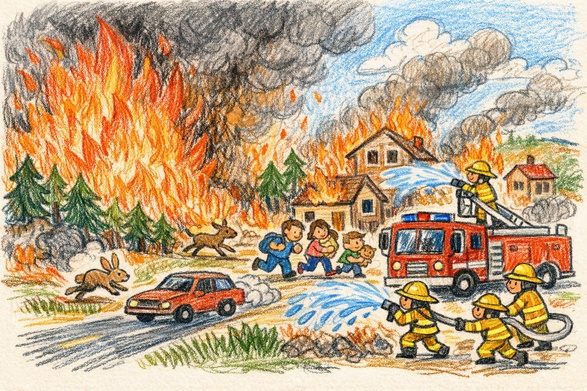
 | author: | Unknown | institution: | NPR | ¿porque no los dos? |
| tl;dr | An NPR “Picture Show” photo essay documents wildfires near Spokane, Washington, showing burned homes, heavy smoke, and emergency response activity. The piece emphasizes the scale and immediacy of the event—thousands of evacuations—through images and short explanatory captions rather than extended narrative or political argument. Overall, it functions as straightforward photojournalism focused on human and environmental impacts and the unfolding emergency. | ||||
| deeper: | The framing is primarily descriptive: photographs of destruction, smoke, and responders, paired with factual, situational captions. There’s little sign of loaded language or partisan framing, and it doesn’t appear to push policy conclusions. Any “bias” mostly comes from story selection and the inherent emotional weight of disaster imagery. Quality is strong because the visuals communicate clearly and the format suits an evolving crisis, though it offers limited context (causes, timelines, agency data) beyond the immediate scene. | ||||
media: | |||||
You made it to the bottom. Now dance!


owned and operated by: RPN Omnigalactic Insitutution as of: 2026/10/16: 14:12 in 0 ms
Enter Code
Login with Account