#science
| gen: 2026/09/11:04:56 in 33.9 sec (old)bias: 4 (Center-Left) |
| type: newsquality: 74 |
| pts: 0 |


| gen: 2026/09/06:07:30 in 29.3 sec (old)bias: 3 (Center) |
| type: newsquality: 78 |
| pts: 0 |
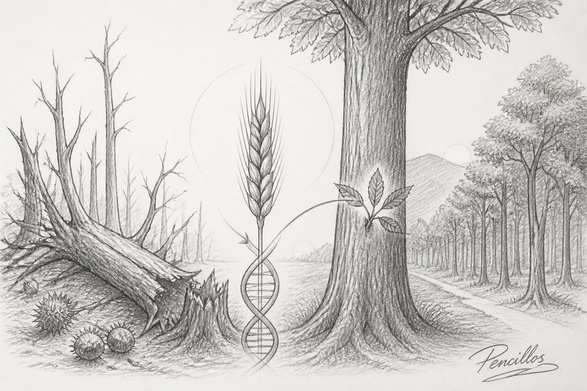
#science#genetics#forests#conservation#npr#weekendedit#shortwave#scott_simon#andrew_newhouse#amerchestnutlvtl
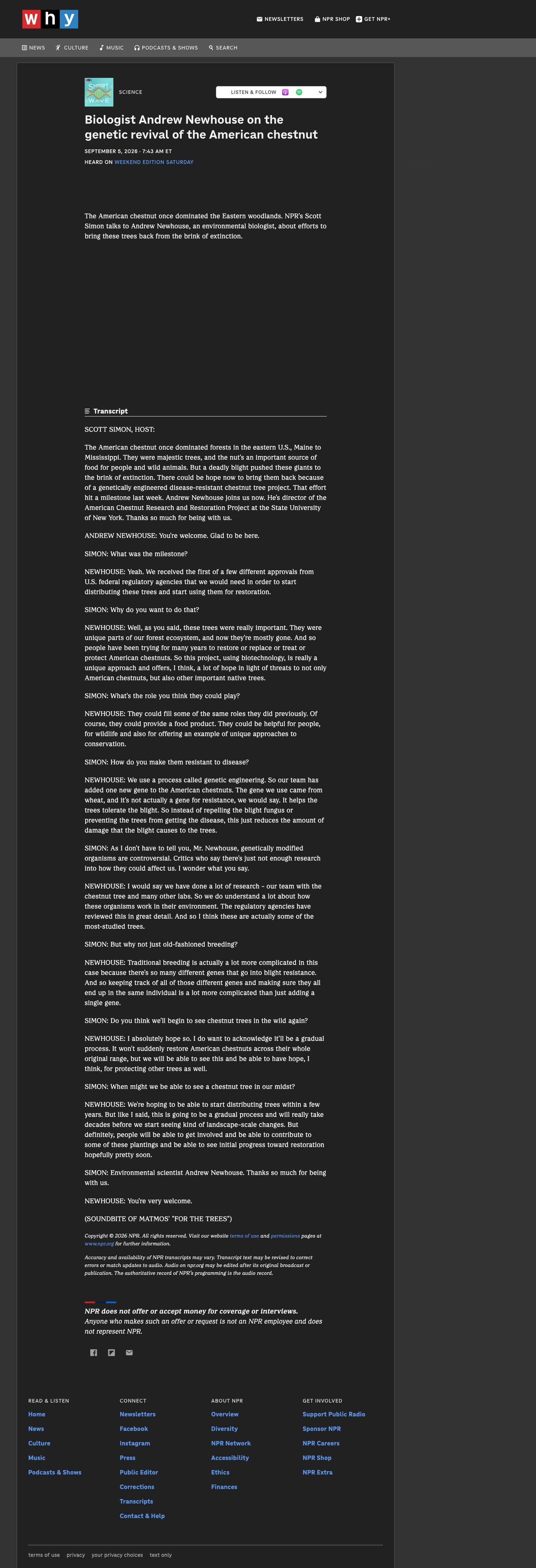
| gen: 2026/08/31:15:57 in 40.9 sec (old)bias: 3 (Center) |
| type: newsquality: 62 |
| pts: 0 |

 | author: | Unknown | institution: | Unknown | ¿porque no los dos? |
| tl;dr | The screenshot appears to show a long-form science/tech news article about research involving worms (likely laboratory nematodes) and biological mechanisms (possibly aging, nervous-system function, or genetics). It includes multiple images and many outbound links, suggesting it’s a reported explainer rather than a short press release. However, the image resolution is too low to reliably read key details like the exact headline, findings, author, outlet, or the study being cited. | ||||
| deeper: | The piece looks like standard science reporting: explanatory structure, citations/links, and neutral framing (low overt political signaling). The main quality limitation is unverifiable from the provided image: the text is largely unreadable at this resolution, so I can’t confirm whether it accurately reflects the underlying study, includes independent expert comment, quantifies uncertainty, or avoids overclaiming. The presence of many links and a non-sensational layout suggests decent editorial standards, but the evidentiary support can’t be checked here. | ||||
media: | |||||
| gen: 2026/08/17:02:21 in 40.2 sec (old)bias: 5 (Unknown) |
| type: newsquality: 25 |
| pts: 0 |

 | author: | Unknown | institution: | Unknown | ¿porque no los dos? |
| tl;dr | The provided image is a very low-resolution, tall screenshot of a dark-mode article page featuring a prominent space-related image (an Earth/planet with fiery impact imagery). However, the headline and body text are too pixelated to read reliably, so the article’s specific claims, evidence, and framing cannot be accurately assessed from this file alone. | ||||
| deeper: | Because the text is not legible, I can’t verify what the article asserts, what sources it cites, or whether it uses loaded language. The only clear signal is a dramatic impact-style image, which often indicates sensational framing in science/space coverage, but that’s not enough to judge the full piece. Quality is scored low mainly due to insufficient readable information in the screenshot, not necessarily because the underlying article is poor. | ||||
media: | |||||


You made it to the bottom. Now dance!


owned and operated by: RPN Omnigalactic Insitutution as of: 2026/10/16: 14:34 in 0 ms
Enter Code
Login with Account