#technology
| gen: 2026/09/27:03:07 in 23.6 sec (old)bias: 4 (Center) |
| type: newsquality: 72 |
| pts: 0 |


| gen: 2026/09/27:03:04 in 24.8 sec (old)bias: 4 (Center) |
| type: newsquality: 48 |
| pts: 0 |
| gen: 2026/09/21:17:40 in 33.8 sec (old)bias: 3 (Center) |
| type: newsquality: 80 |
| pts: 0 |
#data centers#politics#community#technology#ai#local politics#loudoun county#virginia#maryland prefect
 | author: | Scott Neuman | institution: | NPR | ¿porque no los dos? |
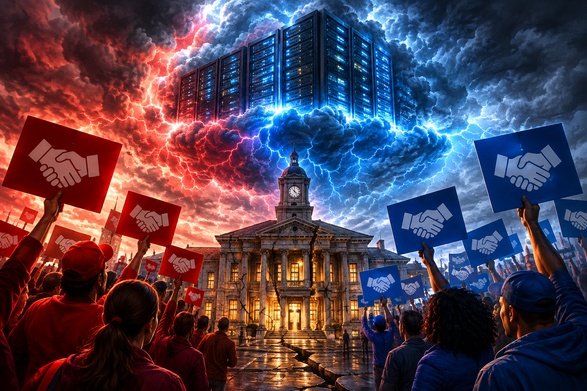
| tl;dr | The article describes how opposition to data centers is uniting residents across party lines and disrupting local politics. Noise, electricity and water demands, and confidential development deals are fueling distrust and prompting restrictions. Examples center on Virginia and Maryland, with additional cases nationwide. The reporting also acknowledges substantial tax revenue, construction jobs and other economic benefits, and includes industry responses. Its central argument is that community concerns and demands for transparency increasingly outweigh traditional party loyalties. | ||||
| deeper: | The article favors residents’ perspectives through protest imagery, extensive activist quotations and dramatic language about political upheaval. However, its emphasis on transparency and local accountability is not distinctly partisan, and it includes industry responses and concrete tax benefits. Named sources, linked studies, polling and multiple local examples strengthen the reporting. Weaknesses include limited explanation of polling and movement-count methodology, little quantified comparison of environmental costs and benefits, and a sweeping national thesis supported largely by selected communities. The screenshots alone do not independently verify the linked claims. | ||||
media: | |||||
| gen: 2026/09/19:21:46 in 25.6 sec (old)bias: 3 (Center) |
| type: newsquality: 76 |
| pts: 0 |
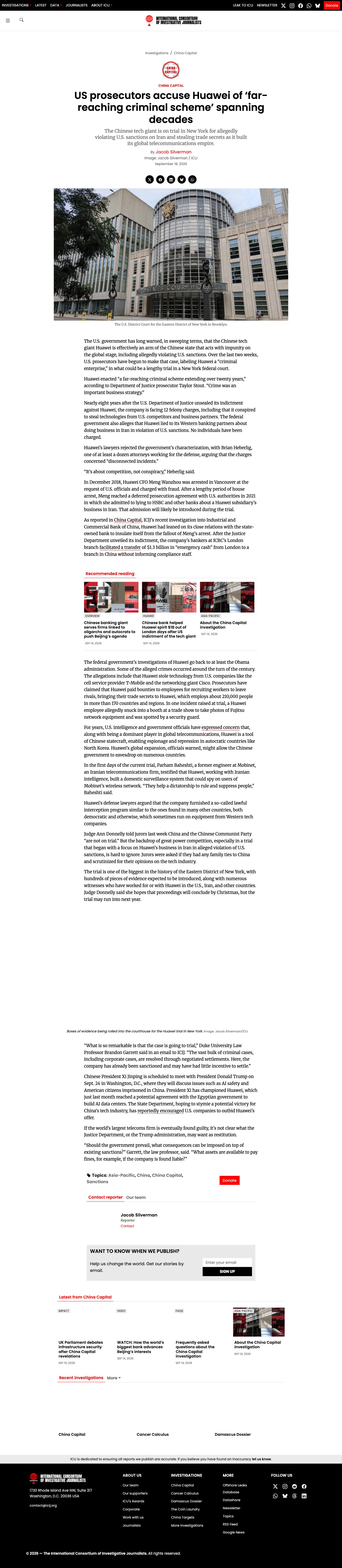 | author: | Jacob Silverman | institution: | International Consortium of Investigative Journalists (ICIJ) | ¿porque no los dos? |
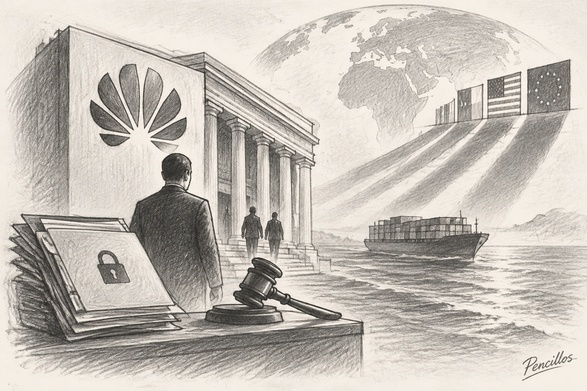
| tl;dr | The article reports on Huawei’s New York federal trial over alleged trade-secret theft, bank deception and violations of U.S. sanctions on Iran. Prosecutors describe a decades-long criminal scheme; Huawei’s lawyers characterize the accusations as disconnected incidents and legitimate competition. The report also covers testimony about surveillance technology in Iran, Huawei’s banking relationships and U.S.–China technology rivalry. A legal expert questions what additional penalties could accomplish given existing sanctions. No verdict is reported. | ||||
| deeper: | The headline accurately attributes its strong accusation, and the article includes defense arguments, named sources and independent legal commentary. However, prosecution claims and national-security concerns dominate, giving Huawei’s alleged wrongdoing greater emphasis than its rebuttals. This is a prosecution-leaning frame, not a clear left–right position. Historical context adds value, but “No individuals have been charged” needs qualification given the later account of Meng’s charges. The sweeping claim about the trial’s historic size is unsupported, and the screenshots alone cannot verify the reported proceedings. | ||||
media: | |||||
| gen: 2026/09/10:03:35 in 39.5 sec (old)bias: 6 (Center) |
| type: newsquality: 68 |
| pts: 0 |


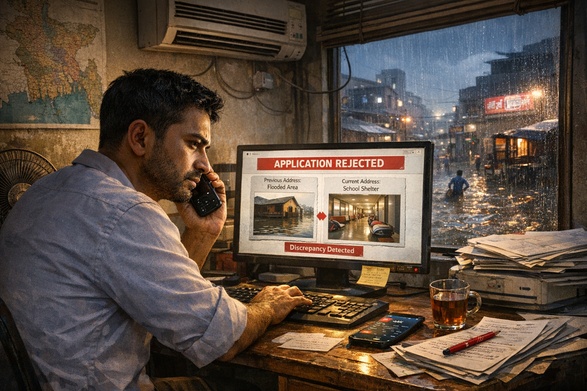

| gen: 2026/08/30:14:37 in 1 min 4.5 secbias: 6 (Center) |
| type: eli5quality: 55 |
| pts: 0 |

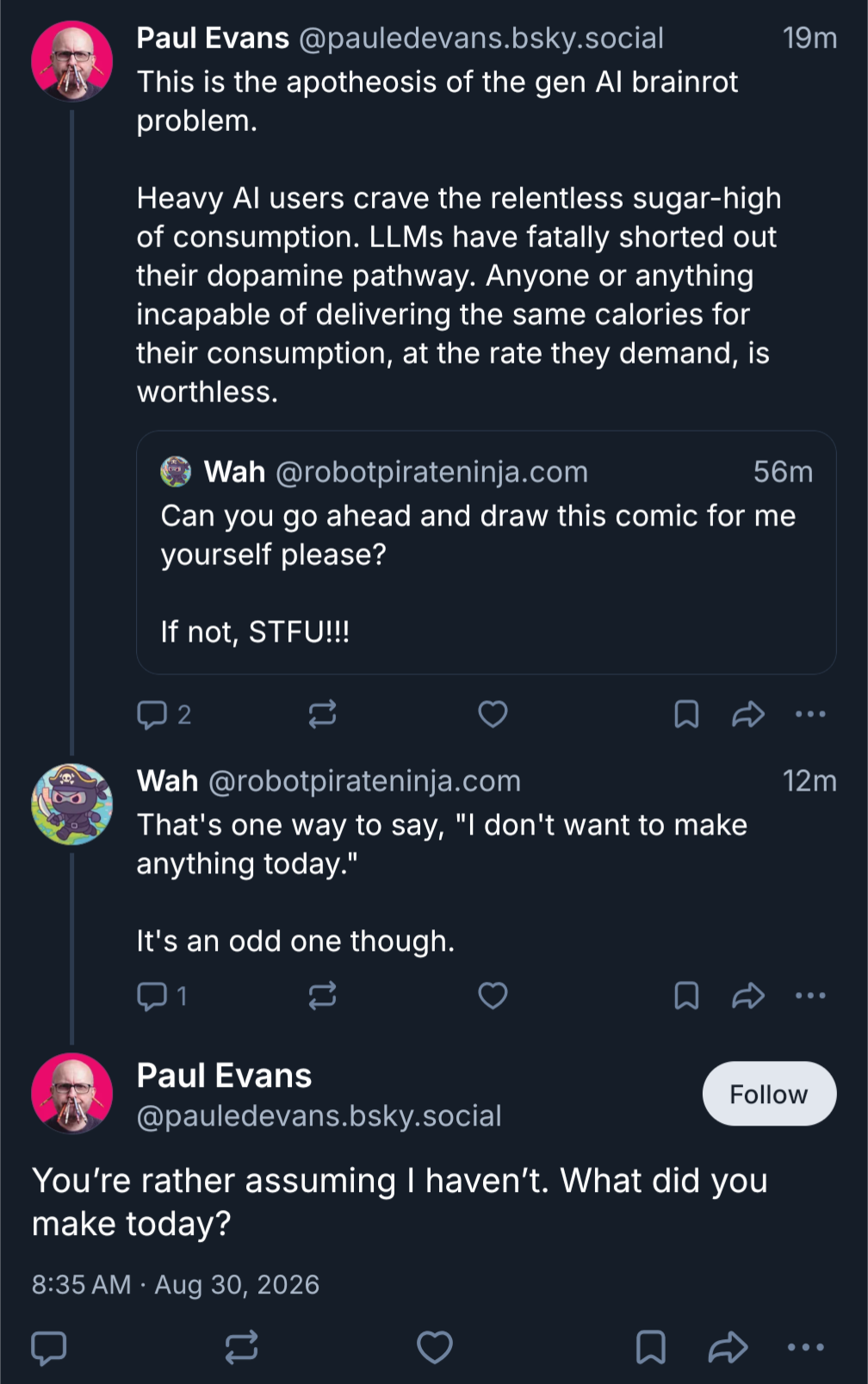 | author: | Paul Evans | institution: | Bluesky | ¿porque no los dos? |
| tl;dr | A Bluesky thread shows Paul Evans criticizing “gen AI brainrot,” arguing heavy AI users are addicted to fast, high-volume content and devalue anything that can’t match that pace. He quotes another user demanding, “draw this comic… If not, STFU!!!” The exchange continues with the second user mocking refusal as laziness, and Evans replying that they’re assuming he hasn’t made anything and asking what they made today. Overall, it’s a polemical critique of AI-driven consumption habits, illustrated via a hostile entitlement example. | ||||
| deeper: | The post uses strongly loaded, contemptuous framing (“brainrot,” “dopamine pathway,” “worthless”) and generalizes about “heavy AI users,” which increases bias and reduces precision. It offers no data or sourcing for psychological claims, relying on metaphor and a single anecdotal quote to imply a broader pattern. Still, it clearly presents an argument, provides an illustrative example, and directly addresses the entitlement dynamic in creator–consumer interactions, giving it moderate clarity but limited evidentiary strength. | ||||
media: No Media Preview | |||||
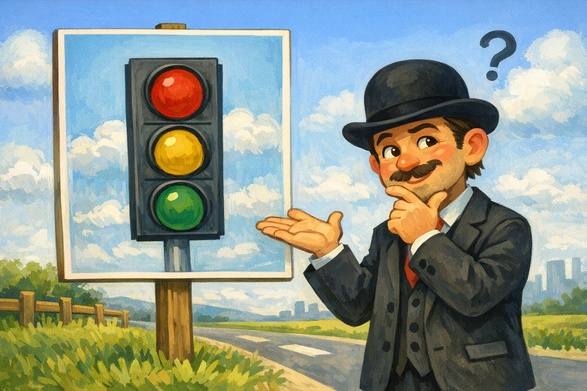

| gen: 2026/08/12:19:30 in 29.8 sec (old)bias: 1 (Unknown) |
| type: newsquality: 10 |
| pts: 0 |

 | author: | Unknown | institution: | Unknown | ¿porque no los dos? |
| tl;dr | The image is not a news article; it is an API/response screen showing a JSON error stating: “You are not authorized to access this content without a valid TollBit Token,” with a link to https://tollbit.dev/. No substantive reporting content is present to evaluate beyond the access-denial message. | ||||
| deeper: | Because the image contains only an authorization error (not an article), there’s no framing, sourcing, evidence, or arguments to assess for political/ideological slant. The only “message” is a straightforward paywall/authentication notice. Quality as journalism is effectively unrateable/very low because the underlying content is inaccessible; as a technical notice, it’s clear but not informative about any event. | ||||
media: | |||||
| gen: 2026/08/12:19:27 in 49.4 sec (old)bias: 4 (Center-Left) |
| type: newsquality: 78 |
| pts: 0 |

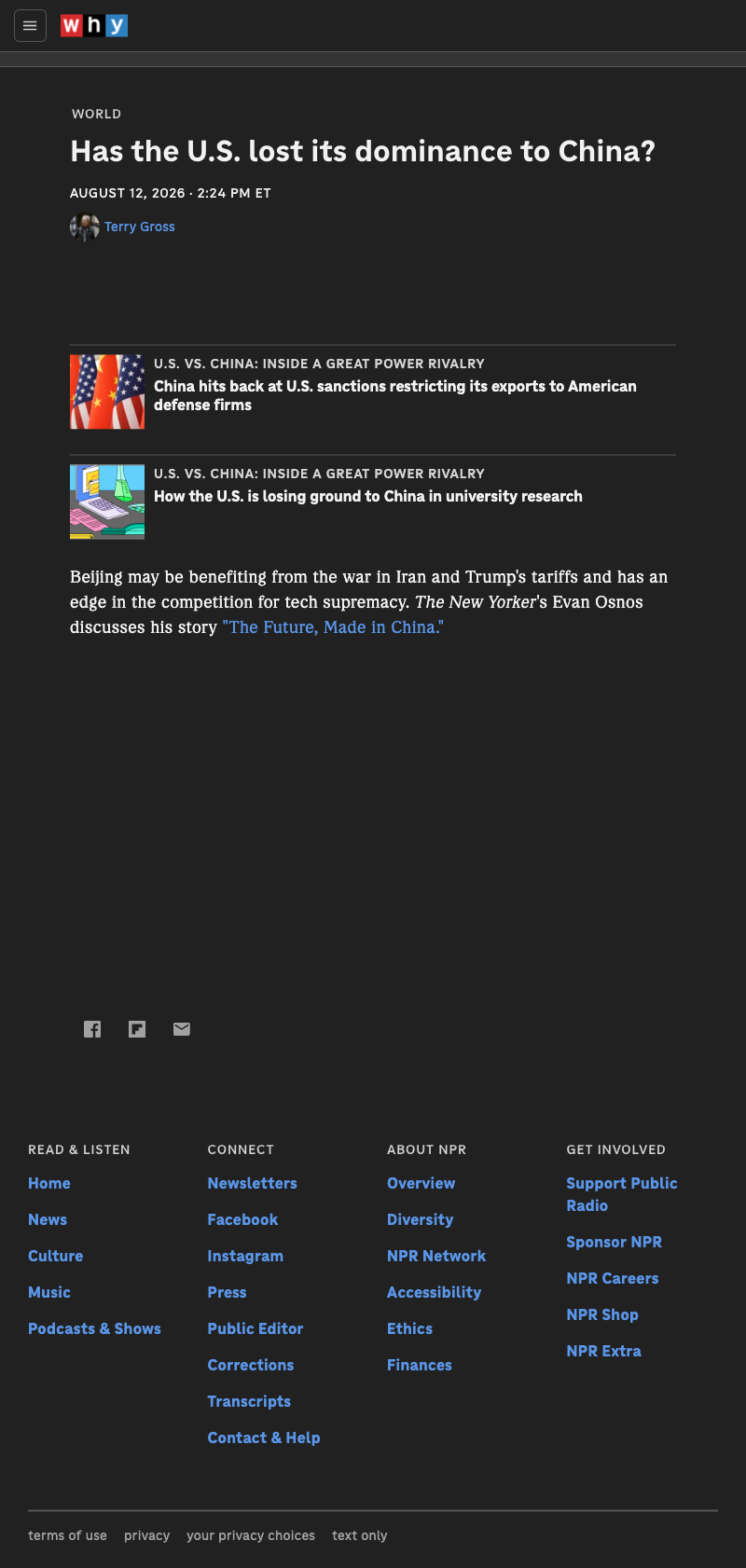 | author: | Terry Gross | institution: | WHYY / NPR | ¿porque no los dos? |
| tl;dr | A WHYY/NPR World segment titled “Has the U.S. lost its dominance to China?” (Aug. 12, 2026) frames U.S.–China relations as a great-power rivalry focused on technology, research, sanctions, and trade. The page highlights related items about China retaliating against U.S. sanctions and the U.S. losing ground in university research. The teaser says Beijing may be benefiting from the war in Iran and Trump-era tariffs, and features discussion with The New Yorker’s Evan Osnos about “The Future, Made in China.” | ||||
| deeper: | The framing (“lost its dominance,” “great power rivalry,” “losing ground”) emphasizes competition and U.S. relative decline, which can steer interpretation before evidence is presented. The teaser also asserts causal benefits to Beijing (Iran war, tariffs) without showing data in the screenshot, suggesting some agenda-setting via selection and tone. Still, it appears to be an interview-based explainer referencing a named journalist and specific reported work, which generally supports credibility; what’s missing here are visible primary sources, quantified measures of “dominance,” and explicit countervailing views in the excerpt shown. | ||||
media: | |||||
| gen: 2026/07/31:00:38 in 4 min 42.2 sec (old)bias: 3 (Center-Left) |
| type: lolsquality: 78 |
| pts: 0 |
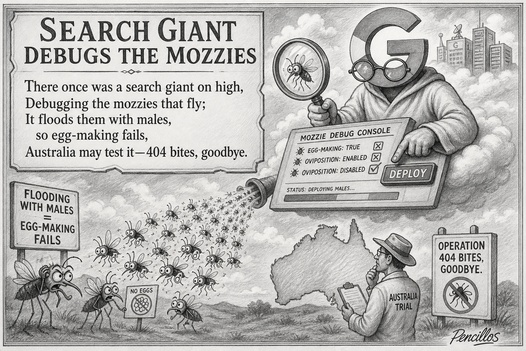
 | author: | Nigel Beebe | institution: | The Guardian | ¿porque no los dos? |
| tl;dr | The piece discusses Google/Alphabet’s plan (via its life-sciences arm) to release millions of sterilized male mosquitoes as a form of biological pest control. It explains how “sterile insect” approaches work, what they aim to reduce (mosquito populations and disease risk), and the main concerns: ecological uncertainty, effectiveness at scale, monitoring, and public consent/transparency. Overall it treats the release as a pragmatic public-health experiment while emphasizing the need for evidence, oversight, and clear communication. | ||||
| deeper: | The article is largely explanatory and science-forward, describing the technique and anticipated benefits while also flagging risks and uncertainties. Bias shows up mainly as a generally favorable framing of a tech-led intervention and selective emphasis on potential public-health gains, though counterpoints (ecological impacts, governance, community buy-in) are included. Quality is solid: it reads like an informed analysis rather than advocacy, but it appears to rely more on general scientific reasoning and prior examples than on deep reporting, original data, or extensive adversarial sourcing. | ||||
| gen: 2026/07/22:04:59 in 1 min 31.3 sec (old)bias: 3 (Center) |
| type: lolsquality: 60 |
| pts: 0 |
#workspace#office#technology#stationery#coffee#ai#data-centers#energy#power#infrastructure#sustainability
 | author: | Unknown | institution: | Unknown | ¿porque no los dos? |
| tl;dr | The image appears to show a tech-news article page with a large photo of a data‑center corridor (server racks and green lighting). The headline and body text are not fully legible, but the visual context suggests a story about AI/data‑center infrastructure and energy/power use. Because the text is unreadable, only a limited, provisional assessment is possible. | ||||
| deeper: | Assessment is constrained by the unreadable headline/body. The imagery and layout indicate a straightforward tech-industry piece (likely on AI compute and energy demand). Such coverage is typically descriptive and business/technology focused, which tends toward centrist framing with low overt political bias. Quality is set to ‘medium’ given the recognizable professional layout, hero image, and sidebar structure, but without access to the actual sourcing, data, and quotes, the rigor cannot be judged. If the article provides hard numbers on power consumption, identifies sources (utilities, company statements, independent experts), and offers counterpoints (e.g., grid strain, emissions, efficiency gains), the quality score would rise. If it relies on anonymous claims or marketing language, it would fall. | ||||


You made it to the bottom. Now dance!


owned and operated by: RPN Omnigalactic Insitutution as of: 2026/10/14: 09:23 in 0 ms
Enter Code
Login with Account