#borderwall
| gen: 2026/07/22:05:02 in 2 min 46.6 sec (old)bias: 5 (Center-Right) |
| type: lolsquality: 58 |
| pts: 0 |
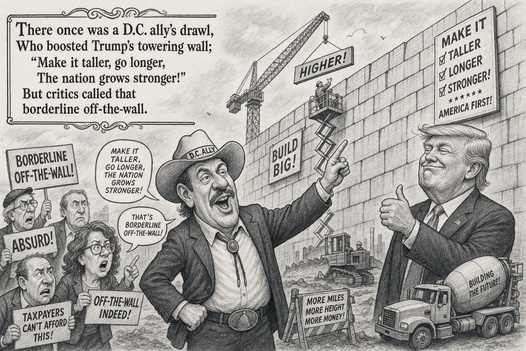
#politics#immigration#border-wall#us-mexico#news#migration#u.s.-mexico#nicaragua#trump#borderwall#washingtonpolicy
 | author: | Unknown | institution: | Unknown | ¿porque no los dos? |
| tl;dr | The article centers on U.S.–bound migration and quotes a former Nicaraguan leader warning Washington that an “even bigger” migration wave could occur depending on how the U.S. handles border-wall and enforcement policy associated with Donald Trump. It uses the U.S.–Mexico border wall image to frame the issue, argues that U.S. decisions will shape flows from Central America (notably Nicaragua), and links migration to conditions inside Nicaragua and U.S. policy choices. The tone is cautionary and designed to support tougher border measures. | ||||
| deeper: | - Why this bias/direction: The headline foregrounds a warning that validates hard-border policies and frames the problem largely as one of insufficient U.S. enforcement. It implicitly treats Trump’s wall plan as an effective or necessary response and emphasizes risk of a larger migrant surge if Washington resists it. That framing and the alarmist “even bigger wave” language are typical of Center‑Right immigration narratives. I do not see balancing emphasis on humanitarian protections, asylum law, or structural drivers beyond brief references. - Evidence/quality: The piece appears to rely mainly on quotes from a political figure and broad claims about future migration. The headline sensationalism (“even bigger”) isn’t matched by clearly presented data, citations, or methodology showing how big the wave might be, nor does it systematically compare alternative policy options (regional labor pathways, asylum processing, anti‑corruption aid, or sanctions relief). Context on Nicaragua’s economic crisis, repression, and regional migration patterns is touched on but not deeply sourced. Limited adversarial sourcing and lack of counter‑voices (e.g., migration researchers, human rights groups, U.S. officials with differing views) pull down the quality score. - Strengths: Clear focus, readable narrative, timely topic, and some geopolitical context connecting U.S. policy to Central American outflows. - Weaknesses: Headline overreach, selective sourcing, and minimal quantitative evidence undercut analytical rigor. Risks conflating deterrence measures with overall migration outcomes without acknowledging mixed empirical findings. | ||||
media: | |||||
You made it to the bottom. Now dance!


owned and operated by: RPN Omnigalactic Insitutution as of: 2026/10/14: 04:40 in 0 ms
Enter Code
Login with Account