#politics

| gen: 2026/10/07:16:31 in 33.5 sec (old)bias: 1 (Center) |
| type: newsquality: 35 |
| pts: 0 |

#politics#military#death penalty#crime#donald trump#fort hood#firing squad#military justice#2009 shooting
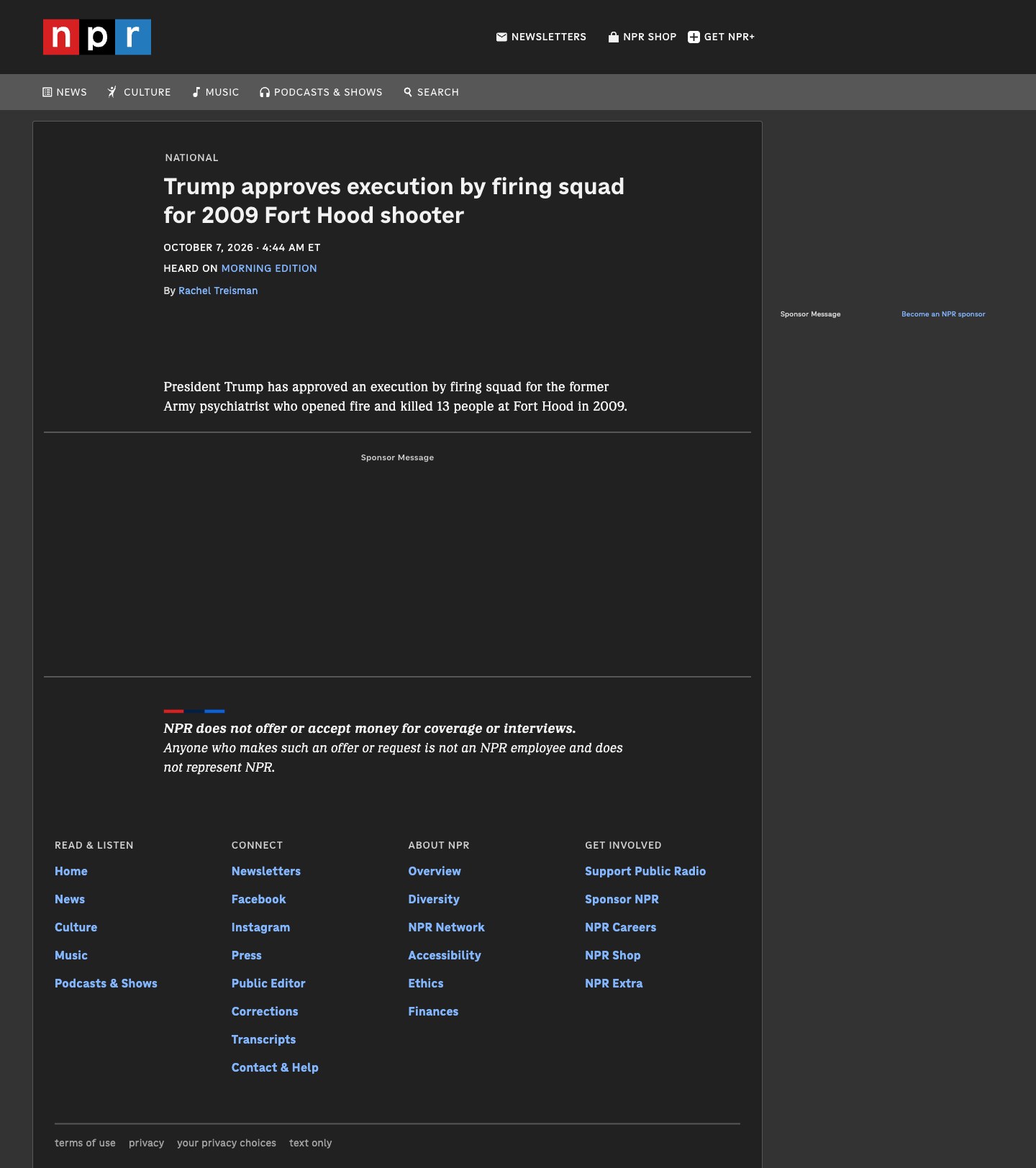 | author: | Rachel Treisman | institution: | NPR | ¿porque no los dos? |
| tl;dr | The displayed page says President Trump approved execution by firing squad for the former Army psychiatrist who killed 13 people at Fort Hood in 2009. Dated October 7, 2026, it contains only a headline and one-sentence news summary, without supporting sources, legal details, or an execution date. The screenshot alone does not establish the claim’s accuracy or the page’s authenticity. | ||||
| deeper: | The wording is straightforward and neither praises nor condemns Trump or capital punishment, providing little evidence of political bias. However, the visible report simply repeats its headline without identifying a source for the approval, explaining military execution rules, or discussing appeals. Its clarity is a strength, but the lack of supporting evidence and context limits its quality. This assessment covers only the displayed text, not any associated broadcast. | ||||
media: | |||||
| gen: 2026/09/28:05:19 in 24.2 sec (old)bias: 3 (Center) |
| type: newsquality: 82 |
| pts: 0 |

| gen: 2026/09/27:03:01 in 28.5 sec (old)bias: 4 (Center) |
| type: newsquality: 56 |
| pts: 0 |
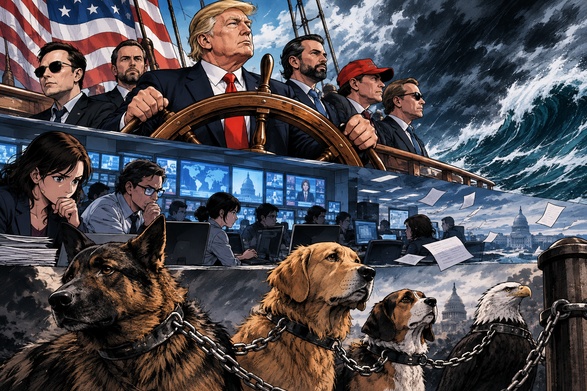
#media#politics#journalism#ownership#cnn#cbs news#paramount#warner bros#donald trump#david ellison no
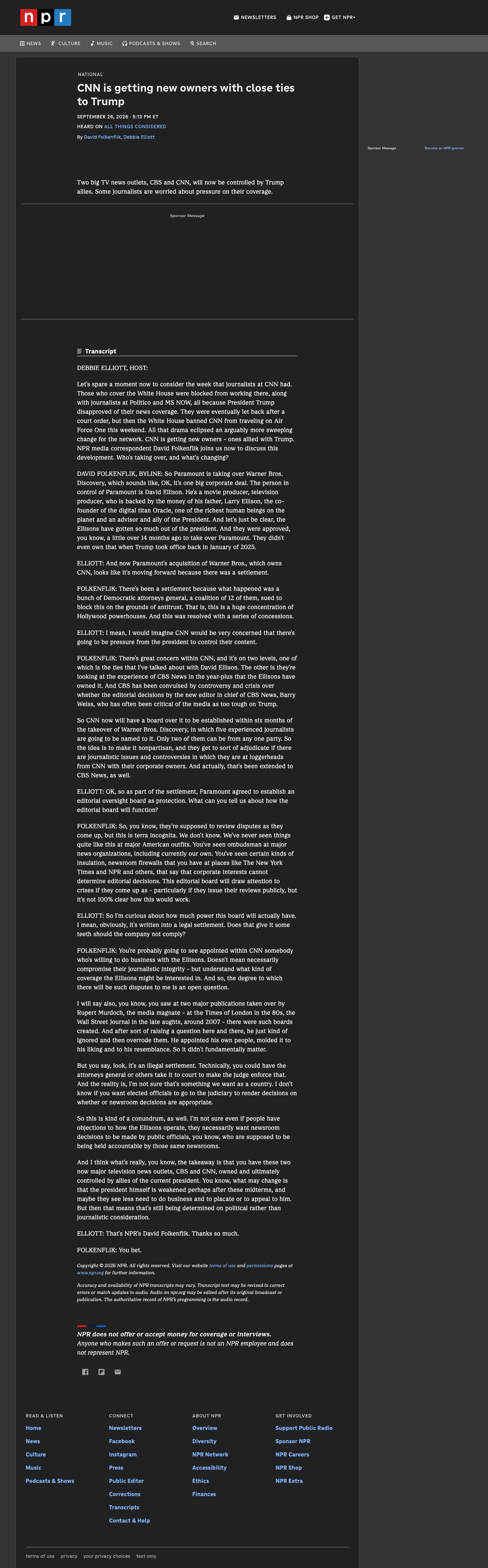 | author: | David Folkenflik, Debbie Elliott | institution: | NPR | ¿porque no los dos? |
| tl;dr | The document says Paramount’s acquisition of Warner Bros. Discovery would put CNN and CBS under owners tied to President Trump. It describes a settlement requiring editorial oversight boards and questions whether those boards could protect newsroom independence. The discussion highlights potential owner influence while also warning that court enforcement could give government officials inappropriate influence over journalism. The acquisition, settlement, and access restrictions described are claims in the supplied screenshots, not independently verified facts. | ||||
| deeper: | The article favors independent journalism and accountability rather than an explicit partisan platform. However, leading questions, dramatic wording, and speculation about owners’ motives create a skeptical, one-sided frame. No responses from Paramount, the Ellisons, or the White House appear. Useful explanations of oversight and government-interference risks add nuance, but major legal claims lack identifiable supporting documents. Apparent transcription errors—including “Barry Weiss” and “illegal settlement”—reduce precision. The screenshots alone cannot establish authenticity or verify the reported events. | ||||
media: | |||||
| gen: 2026/09/24:02:21 in 31.7 sec (old)bias: 4 (Center) |
| type: newsquality: 56 |
| pts: 0 |
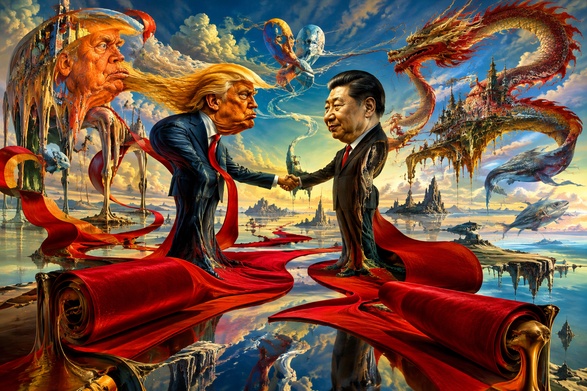
#diplomacy#china#usa#trade#politics#donald trump#xi jinping#united states#state visit#trade war backup
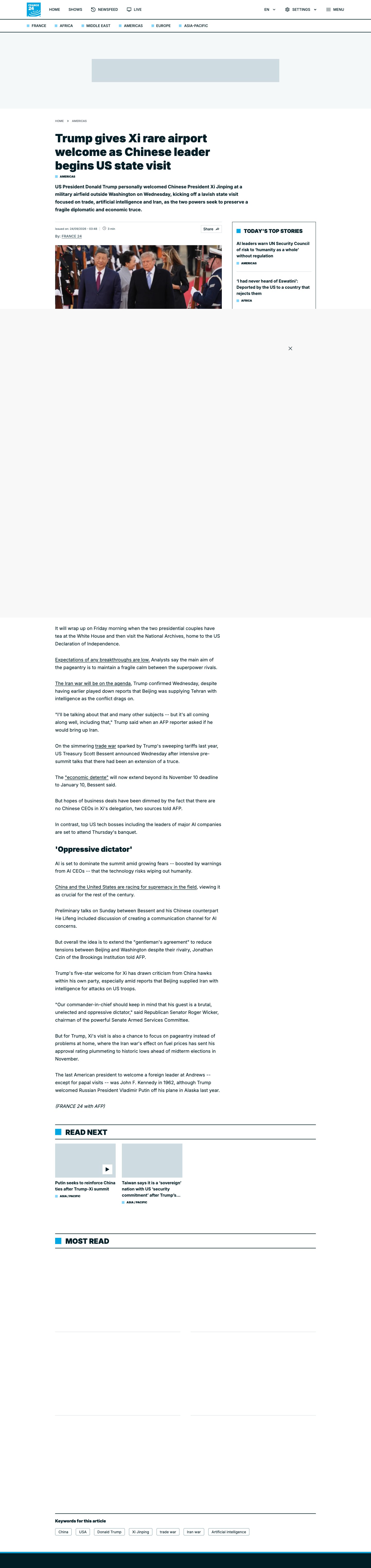 | author: | FRANCE 24 with AFP | institution: | FRANCE 24 | ¿porque no los dos? |
| tl;dr | The article reports that Trump personally welcomed Xi Jinping for a US state visit focused on trade, AI and Iran. It says a trade truce has been extended, while expectations for major breakthroughs remain low. The coverage contrasts elaborate diplomatic ceremonies with Republican criticism of Xi and concerns over alleged Chinese intelligence assistance to Iran. It also describes potential AI cooperation and Trump's domestic political difficulties. The screenshots attribute the report to France 24 with AFP and date it September 24, 2026; its authenticity and claims cannot be independently established from the images. | ||||
| deeper: | The report includes Trump's remarks, a named analyst and Republican criticism, without clearly endorsing a left- or right-wing agenda. However, repeated emphasis on 'pageantry,' the 'Oppressive dictator' subheading and speculation about distracting from domestic problems add a skeptical slant. Chinese perspectives are largely absent. Attribution and specific details help, but claims about historic polling lows and their causes lack supporting figures. The dramatic AI-extinction framing lacks nuance. Some article text is obscured, and the screenshots alone cannot authenticate the report or verify its substantial geopolitical claims. | ||||
media: | |||||
| gen: 2026/09/23:04:53 in 41.8 sec (old)bias: 3 (Center) |
| type: lolsquality: 65 |
| pts: 0 |
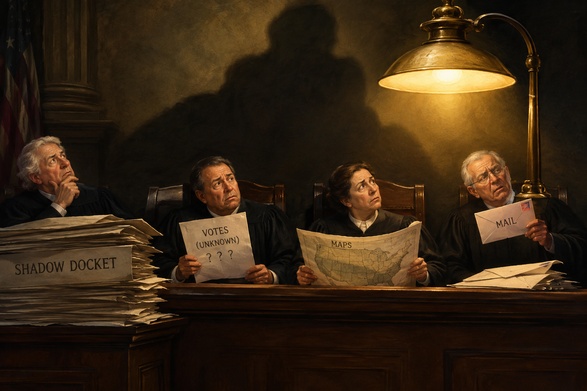
 | author: | Ken B. Morales; Elizabeth McCauley | institution: | ProPublica | ¿porque no los dos? |
| tl;dr | The article argues that the Supreme Court increasingly makes consequential decisions through its emergency, or “shadow,” docket, often without oral arguments, explanations or disclosed votes. It reports that these substantive decisions outnumbered openly argued cases in the term ending in 2025. It describes subsequent rulings involving White House construction, Missouri redistricting and mail voting, while acknowledging that Trump has not always prevailed. The central concern is reduced transparency in decisions with major public consequences. | ||||
| deeper: | The article favors judicial transparency, which is not inherently partisan. However, phrases such as “in the shadows” create a critical tone, and little space explains legitimate reasons for emergency procedures. A described court-records analysis, supporting links, a request for comment and acknowledgment of Trump’s losses strengthen the reporting. The visible text supplies neither exact comparative counts nor named experts, case identifiers or detailed methodology. Its specific ruling descriptions and quotations cannot be independently verified from these screenshots alone. | ||||
media: | |||||
| gen: 2026/09/23:04:47 in 36.5 sec (old)bias: 4 (Center) |
| type: lolsquality: 78 |
| pts: 0 |
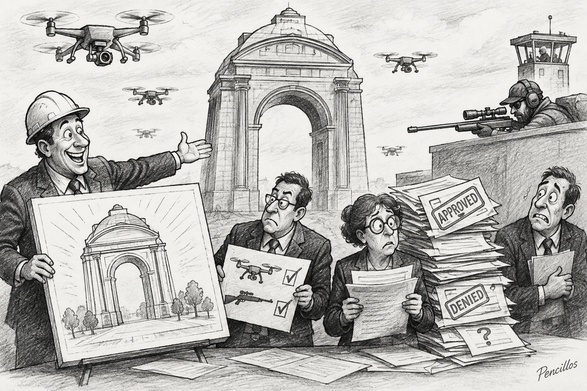
#politics#architecture#military#aviation#law#donald trump#washington dc#triumphal arch#military complex#drones#aviation safety
 | author: | Rachel Treisman | institution: | NPR | ¿porque no los dos? |
| tl;dr | The article reports that Trump wants his proposed 250-foot Washington-area triumphal arch to serve as a military complex housing drones, snipers and ammunition. It examines how that change could complicate preservation reviews, aviation assessments and ongoing litigation over congressional authorization. Preservation advocates, lawmakers and legal and military experts question the project's justification. The administration presents the arch as a national landmark and cites security needs, but provides little additional explanation in response to questions. | ||||
| deeper: | The article offers detailed procedural context, named sources, document links and administration responses, including the FAA's favorable finding. However, critics dominate, and language such as “Trump-packed” adds editorial judgment. The headline also presents a proposed military role more definitively than the body supports. Its emphasis on preservation, safety and congressional oversight does not establish a clear left-right ideology. Strong sourcing improves quality, but extended inflammatory quotations and limited independent examination of military requirements weaken balance. The screenshots alone cannot authenticate the reporting. | ||||
media: | |||||
| gen: 2026/09/21:17:46 in 35.3 sec (old)bias: 2 (Center) |
| type: newsquality: 42 |
| pts: 0 |
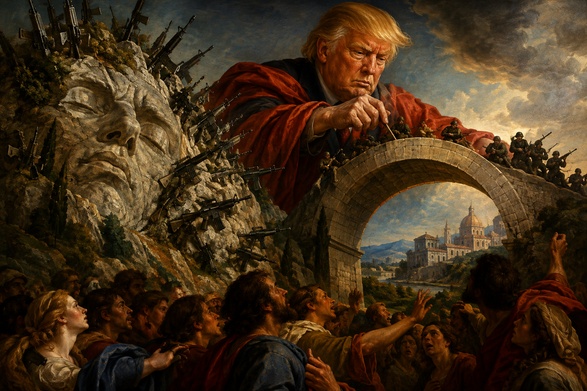
#politics#military#architecture#washington dc#donald trump#proposed arch#military complex#construction#snipers
 | author: | Franco Ordoñez, Steve Inskeep | institution: | NPR | ¿porque no los dos? |
| tl;dr | The displayed NPR item reports that President Trump says his proposed Washington, D.C., arch would also function as a military complex. Its headline mentions snipers and weaponry, while the brief description notes opposition to his construction projects in the capital. The supplied page contains only a headline and short summary, not a detailed report or interview transcript. | ||||
| deeper: | The wording attributes the central claim to Trump rather than presenting it as independently established. Highlighting snipers, weaponry, and pushback creates a dramatic frame, but there is no clear endorsement of a political ideology. Named journalists and a publication date provide accountability. However, the visible text supplies no supporting quotation, project details, explanation of the opposition, or corroboration. This score assesses the limited material shown; the screenshot alone cannot establish authenticity or accuracy. | ||||
media: | |||||
| gen: 2026/09/21:17:40 in 33.8 sec (old)bias: 3 (Center) |
| type: newsquality: 80 |
| pts: 0 |
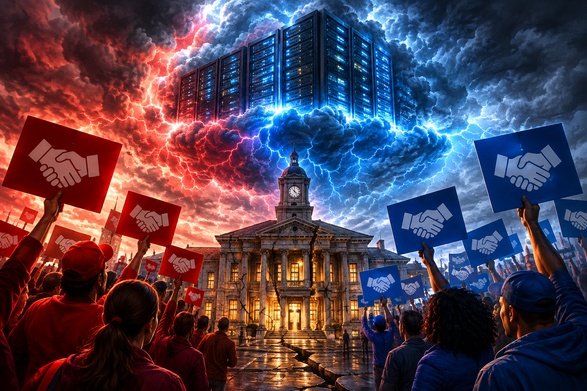
#data centers#politics#community#technology#ai#local politics#loudoun county#virginia#maryland prefect
 | author: | Scott Neuman | institution: | NPR | ¿porque no los dos? |
| tl;dr | The article describes how opposition to data centers is uniting residents across party lines and disrupting local politics. Noise, electricity and water demands, and confidential development deals are fueling distrust and prompting restrictions. Examples center on Virginia and Maryland, with additional cases nationwide. The reporting also acknowledges substantial tax revenue, construction jobs and other economic benefits, and includes industry responses. Its central argument is that community concerns and demands for transparency increasingly outweigh traditional party loyalties. | ||||
| deeper: | The article favors residents’ perspectives through protest imagery, extensive activist quotations and dramatic language about political upheaval. However, its emphasis on transparency and local accountability is not distinctly partisan, and it includes industry responses and concrete tax benefits. Named sources, linked studies, polling and multiple local examples strengthen the reporting. Weaknesses include limited explanation of polling and movement-count methodology, little quantified comparison of environmental costs and benefits, and a sweeping national thesis supported largely by selected communities. The screenshots alone do not independently verify the linked claims. | ||||
media: | |||||
| gen: 2026/09/20:20:34 in 18.0 sec (old)bias: 1 (Center) |
| type: newsquality: 40 |
| pts: 0 |
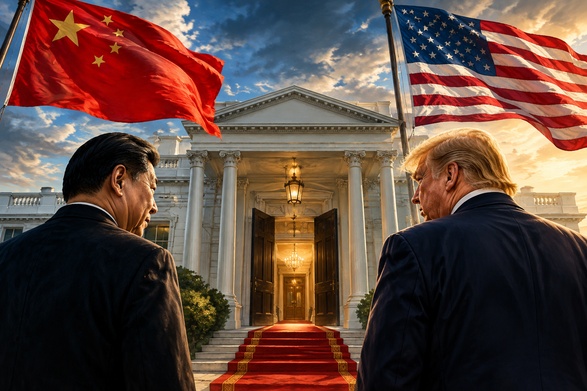
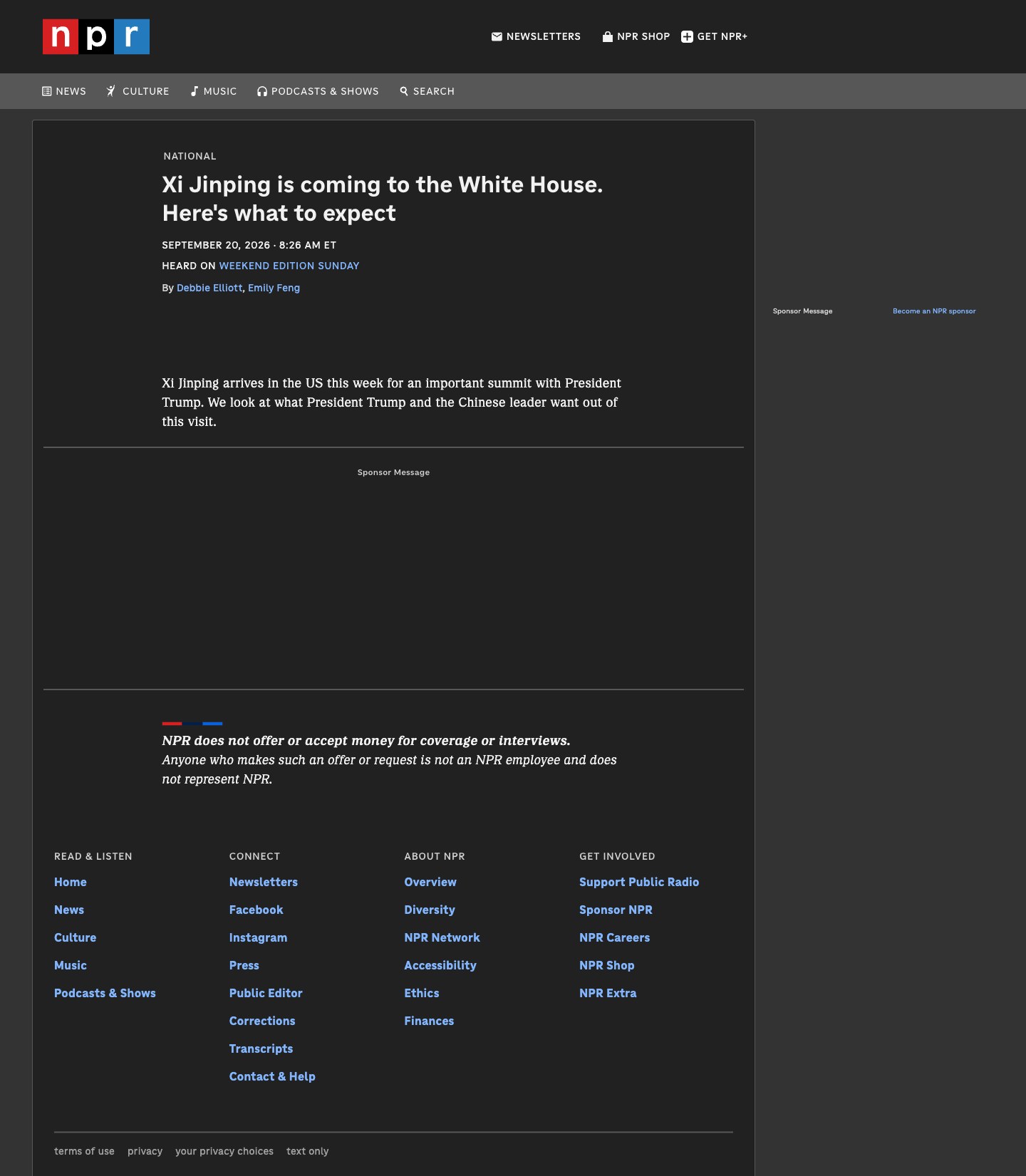 | author: | Debbie Elliott, Emily Feng | institution: | NPR | ¿porque no los dos? |
| tl;dr | The screenshot presents a brief preview of an anticipated White House summit between Chinese leader Xi Jinping and President Donald Trump. Dated September 20, 2026, it says Xi will arrive in the United States that week and promises to examine both leaders’ goals. The visible text does not actually describe those goals, provide supporting sources, or explain the summit’s agenda. | ||||
| deeper: | The visible wording treats both leaders neutrally and gives neither side preferential treatment. Calling the summit “important” adds mild emphasis, not clear political bias. Quality is limited by the extremely short excerpt: the headline promises expectations, but no substantive analysis, sourcing, or agenda appears. These scores apply only to the visible material, not any accompanying broadcast. The screenshot alone cannot establish the authenticity of the page or confirm the reported visit. | ||||
media: | |||||
| gen: 2026/09/20:20:31 in 29.7 sec (old)bias: 3 (Center) |
| type: newsquality: 66 |
| pts: 0 |
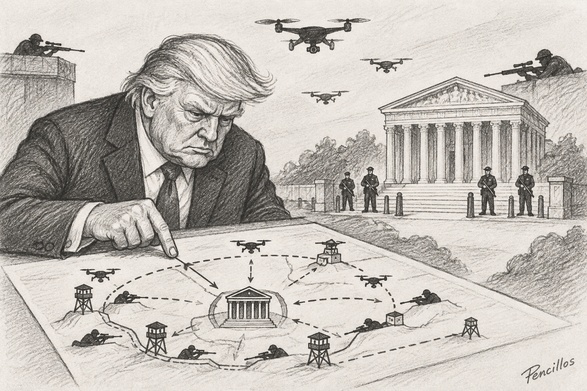
#politics#military#monuments#law#donald trump#washington dc#triumphal arch#national mall#national securit#military drones
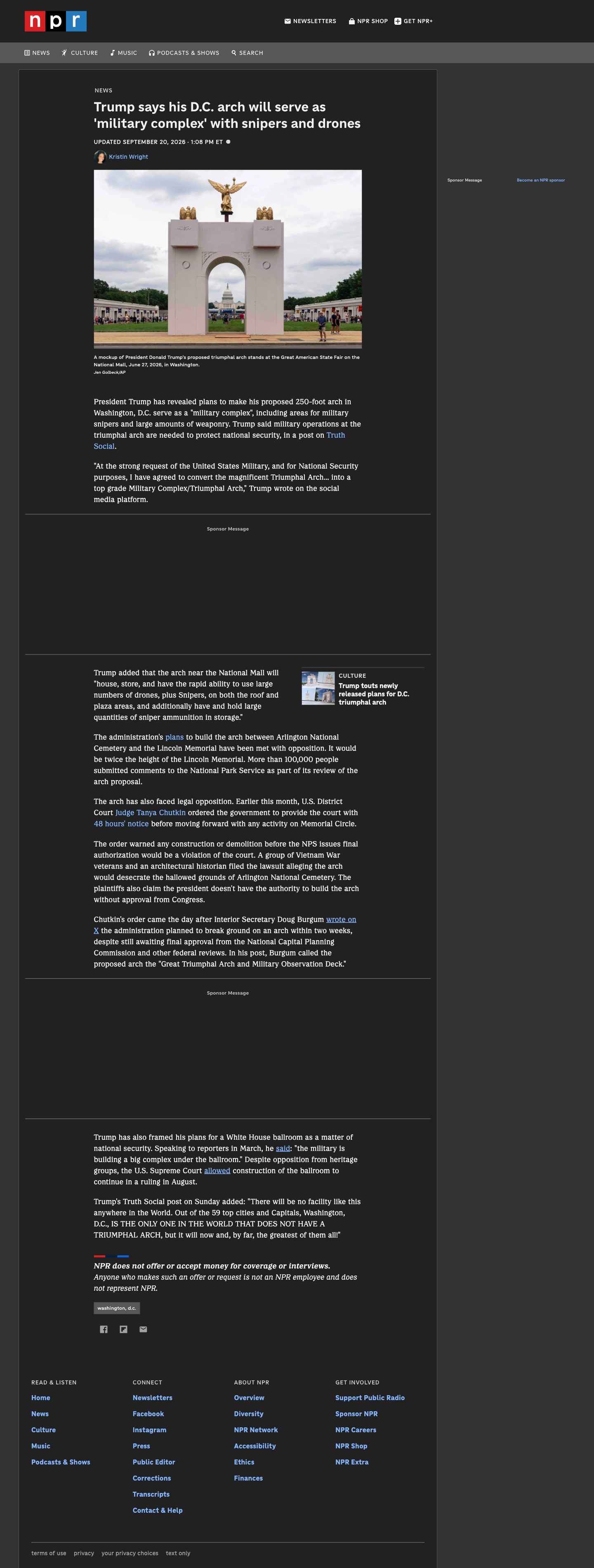 | author: | Kristin Wright | institution: | NPR | ¿porque no los dos? |
| tl;dr | The article reports that Trump wants his proposed 250-foot Washington, D.C., triumphal arch to double as a military facility housing drones, snipers and ammunition. It describes legal challenges, pending federal approvals and objections concerning nearby Arlington National Cemetery. It also connects the proposal to his national-security justification for a White House ballroom. These claims are attributed to social media posts and court actions; the screenshots alone do not establish their authenticity. | ||||
| deeper: | The language is mostly restrained, and the alarming headline reflects quotations attributed to Trump rather than editorial insults. Coverage emphasizes legal obstacles and opposition but includes the administration’s security rationale, without clearly endorsing a political ideology. Named sources, links and procedural detail strengthen the presentation. However, it offers no independent military assessment, leaves the sweeping claim about other cities’ arches unchecked, and does not clarify how many public comments opposed the project. Authenticity and linked evidence cannot be verified from screenshots. | ||||
media: | |||||
| gen: 2026/09/18:18:48 in 37.0 secbias: 3 (Unknown) |
| type: colorquality: 45 |
| pts: 0 |
#politics#war#diplomacy#iran#trump#iran war#donald trump#barack obama#us presidency#national securit
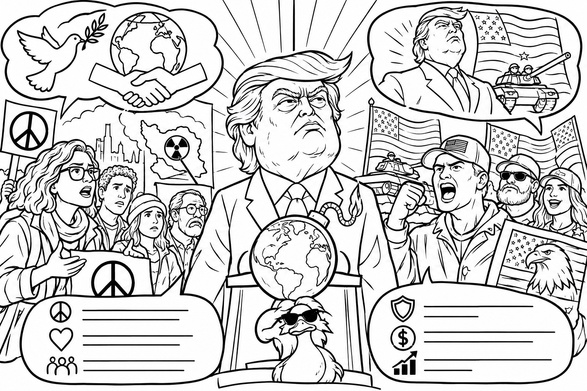
Leftist
Yet another disastrous consequence of unchecked power. The Trump administration's aggressive stance on Iran risks not just regional peace but global stability. Diplomacy should always triumph over reckless showmanship. This isn't just about jeopardizing a political career; it's jeopardizing lives. When will we learn that war isn't the answer? We need leaders who prioritize humanity over hubris, fostering dialogue over division.
Rightist
This is a classic case of fearmongering from the left. The Trump administration is taking strong steps to ensure national security. Liberals may call it jeopardizing, but it's about protecting American interests and showing strength against adversaries like Iran. Sometimes, peace requires power. It's time to stop apologizing for America and start safeguarding our future. Trump’s decisive actions show the world we won’t back down.
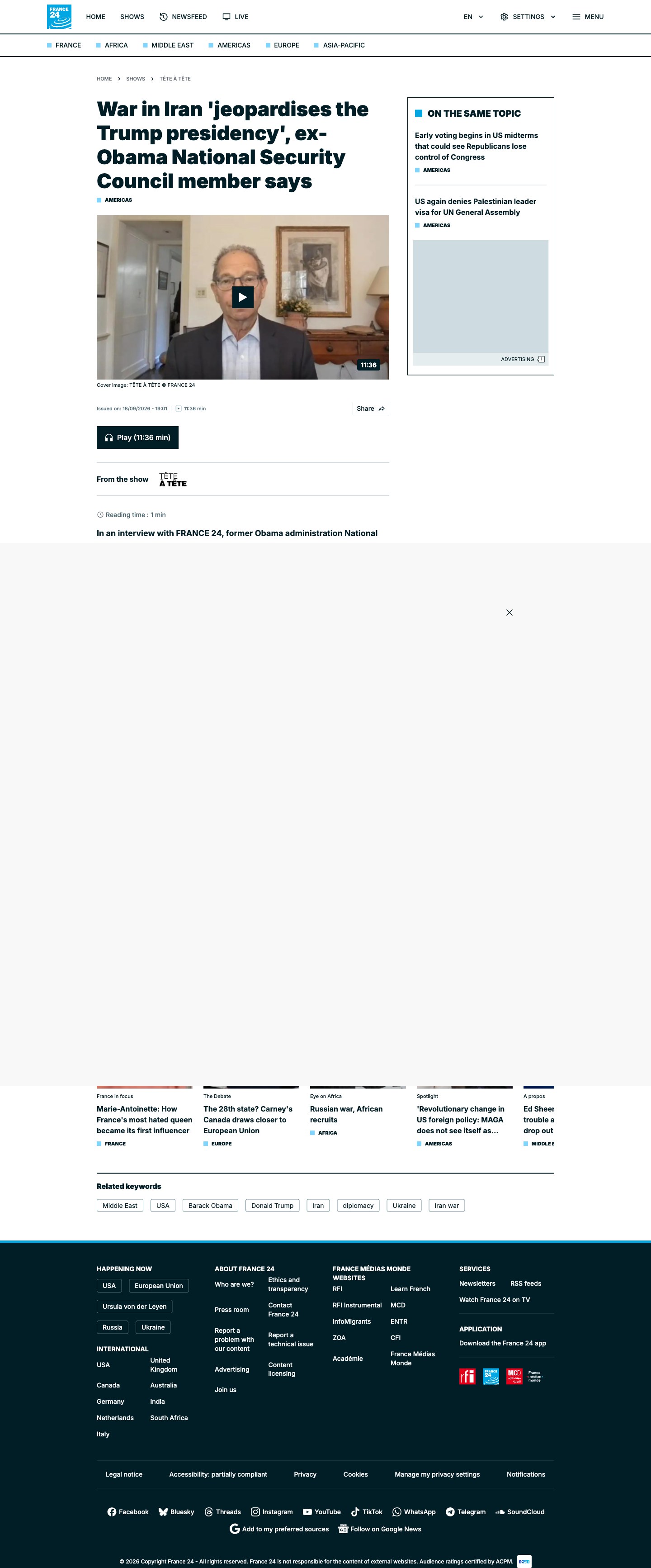 | author: | Unknown | institution: | France 24 | ¿porque no los dos? |
| tl;dr | The visible France 24 page previews an interview with a former Obama administration National Security Council member who argues that war in Iran jeopardises Donald Trump’s presidency. The headline presents this as the guest’s assessment, not an established outcome. Most of the article text is obscured, and the interview itself cannot be assessed from these screenshots. | ||||
| deeper: | The headline foregrounds a dramatic prediction from one former administration official, giving the visible coverage a narrow perspective. However, quotation marks and explicit attribution distinguish opinion from fact. Criticism of Trump alone does not establish a left–right position. The page supplies publication details and an interview format, but the obscured text prevents evaluation of evidence, questioning, context or competing views. The quality score applies only to the material visible here. | ||||
media: No Media Preview | |||||
| gen: 2026/09/12:23:27 in 35.6 sec (old)bias: 6 (Center-Left) |
| type: lolsquality: 61 |
| pts: 0 |

#basketball#womens sports#politics#media#labor#wnba#caitlin clark#sabreena merchan#indiana fever#chicago sky#culture wars lon
 | author: | Sam Fragoso | institution: | NPR / Fresh Air | ¿porque no los dos? |
| tl;dr | This Fresh Air interview with WNBA reporter Sabreena Merchant examines how the league’s commercial growth has coincided with disputes over race, gender and Caitlin Clark’s treatment. Merchant argues that political narratives overshadow basketball, while acknowledging Clark’s economic importance and shortcomings in officiating. The article also discusses player security, Sophie Cunningham’s comments about transgender athletes, leadership changes and reported salary increases under a new labor agreement. | ||||
| deeper: | The interview favors gender equality, marginalized communities and improved player compensation, giving it a center-left emphasis. Its framing largely adopts one guest’s interpretation, including sweeping claims about misogyny and Cunningham’s motives, without meaningful challenge. Clear attribution, links and basketball context are strengths. However, foul totals cannot establish whether defenders’ motives are racial, and several categorical claims lack supporting evidence. The statement that the NCAA excludes transgender athletes generally is overbroad. Reported 2026 developments cannot be independently verified from these screenshots. | ||||
media: No Media Preview | |||||
| gen: 2026/09/11:15:43 in 31.8 sec (old)bias: 3 (Center) |
| type: newsquality: 68 |
| pts: 0 |

#europe#politics#elections#extremism#diplomacy#luc frieden#luxembourg#european union#ukraine#united states#diplomacy ha
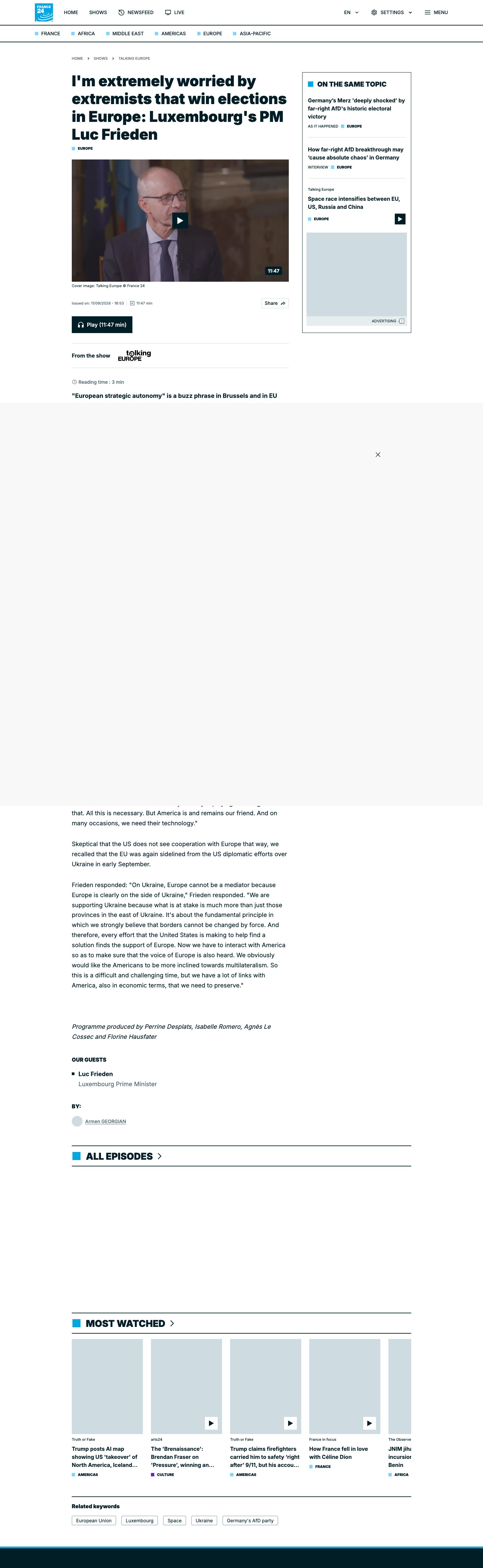 | author: | Armen Georgian | institution: | France 24 | ¿porque no los dos? |
| tl;dr | Luxembourg Prime Minister Luc Frieden warns about extremists winning European elections. In the visible interview excerpts, he supports Ukraine, argues that borders must not be changed by force, and advocates preserving economic and technological ties with the United States. The interviewer questions whether Washington treats Europe as a genuine diplomatic partner. Frieden calls for Europe's voice to be heard while maintaining transatlantic cooperation. Much of the article's middle section is obscured in the supplied images. | ||||
| deeper: | The visible text emphasizes European cooperation, multilateral diplomacy and transatlantic ties—positions spanning the political center. The emotionally charged headline is clearly attributed to Frieden rather than presented as the reporter's judgment. Direct quotations and a skeptical question provide useful firsthand reporting, but the excerpt largely conveys one leader's perspective without independent corroboration. A repeated attribution suggests minor editing weakness. These scores are provisional because substantial text is obscured and the video cannot be assessed from screenshots. | ||||
media: No Media Preview | |||||
| gen: 2026/09/10:16:49 in 40.3 sec (old)bias: 4 (Center-Left) |
| type: newsquality: 78 |
| pts: 0 |


| gen: 2026/09/10:16:45 in 40.7 sec (old)bias: 4 (Center-Left) |
| type: newsquality: 78 |
| pts: 0 |

 | author: | Hansi Lo Wang | institution: | NPR | ¿porque no los dos? |
| tl;dr | An NPR “Morning Edition” piece reports that Trump administration officials are reviving efforts to change how the U.S. Census is used for redistricting/apportionment, aiming to exclude millions of U.S. residents from a key count. The teaser text highlights the 14th Amendment’s requirement to count the “whole number of persons in each state,” signaling a constitutional dispute with major consequences for representation and voting maps. | ||||
| deeper: | The framing (“exclude millions”) and immediate emphasis on the 14th Amendment leans toward a rights/representation perspective, though the language shown is still mostly descriptive rather than inflammatory. Based on the screenshot alone, the story appears grounded in a concrete policy proposal with clear stakes and a relevant constitutional reference, suggesting solid journalistic quality. What’s missing in the visible portion is sourcing detail (documents, court precedents, proponents’ full rationale), which prevents a higher score. | ||||
media: No Media Preview | |||||
| gen: 2026/09/07:22:31 in 34.8 sec (old)bias: 5 (Center-Left) |
| type: newsquality: 78 |
| pts: 0 |
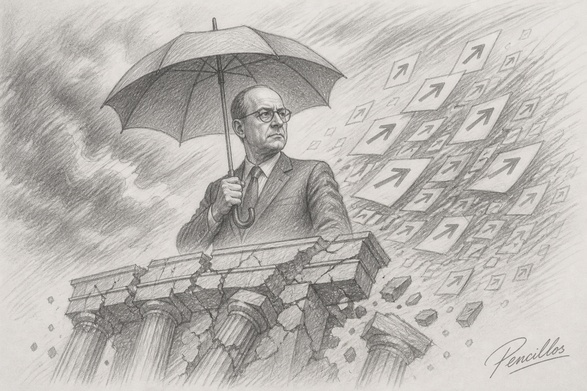
 | author: | Deborah Cole | institution: | The Guardian | ¿porque no los dos? |
| tl;dr | The article reports that German chancellor Friedrich Merz intends to remain in office after the AfD won a landslide in Saxony-Anhalt (about 44%). It describes the defeat as a major shock for Merz’s CDU, cites exit-poll evidence of very low approval for Merz, and outlines how coalition partners and commentators are reacting. It also summarizes AfD positions (immigration, public broadcasting, Russia/Ukraine) and notes concerns about extremist classification, potential coalition arithmetic, and alleged Russian interference ahead of further regional elections. | ||||
| deeper: | The reporting is largely factual (results, quotes, polling) but uses loaded descriptors (“far-right triumph,” “nativist,” “ash(en)-faced,” “fragrance salesman”) that signal a skeptical, alarmed framing toward AfD and a personalizing tone toward its candidate. It includes multiple viewpoints (Merz, critics, coalition partner, intelligence-service designation) but gives comparatively limited space to AfD voters’ policy motivations beyond grievance/identity themes. Quality is solid: clear narrative, relevant context, and specific figures; weaker on sourcing detail for some claims (e.g., interference allegations) and on distinguishing analysis from description. | ||||
| gen: 2026/09/07:05:25 in 25.3 sec (old)bias: 6 (Center-Left) |
| type: newsquality: 78 |
| pts: 0 |

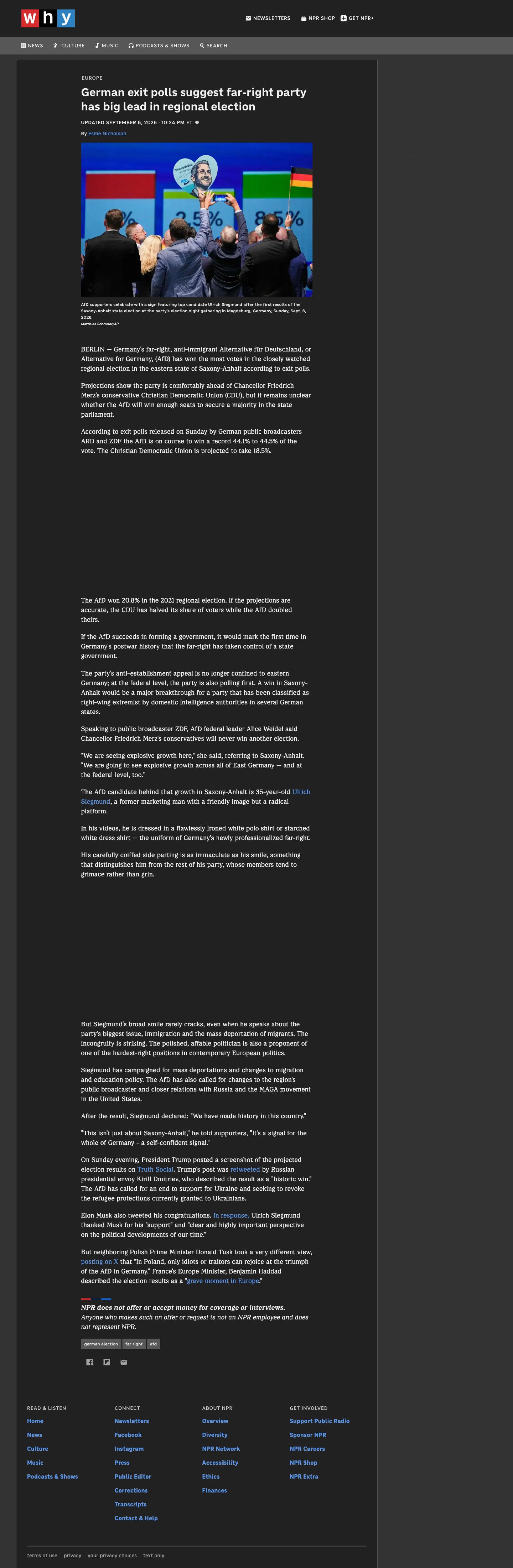 | author: | Esme Nicholson | institution: | NPR | ¿porque no los dos? |
| tl;dr | NPR reports that exit polls in Germany’s Saxony-Anhalt state election show the far-right AfD with a large lead (projected ~44.1–44.5%), far ahead of the CDU (~18.5%). The piece notes AfD’s rapid growth since 2021, the possibility of forming a first postwar far-right-led state government, and highlights top candidate Ulrich Siegmund’s messaging—especially on immigration and mass deportations. It also describes international reactions, including comments from Donald Tusk and France’s Europe minister, and references AfD’s positions on Russia and Ukraine aid. | ||||
| deeper: | The article is strongly framed around AfD as “far-right” and “anti-immigrant,” and includes subjective, image-focused characterizations of Siegmund (his smile, grooming, “incongruity”) that tilt toward editorial coloring rather than straight reporting. Still, core claims are anchored in specific exit-poll numbers and attributable sources (ARD/ZDF), and it distinguishes projections from confirmed outcomes. It could be higher quality with more detail on methodology/uncertainty of exit polls, coalition math, and a fuller presentation of AfD voters’ stated motivations beyond immigration. | ||||
media: No Media Preview | |||||
| gen: 2026/09/03:23:21 in 40.1 sec (old)bias: 6 (Center-Left) |
| type: newsquality: 78 |
| pts: 0 |

| gen: 2026/09/03:23:18 in 36.4 sec (old)bias: 3 (Center) |
| type: newsquality: 78 |
| pts: 0 |




owned and operated by: RPN Omnigalactic Insitutution as of: 2026/10/14: 21:36 in 0 ms
Enter Code
Login with Account