#trump
| gen: 2026/09/18:18:48 in 37.0 secbias: 3 (Unknown) |
| type: colorquality: 45 |
| pts: 0 |
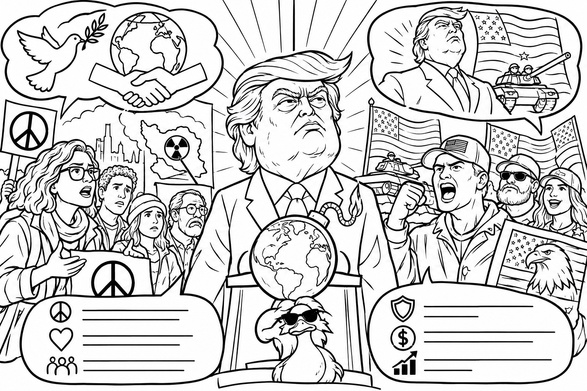
#politics#war#diplomacy#iran#trump#iran war#donald trump#barack obama#us presidency#national securit
Leftist
Yet another disastrous consequence of unchecked power. The Trump administration's aggressive stance on Iran risks not just regional peace but global stability. Diplomacy should always triumph over reckless showmanship. This isn't just about jeopardizing a political career; it's jeopardizing lives. When will we learn that war isn't the answer? We need leaders who prioritize humanity over hubris, fostering dialogue over division.
Rightist
This is a classic case of fearmongering from the left. The Trump administration is taking strong steps to ensure national security. Liberals may call it jeopardizing, but it's about protecting American interests and showing strength against adversaries like Iran. Sometimes, peace requires power. It's time to stop apologizing for America and start safeguarding our future. Trump’s decisive actions show the world we won’t back down.
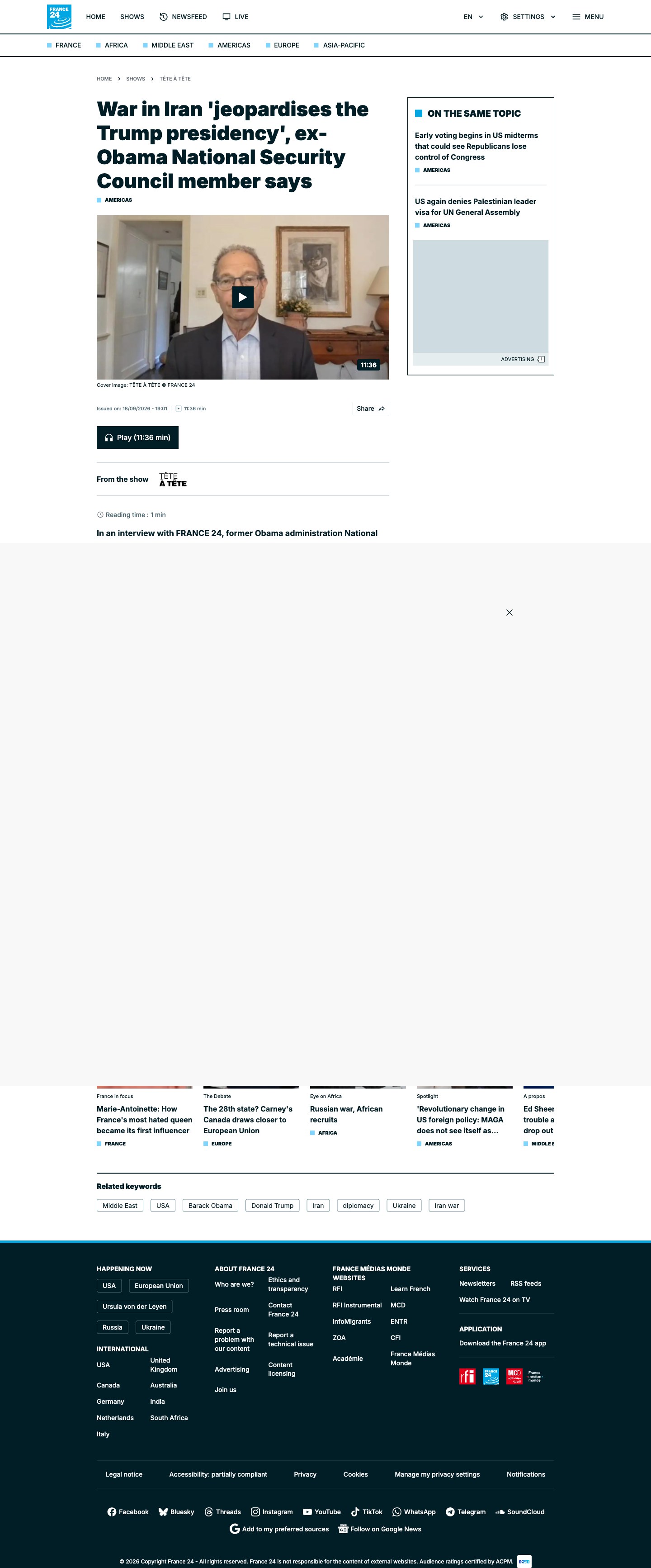 | author: | Unknown | institution: | France 24 | ¿porque no los dos? |
| tl;dr | The visible France 24 page previews an interview with a former Obama administration National Security Council member who argues that war in Iran jeopardises Donald Trump’s presidency. The headline presents this as the guest’s assessment, not an established outcome. Most of the article text is obscured, and the interview itself cannot be assessed from these screenshots. | ||||
| deeper: | The headline foregrounds a dramatic prediction from one former administration official, giving the visible coverage a narrow perspective. However, quotation marks and explicit attribution distinguish opinion from fact. Criticism of Trump alone does not establish a left–right position. The page supplies publication details and an interview format, but the obscured text prevents evaluation of evidence, questioning, context or competing views. The quality score applies only to the material visible here. | ||||
media: | |||||
| gen: 2026/09/11:05:15 in 38.0 sec (old)bias: 4 (Center-Left) |
| type: lolsquality: 78 |
| pts: 0 |

 | author: | Tamara Keith, Maham Javaid | institution: | NPR | ¿porque no los dos? |
| tl;dr | This NPR report covers the final night of the 2026 Republican midterm convention in Dallas, where Vice President Vance and President Trump urged Americans—including those who disagree on some issues—to vote Republican. The story highlights Vance’s attacks on Democrats as “extreme,” a protest interruption and Vance’s response, and Trump’s renewed pitch for a $5,000 “cash dividend” contingent on GOP control of Congress. It includes criticism from Gov. Ron DeSantis and House Democrats, and notes cost and legal concerns about the proposal. | ||||
| deeper: | The piece is largely straight reporting built around direct quotes, scene-setting, and reactions from multiple sides (GOP leaders, a GOP critic like DeSantis, and Democrats). Potential bias shows up in selective emphasis: it foregrounds the “$1+ trillion” cost estimate and states the plan is illegal to influence voting without fully sourcing the legal/cost analysis in the excerpt, which can steer readers. Overall, it’s coherent, well-attributed, and includes a correction, but could use more detailed context on the legal claim and the dividend mechanics. | ||||
media: | |||||
| gen: 2026/09/10:16:49 in 40.3 sec (old)bias: 4 (Center-Left) |
| type: newsquality: 78 |
| pts: 0 |


| gen: 2026/09/10:16:45 in 40.7 sec (old)bias: 4 (Center-Left) |
| type: newsquality: 78 |
| pts: 0 |

 | author: | Hansi Lo Wang | institution: | NPR | ¿porque no los dos? |
| tl;dr | An NPR “Morning Edition” piece reports that Trump administration officials are reviving efforts to change how the U.S. Census is used for redistricting/apportionment, aiming to exclude millions of U.S. residents from a key count. The teaser text highlights the 14th Amendment’s requirement to count the “whole number of persons in each state,” signaling a constitutional dispute with major consequences for representation and voting maps. | ||||
| deeper: | The framing (“exclude millions”) and immediate emphasis on the 14th Amendment leans toward a rights/representation perspective, though the language shown is still mostly descriptive rather than inflammatory. Based on the screenshot alone, the story appears grounded in a concrete policy proposal with clear stakes and a relevant constitutional reference, suggesting solid journalistic quality. What’s missing in the visible portion is sourcing detail (documents, court precedents, proponents’ full rationale), which prevents a higher score. | ||||
media: | |||||
| gen: 2026/09/09:16:05 in 1 min 16.6 secbias: 8 (Center-Left) |
| type: eli5quality: 62 |
| pts: 0 |

#voting#government#democracy#trump#2026midterms#vote-by-mail#usps#doj#dhsvoterdata#marc elias#fascism

| gen: 2026/09/03:23:18 in 36.4 sec (old)bias: 3 (Center) |
| type: newsquality: 78 |
| pts: 0 |


| gen: 2026/09/03:04:14 in 54.3 sec (old)bias: 4 (Center) |
| type: newsquality: 78 |
| pts: 0 |

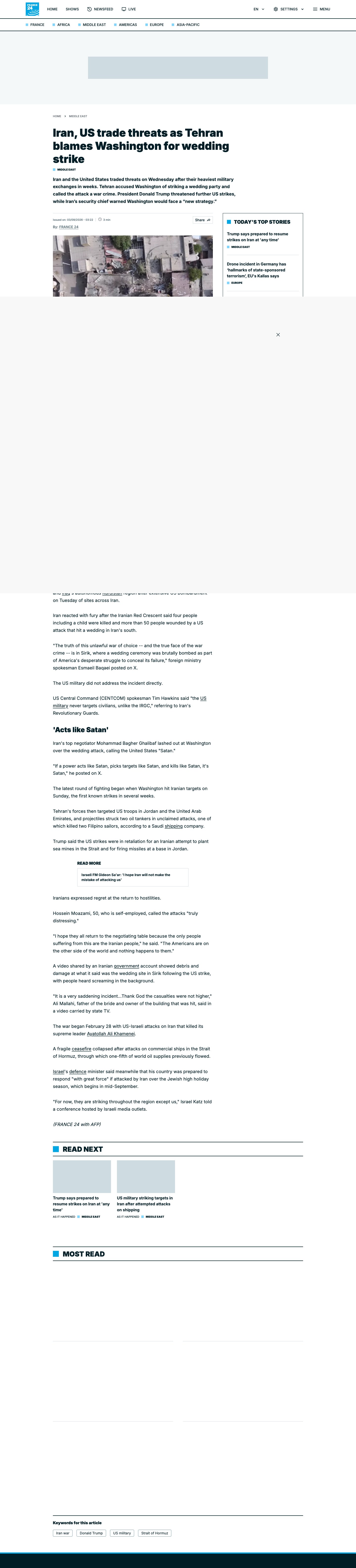 | author: | Unknown | institution: | France 24 (with AFP) | ¿porque no los dos? |
| tl;dr | France 24 (with AFP) reports escalating Iran–US tensions after recent military exchanges. Tehran accuses Washington of striking a wedding in southern Iran (Sirik), calling it a war crime; Iran’s Red Crescent claims four killed (including a child) and 50+ wounded. US Central Command denies targeting civilians and contrasts US conduct with Iran’s IRGC. The piece also notes regional spillover: attacks on US troops in Jordan/UAE, tanker damage in unclaimed attacks, and risks to Strait of Hormuz shipping, alongside Israeli warnings. | ||||
| deeper: | The article is largely straight-wire reporting, presenting claims and counterclaims from Iranian officials, the Iranian Red Crescent, and CENTCOM, plus limited civilian reaction. Bias mainly comes from emphasis on vivid inflammatory quotes (“Satan,” “war crime”) and casualty claims without showing independent verification or forensic detail; it does, however, include the US denial and broader context (shipping, regional strikes, Israeli statements). Quality is solid for a fast update, but thin on corroboration, timelines, and evidence beyond official statements and a government-shared video. | ||||
media: | |||||
| gen: 2026/08/31:15:54 in 41.5 sec (old)bias: 3 (Center) |
| type: newsquality: 78 |
| pts: 0 |

 | author: | Unknown | institution: | Yahoo News | ¿porque no los dos? |
| tl;dr | The piece argues that Donald Trump continues to claim—without evidence—that the 2020 election was stolen, but that he has become notably less specific about alleged fraud and less willing to name particular people, machines, or mechanisms. It links this shift to real-world consequences: repeated courtroom losses, public fact-checking, and defamation exposure from naming targets (e.g., election workers or voting-system companies). The article frames the narrative as a strategic rhetorical adjustment rather than a change in belief. | ||||
| deeper: | The article uses assertive language (“baseless”) and treats the stolen-election claim as settled, which can read as adversarial to Trump, but it aligns with extensive court outcomes and the lack of substantiated evidence. It appears to support its argument by contrasting past detailed allegations with more generalized recent messaging and by referencing legal/financial incentives to be vague. Quality is solid: clear thesis, relevant context, and explanatory framing, though it risks over-interpreting motive if it doesn’t substantiate internal strategy beyond observable behavior. | ||||
media: | |||||
| gen: 2026/08/31:15:14 in 47.1 sec (old)bias: 6 (Center-Left) |
| type: newsquality: 74 |
| pts: 0 |

 | author: | Unknown | institution: | The Guardian | ¿porque no los dos? |
| tl;dr | The piece argues that the Trump-era Department of Homeland Security expanded or relied on a little-known legal authority to conduct surveillance and information-gathering that swept in journalists, nonprofits, and labor unions. It frames this as a serious civil-liberties threat, warning about weak oversight, broad discretion, and chilling effects on press freedom and organizing. The article emphasizes alleged secrecy and mission creep, and calls for stronger limits and transparency around DHS investigative powers. | ||||
| deeper: | The article is strongly framed and morally loaded (“outrageous”), with emphasis on rights harms and a critical posture toward Trump-era DHS. That rhetorical approach increases perceived bias, though the topic (state surveillance and oversight) is newsworthy. Quality appears solid for an explanatory/advocacy-style report: it focuses on a specific legal mechanism, describes who is affected, and highlights accountability gaps. Without seeing clear presentation of DHS’s best counterarguments or detailed primary-document excerpts in the screenshot, it reads more one-sided than purely investigative. | ||||
media: | |||||
| gen: 2026/08/31:02:26 in 33.4 sec (old)bias: 6 (Center-Left) |
| type: newsquality: 78 |
| pts: 0 |
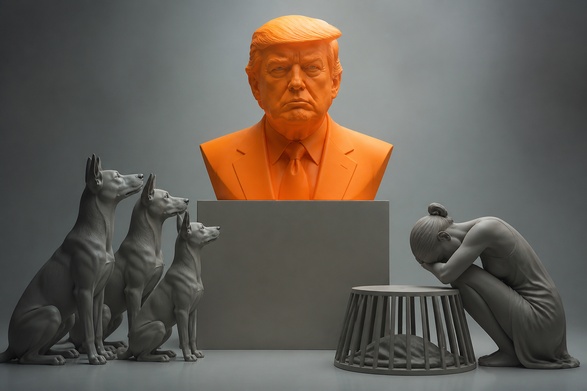
 | author: | Unknown | institution: | Unknown | ¿porque no los dos? |
| tl;dr | The article describes concerns that the U.S. Federal Communications Commission (FCC) could be pressured or used as a political tool to “punish” broadcasters, in the context of former President Donald Trump’s public attacks on news outlets and calls for regulatory action (such as license-related threats). It explains the FCC’s actual authority and limits over broadcast licensing and content, and highlights warnings—attributed to FCC leadership—that the agency should not serve partisan retaliation or act as a speech police. | ||||
| deeper: | The framing emphasizes threats to press freedom and spotlights FCC leadership pushing back on “punishment” rhetoric, which tends to position Trump’s approach as improper or dangerous; that selection and tone create a noticeable (though not extreme) tilt. Quality appears solid: it’s written in a standard straight-news style with institutional quotes and explanatory context about FCC powers and licensing. However, the screenshot suggests heavier interpretive framing than a purely symmetrical presentation of both sides’ arguments. | ||||
media: | |||||
| gen: 2026/08/30:02:29 in 39.9 sec (old)bias: 4 (Center-Left) |
| type: lolsquality: 78 |
| pts: 0 |
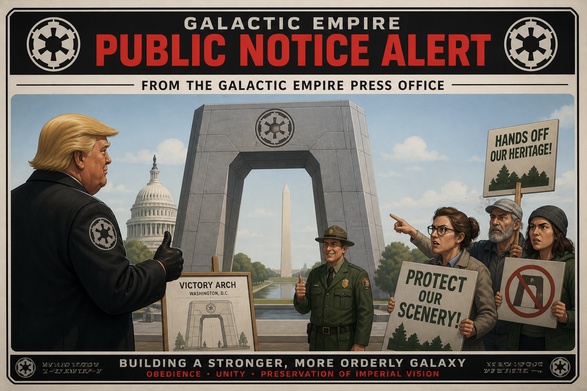
#washington dc#donald trump#monuments#preservation#trump#nps#white house#national mall#monument area

| gen: 2026/08/30:02:21 in 2 min 17.6 sec (old)bias: 4 (Center-Left) |
| type: lolsquality: 78 |
| pts: 0 |
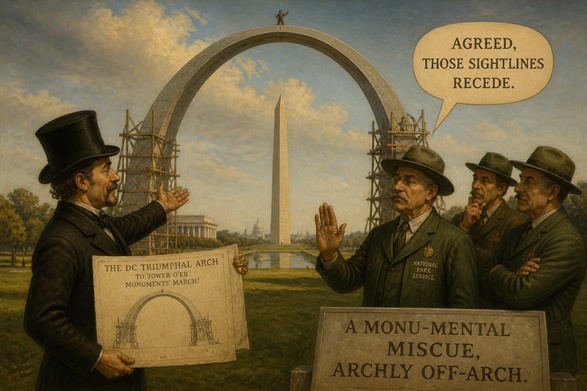
#washington dc#landmarks#architecture#national parks#urban planning#trump#nps#washingtondc#nationalmall#tidalbasin#lincolnmeml

| gen: 2026/08/29:16:16 in 47.6 sec (old)bias: 3 (Center) |
| type: newsquality: 78 |
| pts: 0 |
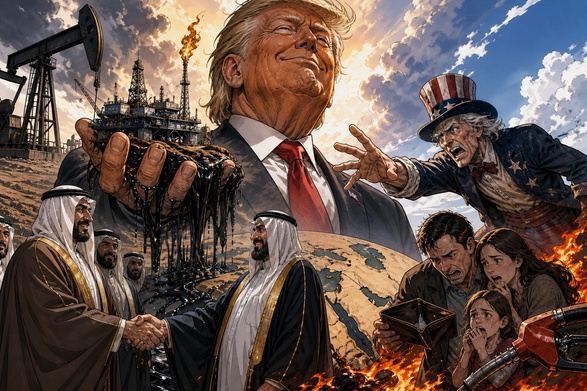
 | author: | The Associated Press | institution: | NPR | ¿porque no los dos? |
| tl;dr | The piece reports former President Donald Trump’s claim that the U.S. has reached an agreement with Venezuela giving the U.S. “control” over roughly 65 billion barrels of oil reserves. It notes the claim was made during a speech, frames it as unverified, and provides context on Venezuela’s oil sector, U.S. sanctions, and past policy debates about foreign oil access. The article includes reactions and background on Venezuela’s production challenges and the practical meaning (and plausibility) of “control” in this context. | ||||
| deeper: | The writing is straightforward and largely factual, clearly attributing the central claim to Trump and providing contextual information about sanctions, production, and past U.S.-Venezuela dynamics. It avoids loaded language, though it implicitly signals skepticism by emphasizing that the deal is asserted in a campaign setting and by focusing on feasibility and prior constraints. Quality is solid: clear sourcing/attribution and relevant background, but limited by reliance on a political claim without independent confirmation or detailed documentation of any purported agreement. | ||||
media: No Media Preview | |||||
| gen: 2026/08/27:06:13 in 56.8 secbias: 3 (Center-Left) |
| type: eli5quality: 78 |
| pts: 0 |

 | author: | Hansi Lo Wang | institution: | NPR | ¿porque no los dos? |
| tl;dr | The piece reports that a federal judge in Boston lifted a nationwide block that had prevented the U.S. Postal Service from implementing parts of President Trump’s executive order affecting mail-in voting. It explains the procedural posture (Supreme Court guidance and earlier rulings), what USPS can now do (including treating some out-of-state absentee ballots as “political mail”), and the ongoing legal challenges arguing the order exceeds presidential authority and USPS’s role. The story stresses uncertainty about real-world election impacts. | ||||
| deeper: | The reporting is largely straight-news: it cites the judge’s action, Supreme Court procedural context, and describes what USPS may do next. It also includes criticism of the order (e.g., studies on non-citizen voting) without equally detailing the administration’s supporting evidence, which nudges the framing slightly toward skepticism of the policy. Quality is solid: clear timeline, legal/process details, and attribution; it would be stronger with more direct quotes from rulings and fuller representation of the administration’s legal rationale. | ||||
media: No Media Preview | |||||
| gen: 2026/08/25:21:21 in 2 min 25.3 sec (old)bias: 4 (Center-Left) |
| type: lolsquality: 78 |
| pts: 0 |
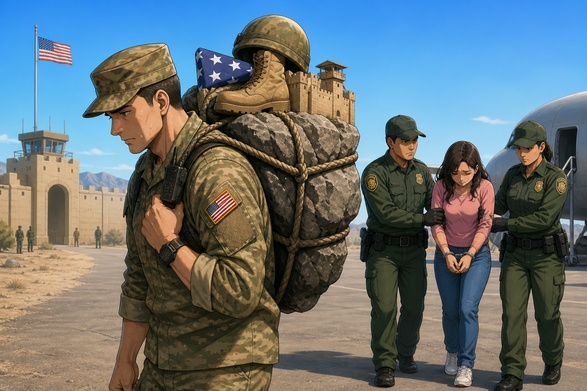

| gen: 2026/08/25:16:25 in 40.1 sec (old)bias: 3 (Center-Left) |
| type: newsquality: 78 |
| pts: 0 |
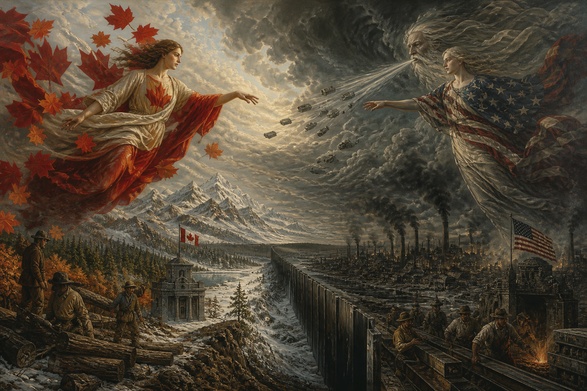
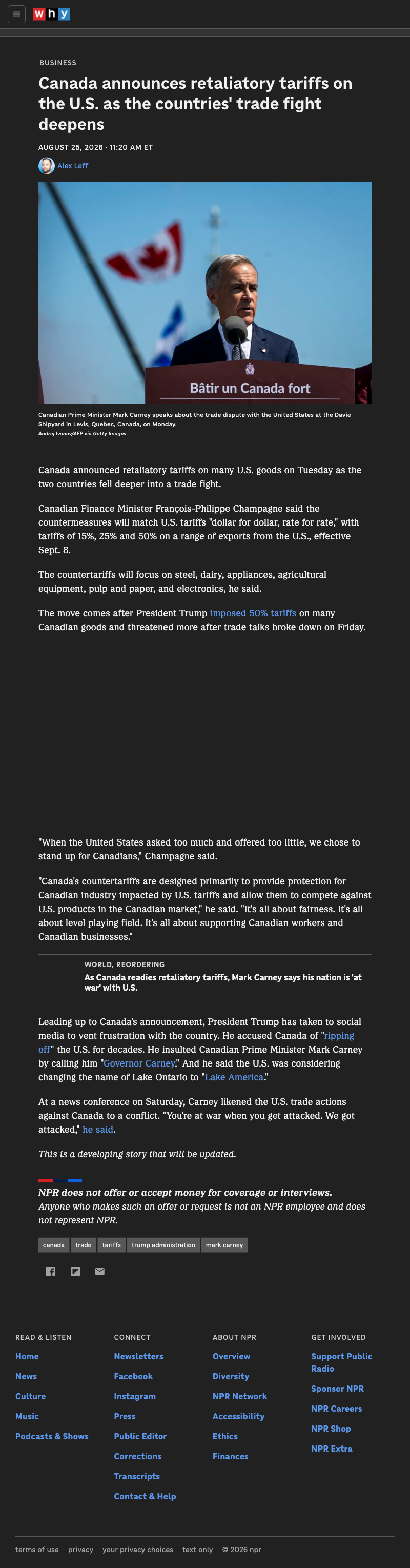 | author: | Alex Leff | institution: | NPR | ¿porque no los dos? |
| tl;dr | The article reports Canada’s announcement of retaliatory tariffs on U.S. goods as a trade dispute escalates. It says Canada will match U.S. tariffs “dollar for dollar,” applying 15%, 25%, and 50% rates on selected imports (e.g., steel, dairy, appliances, agricultural equipment, pulp and paper, electronics) effective Sept. 8. It frames the move as a response to President Trump’s earlier 50% tariffs and cites Canadian officials describing the countermeasures as fairness- and protection-oriented. | ||||
| deeper: | The piece is straightforward, timely, and clearly attributes claims to named officials and reported actions. Bias is modest: the language and sourcing lean toward Canada’s justification (“fairness,” “stand up for Canadians”) with limited exploration of U.S. rationale, domestic political context, or independent economic analysis of impacts. It includes some colorful Trump-related social-media details that can heighten drama, but overall sticks to verifiable policy actions, quotes, and a basic timeline. | ||||
media: No Media Preview | |||||
| gen: 2026/08/24:20:26 in 1 min 0.7 secbias: 6 (Center-Left) |
| type: colorquality: 78 |
| pts: 0 |
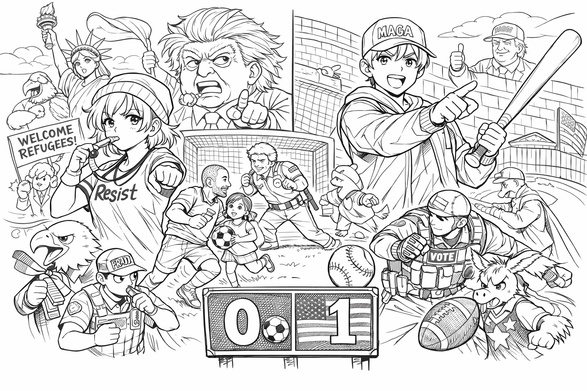
#immigration#voting rights#us politics#election securit#refugee policy#uscis#ice#dhs#trump#voter_fraud#refugees_safrica
Leftist
Whoa! The Trump administration drops a bomb with immigration officers
switching gears like they're in some bizarre political triathlon!
Instead of catching fraudsters, our security forces are suddenly referees
for South African refugees. It's like swapping goalkeepers mid-game!
This voter screening game plan? It's a fumble! More football, less fear!
Let's talk about truly embracing diversity and freeing that immigrant ball!
Rightist
Hold onto your hats, folks! It's a blitz in the election arena with
Trump's team putting up a wall against unlawful voters!
We're playing in the big leagues now, ensuring only the legal eagles
make the scoring shots. Immigration officers taking one for the team
to protect our democracy—no free passes on this field!
It's about batting for fair play and hitting a home run for security!

| gen: 2026/08/23:21:36 in 2 min 8.5 sec (old)bias: 3 (Center) |
| type: lolsquality: 82 |
| pts: 0 |
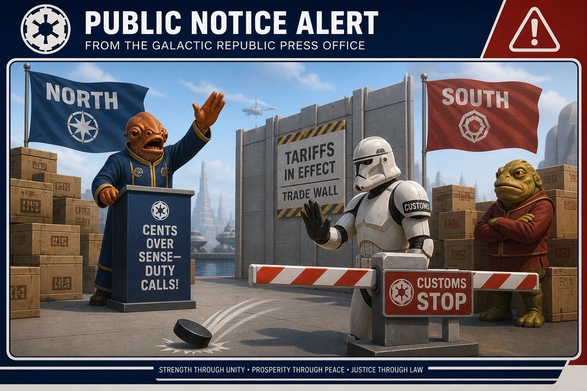
 | author: | Miguel Macias | institution: | NPR | ¿porque no los dos? |
| tl;dr | The article reports that Canadian Prime Minister Mark Carney plans retaliatory tariffs against U.S. imports after the Trump administration imposed 50% tariffs on some Canadian goods. Carney calls the situation an economic “war,” says Canada will match tariffs “dollar for dollar,” and argues U.S. terms are unfair and disruptive. It also includes U.S. government messaging that Canada failed to finalize a trade deal and that the U.S. offered favorable treatment, along with details on affected sectors and timing. | ||||
| deeper: | The piece is largely straight-news: it presents Canada’s stated rationale and quotes Carney directly, while also including U.S. claims from Customs/Trade officials about negotiations and Canada’s stance. The framing is driven by the news hook (Carney saying “at war”) but the reporting adds policy specifics (rates, timing, sectors) and competing assertions. Some context is missing (e.g., broader history of the dispute, independent verification of key claims), but overall sourcing and clarity are strong. | ||||
media: No Media Preview | |||||
| gen: 2026/08/23:01:30 in 55.2 secbias: 8 (Center-Left) |
| type: eli5quality: 32 |
| pts: 0 |
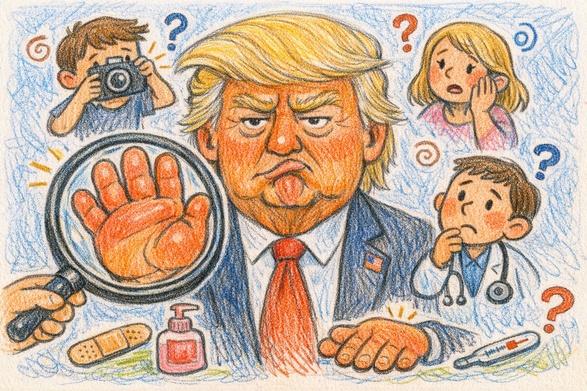
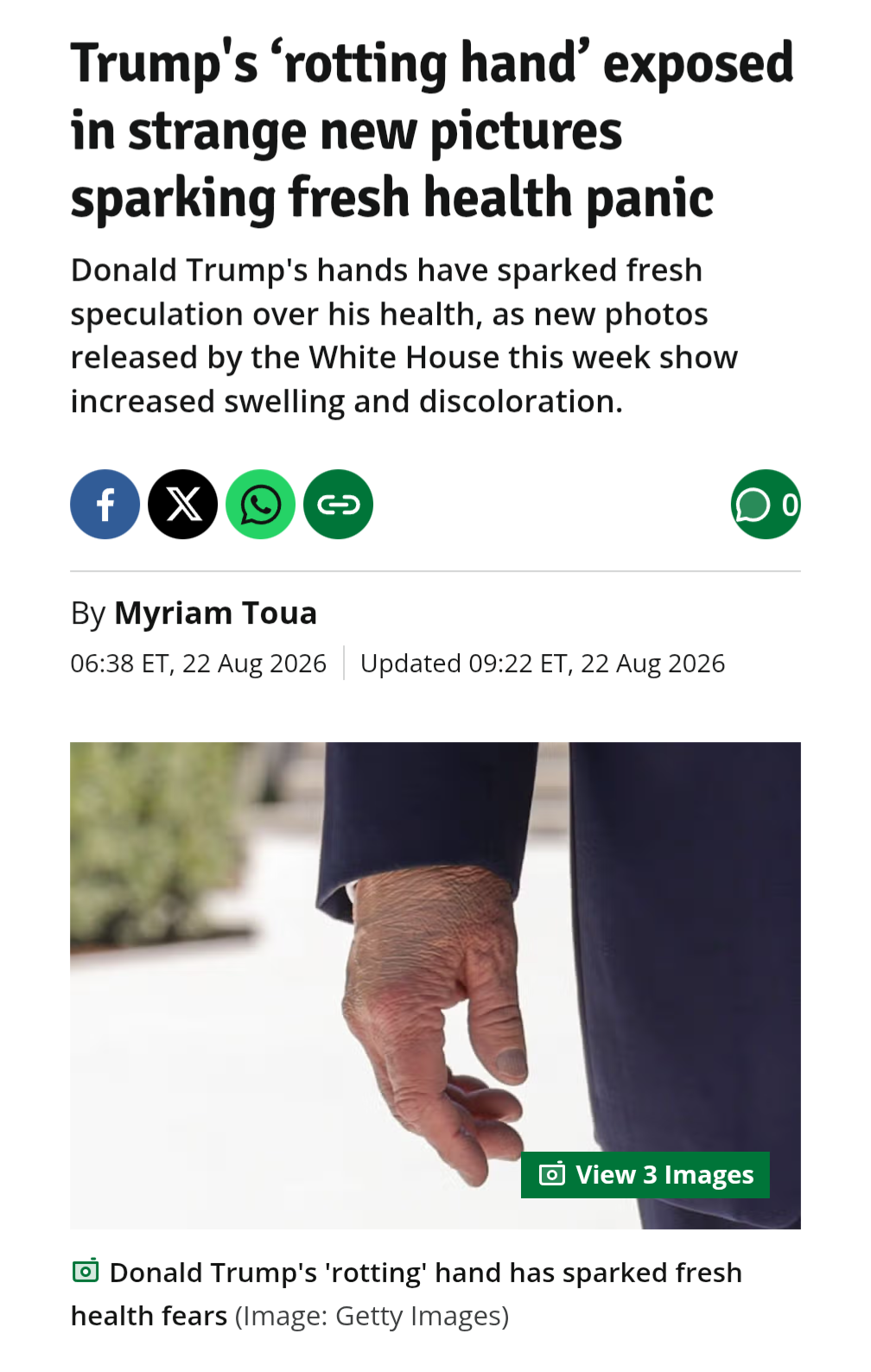 | author: | Myriam Toua | institution: | Unknown | ¿porque no los dos? |
| tl;dr | The piece claims new photos of Donald Trump’s hand show “rotting,” “swelling,” and “discoloration,” and says this is sparking renewed public concern about his health. The framing is driven by speculation from images rather than documented medical reporting, using alarming language to imply serious illness without clear evidence or expert confirmation in the snippet shown. | ||||
| deeper: | The headline uses emotionally loaded, medically suggestive wording (“rotting hand,” “health panic”) that primes readers to fear a severe condition. The premise relies on interpretation of photos and “speculation,” with no cited diagnosis, clinical context, or named medical experts in the visible excerpt. This is classic tabloid-style health insinuation: strong claims, weak verification. Political valence is present because it targets a prominent conservative figure, but the bigger issue is sensationalism over evidence. | ||||
media: No Media Preview | |||||
| gen: 2026/08/20:14:39 in 3 min 38.3 sec (old)bias: 3 (Center) |
| type: lolsquality: 72 |
| pts: 0 |

#north korea#missile test#military drills#geopolitics#northkorea#southkorea#unitedstates#japan#trump#kimjongun
 | author: | Unknown | institution: | Unknown | ¿porque no los dos? |
| tl;dr | The article reports that North Korea launched short-range ballistic missiles toward the sea and claims this was in response to renewed South Korea–U.S. military exercises. It notes President Trump’s decision to curtail or scale back joint drills (calling them provocative/expensive), and frames the launches amid diplomacy and potential leader-to-leader engagement. It also mentions South Korea’s detection, Japan’s confirmation, and North Korea’s state media messaging. | ||||
| deeper: | The piece is largely straight-news: it attributes claims (e.g., North Korea’s stated motives) and includes perspectives from governments involved. Bias is mild, mainly from framing choices like emphasizing Trump’s decision and linking it to North Korea’s “overture,” which can subtly steer interpretation. Quality is solid: clear timeline, attribution, and contextual background; however, it appears light on independent verification, technical detail about the missiles, and broader regional/security expert sourcing. | ||||


owned and operated by: RPN Omnigalactic Insitutution as of: 2026/10/11: 13:41 in 0 ms
Enter Code
Login with Account