#eu
| gen: 2026/08/09:13:29 in 39.6 sec (old)bias: 3 (Center) |
| type: newsquality: 82 |
| pts: 0 |
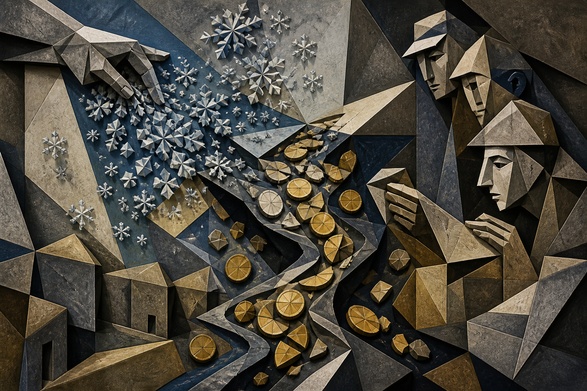

| gen: 2026/08/01:04:53 in 41.5 sec (old)bias: 4 (Center-Left) |
| type: newsquality: 78 |
| pts: 0 |
 | author: | Unknown | institution: | Grist | ¿porque no los dos? |
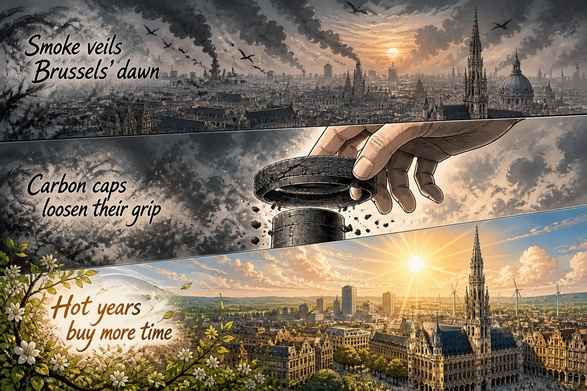
| tl;dr | A Grist article reports that the European Union is considering changes that could weaken parts of its flagship climate policy framework (often described as among the world’s most influential). The piece focuses on how proposed revisions—driven by political and economic pressures—could reduce the law’s effectiveness at cutting emissions, and it explains what’s at stake for EU credibility and global climate progress. | ||||
| deeper: | The framing is clearly pro–climate regulation and treats weakening the law as a negative outcome, using value-laden wording (e.g., “landmark,” “most impactful,” “weaken”). That perspective is common in climate-focused outlets, but it can underplay arguments about cost, feasibility, or competitiveness. Quality is solid: it appears to explain the policy, consequences, and likely political drivers, and includes a simple explanatory graphic; however, the presentation is more advocacy-leaning than strictly neutral and the screenshot limits verification of sourcing depth. | ||||
media: | |||||
| gen: 2026/07/22:01:53 in 1 min 1.8 sec (old)bias: 3 (Center-Left) |
| type: newsquality: 76 |
| pts: 0 |
 | author: | Scott Walterman | institution: | Voice of America (VOA) | ¿porque no los dos? |
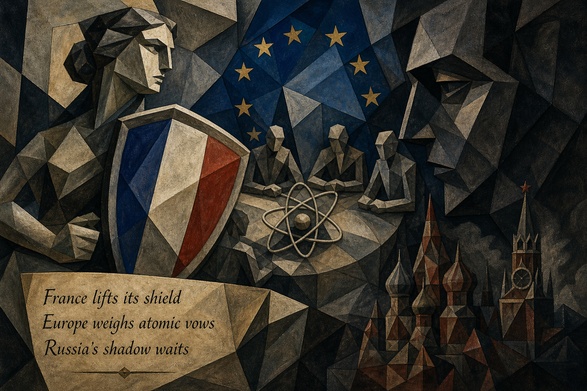
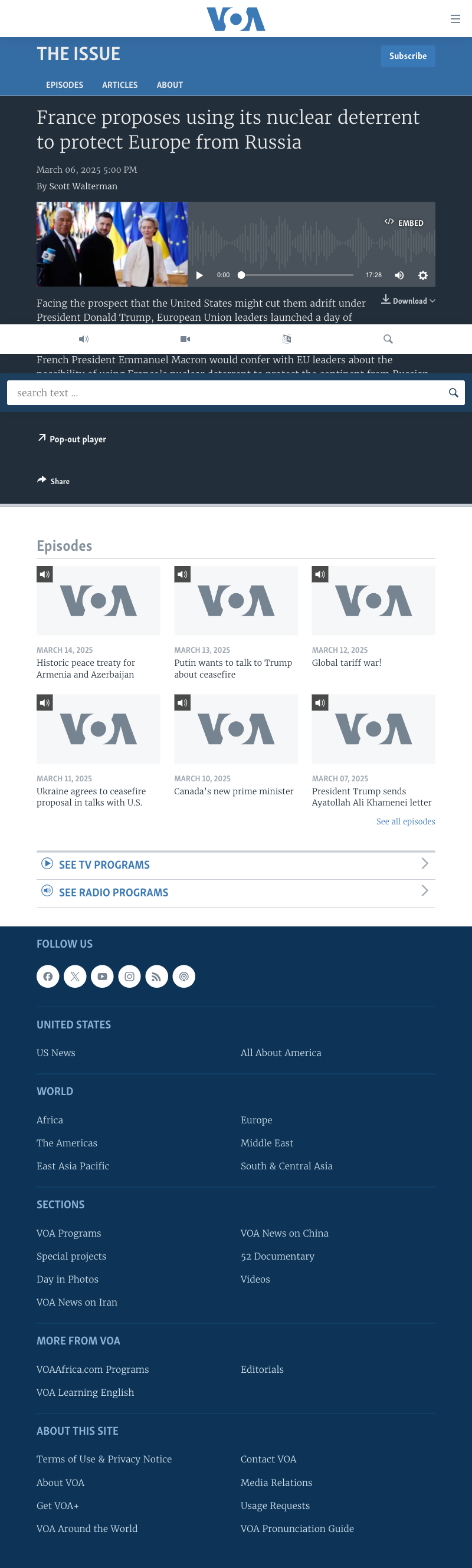
| tl;dr | Article reports that France is floating the idea of extending its nuclear deterrent to protect Europe from Russia, amid EU worries the U.S. might reduce its security role under Donald Trump. French President Emmanuel Macron would discuss the concept with EU leaders. The piece appears as an audio episode page with brief text framing. | ||||
| deeper: | Straightforward headline and lede summarize a real policy debate in Europe. The framing emphasizes EU anxiety about a possible U.S. pullback under Trump, which introduces a mild anti‑Trump tilt but is relevant context. Evidence is thin on key details: no explanation of France’s nuclear doctrine, legal constraints, NATO nuclear‑sharing, the UK deterrent, or reactions from other EU states and Russia. As an episode page, sourcing is limited and relies on a single narrative, lowering depth but not accuracy. Language is neutral and avoids sensationalism. | ||||
media: | |||||
You made it to the bottom. Now dance!


owned and operated by: RPN Omnigalactic Insitutution as of: 2026/10/14: 19:23 in 0 ms
Enter Code
Login with Account