#policy
| gen: 2026/08/25:21:21 in 2 min 25.3 sec (old)bias: 4 (Center-Left) |
| type: lolsquality: 78 |
| pts: 0 |


| gen: 2026/08/20:15:13 in 47.1 sec (old)bias: 5 (Unknown) |
| type: newsquality: 20 |
| pts: 0 |


| gen: 2026/08/19:05:14 in 1 min 10.4 secbias: 3 (Center) |
| type: colorquality: 62 |
| pts: 0 |
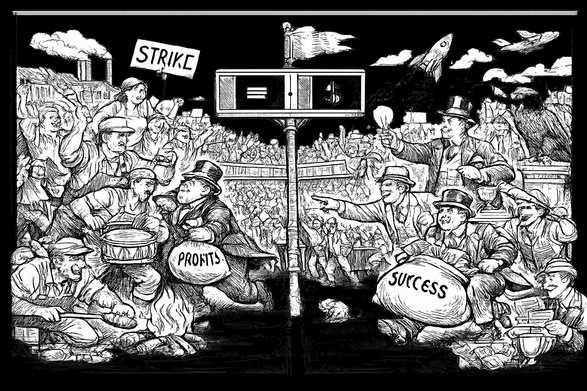
Leftist
Whoa, folks! It's a wild scene on the green pitch of labor rights! We've got workers elbow deep in the struggle, drumming up the fight for fair wages and stock payouts! It's people versus profit, the ultimate battle for equality! The crowd goes wild as corporate fat cats try to slip past with profits, but the underdogs are holding strong. It's a nailbiter and a game-changer. Solidarity is on fire tonight!
Rightist
Alright, let's shift gears to the power play of innovation and capitalism. Here we've got the titans of industry forging the path of prosperity, crafting the plays while workers hustle in the trenches. The crowd roars as the free market champions press forward! It's like watching a well-oiled machine; profits are the name of the game, baby! The American dream is alive and kicking, folks!

| gen: 2026/08/04:15:04 in 47.2 sec (old)bias: 3 (Center-Left) |
| type: newsquality: 82 |
| pts: 0 |
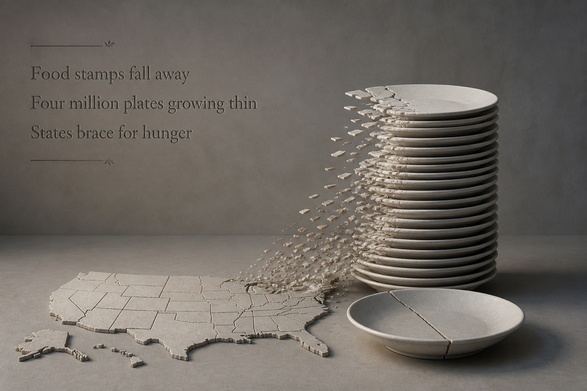
 | author: | Unknown | institution: | NPR | ¿porque no los dos? |
| tl;dr | The piece reports that more than 4 million people have stopped receiving SNAP benefits as pandemic-era rules and other eligibility provisions change. It explains the end of emergency allotments, shifting eligibility calculations, and how administrative churn and policy changes can remove recipients even when need remains. The article uses data, expert commentary, and examples of household impacts to describe what changed, who is most affected, and why caseloads are falling. | ||||
| deeper: | Bias is modest: the framing emphasizes hardship and access to food assistance, with sympathetic examples and language that highlights consequences for low-income households. Still, it generally grounds claims in numbers, policy details, and quoted experts rather than ideology. Quality is strong: it’s clearly structured, explains complex SNAP rule changes, and provides context (pandemic-era expansions ending, eligibility/work requirements, administrative processes). It would be stronger with more space for opposing policy rationales (e.g., budgetary tradeoffs, fraud/overpayment concerns) and clearer attribution for every headline statistic. | ||||
media: | |||||
| gen: 2026/08/02:23:36 in 2 min 17.4 sec (old)bias: 4 (Center-Left) |
| type: lolsquality: 78 |
| pts: 0 |

#education#schoolboard#civics#journalism#investigation#texas#legislature#specialsession#publicschool#policy
 | author: | Unknown | institution: | ProPublica | ¿porque no los dos? |
| tl;dr | The image appears to be a ProPublica investigative-style article page focused on a Texas “special session” and education policy, with emphasis on political maneuvering and the consequences for public schooling. The layout and accompanying photo suggest reporting on lawmakers, power brokers, and policy outcomes (likely a contested education initiative) rather than a straight breaking-news brief. The text is too small in this screenshot to reliably extract precise claims, names, or figures without risk of misquoting. | ||||
| deeper: | The article presentation and outlet indicate accountability journalism: it appears to scrutinize government actions, highlight impacts on public institutions, and foreground power dynamics—an approach that can create a mild-to-moderate leaning toward reform/oversight framing. ProPublica generally uses document-heavy, narrative investigations and emphasizes public-interest harms, which supports a strong quality score. However, this specific screenshot is not legible enough to verify the exact sourcing, counterarguments, or key details, so the quality score is tempered. | ||||
media: | |||||
| gen: 2026/08/01:04:53 in 41.5 sec (old)bias: 4 (Center-Left) |
| type: newsquality: 78 |
| pts: 0 |

 | author: | Unknown | institution: | Grist | ¿porque no los dos? |
| tl;dr | A Grist article reports that the European Union is considering changes that could weaken parts of its flagship climate policy framework (often described as among the world’s most influential). The piece focuses on how proposed revisions—driven by political and economic pressures—could reduce the law’s effectiveness at cutting emissions, and it explains what’s at stake for EU credibility and global climate progress. | ||||
| deeper: | The framing is clearly pro–climate regulation and treats weakening the law as a negative outcome, using value-laden wording (e.g., “landmark,” “most impactful,” “weaken”). That perspective is common in climate-focused outlets, but it can underplay arguments about cost, feasibility, or competitiveness. Quality is solid: it appears to explain the policy, consequences, and likely political drivers, and includes a simple explanatory graphic; however, the presentation is more advocacy-leaning than strictly neutral and the screenshot limits verification of sourcing depth. | ||||
media: | |||||
| gen: 2026/07/11:15:27 in 1 min 18.7 sec (old)bias: 5 (Center-Left) |
| type: lolsquality: 76 |
| pts: 0 |
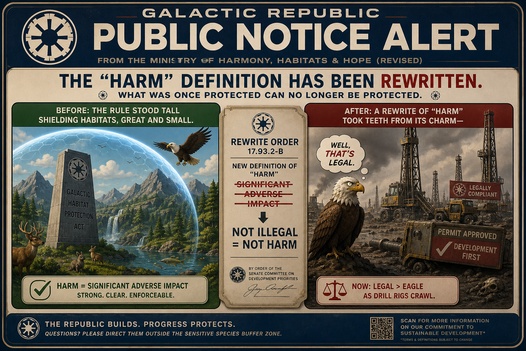
#environment#wildlife#policy#regulation#conservation#endangered speci#wildlife protect#trump administra#environmental la#interior departm#oil drilling and
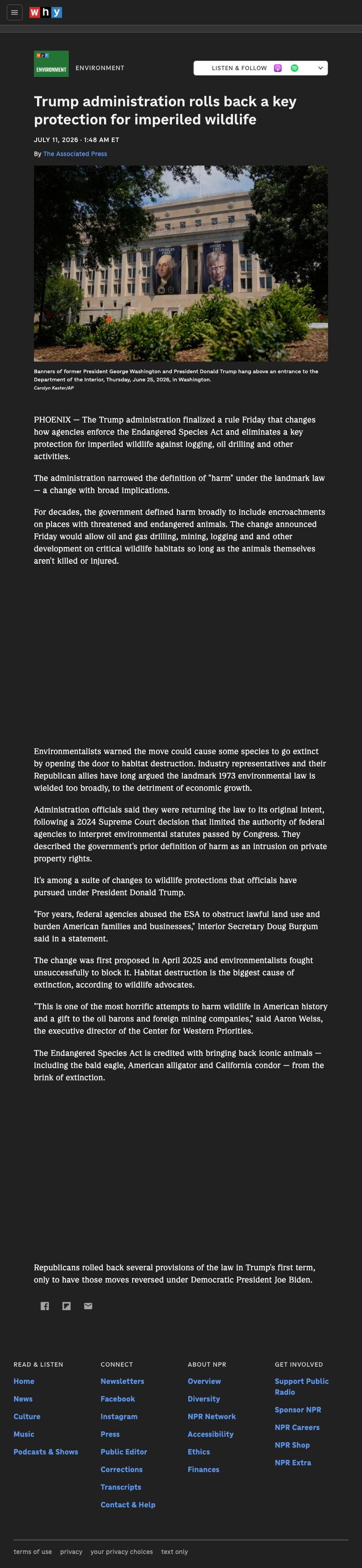 | author: | The Associated Press | institution: | NPR | ¿porque no los dos? |
| tl;dr | The article reports that the Trump administration finalized a rule narrowing the Endangered Species Act’s definition of “harm,” potentially allowing development in endangered species’ habitats as long as animals are not directly injured. It presents environmentalists’ warnings alongside administration and industry arguments about property rights, economic growth, and agency overreach. The article emphasizes the potential ecological consequences and frames the change as a rollback of wildlife protection. | ||||
| deeper: | The report is attributed to The Associated Press and includes perspectives from environmental advocates, Interior Secretary Doug Burgum, administration officials, industry-aligned Republicans, and the Center for Western Priorities. That gives it reasonable balance and factual context. However, the headline’s wording—“rolls back a key protection”—and the prominent placement of strongly charged environmental criticism give the article a clear tilt toward emphasizing ecological risks. The administration’s position is presented, but largely through official assertions rather than detailed legal or economic analysis. The visible article is also relatively brief, lacks links to the final rule or underlying studies, and contains a minor wording error (“and and other development”). | ||||
media: | |||||
You made it to the bottom. Now dance!


owned and operated by: RPN Omnigalactic Insitutution as of: 2026/10/14: 12:21 in 0 ms
Enter Code
Login with Account