#nuclear
| gen: 2026/08/08:06:37 in 34.5 sec (old)bias: 2 (Center) |
| type: newsquality: 78 |
| pts: 0 |
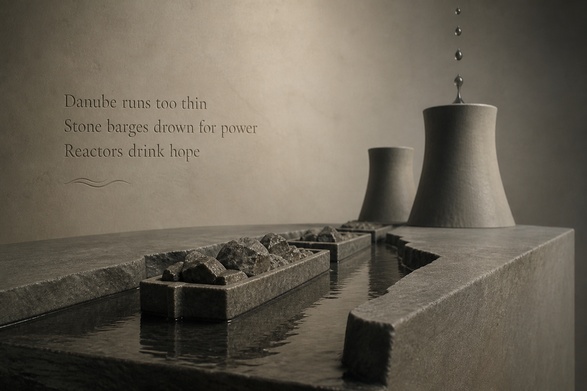
 | author: | Unknown | institution: | Yahoo News | ¿porque no los dos? |
| tl;dr | The article reports that Romania is urgently sinking four barges in the Danube River to stabilize water levels/flow needed for the Cernavodă nuclear power plant, aiming to keep its second reactor operating amid unusually low river conditions. It frames the move as an emergency engineering measure to protect cooling-water intake and maintain electricity production, while noting broader regional impacts of low water on navigation and infrastructure. | ||||
| deeper: | The piece is largely straight, event-driven reporting: it describes what Romania is doing, why it matters (nuclear reactor operation and power supply), and the immediate environmental/river-conditions context. Language is mostly neutral and technical, with limited emotive framing. Potential bias comes from reliance on official/operational perspectives (energy security, plant continuity) with comparatively less detail on environmental, downstream, or civic critique. Overall quality is solid for a wire-style report, though it appears light on independent experts and quantified risk tradeoffs. | ||||
media: | |||||
| gen: 2026/08/04:14:35 in 1 min 10.9 sec (old)bias: 4 (Center) |
| type: newsquality: 78 |
| pts: 0 |
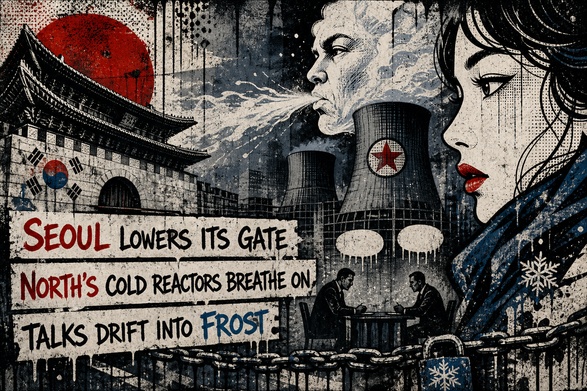
 | author: | Unknown | institution: | Unknown | ¿porque no los dos? |
| tl;dr | The piece reports that South Korea is shifting away from a “denuclearization-first” approach toward North Korea, arguing that insisting on prior denuclearization has stalled diplomacy. It describes Seoul’s newer emphasis on deterrence and risk management while leaving room for talks. The article explores how Pyongyang might respond—continuing weapons development, leveraging Russia/China ties, or testing Seoul’s posture—while noting that negotiations remain difficult without credible incentives and security guarantees on both sides. | ||||
| deeper: | The article is largely explanatory and sources its claims to officials and analysts, but it frames policy change as a practical correction to a failed strategy, which subtly favors Seoul’s new approach. North Korea’s position is presented mostly through inferred motives and prior behavior rather than direct, verifiable statements. Strengths include clear context and scenario analysis; weaknesses include limited empirical evidence for predicting Pyongyang’s next move and a tendency to treat “deterrence/pressure vs talks” as the main policy spectrum. | ||||
media: | |||||
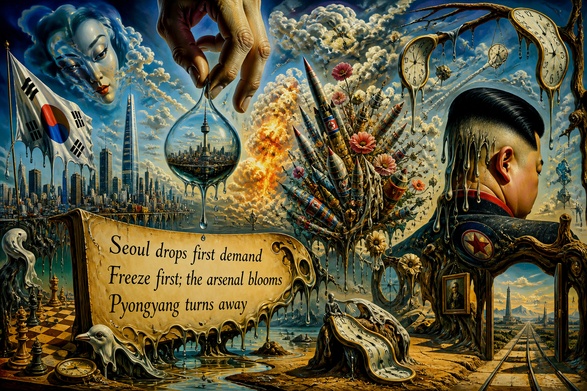

| gen: 2026/07/24:13:04 in 1 min 27.1 sec (old)bias: 4 (Center) |
| type: newsquality: 72 |
| pts: 0 |
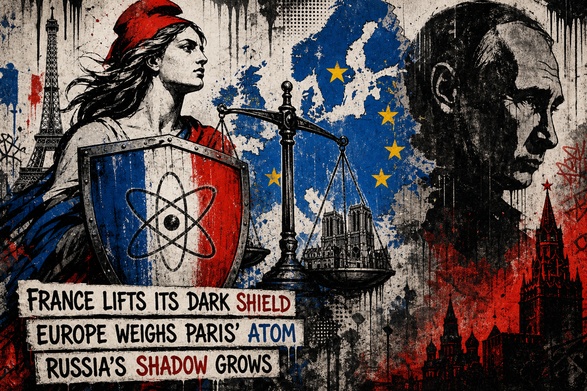
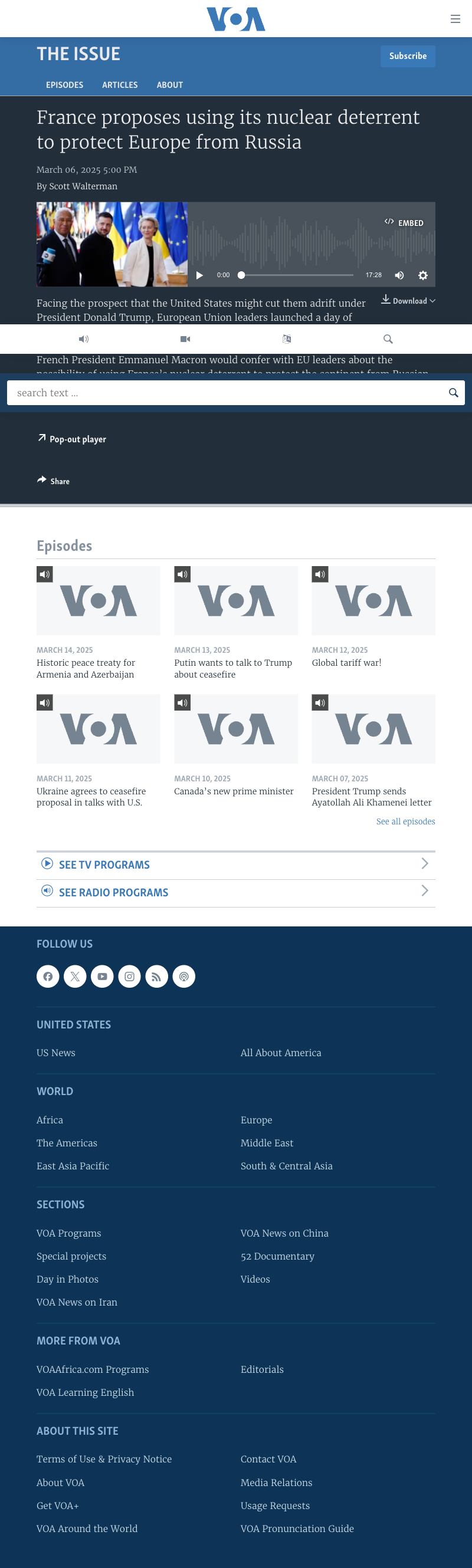 | author: | Scott Walterman | institution: | VOA (Voice of America) | ¿porque no los dos? |
| tl;dr | The VOA “The Issue” episode/article reports that France is floating the idea of extending or leveraging its nuclear deterrent to help protect Europe against Russia, amid European anxiety that U.S. security guarantees could weaken under President Donald Trump. It frames the proposal as part of broader EU leader discussions on defense and deterrence, with Macron expected to consult EU partners on feasibility and implications. | ||||
| deeper: | Content & framing: The headline and lede position Russia as the primary external threat and present France’s nuclear umbrella concept as a protective measure for Europe, which is a broadly mainstream Western-security framing. The story also foregrounds uncertainty about U.S. commitments under Trump, which adds a political angle that may shape readers’ interpretation of urgency. Bias indicators: Language such as “protect Europe from Russia” is assertive and threat-forward; it largely treats the Russian threat premise as given rather than argued. From what’s visible, there’s limited sign of Russia’s perspective, skeptical European voices, or detailed counterarguments (e.g., escalation risks, legal/command-and-control constraints, NATO cohesion concerns) being equally centered—suggesting mild narrative slant rather than overt partisanship. Quality: The piece appears to be a reported explainer tied to a current policy debate, with clear identification of time, author, and subject, and an audio format that likely includes additional context. However, based on the screenshot, the visible text does not show sourcing depth (named officials, documents, experts), concrete policy mechanics (what “using” the deterrent would mean operationally), or explicit differentiation between proposal, trial balloon, and actionable plan. That keeps it solid but not top-tier. | ||||
media: | |||||
| gen: 2026/07/22:05:40 in 3 min 28.4 sec (old)bias: 4 (Center-Left) |
| type: lolsquality: 74 |
| pts: 0 |
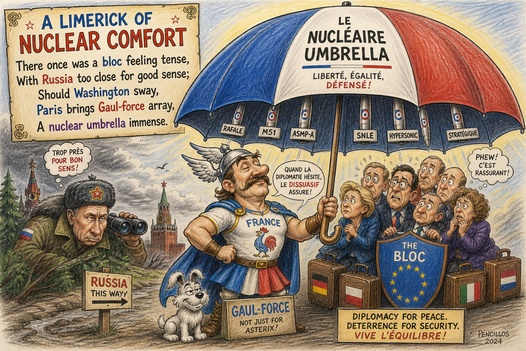
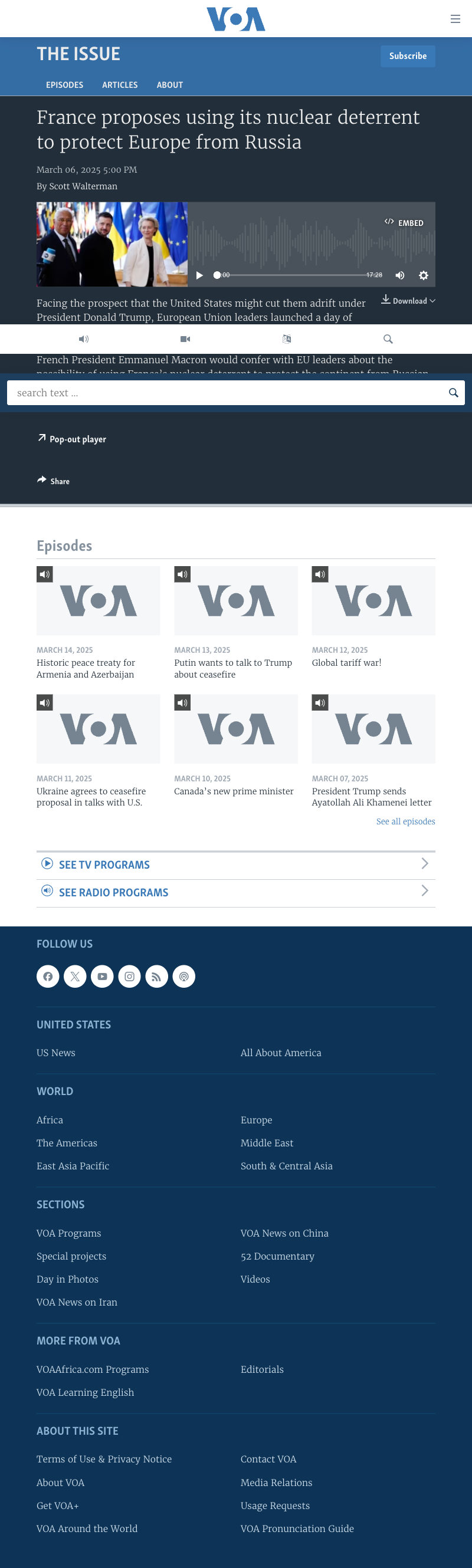 | author: | Scott Walterman | institution: | Voice of America | ¿porque no los dos? |
| tl;dr | A Voice of America (VOA) “The Issue” episode/article (March 6, 2025) by Scott Walterman reports that France is proposing its nuclear deterrent as a way to help protect Europe against Russia, amid concerns that the United States could reduce its security commitment under President Donald Trump. The framing emphasizes European anxiety about U.S. reliability and highlights French President Emmanuel Macron’s intent to discuss the idea with EU leaders. | ||||
| deeper: | Content & framing: The headline and lede frame Russia as the primary threat (“protect Europe from Russia”) and present France’s nuclear deterrent as a prospective solution, which is a defensible news frame given the post-2022 European security context. The visible text also foregrounds a political premise—European leaders fear being “cut … adrift” by the U.S. under President Trump—without showing, in the screenshot, balancing language that would test that claim (e.g., references to stated U.S. policy, NATO commitments, or countervailing views from U.S. officials). Bias: The piece appears to lean mildly toward a pro-EU strategic autonomy perspective (treating U.S. retrenchment as plausible and Russian threat as central) and uses emotionally loaded phrasing (“cut … adrift”). However, it is not overtly ideological in the portion shown; it reads like mainstream security reporting, hence a moderate (not high) bias score. Quality: As presented, it’s a VOA program page with an audio segment (~17 minutes). The topic is timely and clearly stated; author and date are provided. Quality is limited in this screenshot by the lack of visible sourcing, direct quotations, and presentation of opposing arguments (e.g., Russia’s response, NATO nuclear-sharing context, French doctrine constraints, and critique from European states wary of nuclear escalation). If the audio includes multiple expert voices and hard details, quality would rise; based on what’s visible, it’s solid but not deeply evidenced. What would strengthen it: explicit sourcing for the U.S.-retrenchment premise, concrete description of what France is actually proposing (political guarantee vs. operational nuclear posture), legal/doctrinal limits of France’s force de frappe, reactions from key EU/NATO members (Germany, Poland, Baltics), and a clearer distinction between deterrence signaling and actual defense commitments. | ||||
media: | |||||
| gen: 2026/07/22:01:53 in 1 min 1.8 sec (old)bias: 3 (Center-Left) |
| type: newsquality: 76 |
| pts: 0 |
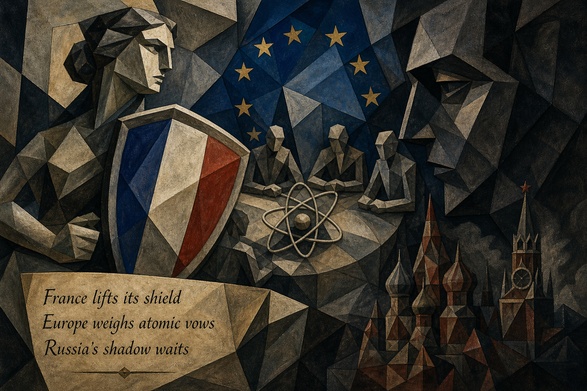
 | author: | Scott Walterman | institution: | Voice of America (VOA) | ¿porque no los dos? |
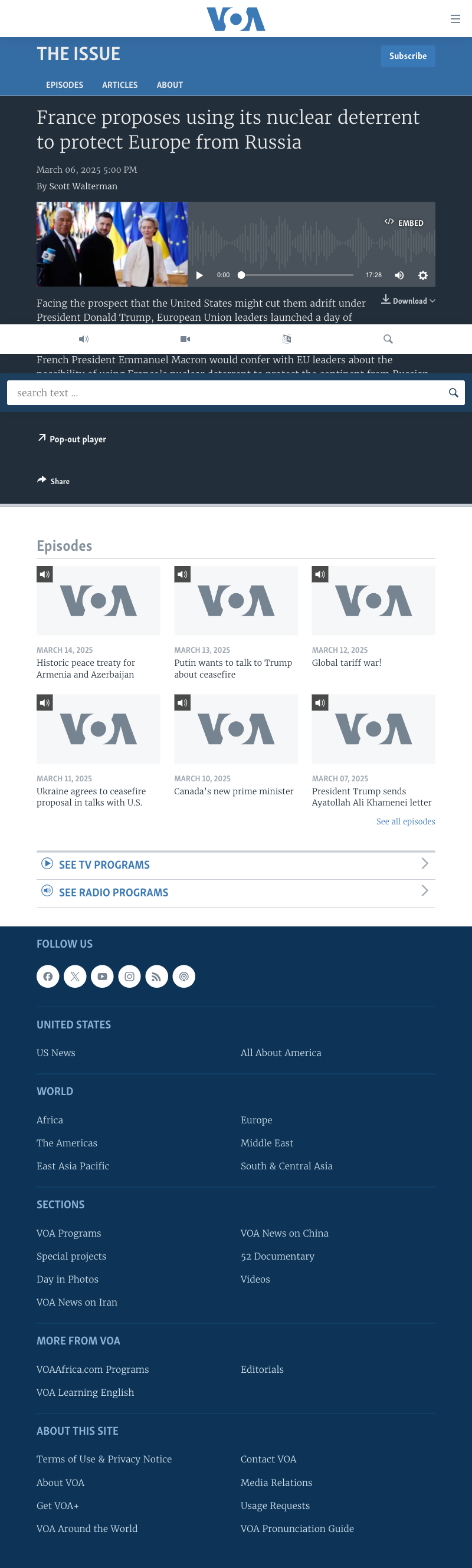
| tl;dr | Article reports that France is floating the idea of extending its nuclear deterrent to protect Europe from Russia, amid EU worries the U.S. might reduce its security role under Donald Trump. French President Emmanuel Macron would discuss the concept with EU leaders. The piece appears as an audio episode page with brief text framing. | ||||
| deeper: | Straightforward headline and lede summarize a real policy debate in Europe. The framing emphasizes EU anxiety about a possible U.S. pullback under Trump, which introduces a mild anti‑Trump tilt but is relevant context. Evidence is thin on key details: no explanation of France’s nuclear doctrine, legal constraints, NATO nuclear‑sharing, the UK deterrent, or reactions from other EU states and Russia. As an episode page, sourcing is limited and relies on a single narrative, lowering depth but not accuracy. Language is neutral and avoids sensationalism. | ||||
media: | |||||
| gen: 2026/07/21:05:43 in 1 min 7.5 sec (old)bias: 4 (Center-Left) |
| type: newsquality: 78 |
| pts: 0 |
 | author: | Scott Walterman | institution: | Voice of America | ¿porque no los dos? |
| tl;dr | A Voice of America episode reports that French President Emmanuel Macron is exploring talks with EU leaders about extending France’s nuclear deterrent to protect Europe from Russia. The piece frames the idea amid concern that a future Trump-led United States might be a less reliable defender of Europe. It highlights the concept of a French-led nuclear umbrella for the EU as a response to Russia’s threat. | ||||
| deeper: | The article’s headline and lede are factual and newsworthy, and the sourcing appears tied to on-record statements about Macron’s proposal. However, the framing foregrounds European anxiety about Donald Trump potentially abandoning Europe, which nudges the narrative toward a skeptical view of a Trump-led U.S. without equal space for countervailing arguments (e.g., NATO treaty obligations, current U.S. defense policy, the role of the UK’s nuclear deterrent, or European skepticism toward a French nuclear umbrella). More balance would include perspectives from NATO officials, central/eastern European governments, and defense analysts on feasibility, command-and-control, costs, and legal constraints. Still, the piece communicates the core development clearly and situates it within the Russia threat context, giving it solid but not exhaustive quality. | ||||
media: | |||||
| gen: 2026/07/18:02:17 in 1 min 0.8 sec (old)bias: 0 (Unknown) |
| type: newsquality: 5 |
| pts: 0 |
 | author: | Unknown | institution: | Voice of America (VOA) | ¿porque no los dos? |
| tl;dr | The image shows an "Access Denied" page from voanews.com via Akamai. No article text is visible, so the content of the reported piece cannot be evaluated. The URL slug implies a story about France proposing to use its nuclear deterrent to help protect Europe from Russia, but the article itself is inaccessible in the screenshot. | ||||
| deeper: | Because the article text is not accessible, I cannot judge framing, sourcing, or balance. The bias score is set to 0 only because there is no content to evaluate, not because the story is unbiased. The quality score is low (5/100) for this screenshot since it contains only an error message and provides no reporting. The institution appears to be Voice of America based on the domain, but the author and the article’s details are unknown. | ||||
media: | |||||
You made it to the bottom. Now dance!


owned and operated by: RPN Omnigalactic Insitutution as of: 2026/10/15: 20:28 in 0 ms
Enter Code
Login with Account