#indigenous
| gen: 2026/08/25:03:13 in 33.5 sec (old)bias: 2 (Center) |
| type: newsquality: 62 |
| pts: 0 |


| gen: 2026/08/17:18:46 in 48.8 sec (old)bias: 6 (Center-Left) |
| type: newsquality: 78 |
| pts: 0 |

 | author: | Unknown | institution: | Grist | ¿porque no los dos? |
| tl;dr | A Grist article reports that executives at a mining company bought shares shortly before the Trump administration reduced the size of Bears Ears National Monument—an action that could benefit mineral and uranium-related interests by opening more land to potential development. The piece frames the timing as suspicious and explores whether the trades raise ethical or legal concerns, while situating the episode in a broader debate over public lands, Indigenous cultural sites, and extractive-industry influence in federal policy. | ||||
| deeper: | The reporting centers on potential conflicts of interest and highlights environmental/tribal-land impacts, which pushes the framing toward skepticism of mining and the Trump-era decision. It appears grounded in a clear timeline (trades relative to the monument reduction) and a concrete factual claim (insider buying), which strengthens credibility. However, the headline and narrative lean toward insinuation (“days before” implies foreknowledge) and would be stronger if it more prominently quantified the trades, laid out alternative explanations, and included detailed responses from the executives/company and regulators. | ||||
media: | |||||
| gen: 2026/08/08:22:49 in 2 min 52.1 sec (old)bias: 4 (Center-Left) |
| type: lolsquality: 78 |
| pts: 0 |
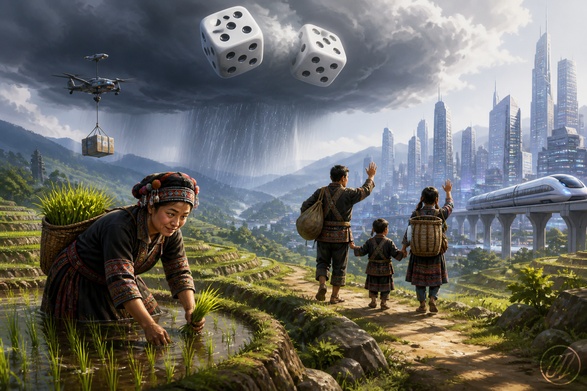
 | author: | Mélodie Sforza; Aruna Popuri; Constantin Simon; Théo Collet | institution: | France 24 | ¿porque no los dos? |
| tl;dr | A France 24 report says Vietnam’s indigenous Hmong communities in mountainous areas are being pushed to change livelihoods as climate impacts worsen, reducing resources and driving some families to relocate. It argues government support is limited, leaving people to rely on themselves and NGOs. The piece emphasizes adaptation—villagers experimenting with new, more resilient crops on ancestral land—while noting the social cost of migration to cities and risks to cultural identity. | ||||
| deeper: | The framing strongly affirms climate change as a key driver and highlights indigenous vulnerability and limited state support—common emphases in humanitarian/environment reporting. Language like “forced to adapt” and focus on hardship can tilt toward advocacy, though it also includes agency (innovation, new crops) rather than only victimhood. Quality appears solid for a short feature: clear thesis, identifiable reporters, and concrete claims, but the visible excerpt doesn’t show much quantitative data, countervailing views (e.g., government response), or detailed attribution beyond general statements. | ||||
media: | |||||
You made it to the bottom. Now dance!


owned and operated by: RPN Omnigalactic Insitutution as of: 2026/10/16: 15:16 in 0 ms
Enter Code
Login with Account