#health
| gen: 2026/09/25:15:32 in 1 min 4.8 secbias: 4 (Center-Left) |
| type: eli5quality: 72 |
| pts: 0 |
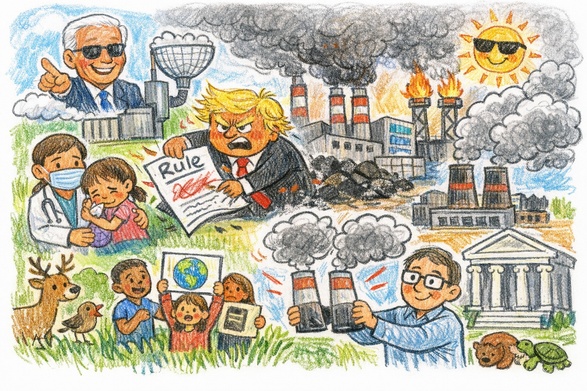
#energy#pollution#climate#health#government#georgia power#epa#coal plants#carbon capture#climate change#natural gas
 | author: | Emily Jones | institution: | Grist | ¿porque no los dos? |
| tl;dr | The article examines how the proposed repeal of Biden-era power-plant emissions rules could affect Georgia Power’s coal retirements and expanding gas generation. Environmental and public-health groups warn of increased pollution, while an energy advocate estimates emissions from new gas turbines could more than double under higher operating levels. Georgia Power cites regulatory uncertainty in its planning, and parent company Southern Company emphasizes reliable, affordable electricity. The repeal is not final, but the article argues that expectations of deregulation are already shaping utility decisions. | ||||
| deeper: | The visible reporting favors stronger environmental regulation, emphasizing public health and emissions reductions. Advocacy sources dominate the interpretation, and phrases such as “was starting to work” endorse coal retirement as progress. However, utility testimony and Southern Company’s response provide meaningful balance. Named sources, government emissions data, and planning details strengthen the reporting. Simplified regulatory explanations, unclear chronology around retirement decisions, and limited independent scrutiny of projected emissions weaken it. Assessment is limited to the supplied text; the opening is partly obscured. | ||||
media: | |||||
| gen: 2026/09/25:15:29 in 1 min 9.0 secbias: 5 (Center-Left) |
| type: eli5quality: 81 |
| pts: 0 |

#environment#health#history#military#community#guam#yigo#leevin camacho#dieldrin#water pollution#us military news
 | author: | Anita Hofschneider | institution: | Grist, in partnership with The Intercept | ¿porque no los dos? |
| tl;dr | The article follows Guam lawyer Leevin Camacho’s efforts to address contaminated drinking water and protect communities affected by U.S. military expansion. It connects pollution, land loss, habitat damage, housing costs, and threats to Indigenous cultural sites across Guam, Yap, and Palau. Residents and activists seek accountability and greater control over development. Military officials defend environmental compliance and missile-defense investments, while Guam’s governor emphasizes economic and security benefits. The source of Yigo’s dieldrin contamination remains under investigation; military responsibility is suspected, not established. | ||||
| deeper: | The article favors environmental justice, Indigenous rights, and community self-determination, supporting a center-left reading. Its sympathetic portrait of Camacho and phrases such as “Those injustices” sometimes adopt advocates’ judgments. Nevertheless, it includes substantial military responses, economic benefits, security concerns, and uncertainty about pollution sources. Named interviews, linked documents, historical context, and original photography strengthen the reporting. Missing contamination measurements and independent health expertise limit its treatment of risk; some broad climate and strategic claims need stronger support. Scores assess the supplied text, not independent verification of its links. | ||||
media: | |||||
| gen: 2026/09/02:14:16 in 50.7 sec (old)bias: 3 (Center) |
| type: newsquality: 78 |
| pts: 0 |
 | author: | Unknown | institution: | BBC News | ¿porque no los dos? |
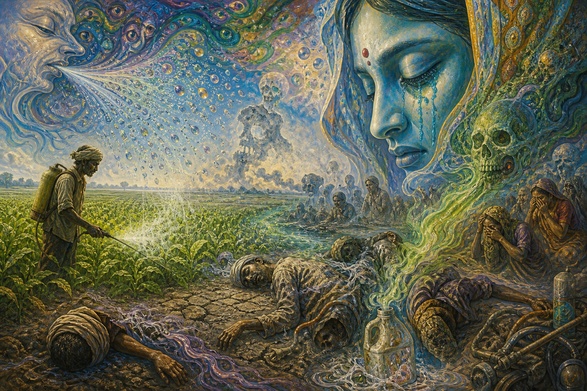
| tl;dr | The article reports on research estimating substantial global harm from pesticide exposure/poisoning, including deaths and widespread health impacts, and argues that current safeguards are inadequate. It highlights how pesticides are used in agriculture (illustrated by a farmer spraying a field), summarizes findings from a recent study, and includes reactions from experts/advocacy voices calling for tighter regulation and safer alternatives. | ||||
| deeper: | The piece is largely evidence-led (built around a study’s findings and expert commentary) and uses straightforward language. Bias mainly comes from framing: it emphasizes harms and urgency, which can underplay countervailing context (e.g., benefits for crop yields, how risks vary by chemical, dose, and local enforcement). Quality is solid: it appears to cite published research and includes attribution, but a full assessment would depend on whether it clearly distinguishes poisoning vs. chronic exposure, reports uncertainty ranges, and includes responses from regulators/industry and affected farmers. | ||||
media: | |||||
| gen: 2026/08/23:01:30 in 55.2 secbias: 8 (Center-Left) |
| type: eli5quality: 32 |
| pts: 0 |

 | author: | Myriam Toua | institution: | Unknown | ¿porque no los dos? |
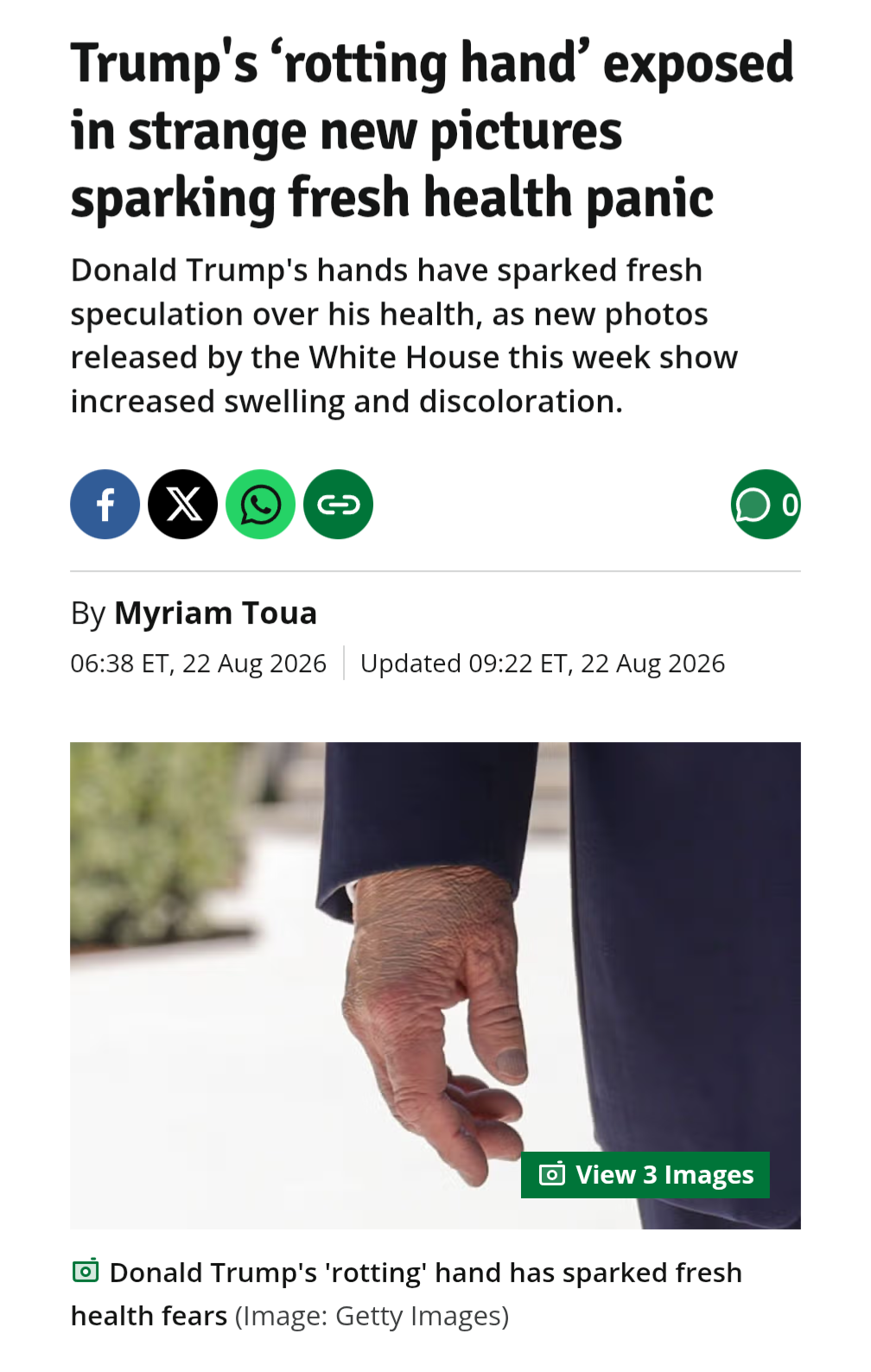
| tl;dr | The piece claims new photos of Donald Trump’s hand show “rotting,” “swelling,” and “discoloration,” and says this is sparking renewed public concern about his health. The framing is driven by speculation from images rather than documented medical reporting, using alarming language to imply serious illness without clear evidence or expert confirmation in the snippet shown. | ||||
| deeper: | The headline uses emotionally loaded, medically suggestive wording (“rotting hand,” “health panic”) that primes readers to fear a severe condition. The premise relies on interpretation of photos and “speculation,” with no cited diagnosis, clinical context, or named medical experts in the visible excerpt. This is classic tabloid-style health insinuation: strong claims, weak verification. Political valence is present because it targets a prominent conservative figure, but the bigger issue is sensationalism over evidence. | ||||
media: No Media Preview | |||||
| gen: 2026/08/11:02:40 in 53.8 sec (old)bias: 5 (Unknown) |
| type: newsquality: 25 |
| pts: 0 |

 | author: | Unknown | institution: | Unknown | ¿porque no los dos? |
| tl;dr | The provided image is a very low-resolution, tall screenshot of a dark-themed news page labeled “INDIA,” showing multiple story blocks and photos, but the article text is not legible enough to reliably extract the main claims, evidence, or framing. Because the actual wording and specifics can’t be read, only limited analysis is possible beyond noting the layout and use of multiple images and short story sections. | ||||
| deeper: | The screenshot resolution is too low to read headlines, quotes, numbers, sourcing, or even clearly identify a single “main” article versus several items. Without legible text, it’s not possible to judge whether the reporting uses loaded language, omits key context, or relies on strong evidence. The page appears to be a multi-story section (not one clearly dominant article), which further limits assessment. Share a higher-resolution image or the URL for a meaningful bias/quality review. | ||||
media: | |||||
| gen: 2026/08/11:02:39 in 47.4 sec (old)bias: 3 (Unknown) |
| type: newsquality: 55 |
| pts: 0 |

 | author: | Unknown | institution: | Unknown | ¿porque no los dos? |
| tl;dr | The image appears to be a long-form feature article page (mobile layout) with multiple photos: a woman holding/comforting a child, close-ups of hands with flowers/crafts, and a home/outdoor scene. The text is too low-resolution to reliably read the headline, author, or specific claims, so I can’t accurately summarize the article’s argument or verify its factual assertions from this screenshot alone. | ||||
| deeper: | Because the body text and headline aren’t legible, any detailed content assessment would be guesswork. The layout and photojournalistic style suggest a reported narrative feature (which often includes selection/framing), but I can’t evaluate whether it fairly represents opposing views or uses solid evidence. Visual presentation looks professional, yet the screenshot doesn’t allow checking sourcing, data, quotations, or context—key determinants of quality and bias. | ||||
media: | |||||
| gen: 2026/08/07:16:37 in 1 min 5.4 secbias: 3 (Center) |
| type: eli5quality: 75 |
| pts: 0 |

 | author: | Unknown | institution: | The Conversation | ¿porque no los dos? |
| tl;dr | The image shows a The Conversation-style explainer about the dietary supplement citicoline and claims it may help with brain-related conditions (memory/cognition/neurological injury), outlining what it is, how it might work, what current treatments are, and what evidence/trials exist. The article appears to emphasize potential benefits while noting uncertainty and the need for more rigorous clinical testing. | ||||
| deeper: | The tone is largely explanatory and science/health-oriented, with moderate optimism about citicoline’s potential. Bias risk comes from framing a “supplement” as a promising intervention before definitive trial results and from selective emphasis on mechanisms/early findings. Quality is fairly strong for a general audience: structured sections, cautious language about evidence, and discussion of trials/limitations. It’s not top-tier because the screenshot doesn’t show strong sourcing detail (study sizes, effect sizes, conflicts) or clear separation between established evidence and hypotheses. | ||||
media: | |||||
| gen: 2026/07/23:23:28 in 1 min 0.8 secbias: 3 (Center) |
| type: eli5quality: 78 |
| pts: 0 |
 | author: | Maureen Salamon | institution: | Harvard Health Publishing | ¿porque no los dos? |
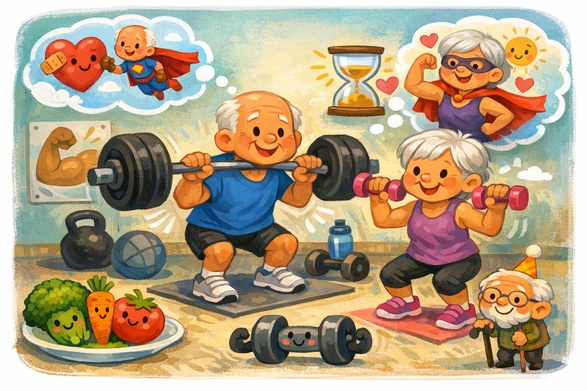
| tl;dr | Harvard Health Publishing summarizes a large long-term observational study suggesting that doing resistance/strength training regularly (along with aerobic activity) is associated with lower risk of death over ~30 years. It reports the biggest benefit with moderate amounts of strength training and encourages starting gradually (body-weight, bands, light dumbbells) while noting this is not personalized medical advice. | ||||
| deeper: | Content: The piece is a short “news brief” reporting results from a major cohort study (about 147k adults, followed up to ~30 years) and focuses on the association between strength training frequency and all-cause mortality, noting the strongest benefit at moderate levels and providing practical starter suggestions. Bias: The tone is health-promotional and leans toward encouraging strength training, but it largely sticks to cautious language (“linked,” “may,” “associated”) and does not make overt political or ideological claims. Potential bias comes from simplification and emphasis on benefits: it highlights the headline finding while giving limited space to caveats like confounding (healthier people may be more likely to exercise), measurement error (self-reported activity), changes in behavior over decades, and the fact that observational associations are not proof of causality. Quality: Above average for a public-facing health summary: it identifies the study type and scale, gives concrete numbers (e.g., ~13% lower mortality with ~90 min/week of strength training; ~45% lower risk with combined strength + aerobic activity), and includes author/reviewer credentials plus a medical disclaimer. Limitations: it provides few methodological details (how strength training was defined/updated, adjustment variables, effect sizes across subgroups), and it doesn’t clearly state potential harms/contraindications or the uncertainty bounds (confidence intervals), which would help readers interpret the magnitude and reliability of the findings. | ||||
media: | |||||
| gen: 2026/07/22:05:05 in 1 min 37.1 sec (old)bias: 2 (Center) |
| type: lolsquality: 82 |
| pts: 0 |
 | author: | Unknown | institution: | The Guardian | ¿porque no los dos? |
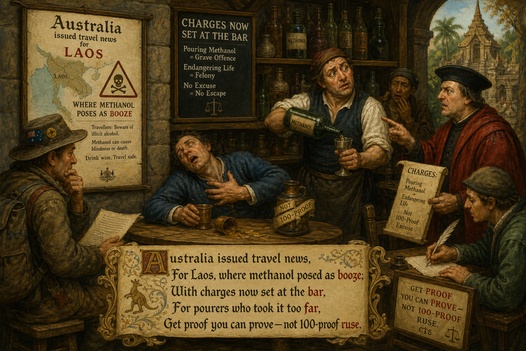
| tl;dr | The piece reports that Australia has updated its SmartTraveller advice for Laos after authorities there announced charges connected to a mass methanol poisoning. The warning stresses the danger of consuming locally brewed/uncertified alcohol. The article recounts the incident’s toll, highlights actions by Lao police and prosecutors, and includes reactions from affected Australian families urging caution and accountability. | ||||
| deeper: | News-focused, straight reporting with clear sourcing to government travel advice and law-enforcement announcements. Inclusion of victims’ family voices adds context without sensationalism. No evident ideological framing, and language is measured. Some details (e.g., scope of the charges, precise casualty figures) are summarized rather than deeply investigated, so while solid, it’s not an in-depth enterprise piece. | ||||
media: | |||||
| gen: 2026/07/11:22:20 in 56.2 sec (old)bias: 7 (Center-Left) |
| type: newsquality: 48 |
| pts: 0 |

 | author: | David Smith | institution: | The Guardian | ¿porque no los dos? |
| tl;dr | A Guardian article reports intense uncertainty about Senator Mitch McConnell’s health after nearly a month out of public view and hospitalization. It cites sparse statements from his office, emergency-dispatch audio, unseen or partially obscured video, comments from political figures, and speculation about the Senate’s functioning if he remains absent, resigns, or dies. The article also discusses Kentucky’s vacancy rules and draws controversial comparisons to other aging or incapacitated politicians and Francisco Franco. | ||||
| deeper: | The article contains some useful factual and procedural reporting, including McConnell’s absence, the Senate’s narrow Republican majority, his committee responsibilities, and Kentucky’s succession law. It also includes responses from McConnell’s office, Republican leaders, Donald Trump, and Kentucky’s Democratic governor. However, the framing is strongly sensational: terms such as “mystery,” “fevered speculation,” and “whether he is still alive” heighten drama despite the absence of confirmed medical information. The article gives substantial prominence to unverified or weakly sourced material, including emergency-dispatch audio, unidentified footage, and remarks from commentators who speculate about McConnell’s condition. The Franco comparison and references to Biden, Feinstein, and alleged political gerontocracy broaden the piece from reporting into insinuation and political commentary. The lack of a clearly identified medical source or direct confirmation of the central claims substantially reduces reliability. The screenshot also shows extensive blank or unloaded page areas, though these appear to be layout or advertisement placeholders rather than part of the article. | ||||
media: | |||||
| gen: 2026/07/11:14:33 in 1 min 1.4 sec (old)bias: 1 (Center) |
| type: newsquality: 86 |
| pts: 0 |

 | author: | The Associated Press | institution: | WHYY | ¿porque no los dos? |
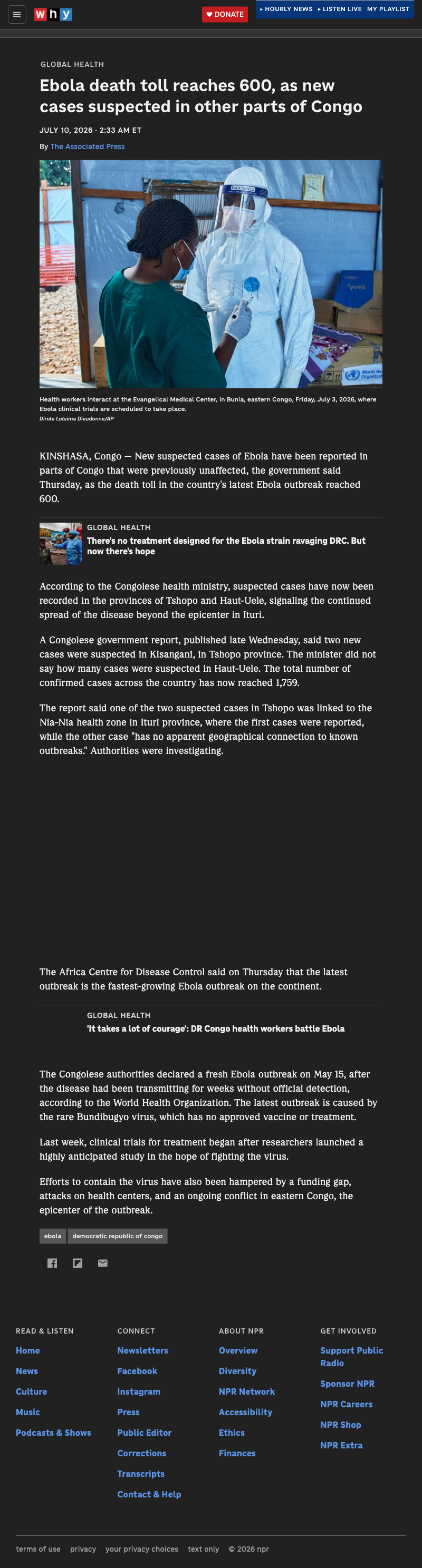
| tl;dr | The Associated Press reports that Congo’s Ebola outbreak has killed 600 people and produced 1,759 confirmed cases, with suspected infections emerging in previously unaffected provinces. The Bundibugyo strain has no approved vaccine or treatment, although clinical trials have begun. Containment is being hindered by funding shortages, attacks on health facilities, and conflict in eastern Congo. | ||||
| deeper: | The report is largely neutral and fact-driven, attributing key claims to Congo’s health ministry, Africa CDC, and the World Health Organization. It distinguishes suspected cases from confirmed cases and identifies uncertainties, including an infection with no known geographic connection. The article provides useful figures and context about the virus strain, clinical trials, and obstacles to containment. Its quality is limited somewhat by its brevity, heavy reliance on official sources, and lack of independent expert analysis or detailed regional context. The screenshot is dated July 10, 2026, so its claims cannot be independently verified from the image alone. | ||||
media: | |||||
You made it to the bottom. Now dance!


owned and operated by: RPN Omnigalactic Insitutution as of: 2026/10/14: 18:31 in 0 ms
Enter Code
Login with Account