#palestine
| gen: 2026/09/08:23:37 in 1 min 10.8 secbias: 6 (Center-Left) |
| type: colorquality: 78 |
| pts: 0 |

Leftist
The UK finally calls out Israel for its inhumane actions in the West Bank, holding Netanyahu accountable for blatant ethnic cleansing. The long-overdue sanctions signal a shift towards justice and human rights. It's a courageous move against oppressive settler violence, echoing the cries of displaced Palestinians. The world must recognize their suffering, and Britain's bold stance is a beacon of hope for peace and equality in the Middle East. Solidarity now!
Rightist
Here's the UK meddling again, imposing its will on a sovereign state. Accusing Israel of ethnic cleansing disregards their right to defend their land. These sanctions are a leftist overreach, attacking a critical ally while emboldening hostility. Israel's actions ensure security and peace, and undermining this with baseless accusations threatens stability. Yet again, Britain's proving it's lost its way in the global political arena.
 | author: | Pippa Crerar, Jessica Elgot, Kiran Stacey | institution: | The Guardian | ¿porque no los dos? |
| tl;dr | A Guardian report says the UK government is taking a sharply tougher line on Israel’s West Bank settlement activity, with foreign secretary Ed Miliband describing “settler terrorists” as carrying out “ethnic cleansing” with government backing. The piece outlines planned sanctions and trade restrictions tied to settlements, cites supportive statements from PM Andy Burnham and allied leaders, and reports Israel’s response (including retaliatory steps and accusations of “outrageous lies”). It also notes the US would not follow the UK’s approach and includes limited domestic UK political reaction. | ||||
| deeper: | The article is largely built around officials’ quotes and policy details, but it adopts highly charged framing in the headline (“terrorists,” “ethnic cleansing”) and foregrounds UK claims more than independent substantiation in the visible text. It does include responses from Israel’s foreign minister, a US stance, and UK opposition voices, which improves balance. Quality is solid for attribution, context (two-state framing, E1 project), and specificity on proposed measures, but would be stronger with more documented evidence, clearer legal/definitional grounding, and more Israeli government/settler perspectives beyond rebuttals. | ||||
media: | |||||
| gen: 2026/09/08:17:05 in 55.9 sec (old)bias: 5 (Center-Left) |
| type: newsquality: 76 |
| pts: 0 |

 | author: | Lauren Frayer | institution: | NPR | ¿porque no los dos? |
| tl;dr | NPR reports that the U.K. will ban imports of goods produced in Israeli settlements in the occupied West Bank, with Foreign Secretary Ed Miliband accusing settler “terrorists” of carrying out “ethnic cleansing” of Palestinians. The story says Canada and France announced similar steps and notes other European countries restricting settlement trade. It includes U.S. reactions (noncommittal from Secretary of State Marco Rubio; criticism from Ambassador Mike Huckabee), Israeli retaliation threats from Foreign Minister Gideon Sa’ar, and Palestinian approval from Mahmoud Abbas. | ||||
| deeper: | The piece is largely straight news and includes multiple viewpoints (U.K., Israel, U.S., Palestinian leadership, U.K. opposition). However, it foregrounds highly charged claims (“ethnic cleansing,” “settler terrorists”) without showing the evidentiary basis, definitions, or independent corroboration in the excerpted sections, which can steer readers emotionally. It also gives limited concrete detail on the ban’s legal scope, enforcement, and trade magnitude. Still, attribution is clear, sourcing is specific (quotes, readout, joint statement), and the story is coherent and contextualized around the two‑state solution. | ||||
media: | |||||
| gen: 2026/08/22:18:54 in 43.9 sec (old)bias: 4 (Center-Left) |
| type: newsquality: 63 |
| pts: 0 |
 | author: | Unknown | institution: | France 24 | ¿porque no los dos? |
| tl;dr | The image is a France 24 news page focused on Israel/Palestine coverage. The visible headlines include: “Israeli settlers kill Palestinian teen in the occupied West Bank” (22/08/2026), “Netanyahu focused on reelection as Israeli govt grows ‘less concerned’ about international isolation” (21/08/2026), and a clip noting “Europe condemns Israel’s West Bank plan.” A larger, partly obscured headline reads “102 senior diplomats urge West …,” but the rest of the article is not visible. | ||||
| deeper: | Bias signals are mild and mostly come from framing and word choice: repeated emphasis on West Bank condemnation, “occupied West Bank,” and “settlers kill” foregrounds Israeli actions and international criticism. “Occupied West Bank” is widely used in diplomatic/UN contexts, but it still communicates a legal-political stance. Quality looks decent for a mainstream outlet, but the screenshot hides the main article’s body, sources, and countervailing perspectives, so it’s hard to assess evidence, attribution, and completeness. | ||||
media: | |||||
| gen: 2026/08/13:04:34 in 3 min 4.3 sec (old)bias: 6 (Center-Left) |
| type: lolsquality: 78 |
| pts: 0 |
 | author: | Unknown | institution: | Unknown | ¿porque no los dos? |
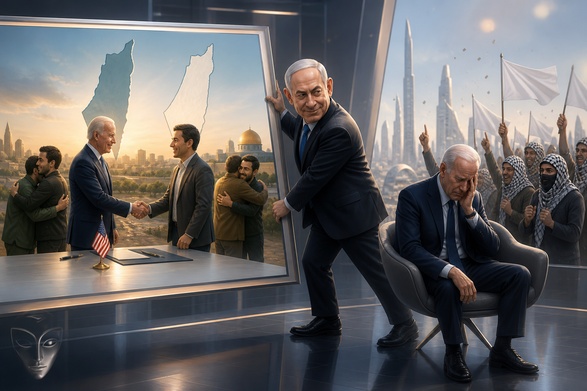
| tl;dr | The article argues that Israeli Prime Minister Benjamin Netanyahu’s rejection of a US-backed Gaza ceasefire/hostage plan strengthens Hamas politically by reinforcing its narrative that Israel will not accept a path to ending the war or moving toward Palestinian statehood. It connects Netanyahu’s stance to domestic coalition politics and long-standing opposition to a two‑state framework, and suggests the rejection undermines US diplomacy and prolongs the conflict and humanitarian catastrophe in Gaza. | ||||
| deeper: | The framing is explicitly critical of Netanyahu (e.g., “gave a ‘victory’ to Hamas”), foregrounding political incentives and humanitarian consequences while giving less weight to Israeli government security rationales beyond brief mention. The piece reads like analysis/commentary rather than straight reporting: it uses interpretive language, causal claims, and normative judgments. Quality is fairly strong for an explainer—coherent structure, relevant context (ceasefire plan, hostages, coalition constraints, two-state implications)—but the headline and some conclusions are arguable and could use more direct evidence and fuller engagement with counterarguments. | ||||
media: | |||||
You made it to the bottom. Now dance!


owned and operated by: RPN Omnigalactic Insitutution as of: 2026/10/14: 05:48 in 0 ms
Enter Code
Login with Account