#middle east
| gen: 2026/09/16:05:17 in 37.9 sec (old)bias: 3 (Center) |
| type: lolsquality: 68 |
| pts: 0 |
 | author: | Agencies | institution: | The Guardian | ¿porque no los dos? |
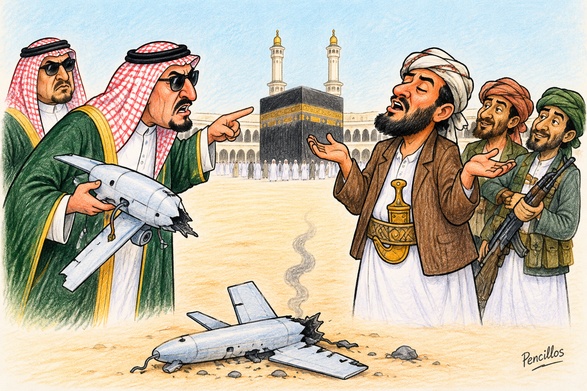
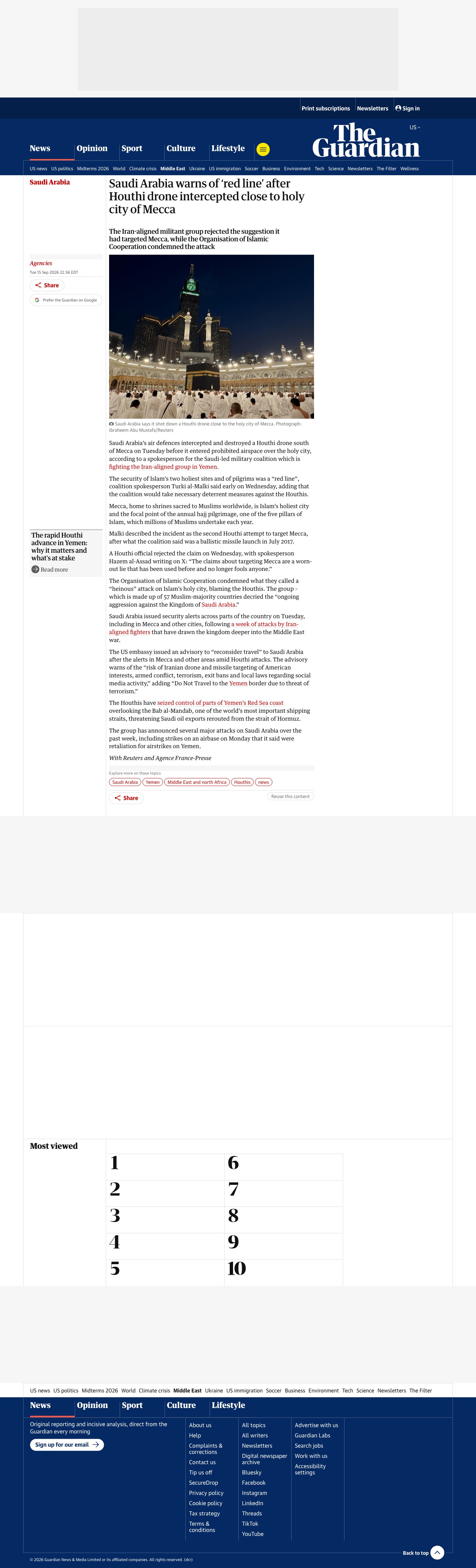
| tl;dr | Saudi Arabia says it intercepted a Houthi drone south of Mecca and warned that protecting holy sites and pilgrims is a “red line.” The Houthis deny targeting Mecca, while the Organisation of Islamic Cooperation condemned the alleged attack. The article also reports Saudi security alerts, a US travel advisory, and wider regional fighting affecting shipping and oil exports. It provides no independent evidence establishing the drone’s intended target. | ||||
| deeper: | The article attributes claims and prominently includes the Houthi denial, with no clear left-right political agenda. However, the headline and holy-site imagery emphasize the Saudi security narrative, while Saudi and allied statements receive more space. Named sources and regional context are strengths. Independent verification, precise interception details, and evidence of the intended target are missing. Some broader military and shipping claims receive little supporting detail, and the screenshot alone cannot establish authenticity or factual accuracy. | ||||
media: | |||||
| gen: 2026/09/13:15:22 in 30.8 sec (old)bias: 2 (Center) |
| type: newsquality: 73 |
| pts: 0 |
 | author: | The Associated Press | institution: | NPR | ¿porque no los dos? |
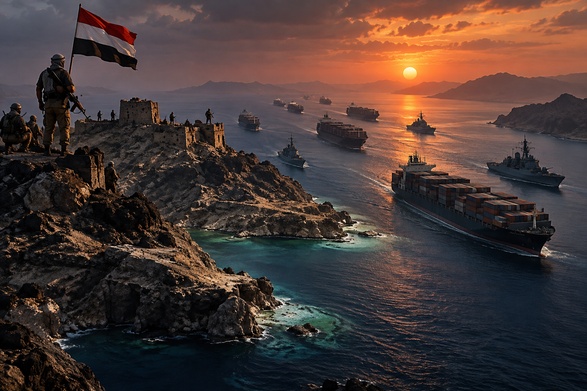
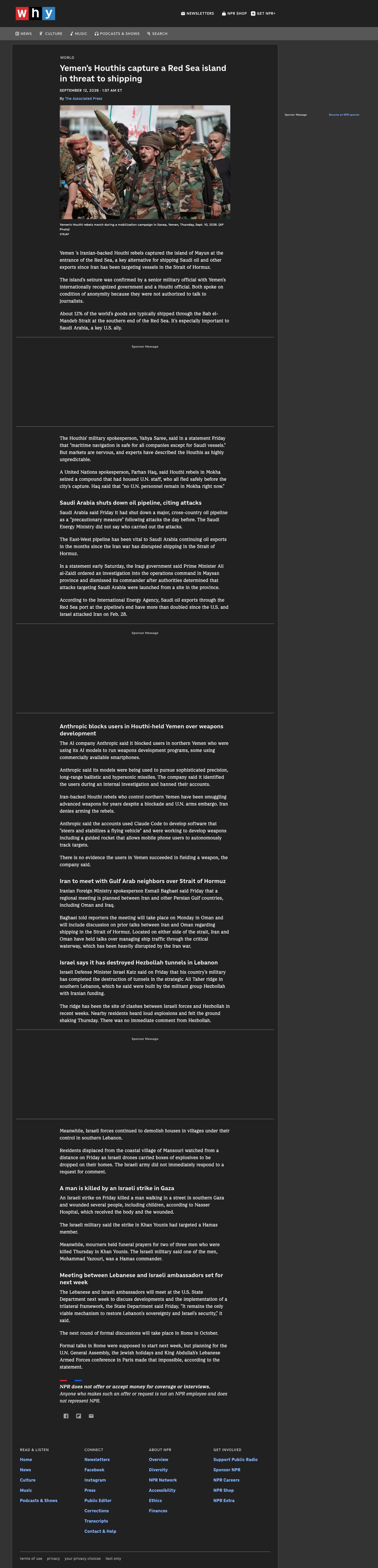
| tl;dr | The article reports that Yemen’s Houthis seized Mayun island, threatening a major Red Sea shipping route as conflict disrupts the Strait of Hormuz. It also covers a Saudi oil pipeline shutdown, Anthropic’s allegations of weapons-related AI misuse in Yemen, and planned regional shipping talks. Additional updates describe Israeli operations in Lebanon and Gaza and upcoming Israeli-Lebanese diplomacy. The central island-capture claim is attributed to anonymous officials from opposing sides; the screenshots alone do not independently establish the reported events. | ||||
| deeper: | The article largely uses restrained language, attributes contested claims, and includes Houthi, Iranian, Israeli, and civilian perspectives without promoting a clear political ideology. Its emphasis on shipping security frames the opening around economic risks. Calling the Houthis “highly unpredictable” through unnamed experts adds an unsupported judgment. Strengths include opposing-side confirmation and the caveat that AI-assisted weapons were not proven operational. Weaknesses include heavy reliance on official statements, limited independent evidence, and an unsourced shipping statistic. The screenshots establish what is reported, not its authenticity or accuracy. | ||||
media: | |||||
| gen: 2026/09/11:15:34 in 44.9 sec (old)bias: 2 (Unknown) |
| type: newsquality: 45 |
| pts: 0 |
 | author: | FRANCE 24 | institution: | FRANCE 24 | ¿porque no los dos? |
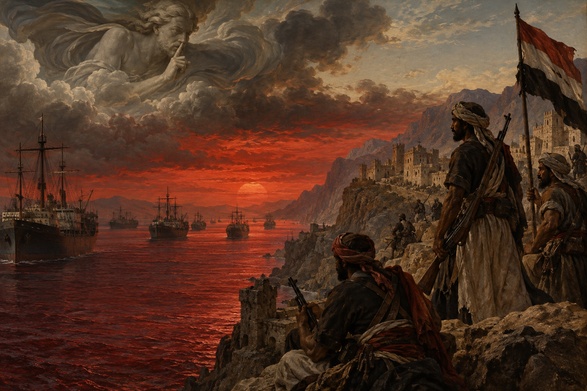
| tl;dr | The visible article reports that Yemen’s Iran-aligned Houthi rebels have seized the country’s entire Red Sea coast, citing a government official. It says this brings them closer to controlling the Bab al-Mandab strait, a strategically important maritime passage. Most of the article body is not visible in the supplied images, so its supporting evidence and broader coverage cannot be assessed. | ||||
| deeper: | The visible wording is mostly factual and shows no clear left-right political position. However, the headline presents a sweeping territorial claim as established fact, while the introduction attributes it only to an unidentified government official. No corroboration or competing account is visible. The byline, timestamps and photo credit provide basic transparency, but the missing article body limits assessment. These scores apply only to the readable excerpt, not the unseen reporting. | ||||
media: | |||||
| gen: 2026/09/09:15:21 in 42.7 sec (old)bias: 2 (Center) |
| type: newsquality: 55 |
| pts: 0 |

 | author: | Unknown | institution: | France 24 | ¿porque no los dos? |
| tl;dr | A France 24 page/headline reports that Iran said it fired ballistic missiles at a US base in Jordan early Wednesday, describing it as retaliation for US strikes on Iranian tankers. The visible page is mostly the headline, timestamp, and a short standfirst; the remainder of the article text is not shown in the provided images. | ||||
| deeper: | The framing is largely straight-news: it attributes key claims (“Iran said…”, “in retaliation…”) and avoids loaded language in the limited visible text. However, only a small excerpt is available, with no sourcing detail, corroboration, casualty/damage reporting, or competing accounts from the US/Jordan, which limits verification and overall informational value in this capture. | ||||
media: | |||||
| gen: 2026/09/08:23:37 in 1 min 10.8 secbias: 6 (Center-Left) |
| type: colorquality: 78 |
| pts: 0 |

Leftist
The UK finally calls out Israel for its inhumane actions in the West Bank, holding Netanyahu accountable for blatant ethnic cleansing. The long-overdue sanctions signal a shift towards justice and human rights. It's a courageous move against oppressive settler violence, echoing the cries of displaced Palestinians. The world must recognize their suffering, and Britain's bold stance is a beacon of hope for peace and equality in the Middle East. Solidarity now!
Rightist
Here's the UK meddling again, imposing its will on a sovereign state. Accusing Israel of ethnic cleansing disregards their right to defend their land. These sanctions are a leftist overreach, attacking a critical ally while emboldening hostility. Israel's actions ensure security and peace, and undermining this with baseless accusations threatens stability. Yet again, Britain's proving it's lost its way in the global political arena.
 | author: | Pippa Crerar, Jessica Elgot, Kiran Stacey | institution: | The Guardian | ¿porque no los dos? |
| tl;dr | A Guardian report says the UK government is taking a sharply tougher line on Israel’s West Bank settlement activity, with foreign secretary Ed Miliband describing “settler terrorists” as carrying out “ethnic cleansing” with government backing. The piece outlines planned sanctions and trade restrictions tied to settlements, cites supportive statements from PM Andy Burnham and allied leaders, and reports Israel’s response (including retaliatory steps and accusations of “outrageous lies”). It also notes the US would not follow the UK’s approach and includes limited domestic UK political reaction. | ||||
| deeper: | The article is largely built around officials’ quotes and policy details, but it adopts highly charged framing in the headline (“terrorists,” “ethnic cleansing”) and foregrounds UK claims more than independent substantiation in the visible text. It does include responses from Israel’s foreign minister, a US stance, and UK opposition voices, which improves balance. Quality is solid for attribution, context (two-state framing, E1 project), and specificity on proposed measures, but would be stronger with more documented evidence, clearer legal/definitional grounding, and more Israeli government/settler perspectives beyond rebuttals. | ||||
media: | |||||
| gen: 2026/09/08:17:08 in 41.3 sec (old)bias: 4 (Center) |
| type: newsquality: 72 |
| pts: 0 |

 | author: | Unknown | institution: | France 24 | ¿porque no los dos? |
| tl;dr | A France 24 “live” Middle East update reports that Israel plans to close the British consulate in Jerusalem, framing the move as a response to UK sanctions related to Israeli settlements. The page features an AFP photo of an Israeli soldier near a newly established settlement outpost near Beit Sahur, labeled as in the occupied West Bank, reinforcing the settlement-focused context of the story. | ||||
| deeper: | The headline is largely straight, cause-and-effect framing (“after sanctions”), but the choice of photo and caption language (“occupied West Bank,” “newly established … outpost”) foregrounds a specific legal/political framing that many governments and the UN use, while others contest parts of it—this can tilt perception without being overtly polemical. Quality is solid for a breaking-news/live item (clear headline, timestamp, AFP image credit), but the provided excerpt lacks the article body, sourcing details, and competing quotes that would let readers fully assess claims and motives. | ||||
media: | |||||
| gen: 2026/09/03:04:14 in 54.3 sec (old)bias: 4 (Center) |
| type: newsquality: 78 |
| pts: 0 |
 | author: | Unknown | institution: | France 24 (with AFP) | ¿porque no los dos? |
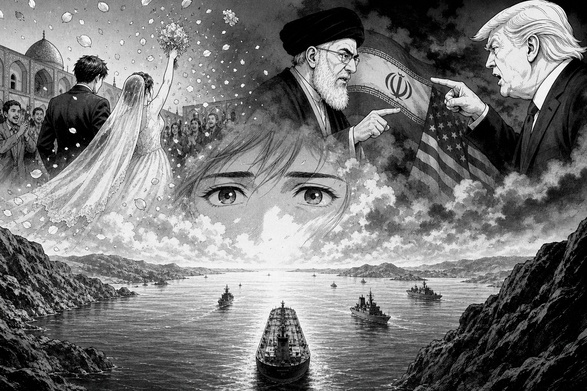
| tl;dr | France 24 (with AFP) reports escalating Iran–US tensions after recent military exchanges. Tehran accuses Washington of striking a wedding in southern Iran (Sirik), calling it a war crime; Iran’s Red Crescent claims four killed (including a child) and 50+ wounded. US Central Command denies targeting civilians and contrasts US conduct with Iran’s IRGC. The piece also notes regional spillover: attacks on US troops in Jordan/UAE, tanker damage in unclaimed attacks, and risks to Strait of Hormuz shipping, alongside Israeli warnings. | ||||
| deeper: | The article is largely straight-wire reporting, presenting claims and counterclaims from Iranian officials, the Iranian Red Crescent, and CENTCOM, plus limited civilian reaction. Bias mainly comes from emphasis on vivid inflammatory quotes (“Satan,” “war crime”) and casualty claims without showing independent verification or forensic detail; it does, however, include the US denial and broader context (shipping, regional strikes, Israeli statements). Quality is solid for a fast update, but thin on corroboration, timelines, and evidence beyond official statements and a government-shared video. | ||||
media: | |||||
| gen: 2026/08/16:22:30 in 35.6 sec (old)bias: 3 (Center) |
| type: newsquality: 78 |
| pts: 0 |

 | author: | The Associated Press | institution: | NPR | ¿porque no los dos? |
| tl;dr | The article reports that Jared Kushner held a rare meeting with Hamas in Egypt ahead of planned talks with Israeli Prime Minister Benjamin Netanyahu about a U.S.-backed Gaza “road map” tied to a ceasefire, disarmament, Israeli withdrawal, and reconstruction. It describes the plan’s stages, the roles of Egypt/Qatar/France, and Israel’s internal political pressures. It also notes Hamas’ conditions and international criticism—especially from Arab states—of Israel’s reported rejection or obstruction of the proposal. | ||||
| deeper: | The piece is mostly straightforward, attribution-heavy wire reporting (named/anonymous officials, clear sequencing of events, and competing claims). Potential bias shows in framing: it emphasizes Israel’s alleged obstruction and Arab condemnation more than Israeli justifications, while also quoting Israel-linked political constraints and Hamas’ stated positions. Quality is solid (context, timeline, details of the proposed framework), but key claims rely on anonymous sourcing and there’s limited verification or direct documentation of the “road map” terms beyond described bullet points. | ||||
media: | |||||
| gen: 2026/08/10:02:38 in 3 min 48.9 sec (old)bias: 4 (Center) |
| type: lolsquality: 62 |
| pts: 0 |
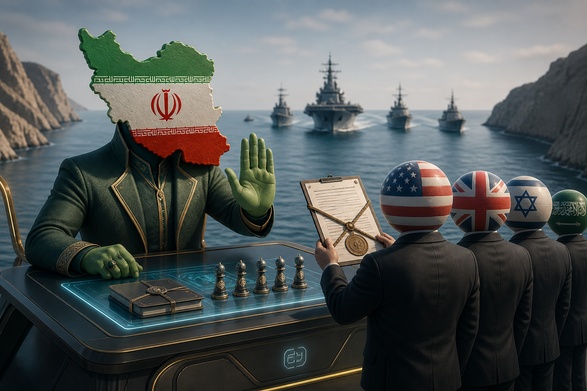
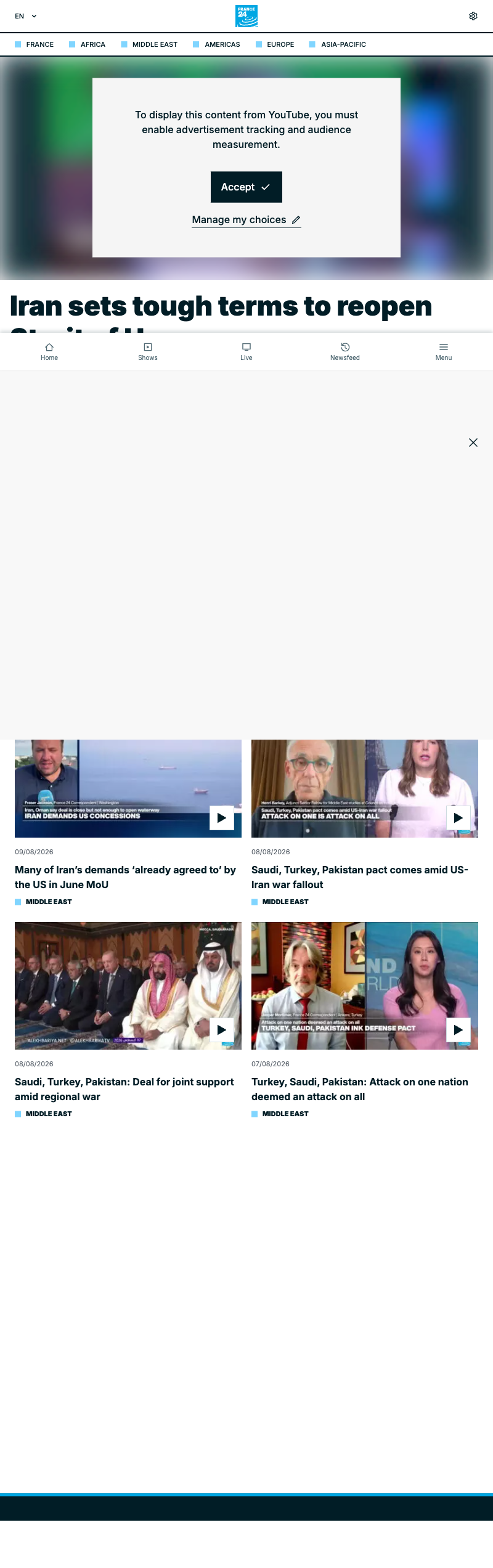 | author: | Unknown | institution: | France 24 | ¿porque no los dos? |
| tl;dr | The image shows a France 24 news page focused on Middle East coverage. The main visible headline reads “Iran sets tough terms to reopen …” (the remainder is cut off), with related video items about Iran demanding concessions and a Saudi–Turkey–Pakistan pact framed as fallout from US–Iran conflict dynamics. A cookie/YouTube tracking consent pop-up blocks much of the primary story text, limiting what can be verified from the screenshot alone. | ||||
| deeper: | France 24’s presentation appears largely straight-news, but wording like “tough terms” and “demands” can subtly prime readers toward a confrontational frame. The screenshot provides headlines and thumbnails but little sourcing detail (no quoted officials, documents, or context visible) because the consent overlay blocks the article/video content. Quality is therefore moderate: reputable outlet and clear topic labeling, but the available evidence here is incomplete and headline-driven. | ||||
media: | |||||
| gen: 2026/08/04:05:26 in 48.8 sec (old)bias: 3 (Center) |
| type: newsquality: 72 |
| pts: 0 |
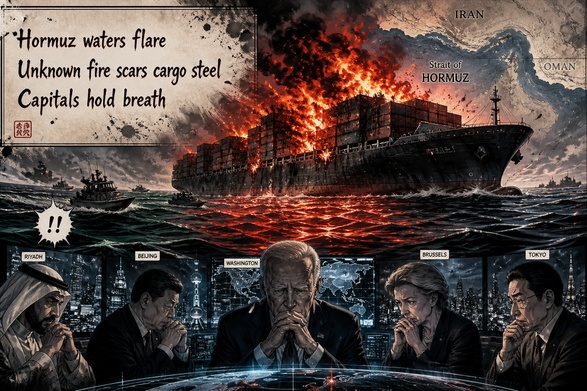
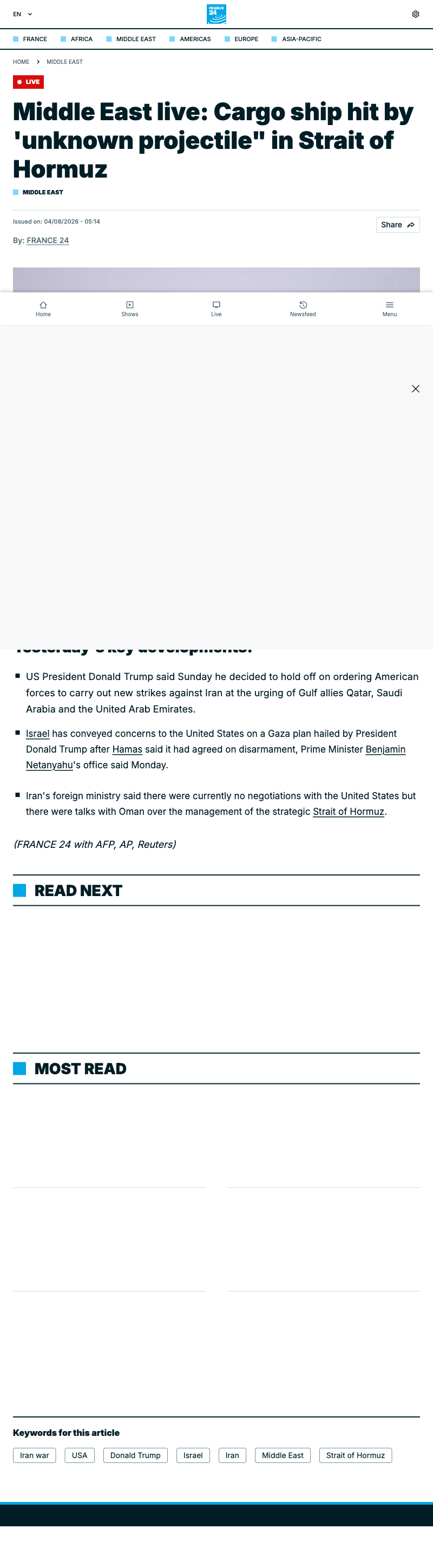
#middle east#shipping#conflict#diplomacy#france24#straitofhormuz#cargo_ship#projectile#iran#israel-gaza_wae?
| gen: 2026/08/01:04:47 in 32.4 sec (old)bias: 2 (Center) |
| type: newsquality: 83 |
| pts: 0 |
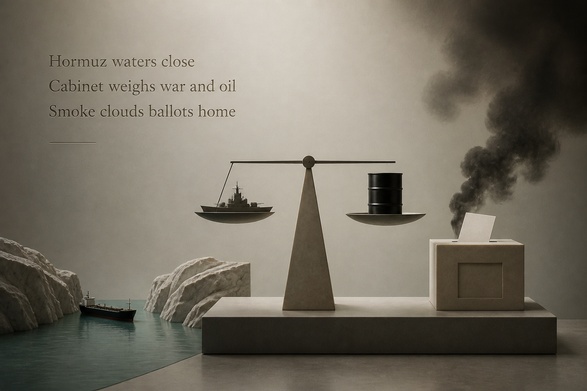
 | author: | Unknown | institution: | Unknown | ¿porque no los dos? |
| tl;dr | The image shows a Reuters-style news page reporting that President Donald Trump convened his cabinet/national security team amid rising tensions tied to the Strait of Hormuz, with discussion centered on the risk of conflict and how the U.S. might respond. The piece appears framed around regional security, shipping threats, and diplomatic/military options, using official statements and on-the-record sourcing typical of wire reporting. | ||||
| deeper: | Language and structure are largely straight-news: event-driven, attribution-heavy, and focused on what officials said and did. Any tilt mainly comes from source selection (government and security officials tend to dominate) and the inherent framing of crises through U.S. decision-making. It avoids overt loaded wording and reads as a factual recap, though it likely offers limited perspective from Iranian actors or independent investigators, which slightly narrows context. | ||||
media: | |||||
| gen: 2026/07/31:16:22 in 45.0 sec (old)bias: 3 (Center) |
| type: newsquality: 78 |
| pts: 0 |
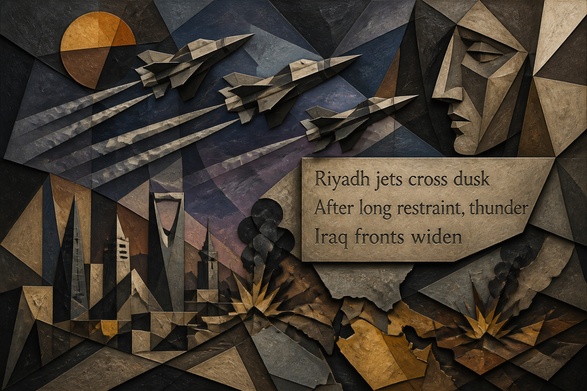
 | author: | Unknown | institution: | Reuters | ¿porque no los dos? |
| tl;dr | The article examines why Saudi Arabia (Riyadh) quietly supported or aligned with U.S. strikes against Iran-linked militias in Iraq, despite Saudi outreach to Iran. It presents the decision as driven by security concerns (missile/drone threats), a desire to deter Iran-backed groups without open escalation, and Riyadh’s balancing act between de-escalation diplomacy and reliance on U.S. security guarantees. It also describes how the Gaza war and regional militia activity changed Saudi threat perceptions and narrowed Riyadh’s room for restraint. | ||||
| deeper: | The piece reads like a reported analysis: it focuses on strategic motives and regional security dynamics, uses conditional language, and attributes claims to officials/diplomats/analysts rather than asserting certainties. Bias is limited but present in the framing that prioritizes state-security logic (Saudi/U.S. deterrence) more than civilian-impact or Iraqi sovereignty critiques. Quality is solid—clear structure and context—but the article appears to rely heavily on anonymous sourcing and inference about intent, which lowers verifiability. | ||||
media: No Media Preview | |||||
| gen: 2026/07/28:14:04 in 4 min 48.9 sec (old)bias: 7 (Center-Right) |
| type: lolsquality: 45 |
| pts: 0 |
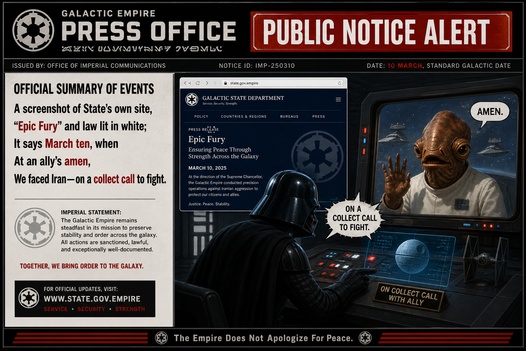
#geopolitics#intl law#diplomacy#middle east#us-iran#us state dept#israel#iran#self-defense#un security#operation epicfu
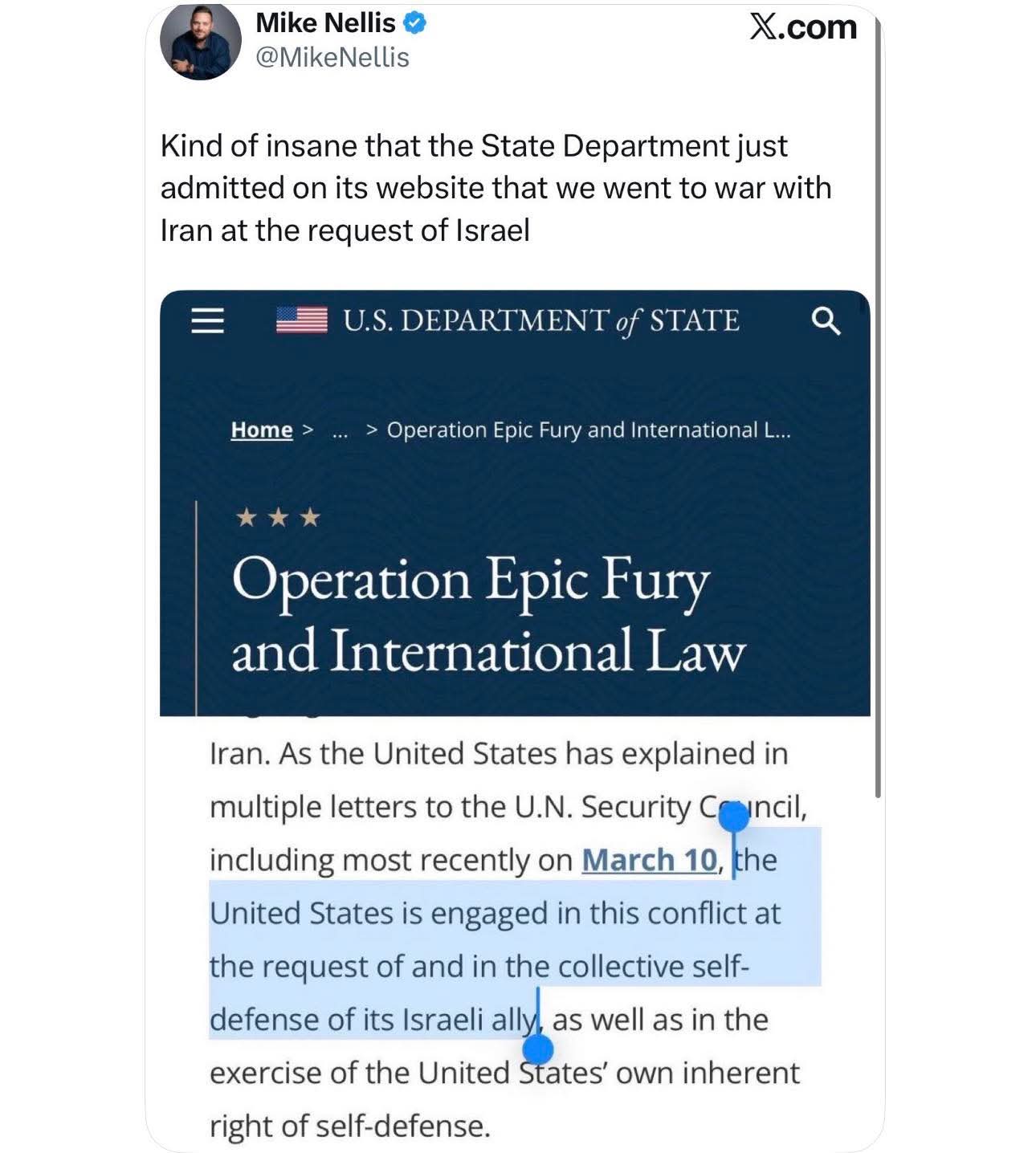 | author: | Mike Nellis | institution: | X.com | ¿porque no los dos? |
| tl;dr | The image is a screenshot of an X (Twitter) post claiming the U.S. State Department “admitted” the U.S. went to war with Iran “at the request of Israel.” The post cites a State Department page titled “Operation Epic Fury and International Law,” highlighting language that the U.S. is engaged in a conflict “at the request of” and in “collective self-defense of its Israeli ally.” The framing suggests a dramatic revelation, but the excerpt appears to describe a legal justification for U.S. actions tied to protecting an ally, not necessarily a broad U.S.–Iran war declaration. | ||||
| deeper: | The post uses loaded phrasing (“Kind of insane,” “admitted”) to imply scandal and simplify a complex legal/strategic context into a single causal claim. It relies on a cropped excerpt without the full surrounding text, definitions (what “this conflict” refers to), or the State Department’s broader argument. The underlying source (a State Department page) can be high-value evidence, but the presentation is selective and interpretive rather than explanatory, reducing reliability and increasing rhetorical bias. | ||||
media: No Media Preview | |||||
| gen: 2026/07/22:05:43 in 4 min 4.8 sec (old)bias: 2 (Center) |
| type: lolsquality: 78 |
| pts: 0 |
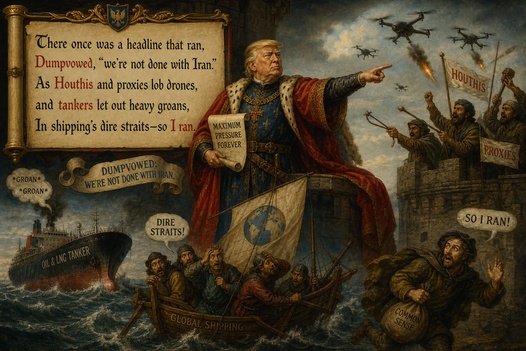
 | author: | Unknown | institution: | Unknown | ¿porque no los dos? |
| tl;dr | The piece reports on Donald Trump saying the U.S. is “not finished” attacking Iran as regional conflict escalates, and it situates his remarks alongside key developments (military actions, diplomatic reactions, and market/security implications). It relies heavily on direct quotations and attributed claims, aiming to summarize what was said and what happened rather than argue a single thesis. | ||||
| deeper: | Content: The central focus is Trump’s statement that the U.S. is “not finished” with attacks on Iran, framed within a broader, fast-moving conflict narrative. The story appears structured around (1) what Trump said, (2) what actions have occurred or are alleged, and (3) reactions/implications (regional actors, security posture, and likely economic/energy concerns). Bias: The language in the visible headline and sections is mostly descriptive and attribution-driven (quoting Trump and other officials/actors rather than asserting conclusions). The piece does use conflict-escalation framing (“conflict widens”), which is common in breaking-news coverage and can heighten urgency, but it is not overtly editorial. Any slant is mainly in story selection and emphasis—foregrounding Trump’s rhetoric and military escalation—rather than loaded adjectives or unchallenged moral claims. Quality: Stronger-than-average for a spot-news article: it appears to use multiple attributed sources, direct quotes, and sectioned context (e.g., health/threat and cost-of-war-type subsections visible in the screenshot). Limitations: it’s constrained by the breaking-news format (less space for deep verification, competing narratives, legal/strategic analysis, and historical background). It also appears to have intrusive overlays/pop-ups that interrupt reading (presentation/UX issue rather than reporting). Overall, it reads like a standard wire-style report: informative, but not deeply investigative. | ||||
media: No Media Preview | |||||
| gen: 2026/07/15:04:15 in 1 min 4.4 sec (old)bias: 3 (Center) |
| type: newsquality: 63 |
| pts: 0 |
#middle east#conflict#iran#oil#united states#strait of hormuz#donald trump#military strikes#naval blockade
 | author: | NPR Staff; reporting by Hadeel Al-Shalchi, with contributions from Emily Feng and Alex Leff | institution: | NPR | ¿porque no los dos? |
| tl;dr | NPR reports that the United States conducted additional strikes against Iran after President Trump announced a renewed blockade of Iranian shipping through the Strait of Hormuz and a 20% toll on other commercial vessels using the route. The article describes Iranian and U.S. exchanges of attacks, disputed claims over control of the strait and alleged violations of a prior memorandum, statements by Iran’s new supreme leader, international calls for de-escalation, and resulting increases in oil prices and shipping disruptions. The screenshot is dated July 13, 2026, and presents the report as a developing story. | ||||
| deeper: | The article is relatively restrained and attributes major claims to identifiable sources, including U.S. Central Command, President Trump, Iranian officials, the United Nations and market-data providers. It includes statements from both the U.S. and Iran and notes disputed claims rather than presenting every assertion as established fact. Its main framing emphasizes escalation, risks to civilians and commercial shipping, diplomatic uncertainty, and economic consequences, which gives the report a cautious anti-war tone without strongly advocating a political position. Quality is reduced because the article is heavily dependent on official statements, offers little independent verification of battlefield claims, provides no casualty figures or detailed legal analysis of the blockade and strikes, and gives limited historical or strategic context. The future-dated 2026 report and extraordinary claims—such as a new Iranian supreme leader and a renewed U.S. war—also cannot be independently validated from the image alone. | ||||
media: No Media Preview | |||||
| gen: 2026/07/13:13:45 in 1 min 42.5 sec (old)bias: 4 (Center-Left) |
| type: lolsquality: 72 |
| pts: 0 |
#politics#congress#middle east#ceasefire#iran conflict#u.s. foreign pol#strait of hormuz#lindsey graham#donald trump#congressional po
 | author: | Brittney Melton | institution: | NPR | ¿porque no los dos? |
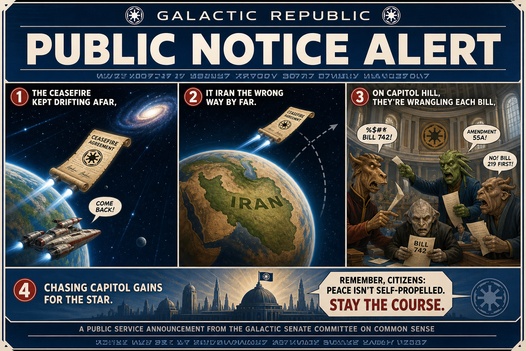
| tl;dr | This NPR “Up First” newsletter, dated July 13, 2026, leads with an escalating U.S.-Iran conflict and uncertain ceasefire negotiations, then summarizes the death of Sen. Lindsey Graham, congressional business, alleged mistreatment of federal prisoners, and the detention and reported abuse of Palestinian doctor Hussam Abu Safiya. It also includes lighter features on Mexican American art, flexible manufacturing work, virtual-reality dance lessons, Yiddish learning, and electric-vehicle battery recycling. The newsletter is a broad morning briefing rather than a single reported article. | ||||
| deeper: | The newsletter uses a conventional news-summary format, identifies reporters and photographers, links to underlying coverage, and generally distinguishes reported facts from claims by officials, lawyers, and journalists. Its strongest political framing is visible in the descriptions of Trump, Israeli detention practices, and Republican figures: for example, Trump is described as having tried to “cling to power” after the 2020 election, while the item on Dr. Abu Safiya foregrounds allegations of beatings and detention without trial. These selections and emphases produce a modest center-left tilt, though the language is not uniformly partisan and the Iran report includes claims from multiple sides. Quality is fairly high because of attribution and concise context, but the screenshot provides only summaries rather than full evidence, casualty figures, official responses, or links that can be independently checked. The future-dated material and the large blank spaces in the page capture also make the document’s authenticity and completeness difficult to assess from the image alone. | ||||
media: No Media Preview | |||||
| gen: 2026/07/13:13:39 in 1 min 33.2 sec (old)bias: 4 (Center-Left) |
| type: lolsquality: 56 |
| pts: 0 |
#middle east#iran#us military#military strikes#geopolitics#united states#strait of hormuz#gulf states#israel#west bank
 | author: | NPR Staff | institution: | NPR | ¿porque no los dos? |
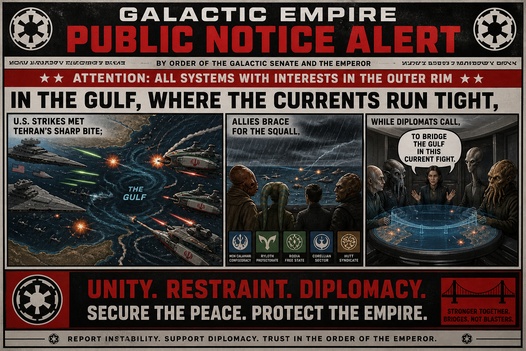
| tl;dr | This NPR article reports an escalating U.S.-Iran conflict involving strikes, attacks on Gulf states, and an alleged closure of the Strait of Hormuz. It presents competing claims from U.S., Iranian, regional, and international sources, mentions diplomatic efforts, and briefly adds a related report about threats faced by Rep. Ro Khanna in the West Bank. However, the article contains significant chronological inconsistencies and relies heavily on official statements without independently verified details about casualties, damage, or the alleged agreement. | ||||
| deeper: | The article generally uses attribution and includes statements from both U.S. and Iranian officials, as well as regional governments, the United Nations, and mediators. Its language is mostly descriptive rather than overtly argumentative. The emphasis on Palestinian displacement, Israeli settler violence, and Rep. Khanna's allegations gives the later portion a somewhat center-left framing, although the main conflict coverage remains relatively balanced. Quality is reduced by major apparent timeline problems: the story says the latest strikes began Saturday, then later says the latest round started Wednesday; it alternates between Saturday, Sunday, and Monday without clearly establishing the chronology; and it provides few independently confirmed facts about damage, deaths, or the reported negotiations. Much of the article is based on claims from military and state media sources, with limited corroboration. The displayed July 2026 date also places the report in a future context that cannot be independently assessed from the image alone. | ||||
media: No Media Preview | |||||
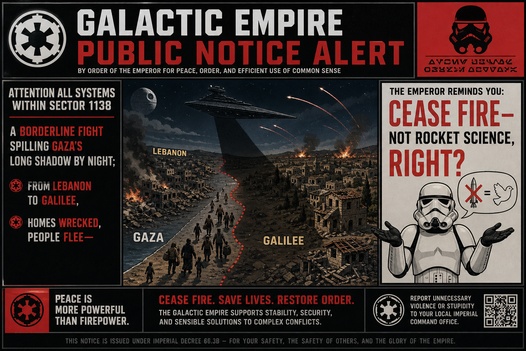

| gen: 2026/07/10:17:18 in 1 min 12.8 sec (old)bias: 5 (Center) |
| type: newsquality: 78 |
| pts: 0 |
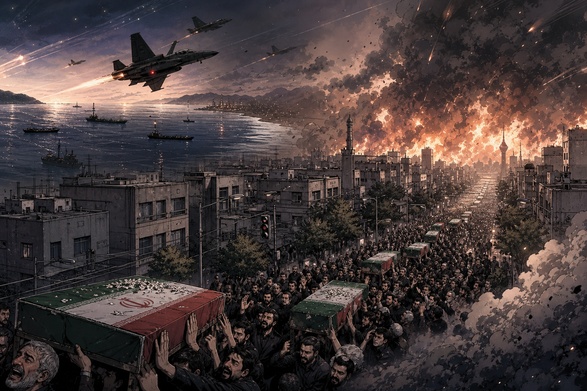
 | author: | Neil Vigdor | institution: | The Washington Post | ¿porque no los dos? |
| tl;dr | The article reports on escalating tensions between the U.S. and Iran, involving military exchanges and threats to destabilize a ceasefire in the Middle East. Recent attacks and military maneuvers have increased the risk of broader conflict. Diplomatic efforts are threatened by these developments, with potential regional consequences. | ||||
| deeper: | The article provides a detailed account of the ongoing U.S.-Iran conflict, highlighting actions from both sides and potential consequences. Language used is balanced, capturing the complexity of the situation without overt bias. The detailed analysis and balanced reporting contribute to a strong quality score. | ||||
media: | |||||
| gen: 2026/07/09:23:01 in 59.2 sec (old)bias: 5 (Center) |
| type: newsquality: 80 |
| pts: 0 |
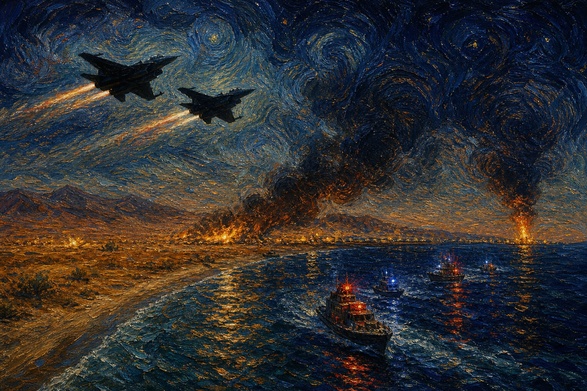
 | author: | Josh Meyer | institution: | NBC News | ¿porque no los dos? |
| tl;dr | The article outlines recent U.S. airstrikes on Iran following Iran's attacks on Gulf Arab states. The escalation marks a significant increase in regional tension. The U.S. claims these actions aim to stabilize the situation and protect American interests, particularly oil flow and allied nations. Meanwhile, Trump reassures that America will not seek war unless provoked. | ||||
| deeper: | The article provides a balanced view, detailing actions of both the U.S. and Iran without clearly aligning with a particular side. It includes various perspectives and statements from different stakeholders. Some bias might be inferred from the emphasis on U.S. actions being defensive, but overall, the piece is fairly neutral. The quality is high, with comprehensive coverage and well-sourced information. | ||||
media: | |||||


owned and operated by: RPN Omnigalactic Insitutution as of: 2026/10/14: 17:51 in 0 ms
Enter Code
Login with Account