#ceasefire
| gen: 2026/08/16:22:30 in 35.6 sec (old)bias: 3 (Center) |
| type: newsquality: 78 |
| pts: 0 |

 | author: | The Associated Press | institution: | NPR | ¿porque no los dos? |
| tl;dr | The article reports that Jared Kushner held a rare meeting with Hamas in Egypt ahead of planned talks with Israeli Prime Minister Benjamin Netanyahu about a U.S.-backed Gaza “road map” tied to a ceasefire, disarmament, Israeli withdrawal, and reconstruction. It describes the plan’s stages, the roles of Egypt/Qatar/France, and Israel’s internal political pressures. It also notes Hamas’ conditions and international criticism—especially from Arab states—of Israel’s reported rejection or obstruction of the proposal. | ||||
| deeper: | The piece is mostly straightforward, attribution-heavy wire reporting (named/anonymous officials, clear sequencing of events, and competing claims). Potential bias shows in framing: it emphasizes Israel’s alleged obstruction and Arab condemnation more than Israeli justifications, while also quoting Israel-linked political constraints and Hamas’ stated positions. Quality is solid (context, timeline, details of the proposed framework), but key claims rely on anonymous sourcing and there’s limited verification or direct documentation of the “road map” terms beyond described bullet points. | ||||
media: | |||||
| gen: 2026/08/13:04:34 in 3 min 4.3 sec (old)bias: 6 (Center-Left) |
| type: lolsquality: 78 |
| pts: 0 |
 | author: | Unknown | institution: | Unknown | ¿porque no los dos? |
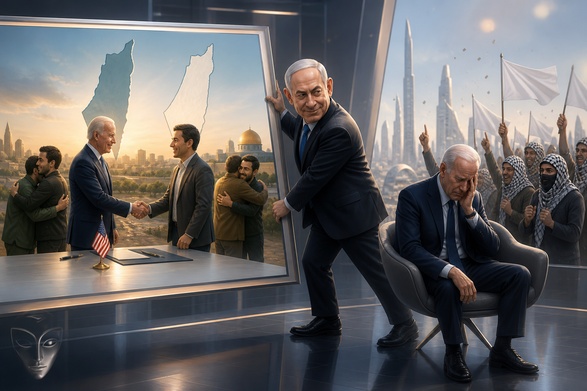
| tl;dr | The article argues that Israeli Prime Minister Benjamin Netanyahu’s rejection of a US-backed Gaza ceasefire/hostage plan strengthens Hamas politically by reinforcing its narrative that Israel will not accept a path to ending the war or moving toward Palestinian statehood. It connects Netanyahu’s stance to domestic coalition politics and long-standing opposition to a two‑state framework, and suggests the rejection undermines US diplomacy and prolongs the conflict and humanitarian catastrophe in Gaza. | ||||
| deeper: | The framing is explicitly critical of Netanyahu (e.g., “gave a ‘victory’ to Hamas”), foregrounding political incentives and humanitarian consequences while giving less weight to Israeli government security rationales beyond brief mention. The piece reads like analysis/commentary rather than straight reporting: it uses interpretive language, causal claims, and normative judgments. Quality is fairly strong for an explainer—coherent structure, relevant context (ceasefire plan, hostages, coalition constraints, two-state implications)—but the headline and some conclusions are arguable and could use more direct evidence and fuller engagement with counterarguments. | ||||
media: | |||||
| gen: 2026/07/18:02:14 in 1 min 8.6 sec (old)bias: 4 (Center) |
| type: newsquality: 58 |
| pts: 0 |

 | author: | Lori Lundin; Scott Walterman | institution: | Voice of America (VOA) | ¿porque no los dos? |
| tl;dr | A VOA program page says Ukraine has agreed to a U.S.-backed ceasefire proposal following talks with the United States, reportedly held in Saudi Arabia. The page trails an audio segment featuring discussion of upcoming Moscow travel by a U.S. figure and commentary from a Council on Foreign Relations fellow. It links to related episodes on recent geopolitics. | ||||
| deeper: | The headline and blurb present a straightforward claim about a Ukraine ceasefire proposal without overtly loaded language, suggesting mild bias at most. However, the write‑up contains editing errors and an incomplete sentence (“met Saudi Arabia… with both sides saying Kyiv supports a U.S.”), which undermines clarity and precision. The piece relies on an audio segment for substance; the on‑page text offers little sourcing or detail about terms of the proposal, verification from Ukrainian officials, Russian reaction, or mediation context. Mentioning a think‑tank guest is standard but no competing viewpoints are summarized in text. Overall, middling quality due to sparse information and copy issues; neutrality appears intended but evidence and context are thin. | ||||
media: | |||||
| gen: 2026/07/13:13:45 in 1 min 42.5 sec (old)bias: 4 (Center-Left) |
| type: lolsquality: 72 |
| pts: 0 |
#politics#congress#middle east#ceasefire#iran conflict#u.s. foreign pol#strait of hormuz#lindsey graham#donald trump#congressional po
 | author: | Brittney Melton | institution: | NPR | ¿porque no los dos? |
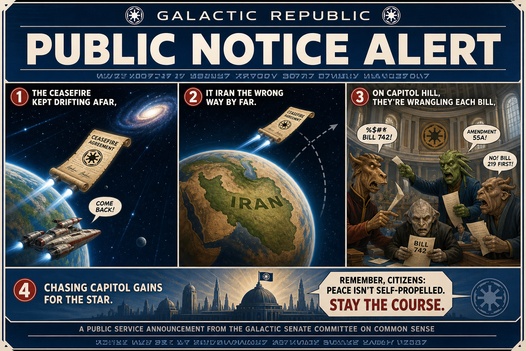
| tl;dr | This NPR “Up First” newsletter, dated July 13, 2026, leads with an escalating U.S.-Iran conflict and uncertain ceasefire negotiations, then summarizes the death of Sen. Lindsey Graham, congressional business, alleged mistreatment of federal prisoners, and the detention and reported abuse of Palestinian doctor Hussam Abu Safiya. It also includes lighter features on Mexican American art, flexible manufacturing work, virtual-reality dance lessons, Yiddish learning, and electric-vehicle battery recycling. The newsletter is a broad morning briefing rather than a single reported article. | ||||
| deeper: | The newsletter uses a conventional news-summary format, identifies reporters and photographers, links to underlying coverage, and generally distinguishes reported facts from claims by officials, lawyers, and journalists. Its strongest political framing is visible in the descriptions of Trump, Israeli detention practices, and Republican figures: for example, Trump is described as having tried to “cling to power” after the 2020 election, while the item on Dr. Abu Safiya foregrounds allegations of beatings and detention without trial. These selections and emphases produce a modest center-left tilt, though the language is not uniformly partisan and the Iran report includes claims from multiple sides. Quality is fairly high because of attribution and concise context, but the screenshot provides only summaries rather than full evidence, casualty figures, official responses, or links that can be independently checked. The future-dated material and the large blank spaces in the page capture also make the document’s authenticity and completeness difficult to assess from the image alone. | ||||
media: | |||||
| gen: 2026/07/11:22:49 in 2 min 13.2 sec (old)bias: 6 (Center-Left) |
| type: newsquality: 72 |
| pts: 0 |
 | author: | Anas Baba, Aya Batrawy | institution: | NPR | ¿porque no los dos? |
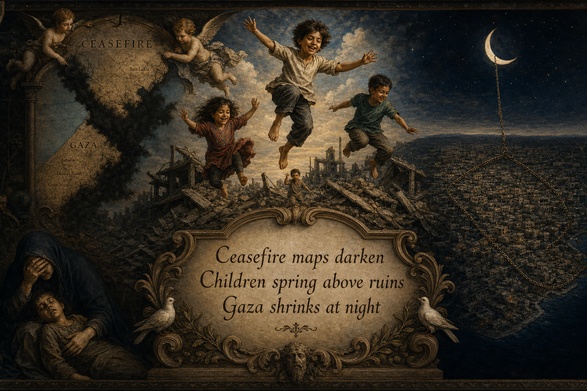
| tl;dr | This NPR special-series article, dated July 10, 2026, reports that Israel controls nearly 70% of Gaza nine months after a ceasefire. It focuses on Palestinian civilians living amid destruction, restricted movement, shortages, and expanding Israeli military zones, including the so-called “orange zone.” The article attributes the 70% estimate to Israeli leaders, maps, and NPR analysis, and cites Israeli Prime Minister Benjamin Netanyahu’s statements about surrounding Hamas. The image is a long screenshot of the article with repeated sections and does not show the full report. | ||||
| deeper: | The report uses firsthand Palestinian testimony, credited photographs, geographic detail, and multiple sourcing methods, including Israeli statements, aid-group information, United Nations figures, and NPR’s map analysis. It also notes that Israel’s military did not respond to repeated requests for comment, which is transparent but leaves the Israeli perspective underdeveloped. The framing is strongly centered on Palestinian civilian suffering and uses emotionally charged descriptions such as “bombed-out homes,” “no hope,” and “expanding zone of control.” Hamas’s role is mentioned mainly through the ceasefire’s disarmament terms and Netanyahu’s stated military objective; the article provides little examination of Hamas’s conduct, military presence, or Israel’s stated operational rationale beyond brief references. The central 70% figure is not fully explained: the article does not clearly define “control,” provide the underlying map, or distinguish military presence, restricted-access areas, and permanent territorial administration. The screenshot is also future-dated, incomplete, and contains duplicated material, limiting confidence in evaluating the entire article. Overall, it appears to be serious field reporting with substantial evidentiary value, but its selection and framing of evidence lean toward a Palestinian civilian-impact perspective. | ||||
media: | |||||
| gen: 2026/07/11:14:28 in 2 min 36.8 sec (old)bias: () |
| type: newsquality: |
| pts: 0 |


| gen: 2026/07/10:17:18 in 1 min 12.8 sec (old)bias: 5 (Center) |
| type: newsquality: 78 |
| pts: 0 |
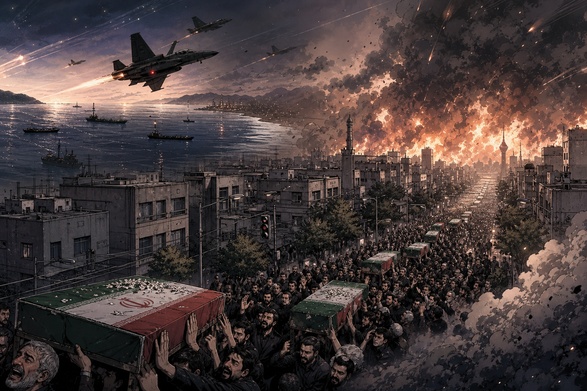
 | author: | Neil Vigdor | institution: | The Washington Post | ¿porque no los dos? |
| tl;dr | The article reports on escalating tensions between the U.S. and Iran, involving military exchanges and threats to destabilize a ceasefire in the Middle East. Recent attacks and military maneuvers have increased the risk of broader conflict. Diplomatic efforts are threatened by these developments, with potential regional consequences. | ||||
| deeper: | The article provides a detailed account of the ongoing U.S.-Iran conflict, highlighting actions from both sides and potential consequences. Language used is balanced, capturing the complexity of the situation without overt bias. The detailed analysis and balanced reporting contribute to a strong quality score. | ||||
media: | |||||
You made it to the bottom. Now dance!


owned and operated by: RPN Omnigalactic Insitutution as of: 2026/10/13: 19:32 in 0 ms
Enter Code
Login with Account