#iran nuclear pro
| gen: 2026/07/11:22:46 in 1 min 11.6 sec (old)bias: 3 (Center) |
| type: newsquality: 63 |
| pts: 0 |
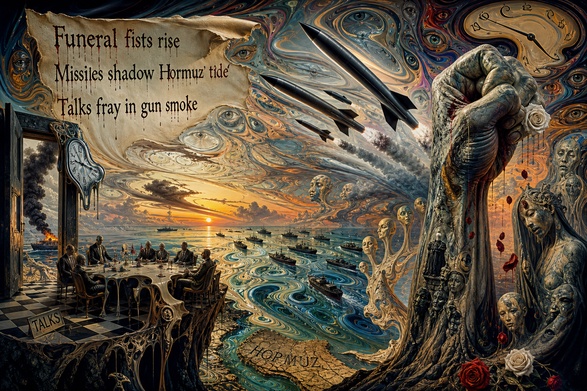
#iran#trump#mideast#conflict#diplomacy#donald trump#ali khamenei#strait of hormuz#u.s.-iran war#iran nuclear pro
 | author: | The Associated Press | institution: | Associated Press | ¿porque no los dos? |
| tl;dr | The Associated Press article reports escalating U.S.-Iran tensions after Ayatollah Ali Khamenei’s funeral, focusing on President Donald Trump’s threats, the disputed status of the Strait of Hormuz, continuing military strikes, and U.S. demands concerning Iran’s enriched uranium. It presents statements from U.S. and Iranian officials, but relies substantially on anonymous U.S. sources and includes several serious allegations that are not independently substantiated within the excerpt. | ||||
| deeper: | The article is structured as a conventional wire report, uses attributed quotations, includes both U.S. and Iranian positions, and avoids overt editorializing. Its headline is attention-grabbing and emphasizes Trump’s threat, while the article gives less context about the origins of the conflict, civilian consequences, legal arguments over the Strait of Hormuz, or independent verification of battlefield claims. Several important assertions—such as who conducted later attacks, the extent of Iran’s control over the strait, and claims about enriched uranium—are presented through officials or indirect reporting rather than independently documented evidence. Anonymous U.S. officials are used repeatedly, which limits transparency. The apparent 2026 setting and extraordinary events also make external verification especially important. Overall, the reporting format and attribution are reasonably strong, but the excerpt’s sourcing and lack of corroborating context reduce its reliability and completeness. | ||||
media: No Media Preview | |||||
You made it to the bottom. Now dance!


owned and operated by: RPN Omnigalactic Insitutution as of: 2026/10/13: 09:44 in 0 ms
Enter Code
Login with Account