#iran
| gen: 2026/09/28:05:22 in 25.0 sec (old)bias: 3 (Center) |
| type: newsquality: 66 |
| pts: 0 |
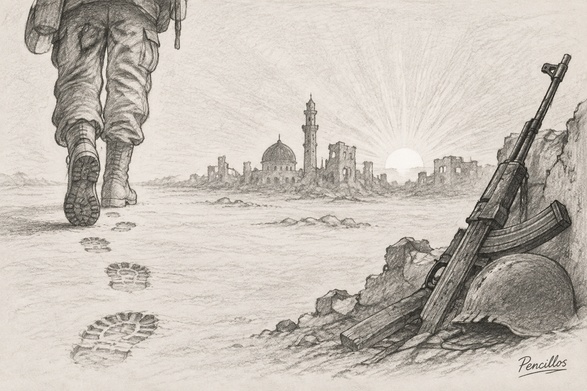
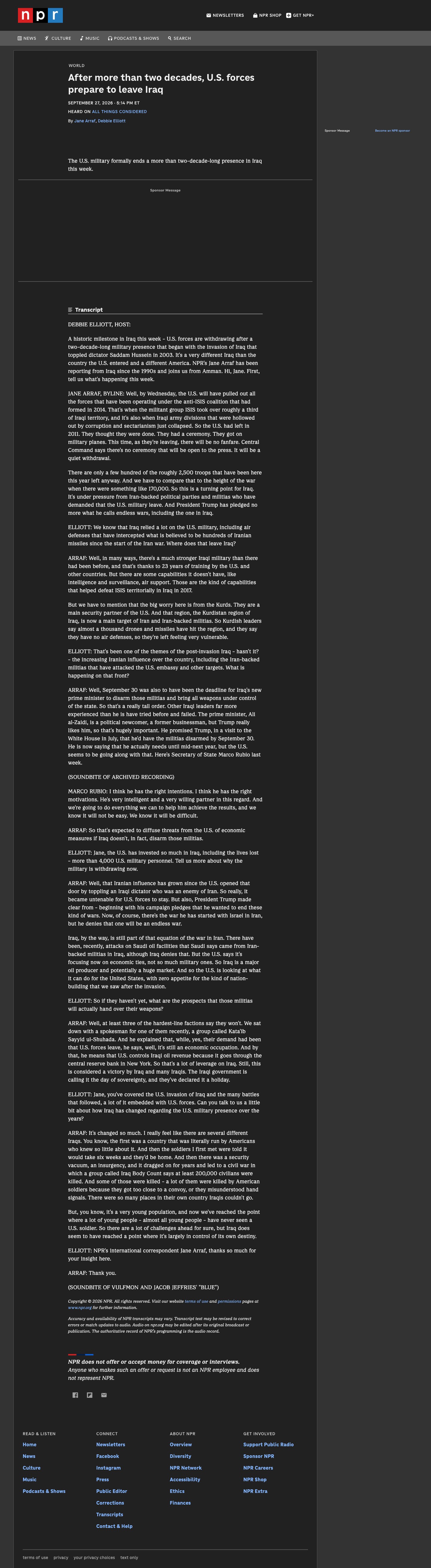 | author: | Jane Arraf, Debbie Elliott | institution: | NPR | ¿porque no los dos? |
| tl;dr | The article reports that U.S. coalition forces are preparing to leave Iraq, presenting the withdrawal as a sovereignty milestone with significant security risks. It highlights Iraqi military capability gaps, Kurdish vulnerability, Iranian influence, and militias resisting disarmament. It also describes a U.S. shift toward economic relations and reviews the invasion’s civilian toll. Although the introduction suggests an uninterrupted military presence since 2003, the transcript acknowledges the 2011 withdrawal and 2014 return. | ||||
| deeper: | The report includes U.S., Kurdish, Iraqi government, and militia perspectives without a clear partisan prescription. Its emphasis on sovereignty and civilian harm is balanced by recognition of U.S. security contributions. Some sweeping judgments—Americans knowing little about Iraq and Iraq controlling its destiny—lack supporting detail. The introduction misleadingly implies continuous deployment. Iraq Body Count’s cumulative civilian deaths are also loosely presented as a civil-war total. Named sources and historical context help, but major contemporary claims cannot be independently verified from these screenshots. | ||||
media: | |||||
| gen: 2026/09/24:02:27 in 28.2 sec (old)bias: 3 (Center) |
| type: newsquality: 70 |
| pts: 0 |
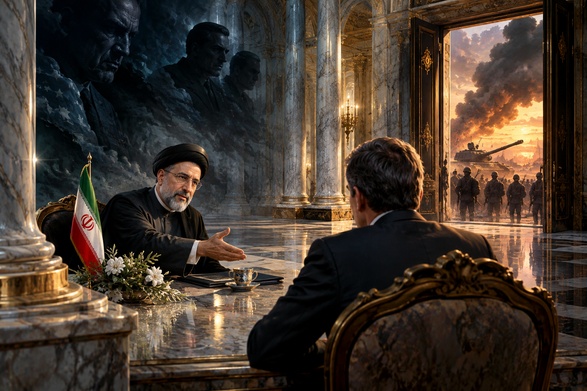
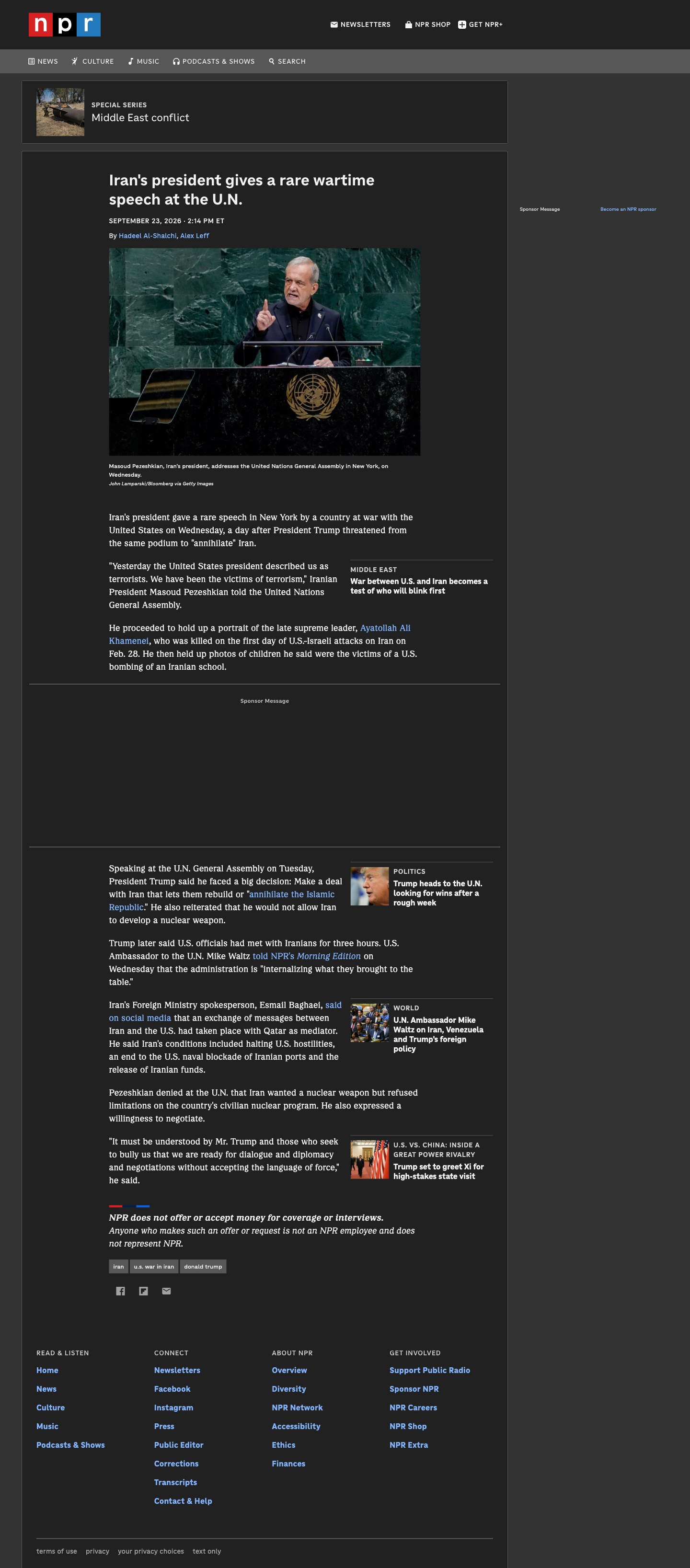 | author: | Hadeel Al-Shalchi, Alex Leff | institution: | NPR | ¿porque no los dos? |
| tl;dr | The article reports that Iranian President Masoud Pezeshkian addressed the United Nations during a war with the United States, criticizing U.S. attacks while expressing willingness to negotiate. It contrasts his remarks with President Trump’s threat to annihilate the Islamic Republic and his insistence that Iran not develop nuclear weapons. U.S. and Iranian officials describe diplomatic exchanges mediated by Qatar. Iran seeks an end to hostilities and a naval blockade, release of funds, and protection of its civilian nuclear program. | ||||
| deeper: | The report quotes both governments and generally distinguishes officials’ claims from established facts. Its opening emphasizes Trump’s threat and Iranian suffering, giving Iran’s perspective some emotional prominence. However, it also includes U.S. nuclear concerns and Iran’s refusal of restrictions, without clearly endorsing a political ideology. Named sources and links strengthen transparency. Limited independent scrutiny of wartime claims and little historical or nuclear-monitoring context weaken the reporting. The screenshots alone cannot establish the authenticity of the page or verify its consequential factual claims. | ||||
media: | |||||
| gen: 2026/09/21:17:43 in 26.6 sec (old)bias: 2 (Center) |
| type: newsquality: 65 |
| pts: 0 |
 | author: | Stephan Bisaha, Steve Inskeep | institution: | NPR | ¿porque no los dos? |
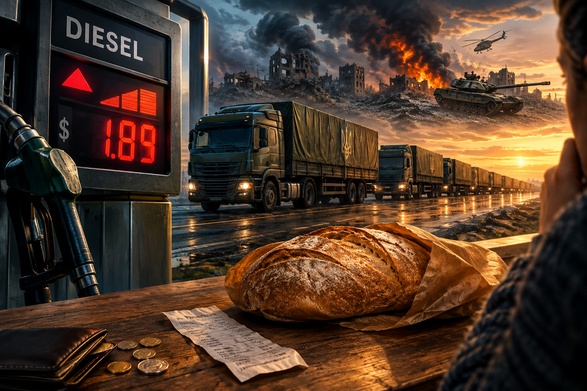
| tl;dr | The article reports a national average diesel price above $6.51 per gallon, citing AAA. It attributes the increase to war with Iran, disrupted oil routes through the Strait of Hormuz, and refining costs. Because diesel powers much freight transportation, higher prices could spread to consumer goods, though the report says that effect is not yet clearly evident on store shelves. It explains that Federal Reserve interest-rate increases cannot directly resolve these supply disruptions. | ||||
| deeper: | The report emphasizes economic consequences without promoting a political party or ideology. Phrases such as “shockingly fast” add mild alarm, but it distinguishes potential consumer price increases from observed effects. AAA attribution and clear explanations are strengths. However, major claims about the war, shipping disruptions, and refining costs lack supporting sources in the text. Saying interest rates do not affect fuel prices is too categorical: reduced demand can affect them indirectly. The screenshot alone does not independently verify the reported events or figures. | ||||
media: | |||||
| gen: 2026/09/19:21:46 in 25.6 sec (old)bias: 3 (Center) |
| type: newsquality: 76 |
| pts: 0 |
 | author: | Jacob Silverman | institution: | International Consortium of Investigative Journalists (ICIJ) | ¿porque no los dos? |
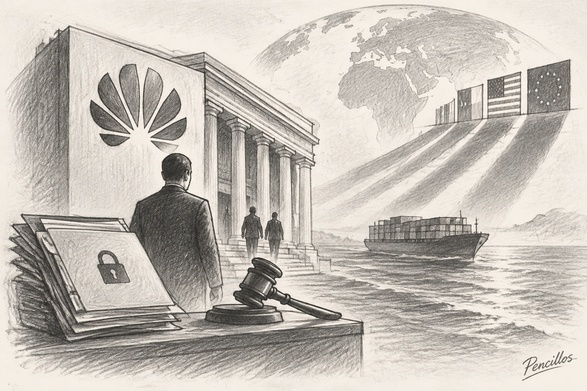
| tl;dr | The article reports on Huawei’s New York federal trial over alleged trade-secret theft, bank deception and violations of U.S. sanctions on Iran. Prosecutors describe a decades-long criminal scheme; Huawei’s lawyers characterize the accusations as disconnected incidents and legitimate competition. The report also covers testimony about surveillance technology in Iran, Huawei’s banking relationships and U.S.–China technology rivalry. A legal expert questions what additional penalties could accomplish given existing sanctions. No verdict is reported. | ||||
| deeper: | The headline accurately attributes its strong accusation, and the article includes defense arguments, named sources and independent legal commentary. However, prosecution claims and national-security concerns dominate, giving Huawei’s alleged wrongdoing greater emphasis than its rebuttals. This is a prosecution-leaning frame, not a clear left–right position. Historical context adds value, but “No individuals have been charged” needs qualification given the later account of Meng’s charges. The sweeping claim about the trial’s historic size is unsupported, and the screenshots alone cannot verify the reported proceedings. | ||||
media: | |||||
| gen: 2026/09/18:18:48 in 37.0 secbias: 3 (Unknown) |
| type: colorquality: 45 |
| pts: 0 |
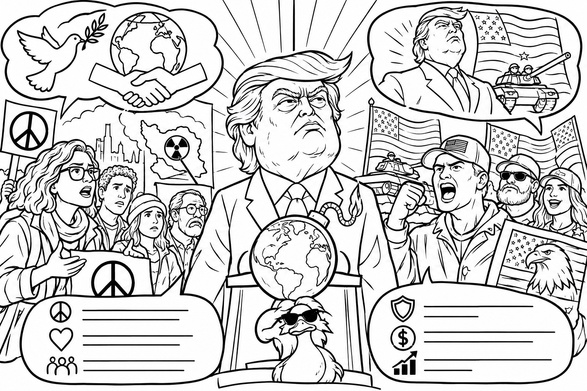
#politics#war#diplomacy#iran#trump#iran war#donald trump#barack obama#us presidency#national securit
Leftist
Yet another disastrous consequence of unchecked power. The Trump administration's aggressive stance on Iran risks not just regional peace but global stability. Diplomacy should always triumph over reckless showmanship. This isn't just about jeopardizing a political career; it's jeopardizing lives. When will we learn that war isn't the answer? We need leaders who prioritize humanity over hubris, fostering dialogue over division.
Rightist
This is a classic case of fearmongering from the left. The Trump administration is taking strong steps to ensure national security. Liberals may call it jeopardizing, but it's about protecting American interests and showing strength against adversaries like Iran. Sometimes, peace requires power. It's time to stop apologizing for America and start safeguarding our future. Trump’s decisive actions show the world we won’t back down.
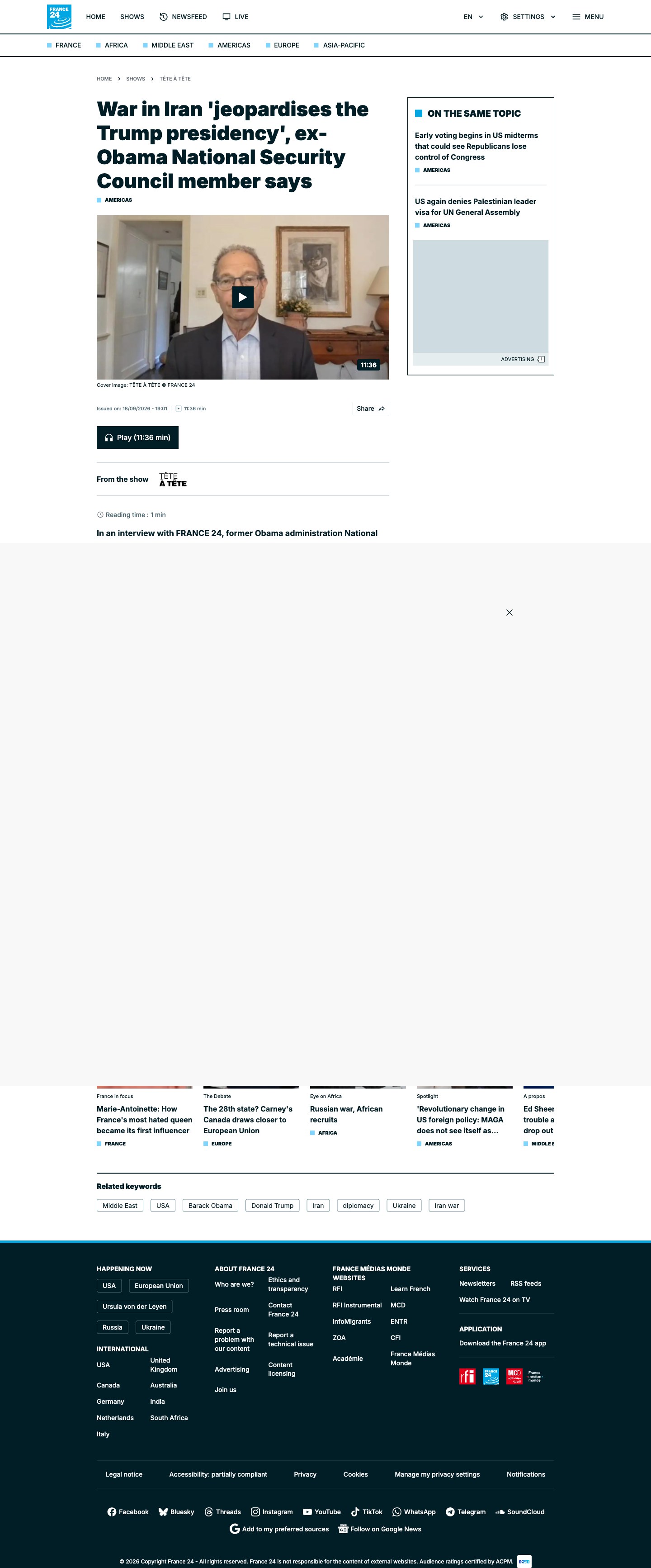 | author: | Unknown | institution: | France 24 | ¿porque no los dos? |
| tl;dr | The visible France 24 page previews an interview with a former Obama administration National Security Council member who argues that war in Iran jeopardises Donald Trump’s presidency. The headline presents this as the guest’s assessment, not an established outcome. Most of the article text is obscured, and the interview itself cannot be assessed from these screenshots. | ||||
| deeper: | The headline foregrounds a dramatic prediction from one former administration official, giving the visible coverage a narrow perspective. However, quotation marks and explicit attribution distinguish opinion from fact. Criticism of Trump alone does not establish a left–right position. The page supplies publication details and an interview format, but the obscured text prevents evaluation of evidence, questioning, context or competing views. The quality score applies only to the material visible here. | ||||
media: | |||||
| gen: 2026/09/18:18:45 in 36.9 secbias: 3 (Center) |
| type: colorquality: 72 |
| pts: 0 |
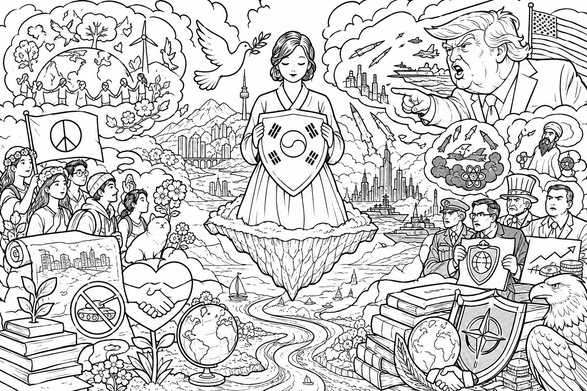
#us-foreign-polic#south-korea#iran-conflict#military-allianc#diplomatic-strat#south korea#lee jae myung#donald trump#iran#strait of hormuz#military policy
Leftist
This decision marks a bold stand for peace and sovereignty against yet another dangerous US initiative in the Middle East. South Korea is prioritizing its citizens’ will and rejecting military pressure from Trump’s imperialistic demands. History reminds us of the chaos that followed compliance in US-led wars. The refusal shows courage, thinking beyond capitalist interests and valuing diplomatic solutions. South Korea sets a precedent against warmongering empires, embodying globalization with empathy and peace.
Rightist
South Korea's decision smacks of a troubling defiance of global commitments. Trump’s stance was clear: allies must contribute to preserving regional stability and security. Turning away from this responsibility showcases a lack of strategic foresight. History warns us that appeasement risks emboldening adversaries like Iran. Economic interests are secondary to maintaining a strong defense posture. South Korea’s refusal could jeopardize relations and embolden rogue regimes, weakening alliances.
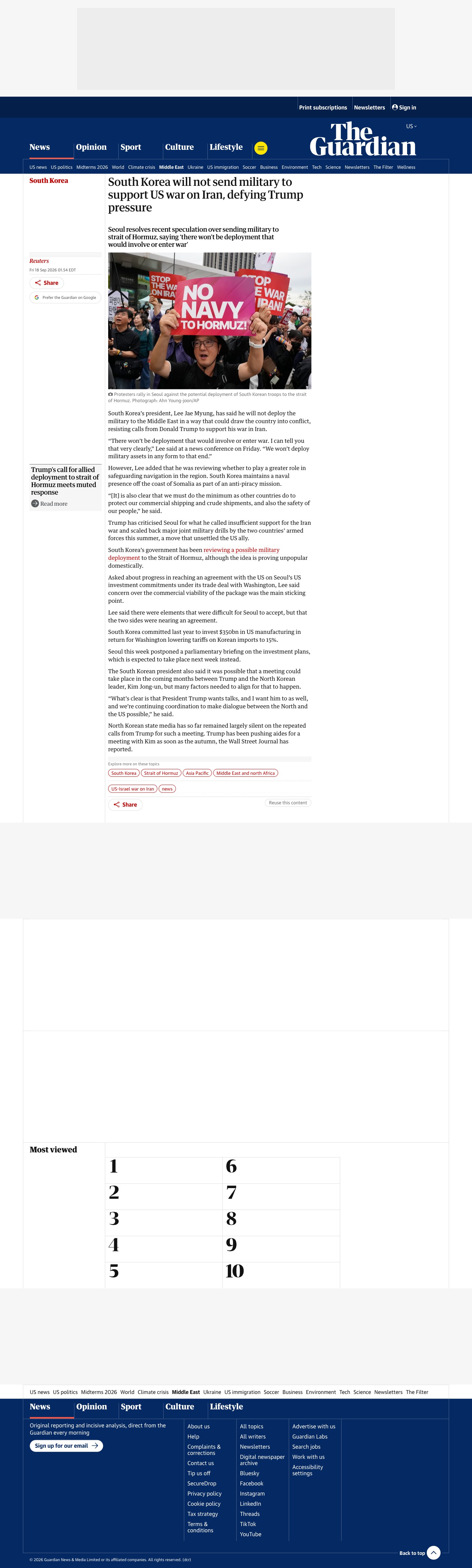 | author: | Reuters | institution: | The Guardian | ¿porque no los dos? |
| tl;dr | South Korean president Lee Jae Myung says the country will not deploy forces in ways that would draw it into the Iran war, while considering measures to protect shipping and citizens. The article describes US pressure for support and domestic opposition to deployment. It also reports continuing negotiations over South Korea’s $350bn US investment commitment and the possibility of talks between Donald Trump and North Korean leader Kim Jong-un. | ||||
| deeper: | Direct quotations support the central account, and the article includes Lee’s willingness to protect shipping, adding nuance. However, the headline sounds more categorical than his qualified rejection of war-related deployments. “His war” and “defying Trump pressure,” alongside the protest photograph, emphasize confrontation. These choices do not establish a clear left-right ideology. Reporting relies heavily on Lee, without a direct US response or evidence quantifying domestic opposition. The screenshot’s authenticity and factual claims cannot be independently verified here, and the ending is cut off. | ||||
media: | |||||
| gen: 2026/09/18:18:42 in 31.0 secbias: 2 (Center) |
| type: colorquality: 82 |
| pts: 0 |
#war crimes#international la#human rights#u.s. politics#iran conflict#iran#united states#united nations#israel#minab#lamerd city stri
Leftist
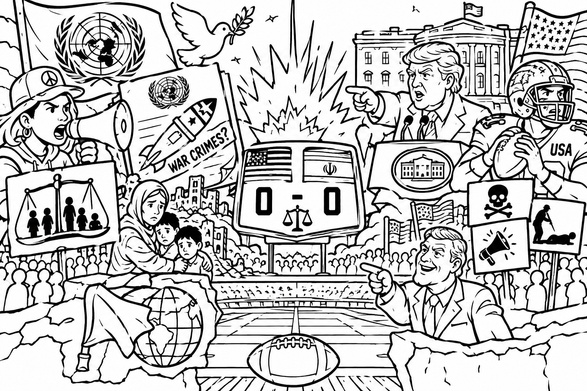
The U.N. report drops a bombshell bigger than any Tomahawk, accusing the U.S. of potential war crimes in Iran. This is like a penalty flag thrown on the field of global justice, demanding accountability for everyone. Civilian losses exceed a hundred, mostly women and children, in strikes in Minab. It's a brutal reminder that the world is less like a fair game and more like an unfair fight. Both the U.S. and Iran must pay reparations; it's time to share the scoreboard of responsibility.
Rightist
Hold onto your seats, folks! The U.N. expert team just tried a Hail Mary against the U.S., claiming war crimes in Iran. But the White House fires back like John Elway in overtime, denying the accusations and pointing fingers at Iran's horrific track record. They've been executing and terrorizing without remorse. In the geopolitical field, the U.S. remains the quarterback, defending democracy while facing flags that seem more about sensationalism than fairness.
 | author: | The Associated Press | institution: | NPR | ¿porque no los dos? |
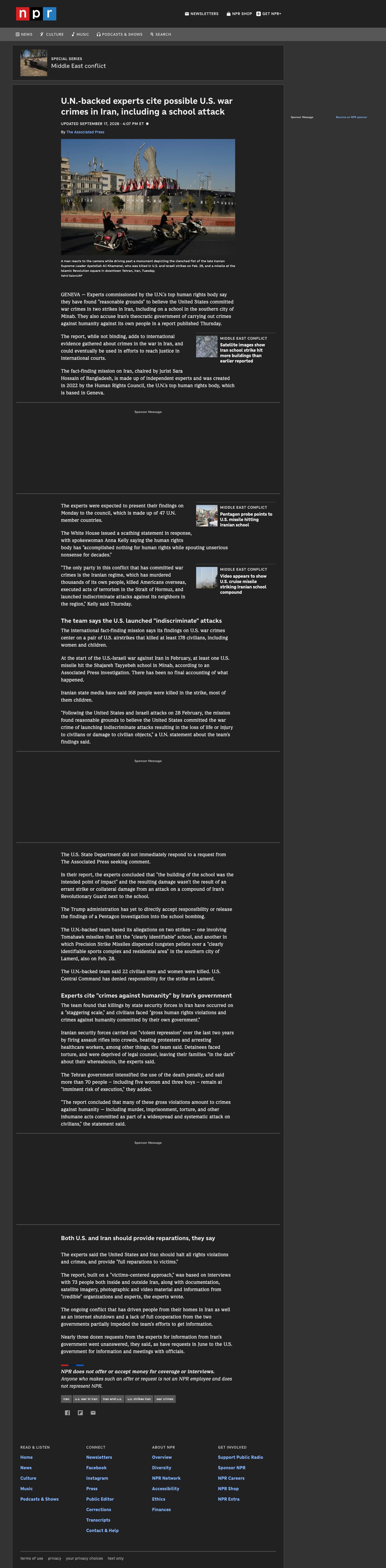
| tl;dr | The article reports that U.N.-commissioned experts found reasonable grounds to suspect U.S. war crimes in two strikes in Iran, including an attack on a school in Minab. The same report accuses Iranian authorities of crimes against humanity through killings, torture and repression. U.S. officials reject the allegations. Experts call for reparations from both governments. Their findings draw on interviews and visual evidence, but information gathering was hindered by conflict, internet restrictions and government noncooperation. The report is not a binding judicial ruling. | ||||
| deeper: | The article emphasizes civilian protection and legal accountability without clearly endorsing a partisan position. It attributes allegations, includes substantial U.S. rebuttals, covers Iranian abuses and explains investigative limitations. Strong wording largely comes from identified sources. Its main weaknesses are reliance on one investigative report, limited explanation of evidence establishing targeting responsibility, and no direct Iranian response. Different casualty figures are attributed but not reconciled. These scores assess the supplied text; the screenshots alone do not authenticate its reporting. | ||||
media: | |||||
| gen: 2026/09/16:05:17 in 37.9 sec (old)bias: 3 (Center) |
| type: lolsquality: 68 |
| pts: 0 |
 | author: | Agencies | institution: | The Guardian | ¿porque no los dos? |
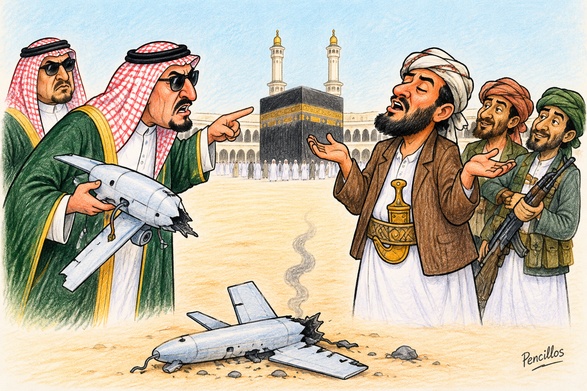
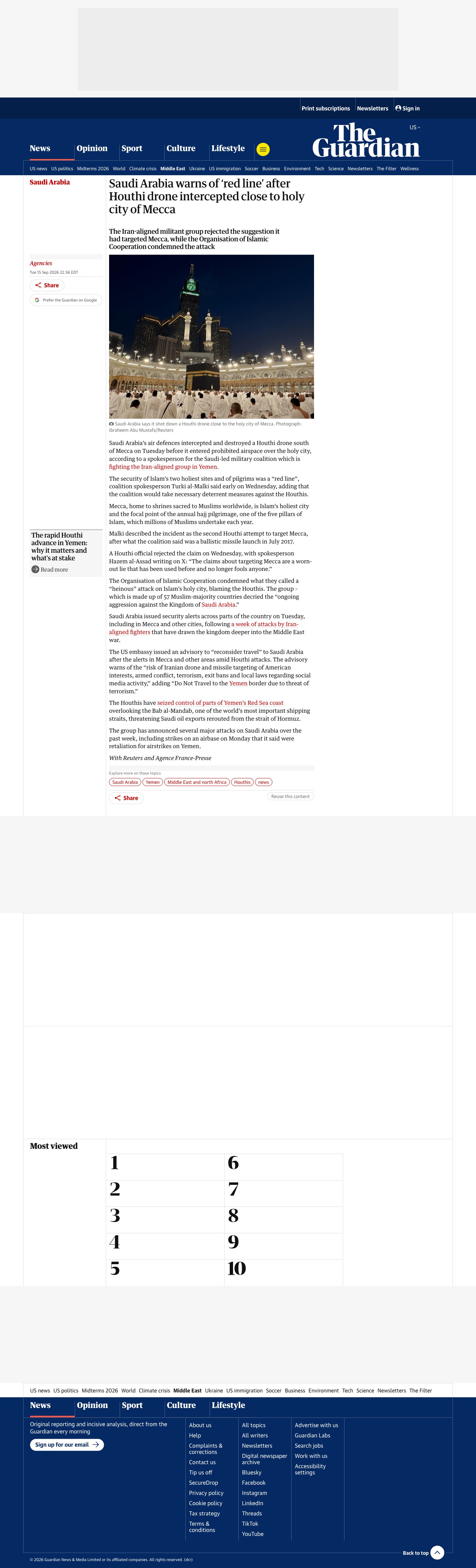
| tl;dr | Saudi Arabia says it intercepted a Houthi drone south of Mecca and warned that protecting holy sites and pilgrims is a “red line.” The Houthis deny targeting Mecca, while the Organisation of Islamic Cooperation condemned the alleged attack. The article also reports Saudi security alerts, a US travel advisory, and wider regional fighting affecting shipping and oil exports. It provides no independent evidence establishing the drone’s intended target. | ||||
| deeper: | The article attributes claims and prominently includes the Houthi denial, with no clear left-right political agenda. However, the headline and holy-site imagery emphasize the Saudi security narrative, while Saudi and allied statements receive more space. Named sources and regional context are strengths. Independent verification, precise interception details, and evidence of the intended target are missing. Some broader military and shipping claims receive little supporting detail, and the screenshot alone cannot establish authenticity or factual accuracy. | ||||
media: | |||||
| gen: 2026/09/14:19:34 in 33.1 sec (old)bias: 3 (Center) |
| type: newsquality: 65 |
| pts: 0 |
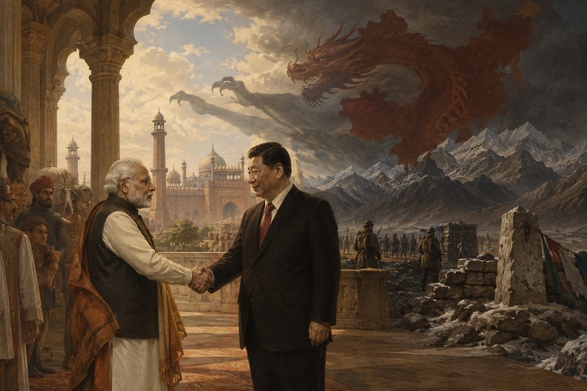
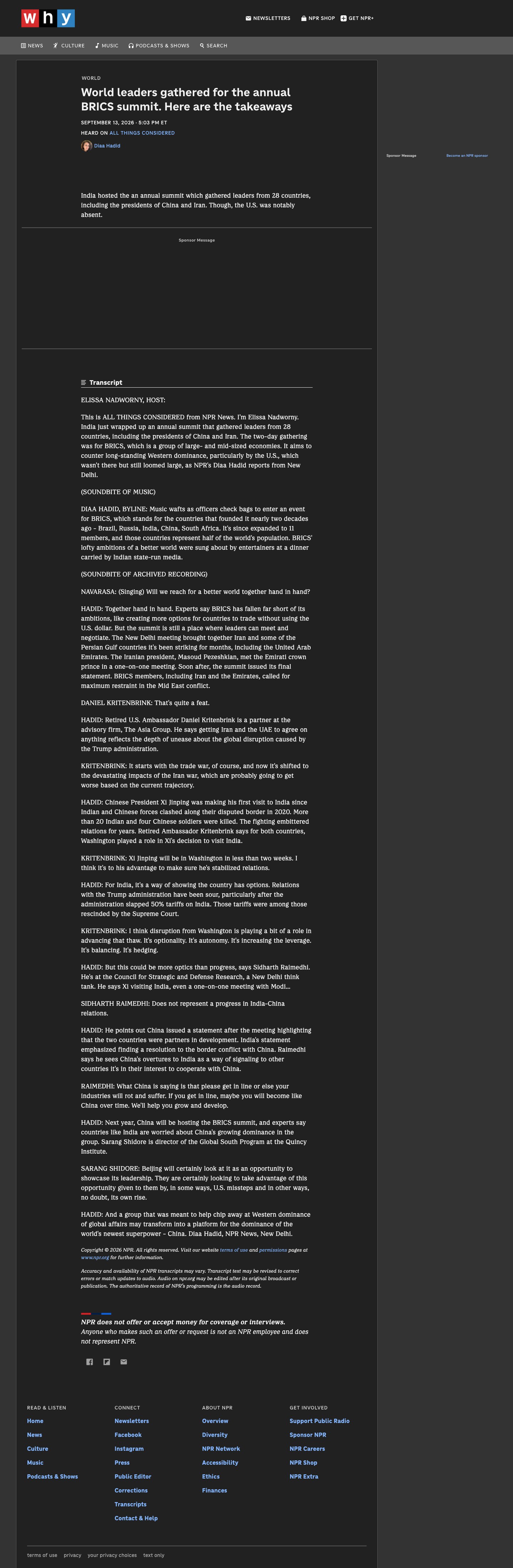 | author: | Diaa Hadid | institution: | NPR | ¿porque no los dos? |
| tl;dr | The article reports that India hosted a BRICS summit focused on diplomacy amid trade tensions and Middle East conflict. It highlights an Iran–UAE meeting, renewed India–China engagement, and calls for restraint. Analysts suggest U.S. policies are encouraging countries to seek alternatives, while unresolved border disputes limit India–China cooperation. The report concludes that China could increasingly dominate BRICS, despite the group’s limited progress toward goals such as reducing reliance on the U.S. dollar. | ||||
| deeper: | The report includes named experts, historical context, and skepticism about BRICS’ achievements. Its geopolitical outlook does not clearly favor a left- or right-wing agenda. However, repeated emphasis on U.S. disruption and China’s dominance narrows the framing, with little direct response from those governments. Some dramatic interpretations receive limited scrutiny. There are factual imprecisions: South Africa joined later rather than founding the original group, and the established Indian death toll in the 2020 border clash was 20, not more than 20. The screenshot alone cannot authenticate its major event claims. | ||||
media: | |||||
| gen: 2026/09/13:15:25 in 41.5 sec (old)bias: 3 (Center) |
| type: newsquality: 57 |
| pts: 0 |
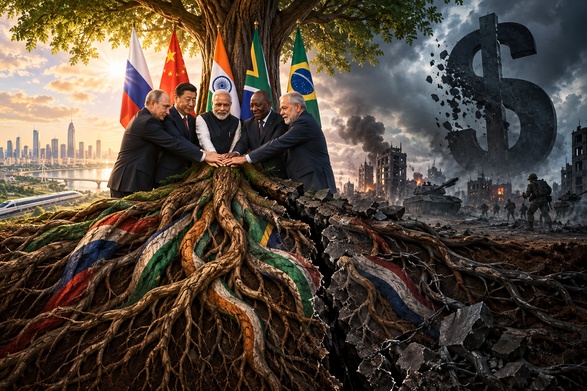
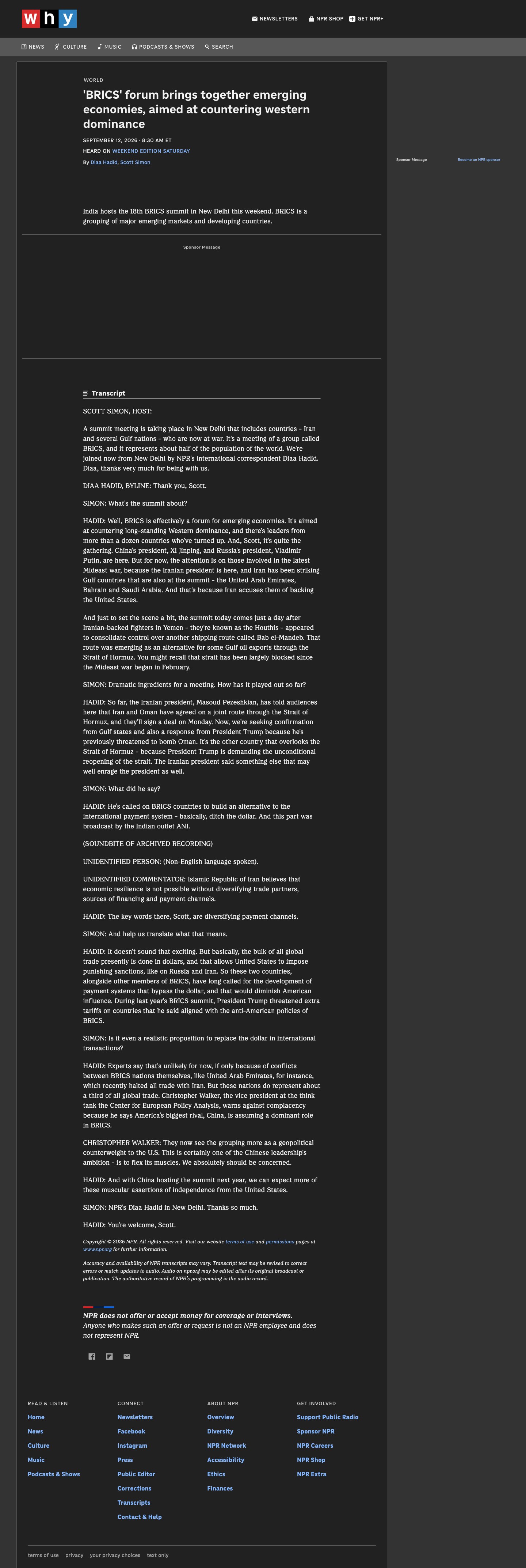 | author: | Diaa Hadid, Scott Simon | institution: | NPR | ¿porque no los dos? |
| tl;dr | The article describes a BRICS summit in New Delhi focused on Middle East conflict and efforts to reduce reliance on the U.S. dollar. It reports Iran’s announcement of a proposed shipping arrangement with Oman and calls for alternative payment channels. Internal disputes among BRICS members are presented as obstacles to replacing the dollar, while an analyst warns of China’s growing influence. Significant claims about warfare, shipping disruptions and U.S. threats are presented but cannot be independently verified from the screenshots. | ||||
| deeper: | The report explains financial issues accessibly, attributes Iran’s proposed deal and acknowledges that confirmation is pending. However, major claims about attacks, trade restrictions and threats to bomb Oman lack supporting evidence in the text. Its U.S.-centered framing and closing warning about China favor a security-threat perspective, without a clear left/right agenda. Phrases such as “enrage the president” introduce speculation. One analyst supplies the main outside assessment, and “ditch the dollar” oversimplifies the quoted call to diversify payment channels. | ||||
media: | |||||
| gen: 2026/09/11:15:34 in 44.9 sec (old)bias: 2 (Unknown) |
| type: newsquality: 45 |
| pts: 0 |
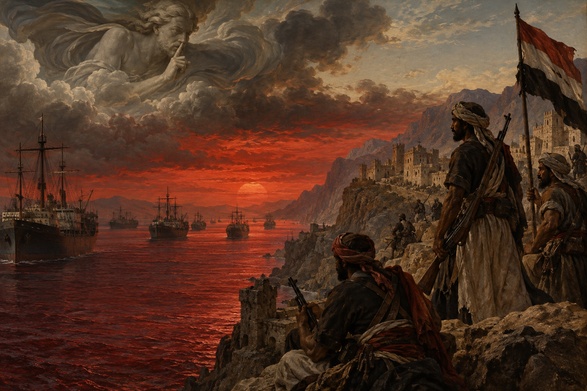
 | author: | FRANCE 24 | institution: | FRANCE 24 | ¿porque no los dos? |
| tl;dr | The visible article reports that Yemen’s Iran-aligned Houthi rebels have seized the country’s entire Red Sea coast, citing a government official. It says this brings them closer to controlling the Bab al-Mandab strait, a strategically important maritime passage. Most of the article body is not visible in the supplied images, so its supporting evidence and broader coverage cannot be assessed. | ||||
| deeper: | The visible wording is mostly factual and shows no clear left-right political position. However, the headline presents a sweeping territorial claim as established fact, while the introduction attributes it only to an unidentified government official. No corroboration or competing account is visible. The byline, timestamps and photo credit provide basic transparency, but the missing article body limits assessment. These scores apply only to the readable excerpt, not the unseen reporting. | ||||
media: | |||||
| gen: 2026/09/09:15:21 in 42.7 sec (old)bias: 2 (Center) |
| type: newsquality: 55 |
| pts: 0 |

 | author: | Unknown | institution: | France 24 | ¿porque no los dos? |
| tl;dr | A France 24 page/headline reports that Iran said it fired ballistic missiles at a US base in Jordan early Wednesday, describing it as retaliation for US strikes on Iranian tankers. The visible page is mostly the headline, timestamp, and a short standfirst; the remainder of the article text is not shown in the provided images. | ||||
| deeper: | The framing is largely straight-news: it attributes key claims (“Iran said…”, “in retaliation…”) and avoids loaded language in the limited visible text. However, only a small excerpt is available, with no sourcing detail, corroboration, casualty/damage reporting, or competing accounts from the US/Jordan, which limits verification and overall informational value in this capture. | ||||
media: No Media Preview | |||||
| gen: 2026/09/07:05:22 in 41.5 sec (old)bias: 4 (Center) |
| type: newsquality: 74 |
| pts: 0 |
| gen: 2026/09/03:04:14 in 54.3 sec (old)bias: 4 (Center) |
| type: newsquality: 78 |
| pts: 0 |
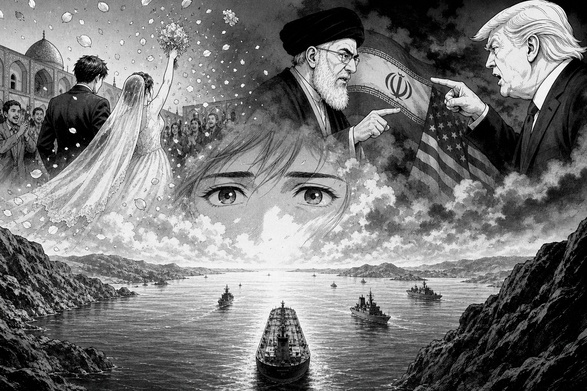
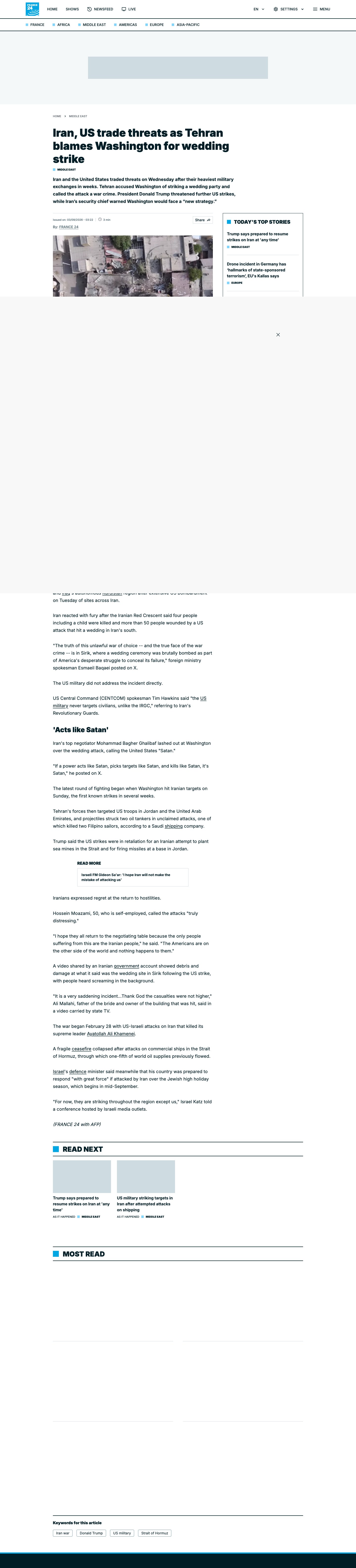 | author: | Unknown | institution: | France 24 (with AFP) | ¿porque no los dos? |
| tl;dr | France 24 (with AFP) reports escalating Iran–US tensions after recent military exchanges. Tehran accuses Washington of striking a wedding in southern Iran (Sirik), calling it a war crime; Iran’s Red Crescent claims four killed (including a child) and 50+ wounded. US Central Command denies targeting civilians and contrasts US conduct with Iran’s IRGC. The piece also notes regional spillover: attacks on US troops in Jordan/UAE, tanker damage in unclaimed attacks, and risks to Strait of Hormuz shipping, alongside Israeli warnings. | ||||
| deeper: | The article is largely straight-wire reporting, presenting claims and counterclaims from Iranian officials, the Iranian Red Crescent, and CENTCOM, plus limited civilian reaction. Bias mainly comes from emphasis on vivid inflammatory quotes (“Satan,” “war crime”) and casualty claims without showing independent verification or forensic detail; it does, however, include the US denial and broader context (shipping, regional strikes, Israeli statements). Quality is solid for a fast update, but thin on corroboration, timelines, and evidence beyond official statements and a government-shared video. | ||||
media: No Media Preview | |||||
| gen: 2026/09/01:15:51 in 33.8 sec (old)bias: 4 (Center) |
| type: newsquality: 70 |
| pts: 0 |
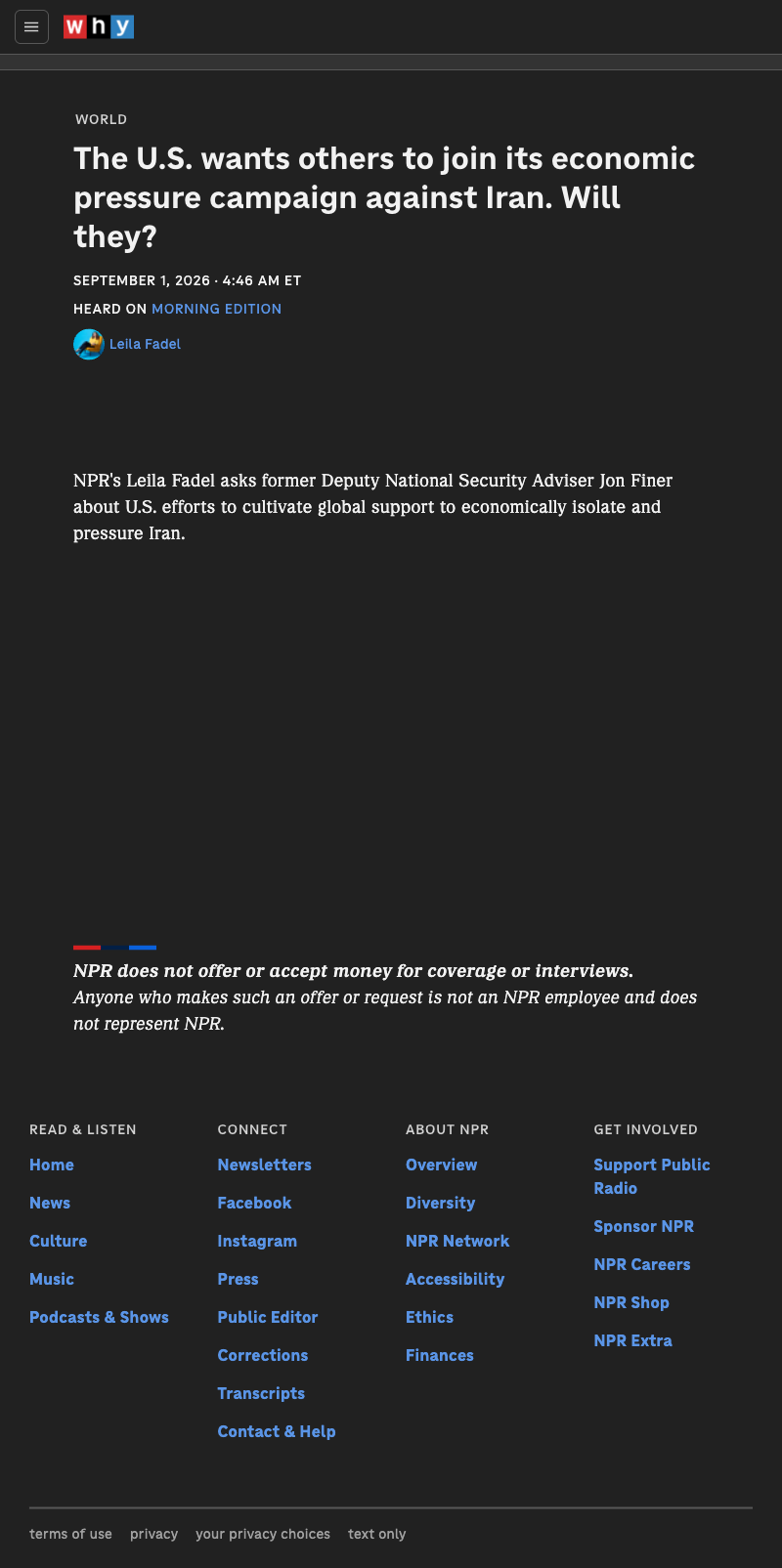 | author: | Leila Fadel | institution: | NPR | ¿porque no los dos? |
| tl;dr | The image shows an NPR World/Morning Edition item titled “The U.S. wants others to join its economic pressure campaign against Iran. Will they?” It’s framed as an interview in which Leila Fadel questions former Deputy National Security Adviser Jon Finer about U.S. efforts to build international support to economically isolate and pressure Iran. The page excerpt indicates the segment focuses on coalition-building and sanctions-style pressure, with the core perspective coming from a senior U.S. official/alumnus rather than multiple stakeholders. | ||||
| deeper: | The framing is largely explanatory and question-driven, but the sourcing shown is narrow: it spotlights a former top U.S. national security official, which tends to privilege Washington’s rationale and language (“pressure campaign,” “isolate”). Without evidence in the screenshot of Iranian, allied, humanitarian, or independent economic perspectives, the segment risks becoming an insider-policy account rather than a fully rounded analysis. Still, NPR’s format and the headline’s interrogative stance suggest an intent to test assumptions rather than simply promote policy. | ||||
media: No Media Preview | |||||
| gen: 2026/08/24:20:20 in 1 min 10.0 secbias: 3 (Center) |
| type: colorquality: 78 |
| pts: 0 |
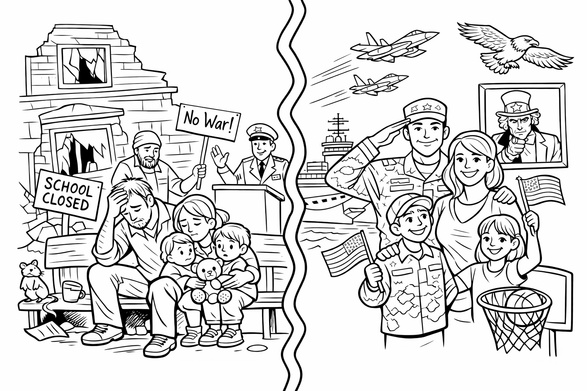
#military familie#navy operations#conflict impact#iran tensions#family support#u.s. navy#bahrain#iran#town hall#mil families#evacuation
Leftist
Folks, it’s a classic tale of mismanaged imperial ambition! The Navy is hosting a town hall to mollify families displaced by a messy conflict with Iran—what a surprise! This is a power play gone awry, and those depending on Uncle Sam are the ones fumbling in the dark! It's all about accountability, but what we're getting is more of the same! Families are struggling, schools in limbo, and yet, the gears of the military machine grind on! Time for a change-up, folks!
Rightist
Talk about a slam dunk for military resilience! The Navy's town hall is stepping up to support families caught in the crossfire of a conflict with Iran - keep those spirits high! This is about standing tall and showing our might; adapting and overcoming are the name of the game! Families face challenges, sure, but this is America! With thoughtful leadership, these issues will be tackled head-on! Keeping America's families and legacy strong - home and abroad, folks!
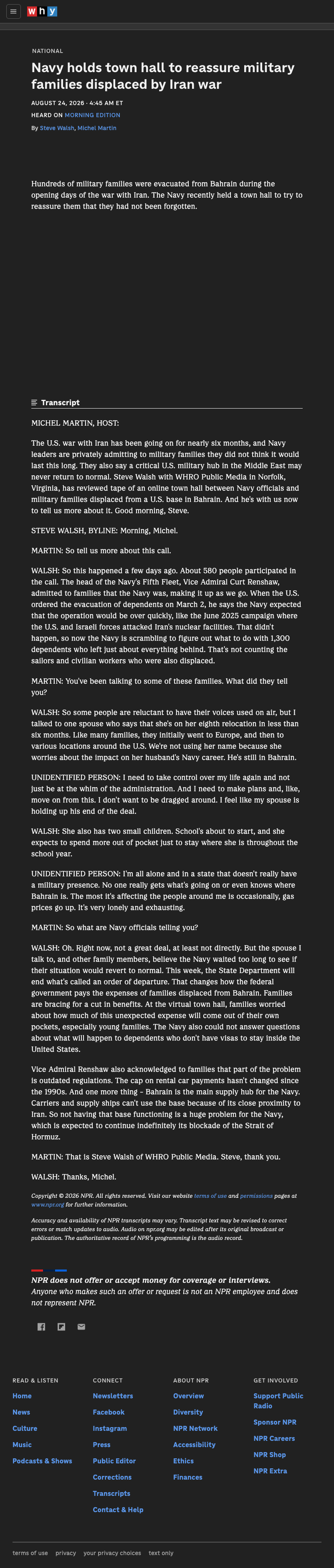 | author: | Steve Walsh, Michel Martin | institution: | NPR | ¿porque no los dos? |
| tl;dr | The piece reports on a Navy-hosted town hall aimed at reassuring U.S. military families evacuated from Bahrain during the early days of a U.S.–Iran conflict. It describes the scale of the evacuation, families’ frustration with uncertainty and costs, and concerns about visas, benefits, and delayed guidance. The story includes host framing plus a reporter’s account and quotes from affected spouses, and notes broader operational implications of Bahrain’s reduced usability for the Navy and disruptions tied to the Strait of Hormuz. | ||||
| deeper: | The story is largely straightforward and evidence-based, relying on a reported town hall, specific figures (e.g., participation and evacuee counts), and direct quotes from families. Any tilt comes from emphasizing human impact and hardship more than the Navy’s rationale or constraints, with limited input from Navy leadership beyond acknowledgments. It avoids loaded language and sticks to concrete problems (costs, visas, benefits, timelines), but would be stronger with more documented Navy responses, sourcing links, and broader context on policy decisions. | ||||
media: No Media Preview | |||||
| gen: 2026/08/11:16:14 in 1 min 21.0 secbias: 4 (Center-Left) |
| type: colorquality: 72 |
| pts: 0 |
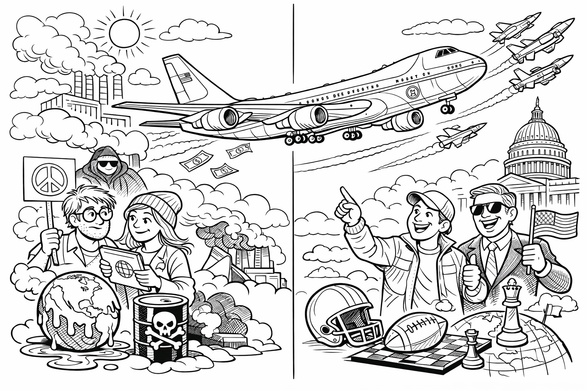
Leftist
Holy smokes! Air Force One's on the move! Think of it as a symbol of imperial power jetting across the skies, flexing muscles and burning fossil fuels like there's no tomorrow. Secret flights are the Super Bowl of global politics—making clandestine moves while the climate spins out of control. Nothing says 'progress' like stealthy maneuvers swerving transparency. But wait, people, it's always sunny above the clouds of privilege!
Rightist
Look at Air Force One! It's the heavyweight champ soaring through skies! Secret flights aren’t just strategic plays; they're buzzer-beaters on the global court. This is about projecting strength, folks! Navigating threats like a QB through defense, showing no retreat on international turf. Hey, diplomacy ain't easy, but nothing worth winning ever is! This is leadership, pure and simple—a full-court press for freedom!
 | author: | Unknown | institution: | The Guardian | ¿porque no los dos? |
| tl;dr | The screenshot shows a Guardian article describing a highly secured, partly secretive flight involving the U.S. presidential aircraft amid heightened regional tension and an alleged threat from Iran. The piece emphasizes the operational secrecy, security precautions, and diplomatic/military context in Turkey, framing the trip as a response to a volatile security environment. It reads as a reported narrative: scene-setting details plus broader geopolitical explanation of why the movement was sensitive. | ||||
| deeper: | The writing leans toward a security-and-diplomacy narrative that assumes the seriousness of the “Iran threat” framing, with limited visible space (in the screenshot) for competing interpretations or direct Iranian/Turkish rebuttal—mild framing bias. Quality is solid: a clear news-style structure, contextual background, and specific logistical detail. Limits: heavy reliance on unnamed officials/opaque security claims (hard for readers to verify) and a somewhat dramatized tone (“secret flight”) that can heighten perceived threat. | ||||
| gen: 2026/08/10:14:38 in 1 min 7.4 secbias: 7 (Unknown) |
| type: eli5quality: 28 |
| pts: 0 |
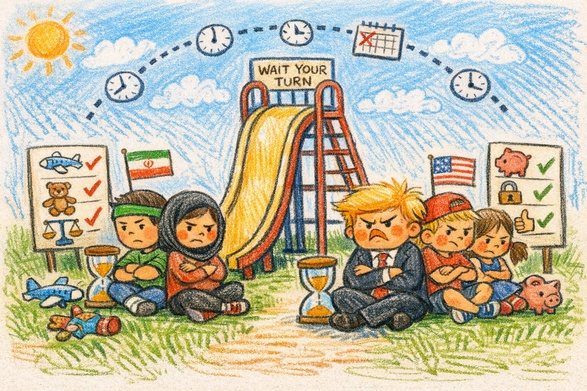
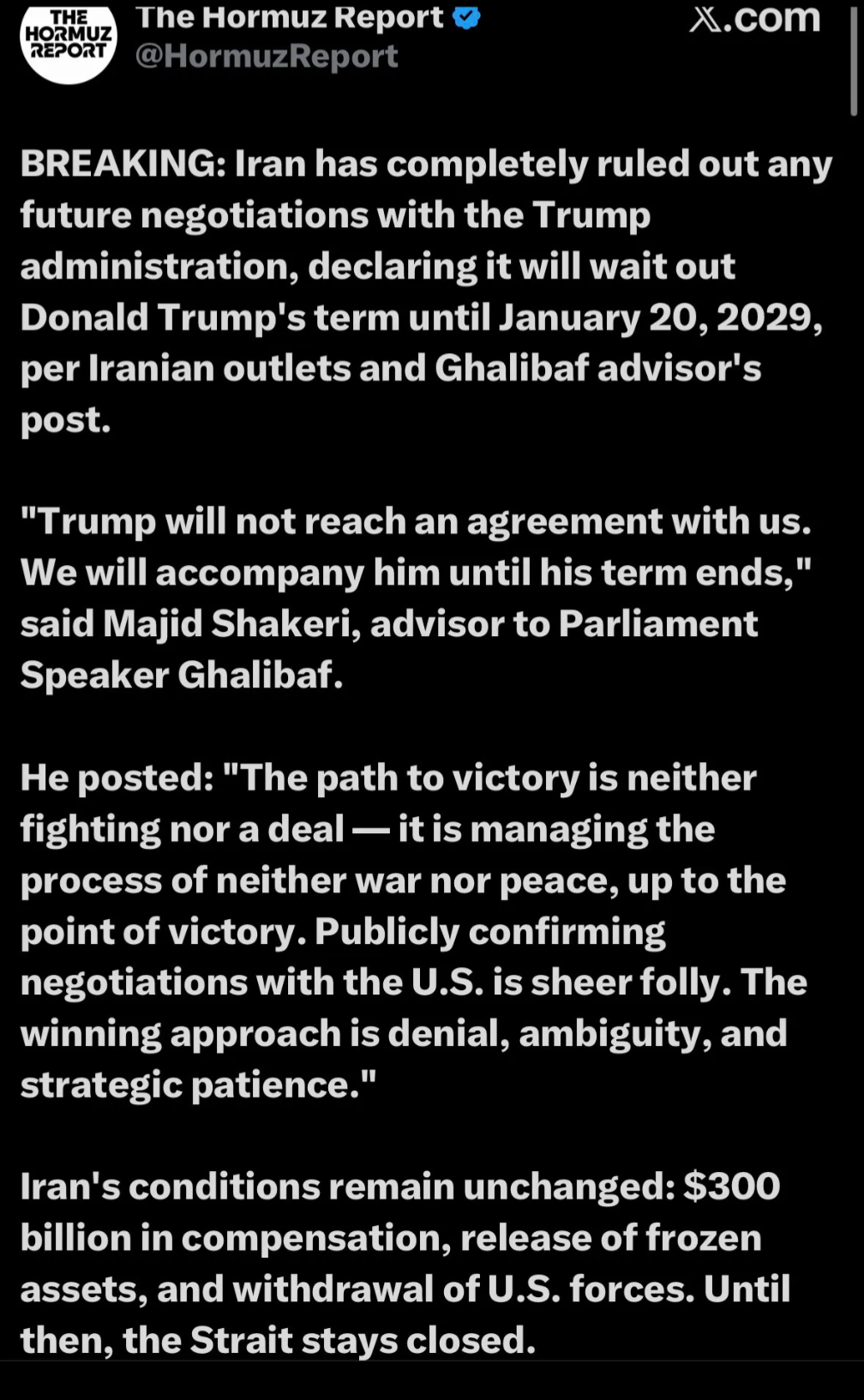 | author: | Unknown | institution: | The Hormuz Report (X account) | ¿porque no los dos? |
| tl;dr | A screenshot of an X post from “The Hormuz Report” claims Iran has “completely ruled out” negotiations with the Trump administration until January 20, 2029, citing “Iranian outlets” and a purported post by Majid Shakeri (an adviser to Iran’s parliament speaker). It also asserts Iran’s conditions include $300B compensation, release of frozen assets, and U.S. troop withdrawal, concluding: “Until then, the Strait stays closed.” The post is framed as breaking news but provides no primary documents or verifiable links. | ||||
| deeper: | The language is sensational (“BREAKING,” “completely ruled out,” “the Strait stays closed”) and compresses complex policy into absolutist claims. Attribution is vague (“Iranian outlets,” “advisor’s post”) with no screenshots of the original Persian statement, no dates, no outlet names, and no corroboration. It mixes a quotation with additional assertions (e.g., specific demands and a Strait-closure ultimatum) without showing they come from the same source. This style increases narrative impact while reducing checkability. | ||||
media: No Media Preview | |||||
| gen: 2026/08/10:02:38 in 3 min 48.9 sec (old)bias: 4 (Center) |
| type: lolsquality: 62 |
| pts: 0 |
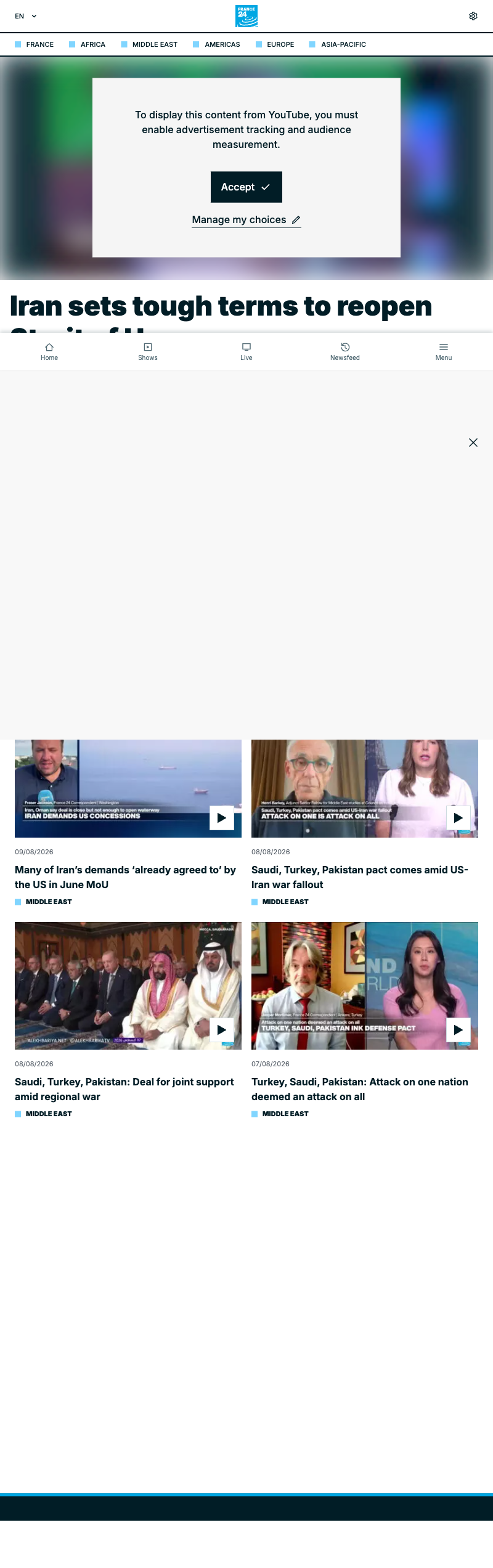 | author: | Unknown | institution: | France 24 | ¿porque no los dos? |
| tl;dr | The image shows a France 24 news page focused on Middle East coverage. The main visible headline reads “Iran sets tough terms to reopen …” (the remainder is cut off), with related video items about Iran demanding concessions and a Saudi–Turkey–Pakistan pact framed as fallout from US–Iran conflict dynamics. A cookie/YouTube tracking consent pop-up blocks much of the primary story text, limiting what can be verified from the screenshot alone. | ||||
| deeper: | France 24’s presentation appears largely straight-news, but wording like “tough terms” and “demands” can subtly prime readers toward a confrontational frame. The screenshot provides headlines and thumbnails but little sourcing detail (no quoted officials, documents, or context visible) because the consent overlay blocks the article/video content. Quality is therefore moderate: reputable outlet and clear topic labeling, but the available evidence here is incomplete and headline-driven. | ||||
media: No Media Preview | |||||
| gen: 2026/08/08:22:43 in 3 min 3.1 sec (old)bias: 3 (Center) |
| type: lolsquality: 78 |
| pts: 0 |
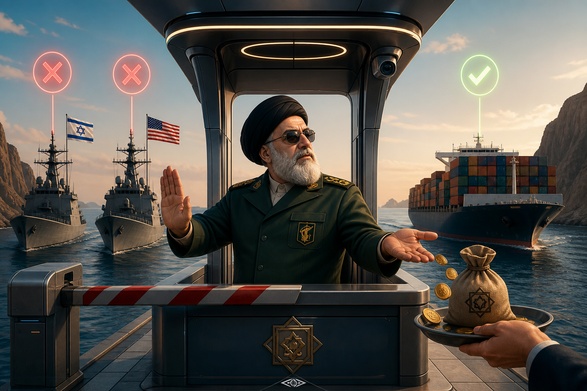
 | author: | Jon Gambrell | institution: | NPR | ¿porque no los dos? |
| tl;dr | The article reports Iran’s parliament advancing a proposal to bar U.S. and Israeli ships from transiting the Strait of Hormuz and to levy fees on other vessels, framing it as retaliation tied to regional conflict dynamics and maritime security. It situates the proposal within the strategic importance of Hormuz for global oil trade, notes reactions/concerns from the U.S. and regional actors, and references prior incidents and Iran-linked threats affecting shipping in and around the Red Sea and Gulf. | ||||
| deeper: | The writing is largely straight-news: it emphasizes verifiable facts (the proposal, the waterway’s importance, recent security context) and includes attribution to officials and prior events. Bias is limited but present in story framing that prioritizes Western/industry security concerns and treats Iran’s stated rationale with some skepticism. Quality is solid: clear headline, relevant background, and contextual history; it would be stronger with more direct Iranian parliamentary quotes and clearer distinction between proposal, likelihood of passage, and enforcement capability. | ||||
media: No Media Preview | |||||


owned and operated by: RPN Omnigalactic Insitutution as of: 2026/10/15: 04:20 in 0 ms
Enter Code
Login with Account