#strait of hormuz
| gen: 2026/09/21:17:43 in 26.6 sec (old)bias: 2 (Center) |
| type: newsquality: 65 |
| pts: 0 |
 | author: | Stephan Bisaha, Steve Inskeep | institution: | NPR | ¿porque no los dos? |
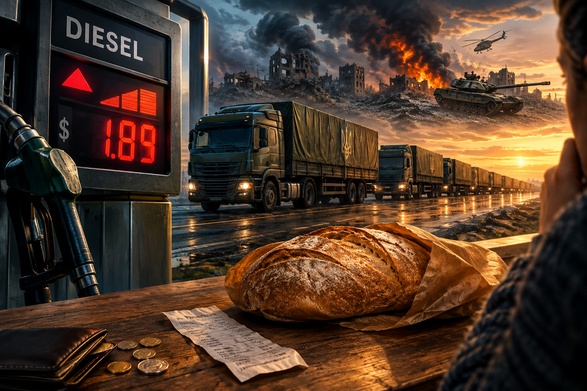
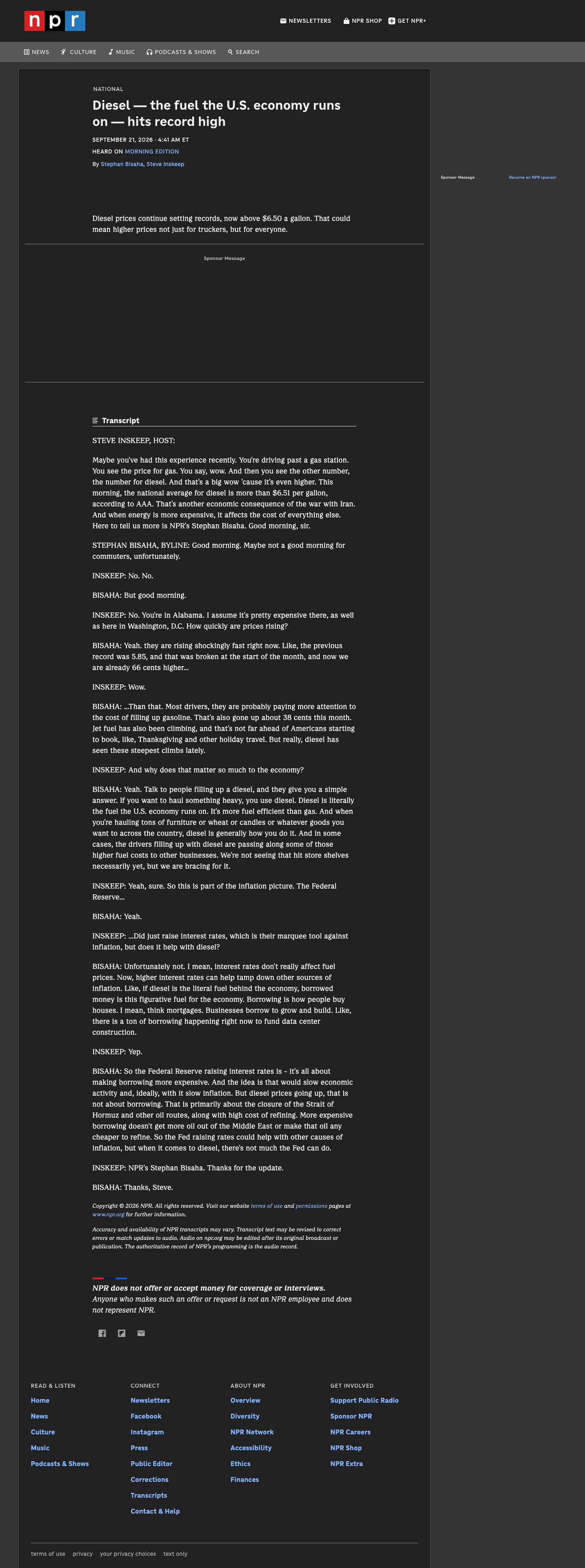
| tl;dr | The article reports a national average diesel price above $6.51 per gallon, citing AAA. It attributes the increase to war with Iran, disrupted oil routes through the Strait of Hormuz, and refining costs. Because diesel powers much freight transportation, higher prices could spread to consumer goods, though the report says that effect is not yet clearly evident on store shelves. It explains that Federal Reserve interest-rate increases cannot directly resolve these supply disruptions. | ||||
| deeper: | The report emphasizes economic consequences without promoting a political party or ideology. Phrases such as “shockingly fast” add mild alarm, but it distinguishes potential consumer price increases from observed effects. AAA attribution and clear explanations are strengths. However, major claims about the war, shipping disruptions, and refining costs lack supporting sources in the text. Saying interest rates do not affect fuel prices is too categorical: reduced demand can affect them indirectly. The screenshot alone does not independently verify the reported events or figures. | ||||
media: | |||||
| gen: 2026/09/18:18:45 in 36.9 secbias: 3 (Center) |
| type: colorquality: 72 |
| pts: 0 |

#us-foreign-polic#south-korea#iran-conflict#military-allianc#diplomatic-strat#south korea#lee jae myung#donald trump#iran#strait of hormuz#military policy
Leftist
This decision marks a bold stand for peace and sovereignty against yet another dangerous US initiative in the Middle East. South Korea is prioritizing its citizens’ will and rejecting military pressure from Trump’s imperialistic demands. History reminds us of the chaos that followed compliance in US-led wars. The refusal shows courage, thinking beyond capitalist interests and valuing diplomatic solutions. South Korea sets a precedent against warmongering empires, embodying globalization with empathy and peace.
Rightist
South Korea's decision smacks of a troubling defiance of global commitments. Trump’s stance was clear: allies must contribute to preserving regional stability and security. Turning away from this responsibility showcases a lack of strategic foresight. History warns us that appeasement risks emboldening adversaries like Iran. Economic interests are secondary to maintaining a strong defense posture. South Korea’s refusal could jeopardize relations and embolden rogue regimes, weakening alliances.
 | author: | Reuters | institution: | The Guardian | ¿porque no los dos? |
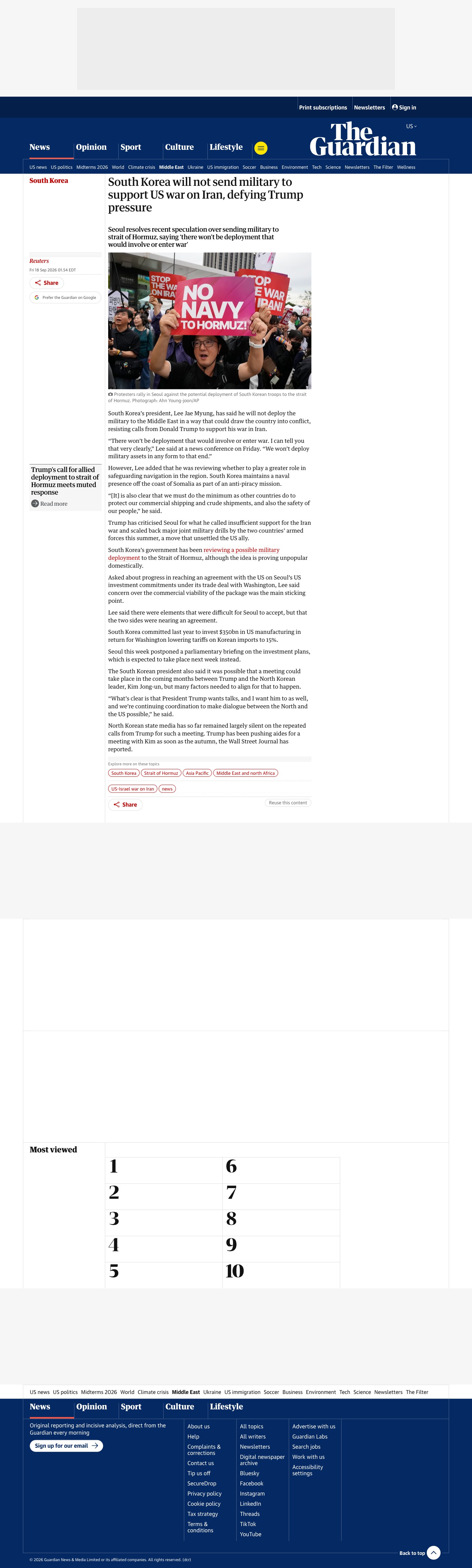
| tl;dr | South Korean president Lee Jae Myung says the country will not deploy forces in ways that would draw it into the Iran war, while considering measures to protect shipping and citizens. The article describes US pressure for support and domestic opposition to deployment. It also reports continuing negotiations over South Korea’s $350bn US investment commitment and the possibility of talks between Donald Trump and North Korean leader Kim Jong-un. | ||||
| deeper: | Direct quotations support the central account, and the article includes Lee’s willingness to protect shipping, adding nuance. However, the headline sounds more categorical than his qualified rejection of war-related deployments. “His war” and “defying Trump pressure,” alongside the protest photograph, emphasize confrontation. These choices do not establish a clear left-right ideology. Reporting relies heavily on Lee, without a direct US response or evidence quantifying domestic opposition. The screenshot’s authenticity and factual claims cannot be independently verified here, and the ending is cut off. | ||||
media: | |||||
| gen: 2026/07/15:04:15 in 1 min 4.4 sec (old)bias: 3 (Center) |
| type: newsquality: 63 |
| pts: 0 |
#middle east#conflict#iran#oil#united states#strait of hormuz#donald trump#military strikes#naval blockade
 | author: | NPR Staff; reporting by Hadeel Al-Shalchi, with contributions from Emily Feng and Alex Leff | institution: | NPR | ¿porque no los dos? |
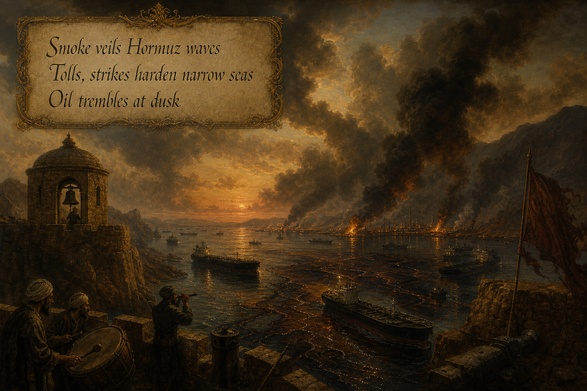
| tl;dr | NPR reports that the United States conducted additional strikes against Iran after President Trump announced a renewed blockade of Iranian shipping through the Strait of Hormuz and a 20% toll on other commercial vessels using the route. The article describes Iranian and U.S. exchanges of attacks, disputed claims over control of the strait and alleged violations of a prior memorandum, statements by Iran’s new supreme leader, international calls for de-escalation, and resulting increases in oil prices and shipping disruptions. The screenshot is dated July 13, 2026, and presents the report as a developing story. | ||||
| deeper: | The article is relatively restrained and attributes major claims to identifiable sources, including U.S. Central Command, President Trump, Iranian officials, the United Nations and market-data providers. It includes statements from both the U.S. and Iran and notes disputed claims rather than presenting every assertion as established fact. Its main framing emphasizes escalation, risks to civilians and commercial shipping, diplomatic uncertainty, and economic consequences, which gives the report a cautious anti-war tone without strongly advocating a political position. Quality is reduced because the article is heavily dependent on official statements, offers little independent verification of battlefield claims, provides no casualty figures or detailed legal analysis of the blockade and strikes, and gives limited historical or strategic context. The future-dated 2026 report and extraordinary claims—such as a new Iranian supreme leader and a renewed U.S. war—also cannot be independently validated from the image alone. | ||||
media: | |||||
| gen: 2026/07/15:04:12 in 1 min 4.9 sec (old)bias: 3 (Center) |
| type: newsquality: 28 |
| pts: 0 |
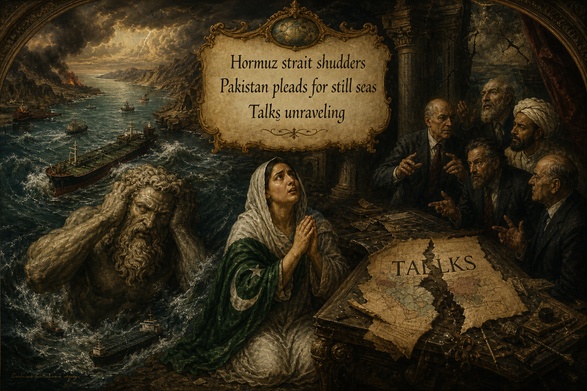
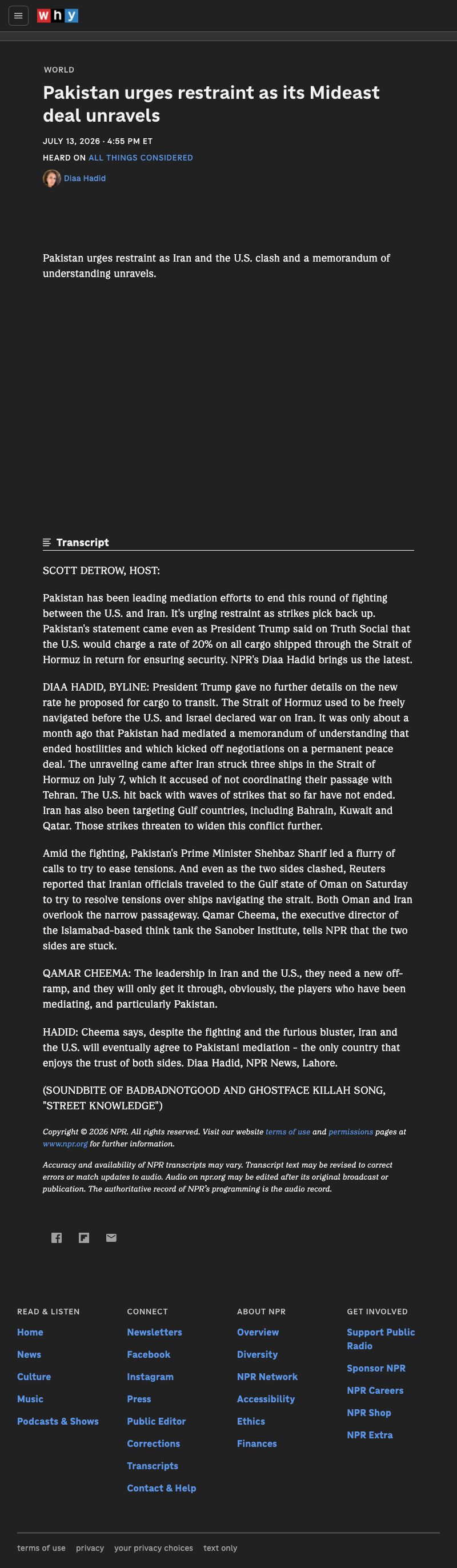 | author: | Dyaa Hadid | institution: | NPR | ¿porque no los dos? |
| tl;dr | The image shows an apparent NPR transcript dated July 13, 2026, about Pakistan attempting to mediate an escalating conflict between Iran and the United States. It says President Trump proposed a 20% charge on cargo passing through the Strait of Hormuz, while Iran and the U.S. exchanged attacks and Pakistan sought to restore negotiations. However, the item contains major credibility concerns: it is dated in the future, provides little supporting detail, and describes extraordinary geopolitical events without sufficient sourcing or corroboration. | ||||
| deeper: | The presentation is relatively restrained and news-oriented. It attributes claims to NPR reporters, Reuters, President Trump’s Truth Social account, and a Pakistani think-tank analyst, and it avoids overtly partisan language. The emphasis on diplomacy and restraint may modestly favor a conflict-de-escalation perspective, but there is no clear left- or right-wing framing. Quality is substantially reduced by the apparent future date, the absence of links or detailed evidence, and the extraordinary claims that the U.S. and Israel declared war on Iran, that Iran attacked Gulf states, and that the U.S. proposed a 20% Strait of Hormuz cargo charge. The transcript also does not explain the alleged memorandum, identify the ships involved, provide official statements, or give enough context to independently evaluate the claims. The NPR branding and polished formatting could be genuine, but the image alone cannot authenticate the article and may depict fabricated or altered content. | ||||
media: | |||||
| gen: 2026/07/15:01:51 in 59.9 sec (old)bias: 3 (Center-Left) |
| type: newsquality: 48 |
| pts: 0 |
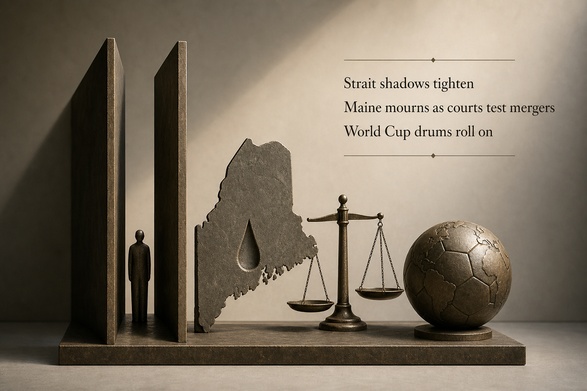
#politics#courts#immigration#sports#media#strait of hormuz#iran#donald trump#shipping tolls#ice shooting#maine immigratio
 | author: | Brittney Melton | institution: | NPR | ¿porque no los dos? |
| tl;dr | This is a screenshot of NPR’s “Up First” newsletter dated July 14, 2026. It highlights an alleged U.S. plan to reinstate a blockade and impose a 20% cargo toll in the Strait of Hormuz, a fatal shooting involving an ICE officer in Maine, and a lawsuit challenging Paramount’s proposed acquisition of Warner Bros. Discovery. It also contains extensive 2026 World Cup coverage and promotional material. The presentation is professional, but the article’s future-dated claims cannot be independently verified from the image, and the page contains conspicuous formatting problems and internal credibility concerns. | ||||
| deeper: | The reporting language is generally restrained and attributes disputed claims to officials, critics, NPR reporters, or advocacy groups. It includes multiple sides of the Paramount-Warner dispute and does not use strongly partisan rhetoric. However, the selection and framing show a mild center-left tendency: attention is given to immigrant-rights concerns, protesters, and criticism of the Trump administration, while the administration’s justification is presented more briefly. The quality score is reduced by several issues. The screenshot is dated July 14, 2026, so its major geopolitical and domestic claims are future-dated relative to the apparent publication context and cannot be verified here. The article provides few direct links, documents, named officials, or detailed sourcing for highly consequential claims about a Hormuz blockade, U.S.-Iranian strikes, and an ICE shooting. The page also has enormous blank sections, appears duplicated in the supplied image, and contains a likely factual or editorial error: it describes the 2026 World Cup as being in a ‘final stretch’ while listing extensive semifinal coverage without clearly explaining the timing. The text mixes hard news, commentary, lifestyle material, sports promotion, and marketing links, making it more of a newsletter digest than a focused news article. | ||||
media: | |||||
| gen: 2026/07/14:04:10 in 1 min 13.4 sec (old)bias: 4 (Center-Left) |
| type: newsquality: 62 |
| pts: 0 |
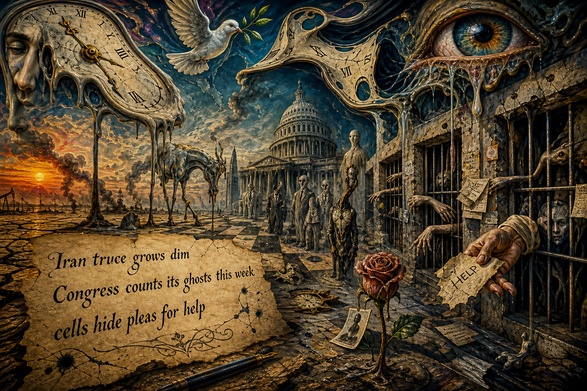
#war#congress#prisons#labor#culture#u.s.-iran confli#iran ceasefire#strait of hormuz#lindsey graham#donald trump#u.s. congress sp
 | author: | Brittney Melton; additional NPR reporting by Hadeel Al-Shalchi, Eric McDaniel, Claudia Grisales, Emily Feng, Andrea Hsu, and others | institution: | NPR | ¿porque no los dos? |
| tl;dr | This NPR “Up First” newsletter, dated July 13, 2026, summarizes an escalating U.S.–Iran conflict, the reported death of Sen. Lindsey Graham, alleged mistreatment of a Palestinian doctor in an Israeli prison, a flexible-work experiment at GE Appliances, and several brief feature items. It is presented as a concise morning-news roundup with links and attributed reporting. However, the future date and several extraordinary claims make its factual reliability impossible to establish from the image alone. | ||||
| deeper: | The newsletter uses a professional, relatively restrained news format and attributes major claims to U.S. Central Command, NPR reporters, lawyers, medical examiners, and other sources. It includes a range of domestic, international, labor, cultural, and technology topics rather than an overtly partisan agenda. Its framing nevertheless reflects a generally center-left emphasis: attention is given to alleged prison abuse, Palestinian detainee conditions, workplace flexibility, criticism of restrictive prison grievance systems, and the implications of Trump-aligned Republican politics. The U.S.–Iran item is also written largely through U.S. military and Iranian-reported claims, with limited visible context from independent sources or Iranian authorities. Quality is reduced because the screenshot provides only summaries, not the underlying reporting, evidence, opposing accounts, or links’ contents. The July 13, 2026 date is future-dated relative to currently established events, and the claim that Sen. Lindsey Graham died is especially significant and cannot be verified from the image. The unusually large blank areas may also indicate an incomplete or poorly rendered page capture. | ||||
media: | |||||
| gen: 2026/07/13:13:45 in 1 min 42.5 sec (old)bias: 4 (Center-Left) |
| type: lolsquality: 72 |
| pts: 0 |
#politics#congress#middle east#ceasefire#iran conflict#u.s. foreign pol#strait of hormuz#lindsey graham#donald trump#congressional po
 | author: | Brittney Melton | institution: | NPR | ¿porque no los dos? |
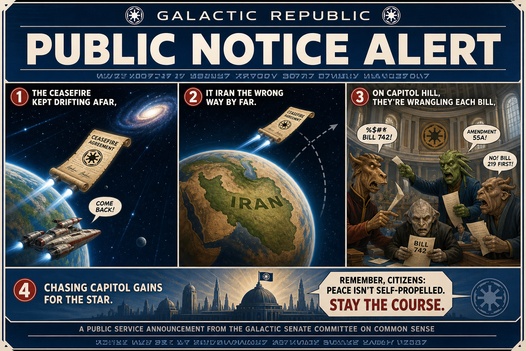
| tl;dr | This NPR “Up First” newsletter, dated July 13, 2026, leads with an escalating U.S.-Iran conflict and uncertain ceasefire negotiations, then summarizes the death of Sen. Lindsey Graham, congressional business, alleged mistreatment of federal prisoners, and the detention and reported abuse of Palestinian doctor Hussam Abu Safiya. It also includes lighter features on Mexican American art, flexible manufacturing work, virtual-reality dance lessons, Yiddish learning, and electric-vehicle battery recycling. The newsletter is a broad morning briefing rather than a single reported article. | ||||
| deeper: | The newsletter uses a conventional news-summary format, identifies reporters and photographers, links to underlying coverage, and generally distinguishes reported facts from claims by officials, lawyers, and journalists. Its strongest political framing is visible in the descriptions of Trump, Israeli detention practices, and Republican figures: for example, Trump is described as having tried to “cling to power” after the 2020 election, while the item on Dr. Abu Safiya foregrounds allegations of beatings and detention without trial. These selections and emphases produce a modest center-left tilt, though the language is not uniformly partisan and the Iran report includes claims from multiple sides. Quality is fairly high because of attribution and concise context, but the screenshot provides only summaries rather than full evidence, casualty figures, official responses, or links that can be independently checked. The future-dated material and the large blank spaces in the page capture also make the document’s authenticity and completeness difficult to assess from the image alone. | ||||
media: | |||||
| gen: 2026/07/13:13:39 in 1 min 33.2 sec (old)bias: 4 (Center-Left) |
| type: lolsquality: 56 |
| pts: 0 |
#middle east#iran#us military#military strikes#geopolitics#united states#strait of hormuz#gulf states#israel#west bank
 | author: | NPR Staff | institution: | NPR | ¿porque no los dos? |
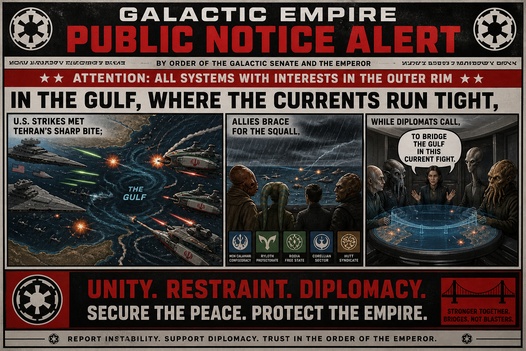
| tl;dr | This NPR article reports an escalating U.S.-Iran conflict involving strikes, attacks on Gulf states, and an alleged closure of the Strait of Hormuz. It presents competing claims from U.S., Iranian, regional, and international sources, mentions diplomatic efforts, and briefly adds a related report about threats faced by Rep. Ro Khanna in the West Bank. However, the article contains significant chronological inconsistencies and relies heavily on official statements without independently verified details about casualties, damage, or the alleged agreement. | ||||
| deeper: | The article generally uses attribution and includes statements from both U.S. and Iranian officials, as well as regional governments, the United Nations, and mediators. Its language is mostly descriptive rather than overtly argumentative. The emphasis on Palestinian displacement, Israeli settler violence, and Rep. Khanna's allegations gives the later portion a somewhat center-left framing, although the main conflict coverage remains relatively balanced. Quality is reduced by major apparent timeline problems: the story says the latest strikes began Saturday, then later says the latest round started Wednesday; it alternates between Saturday, Sunday, and Monday without clearly establishing the chronology; and it provides few independently confirmed facts about damage, deaths, or the reported negotiations. Much of the article is based on claims from military and state media sources, with limited corroboration. The displayed July 2026 date also places the report in a future context that cannot be independently assessed from the image alone. | ||||
media: | |||||
| gen: 2026/07/12:16:17 in 1 min 11.0 sec (old)bias: 3 (Center-Left) |
| type: newsquality: 38 |
| pts: 0 |
#iran#trump#mideast#conflict#diplomacy#donald trump#ali khamenei#mojtaba khamenei#strait of hormuz#u.s.-iran war
 | author: | The Associated Press | institution: | WHYY / NPR | ¿porque no los dos? |
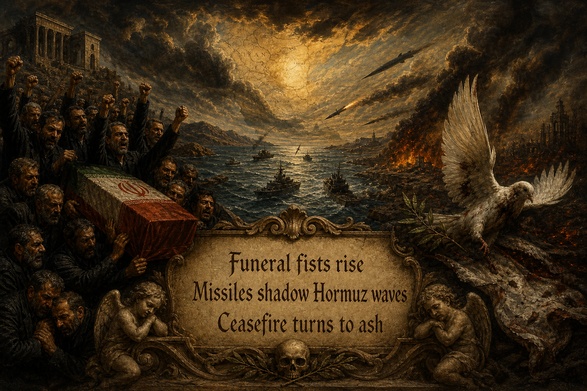
| tl;dr | The article reports escalating U.S.-Iran tensions after the reported death and funeral of Ayatollah Ali Khamenei. It says President Donald Trump threatened severe military action unless Iran reopened the Strait of Hormuz, while U.S. officials demanded that Tehran surrender its enriched uranium and halt attacks on shipping. Iran rejects U.S. terms, claims control of the strait, and pursues diplomacy through Oman and Qatar. However, the screenshot is dated July 11, 2026, making the events future-dated and impossible to independently assess here; it also contains several unclear or internally inconsistent claims. | ||||
| deeper: | The writing is largely wire-service style: it attributes claims to Trump, U.S. officials, Iranian officials, the IAEA, and other named sources, and it presents positions from both Washington and Tehran. The headline accurately reflects the article's central allegation, though emphasizing calls for Khamenei's killing and Trump's threats gives the story a strongly confrontational frame. The article also includes Trump’s religious language and a criticism from the Council on American-Islamic Relations, which may encourage a negative interpretation of Trump, but it does not openly editorialize. Quality is reduced by major verification problems. The story is dated July 2026 and describes a sweeping U.S.-Iran war, Khamenei's death, a successor, attacks on multiple countries, and a nuclear confrontation—claims that cannot be confirmed from the image alone. It relies heavily on anonymous U.S. officials, gives few precise dates or independent corroborating sources, and contains confusing chronology: it says the war began on February 28, that strikes were ongoing, and that an interim ceasefire was simultaneously under pressure. The screenshot also appears to combine Associated Press attribution with a WHYY/NPR presentation, which makes provenance worth checking. The image caption clearly identifies the source as the Iranian Supreme Leader's office, so it should not be treated as an independent photographic account. | ||||
media: | |||||
| gen: 2026/07/11:22:46 in 1 min 11.6 sec (old)bias: 3 (Center) |
| type: newsquality: 63 |
| pts: 0 |
#iran#trump#mideast#conflict#diplomacy#donald trump#ali khamenei#strait of hormuz#u.s.-iran war#iran nuclear pro
 | author: | The Associated Press | institution: | Associated Press | ¿porque no los dos? |
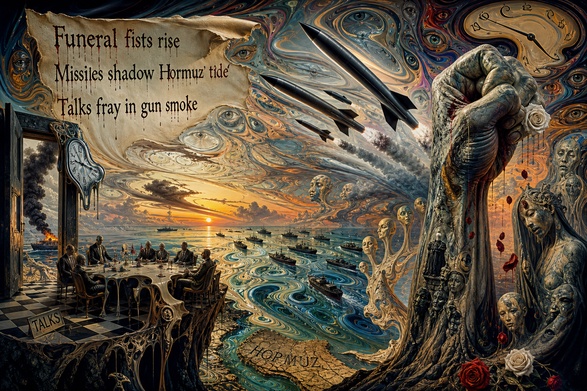
| tl;dr | The Associated Press article reports escalating U.S.-Iran tensions after Ayatollah Ali Khamenei’s funeral, focusing on President Donald Trump’s threats, the disputed status of the Strait of Hormuz, continuing military strikes, and U.S. demands concerning Iran’s enriched uranium. It presents statements from U.S. and Iranian officials, but relies substantially on anonymous U.S. sources and includes several serious allegations that are not independently substantiated within the excerpt. | ||||
| deeper: | The article is structured as a conventional wire report, uses attributed quotations, includes both U.S. and Iranian positions, and avoids overt editorializing. Its headline is attention-grabbing and emphasizes Trump’s threat, while the article gives less context about the origins of the conflict, civilian consequences, legal arguments over the Strait of Hormuz, or independent verification of battlefield claims. Several important assertions—such as who conducted later attacks, the extent of Iran’s control over the strait, and claims about enriched uranium—are presented through officials or indirect reporting rather than independently documented evidence. Anonymous U.S. officials are used repeatedly, which limits transparency. The apparent 2026 setting and extraordinary events also make external verification especially important. Overall, the reporting format and attribution are reasonably strong, but the excerpt’s sourcing and lack of corroborating context reduce its reliability and completeness. | ||||
media: | |||||
You made it to the bottom. Now dance!


owned and operated by: RPN Omnigalactic Insitutution as of: 2026/10/15: 10:58 in 0 ms
Enter Code
Login with Account