#military strikes
| gen: 2026/07/15:04:15 in 1 min 4.4 sec (old)bias: 3 (Center) |
| type: newsquality: 63 |
| pts: 0 |
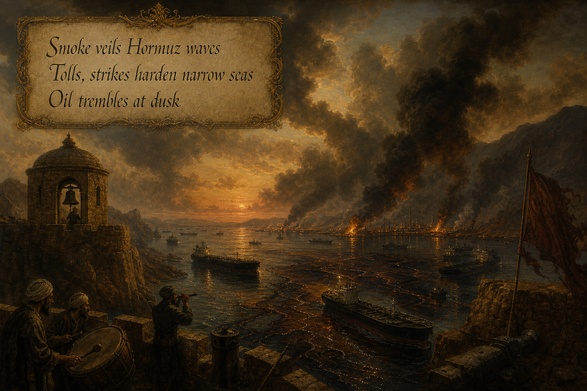
#middle east#conflict#iran#oil#united states#strait of hormuz#donald trump#military strikes#naval blockade
 | author: | NPR Staff; reporting by Hadeel Al-Shalchi, with contributions from Emily Feng and Alex Leff | institution: | NPR | ¿porque no los dos? |
| tl;dr | NPR reports that the United States conducted additional strikes against Iran after President Trump announced a renewed blockade of Iranian shipping through the Strait of Hormuz and a 20% toll on other commercial vessels using the route. The article describes Iranian and U.S. exchanges of attacks, disputed claims over control of the strait and alleged violations of a prior memorandum, statements by Iran’s new supreme leader, international calls for de-escalation, and resulting increases in oil prices and shipping disruptions. The screenshot is dated July 13, 2026, and presents the report as a developing story. | ||||
| deeper: | The article is relatively restrained and attributes major claims to identifiable sources, including U.S. Central Command, President Trump, Iranian officials, the United Nations and market-data providers. It includes statements from both the U.S. and Iran and notes disputed claims rather than presenting every assertion as established fact. Its main framing emphasizes escalation, risks to civilians and commercial shipping, diplomatic uncertainty, and economic consequences, which gives the report a cautious anti-war tone without strongly advocating a political position. Quality is reduced because the article is heavily dependent on official statements, offers little independent verification of battlefield claims, provides no casualty figures or detailed legal analysis of the blockade and strikes, and gives limited historical or strategic context. The future-dated 2026 report and extraordinary claims—such as a new Iranian supreme leader and a renewed U.S. war—also cannot be independently validated from the image alone. | ||||
media: | |||||
| gen: 2026/07/13:13:39 in 1 min 33.2 sec (old)bias: 4 (Center-Left) |
| type: lolsquality: 56 |
| pts: 0 |
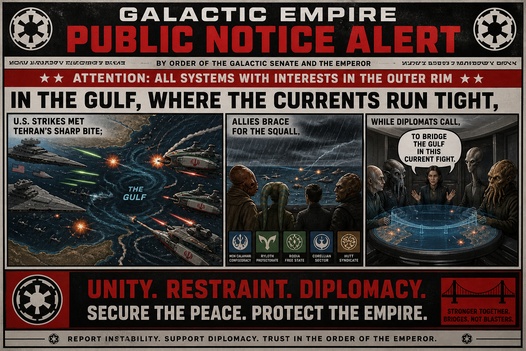
#middle east#iran#us military#military strikes#geopolitics#united states#strait of hormuz#gulf states#israel#west bank
 | author: | NPR Staff | institution: | NPR | ¿porque no los dos? |
| tl;dr | This NPR article reports an escalating U.S.-Iran conflict involving strikes, attacks on Gulf states, and an alleged closure of the Strait of Hormuz. It presents competing claims from U.S., Iranian, regional, and international sources, mentions diplomatic efforts, and briefly adds a related report about threats faced by Rep. Ro Khanna in the West Bank. However, the article contains significant chronological inconsistencies and relies heavily on official statements without independently verified details about casualties, damage, or the alleged agreement. | ||||
| deeper: | The article generally uses attribution and includes statements from both U.S. and Iranian officials, as well as regional governments, the United Nations, and mediators. Its language is mostly descriptive rather than overtly argumentative. The emphasis on Palestinian displacement, Israeli settler violence, and Rep. Khanna's allegations gives the later portion a somewhat center-left framing, although the main conflict coverage remains relatively balanced. Quality is reduced by major apparent timeline problems: the story says the latest strikes began Saturday, then later says the latest round started Wednesday; it alternates between Saturday, Sunday, and Monday without clearly establishing the chronology; and it provides few independently confirmed facts about damage, deaths, or the reported negotiations. Much of the article is based on claims from military and state media sources, with limited corroboration. The displayed July 2026 date also places the report in a future context that cannot be independently assessed from the image alone. | ||||
media: | |||||
You made it to the bottom. Now dance!


owned and operated by: RPN Omnigalactic Insitutution as of: 2026/10/15: 21:54 in 0 ms
Enter Code
Login with Account