#us military
| gen: 2026/09/07:05:22 in 41.5 sec (old)bias: 4 (Center) |
| type: newsquality: 74 |
| pts: 0 |
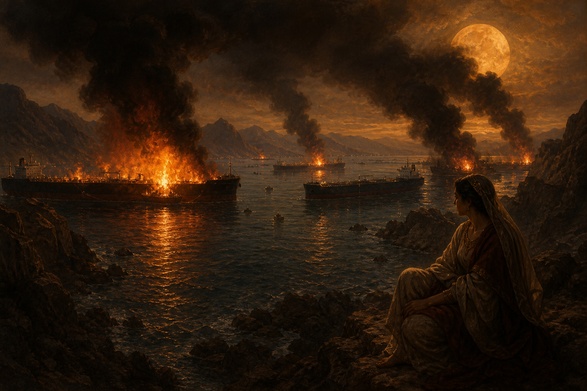
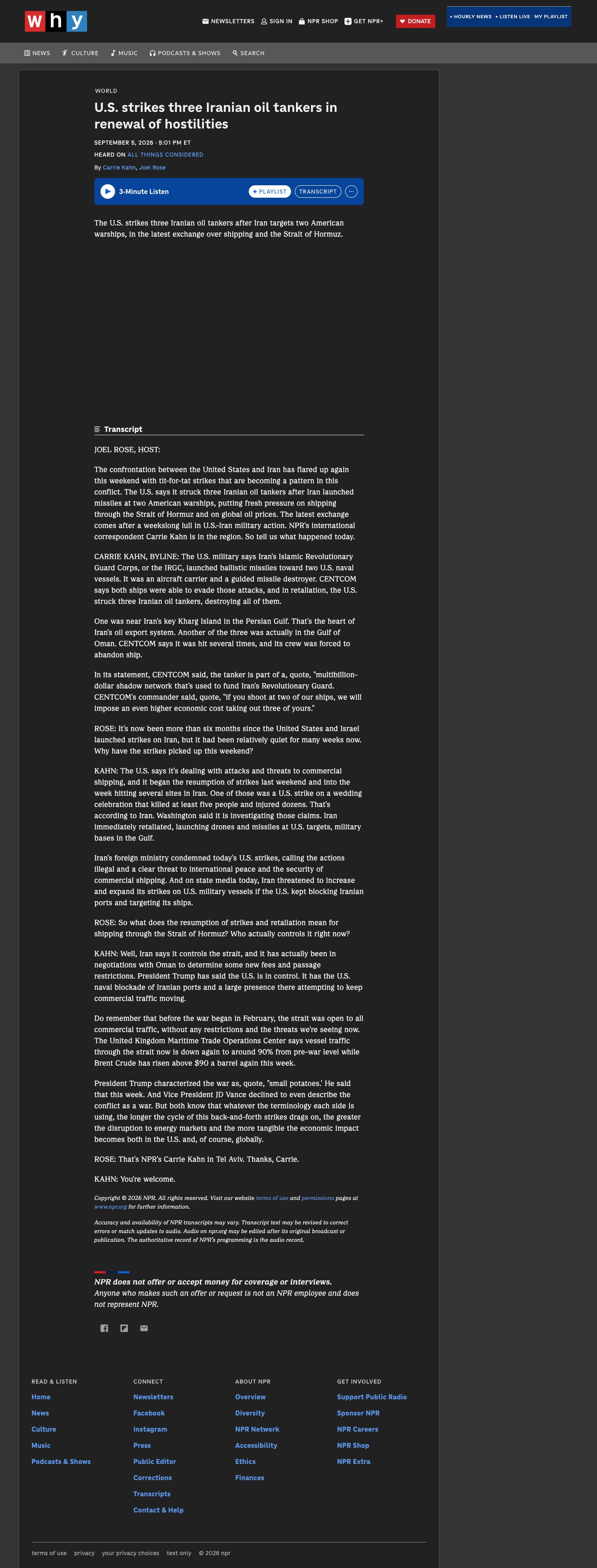
| gen: 2026/09/03:04:14 in 54.3 sec (old)bias: 4 (Center) |
| type: newsquality: 78 |
| pts: 0 |

 | author: | Unknown | institution: | France 24 (with AFP) | ¿porque no los dos? |
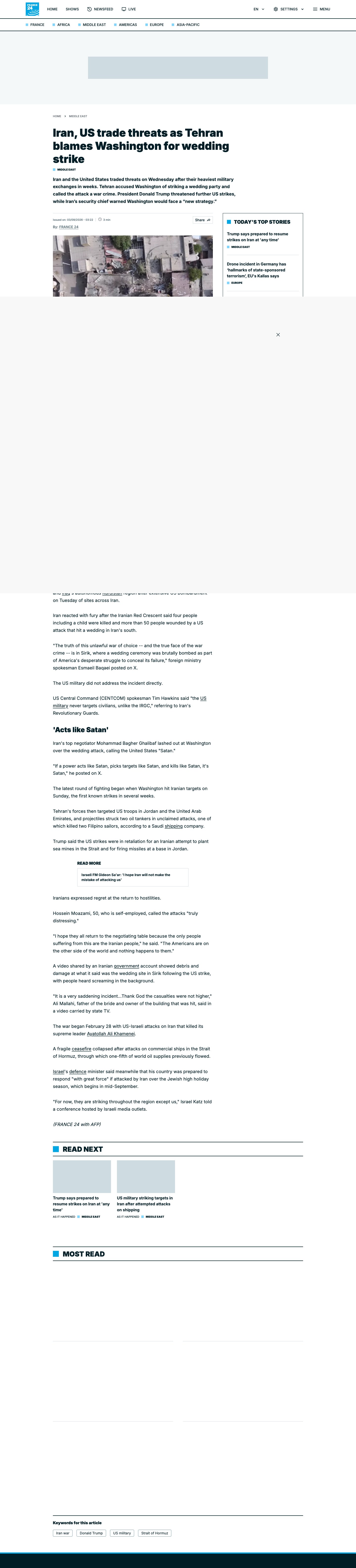
| tl;dr | France 24 (with AFP) reports escalating Iran–US tensions after recent military exchanges. Tehran accuses Washington of striking a wedding in southern Iran (Sirik), calling it a war crime; Iran’s Red Crescent claims four killed (including a child) and 50+ wounded. US Central Command denies targeting civilians and contrasts US conduct with Iran’s IRGC. The piece also notes regional spillover: attacks on US troops in Jordan/UAE, tanker damage in unclaimed attacks, and risks to Strait of Hormuz shipping, alongside Israeli warnings. | ||||
| deeper: | The article is largely straight-wire reporting, presenting claims and counterclaims from Iranian officials, the Iranian Red Crescent, and CENTCOM, plus limited civilian reaction. Bias mainly comes from emphasis on vivid inflammatory quotes (“Satan,” “war crime”) and casualty claims without showing independent verification or forensic detail; it does, however, include the US denial and broader context (shipping, regional strikes, Israeli statements). Quality is solid for a fast update, but thin on corroboration, timelines, and evidence beyond official statements and a government-shared video. | ||||
media: | |||||
| gen: 2026/08/17:18:49 in 40.2 sec (old)bias: 4 (Center-Left) |
| type: newsquality: 78 |
| pts: 0 |
 | author: | Unknown | institution: | The Guardian | ¿porque no los dos? |
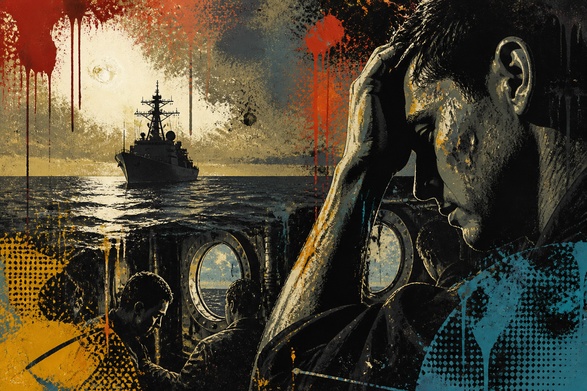
| tl;dr | The article reports that the US Navy destroyer USS Benfold lost propulsion in the South China Sea and drifted for about four days while repairs were made. It says the incident followed an “engineering casualty” and that the ship operated with limited onboard services during the outage (including reduced galley, sanitation, and air conditioning). The story situates the breakdown within the wider, high-stakes US–China operating environment in and around the South China Sea. | ||||
| deeper: | The piece is largely straight news and leans on official descriptions (e.g., the Navy’s account of an engineering casualty), which supports accuracy. It adds geopolitical framing that can steer interpretation, emphasizing tension and the optics of US naval readiness, but it does not read as overtly ideological. Quality is solid: clear headline, concrete timeframe, and attribution; however, the framing is somewhat sensational (“adrift”) and the screenshot format makes it hard to verify how many independent sources and technical details are included beyond official statements. | ||||
media: | |||||
| gen: 2026/07/13:13:39 in 1 min 33.2 sec (old)bias: 4 (Center-Left) |
| type: lolsquality: 56 |
| pts: 0 |
#middle east#iran#us military#military strikes#geopolitics#united states#strait of hormuz#gulf states#israel#west bank
 | author: | NPR Staff | institution: | NPR | ¿porque no los dos? |
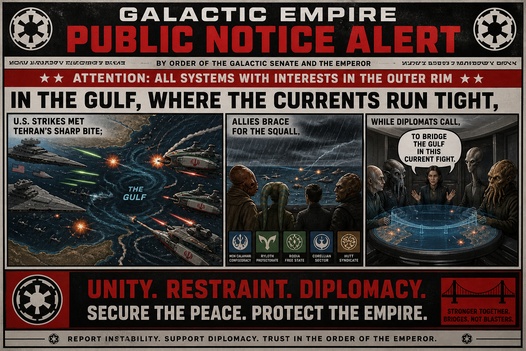
| tl;dr | This NPR article reports an escalating U.S.-Iran conflict involving strikes, attacks on Gulf states, and an alleged closure of the Strait of Hormuz. It presents competing claims from U.S., Iranian, regional, and international sources, mentions diplomatic efforts, and briefly adds a related report about threats faced by Rep. Ro Khanna in the West Bank. However, the article contains significant chronological inconsistencies and relies heavily on official statements without independently verified details about casualties, damage, or the alleged agreement. | ||||
| deeper: | The article generally uses attribution and includes statements from both U.S. and Iranian officials, as well as regional governments, the United Nations, and mediators. Its language is mostly descriptive rather than overtly argumentative. The emphasis on Palestinian displacement, Israeli settler violence, and Rep. Khanna's allegations gives the later portion a somewhat center-left framing, although the main conflict coverage remains relatively balanced. Quality is reduced by major apparent timeline problems: the story says the latest strikes began Saturday, then later says the latest round started Wednesday; it alternates between Saturday, Sunday, and Monday without clearly establishing the chronology; and it provides few independently confirmed facts about damage, deaths, or the reported negotiations. Much of the article is based on claims from military and state media sources, with limited corroboration. The displayed July 2026 date also places the report in a future context that cannot be independently assessed from the image alone. | ||||
media: | |||||
You made it to the bottom. Now dance!


owned and operated by: RPN Omnigalactic Insitutution as of: 2026/10/14: 15:52 in 0 ms
Enter Code
Login with Account