#nato
| gen: 2026/09/20:20:37 in 24.4 sec (old)bias: 3 (Center) |
| type: newsquality: 77 |
| pts: 0 |
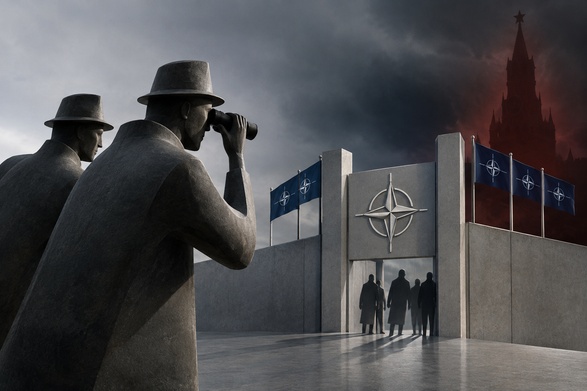
 | author: | Shaun Walker | institution: | The Guardian | ¿porque no los dos? |
| tl;dr | European intelligence chiefs warn that Russia could intensify sabotage and potentially test Nato with limited military action within months. Baltic officials, however, report no signs of an imminent attack and caution that alarmist messaging could serve Moscow’s efforts to spread fear. Officials describe increasing threats to transport, defence industries and infrastructure supporting Ukraine. Russia denies planning an attack on Nato. The article also reports European doubts about Moscow’s commitment to peace negotiations, while acknowledging that the intelligence behind the warnings has not been disclosed. | ||||
| deeper: | The article prioritizes European security officials’ perspectives, but includes substantial disagreement, warnings against panic and Russia’s denial. Its framing does not clearly map onto left-right politics. Named interviews, direct quotations and historical context strengthen the reporting. However, the headline sounds more certain than the underlying assessments, and undisclosed intelligence prevents readers from testing the central claims. Some sweeping assertions, notably about destruction of Russian oil infrastructure, lack supporting figures. These scores assess the supplied text; the screenshot’s authenticity and reported events are not independently verified. | ||||
media: | |||||
| gen: 2026/09/19:21:49 in 26.0 sec (old)bias: 3 (Center) |
| type: newsquality: 68 |
| pts: 0 |

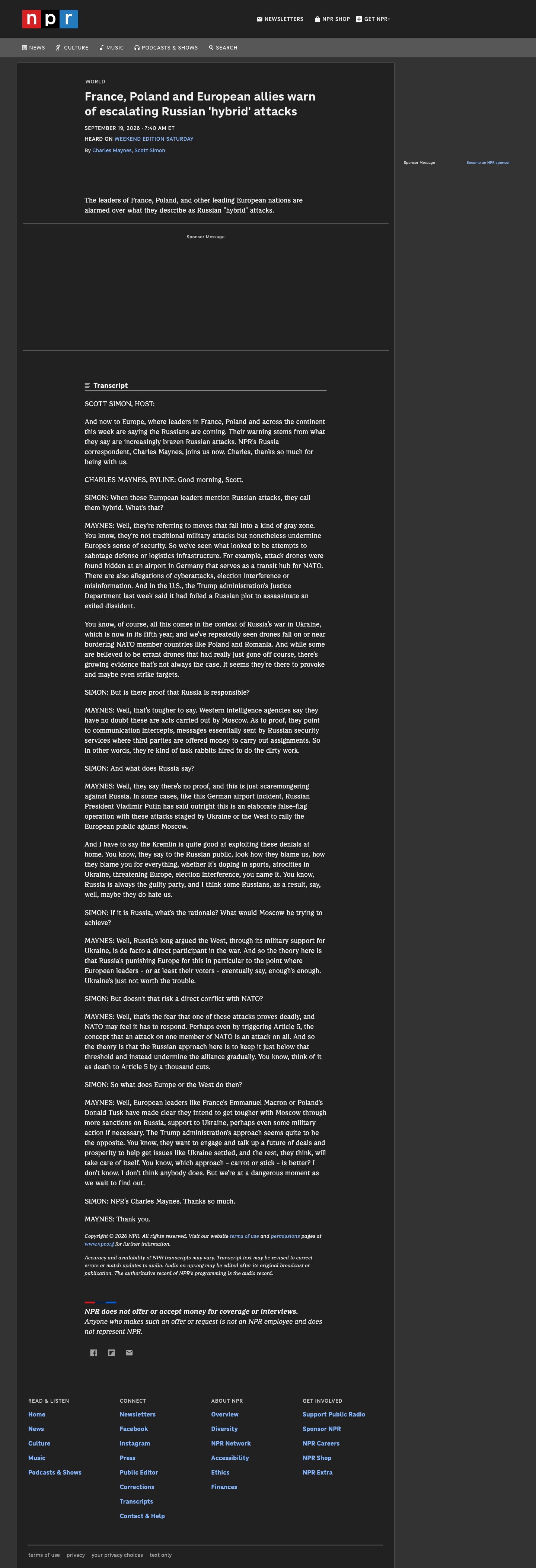 | author: | Charles Maynes, Scott Simon | institution: | NPR | ¿porque no los dos? |
| tl;dr | European leaders warn of alleged Russian hybrid attacks, including sabotage, cyberattacks, election interference and drone incursions. The report explains Western intelligence claims linking these activities to Moscow, while acknowledging uncertainty and presenting Russian denials. It explores the theory that Russia seeks to weaken support for Ukraine without triggering NATO’s collective defense commitment. France and Poland favor tougher measures, contrasted with the Trump administration’s emphasis on engagement. The segment leaves open which approach would work better. | ||||
| deeper: | The report foregrounds European security concerns but asks directly about proof, includes Russian denials and avoids endorsing either sanctions or engagement. This supports a broadly centrist assessment rather than a clear partisan alignment. Phrases such as “the Russians are coming” and “death to Article 5 by a thousand cuts” heighten alarm. The explanation of hybrid warfare is accessible, but major incidents and intelligence claims lack specific sources or independently presented evidence. Commentary about Russian public attitudes is speculative. These limitations reduce the report’s evidentiary strength. | ||||
media: | |||||
| gen: 2026/07/27:05:36 in 1 min 1.7 sec (old)bias: 4 (Center) |
| type: newsquality: 72 |
| pts: 0 |
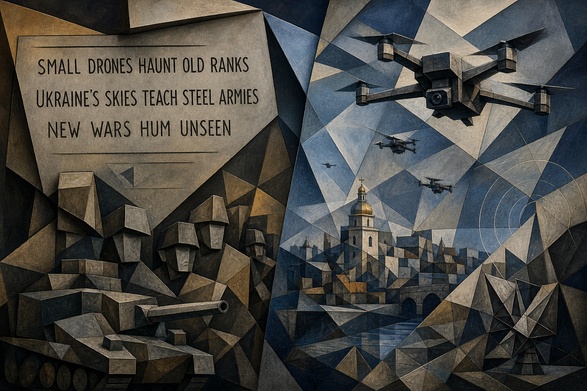
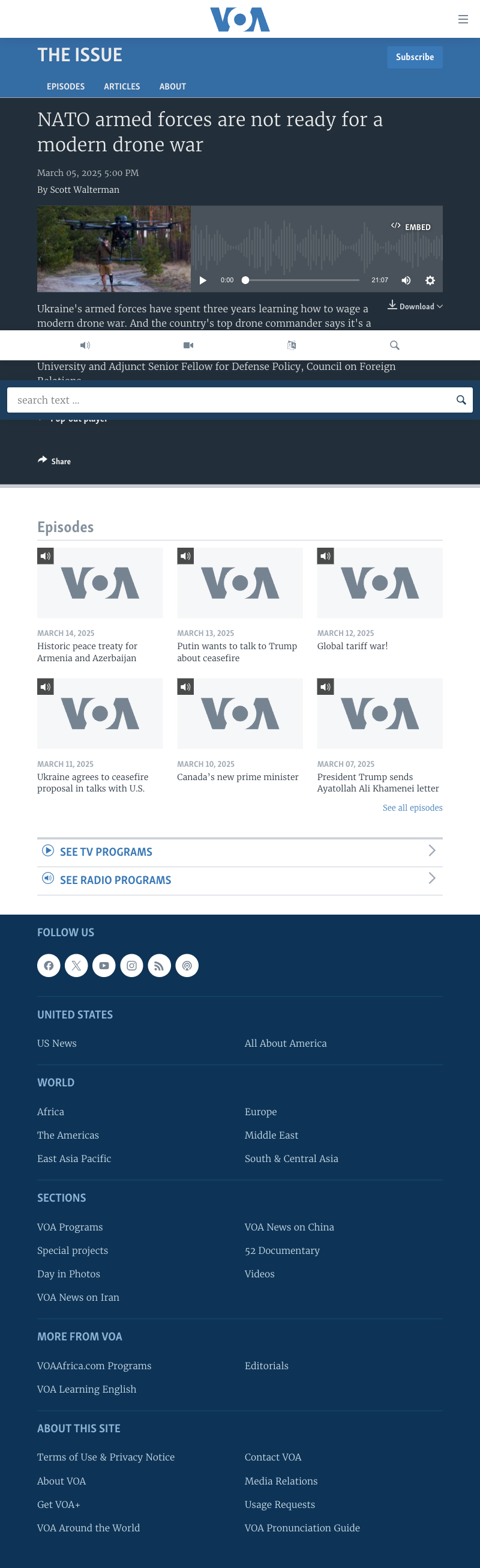 | author: | Scott Walterman | institution: | Voice of America (VOA) | ¿porque no los dos? |
| tl;dr | A Voice of America “The Issue” episode/article titled “NATO armed forces are not ready for a modern drone war” argues that NATO militaries lag behind the realities of drone-centric combat, drawing lessons from Ukraine’s experience and expertise after years of large-scale war. The framing emphasizes capability gaps, adaptation needs, and operational lessons from Ukraine’s drone warfare practices, presented in a broadcast/podcast format with supporting context and related episodes listed on the page. | ||||
| deeper: | The headline is assertive (“not ready”), signaling a critical, agenda-setting frame focused on NATO preparedness. The page implies reliance on Ukrainian military perspectives and expert commentary, which can narrow viewpoint diversity if opposing or internal NATO counter-arguments aren’t equally featured. As a VOA program page, it appears professionally produced and timely, but the screenshot provides limited visible evidence of data, methodology, or multiple independent sources—so it reads more like analysis/interview than a fully evidenced report. | ||||
media: | |||||
| gen: 2026/07/23:02:38 in 55.9 sec (old)bias: 4 (Center) |
| type: newsquality: 74 |
| pts: 0 |
 | author: | Scott Walterman | institution: | Voice of America (VOA) | ¿porque no los dos? |
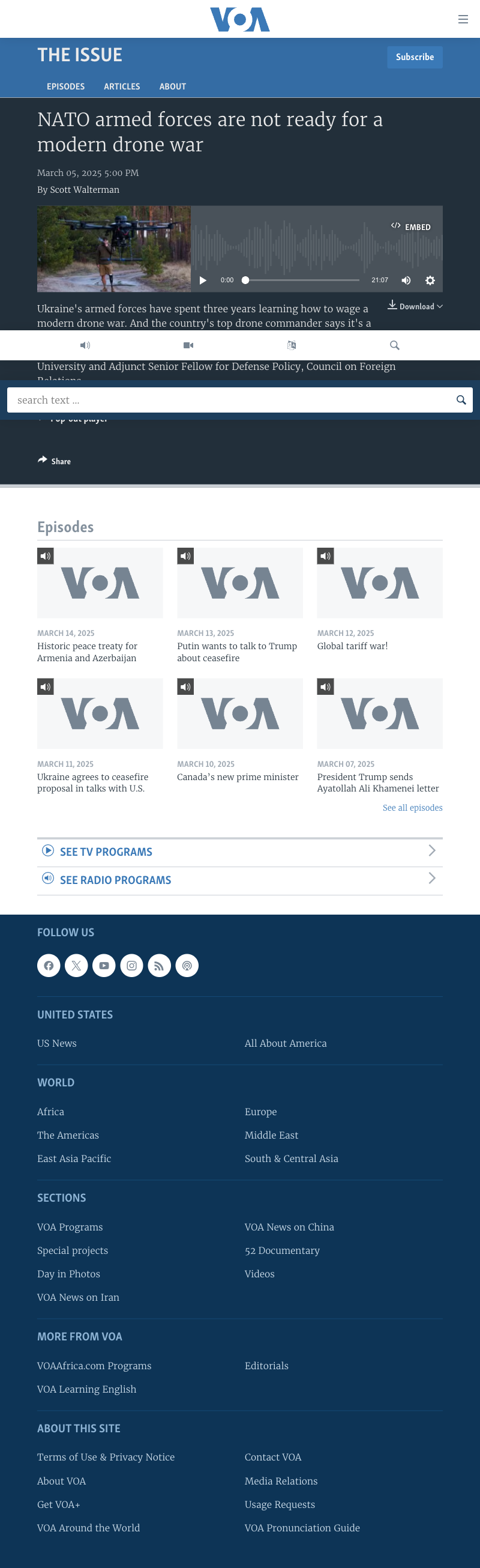
| tl;dr | A Voice of America “The Issue” episode/article argues that NATO militaries are not adequately prepared for today’s drone-centric warfare, drawing on Ukraine’s three-year learning curve and commentary from Ukraine’s senior drone leadership to highlight gaps in doctrine, training, and readiness. | ||||
| deeper: | Content focus: The framing is a critical assessment of NATO readiness in the emerging “modern drone war,” using Ukraine’s battlefield experience as the key reference point. The headline is assertive (“are not ready”), which signals a strong thesis from the outset, but the topic is legitimate and newsworthy given the rapid evolution of drone tactics. Bias: The piece appears to privilege Ukraine’s lived combat lessons and likely adopts a reformist, capability-improvement stance toward NATO (i.e., urging adaptation). That is a perspective, but not inherently partisan; it becomes bias if countervailing NATO viewpoints, differing expert assessments, or evidence that some NATO units are adapting quickly are not included. From the screenshot alone, it’s not clear how much balancing material is provided, so bias is moderate rather than high. Quality: The presentation looks like an audio segment (about 21 minutes) with a byline (Scott Walterman) and date (March 5, 2025), which supports accountability. The quality would be higher if the piece clearly cites concrete metrics (procurement rates, training throughput, EW/drone defense performance, doctrine changes), includes multiple independent experts (beyond Ukrainian sources), and distinguishes among NATO members (readiness varies widely). Without the full transcript, the evidence density and balance can’t be fully verified; still, the premise is plausible and the sourcing appears at least partially expert-driven (Ukraine’s top drone commander). | ||||
media: | |||||
| gen: 2026/07/10:17:21 in 2 min 31.1 sec (old)bias: 4 (Center) |
| type: newsquality: 80 |
| pts: 0 |
 | author: | Kathryn Pink, Scott Detrow, Patrick Jarenwattananon | institution: | NPR | ¿porque no los dos? |
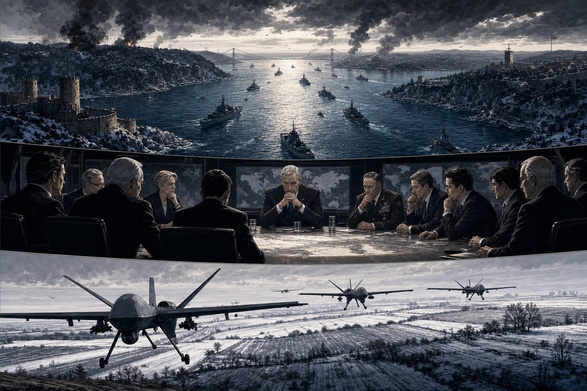
| tl;dr | Former U.S. Ambassador to NATO, Nicholas Burns, discusses recent U.S.-Iran tensions and the NATO summit. He criticizes the U.S. administration's handling of the situation with Iran, noting the risk of conflict over commercial shipping in the Strait of Hormuz. Burns also comments on President Trump's meeting with Ukrainian President Zelensky, highlighting potential U.S. support for Ukraine despite Trump's past remarks about NATO. | ||||
| deeper: | The article presents a balanced discussion with insights from a former ambassador, offering a nuanced perspective on recent geopolitical events. Economic pressures and diplomatic actions are examined critically. The inclusion of Nicholas Burns' views provides an informed analysis, though it slightly leans towards criticism of the current administration's foreign policy. The overall presentation is informative and maintains a professional tone. | ||||
media: | |||||
| gen: 2026/07/09:22:55 in 58.9 sec (old)bias: 3 (Center) |
| type: newsquality: 85 |
| pts: 0 |

 | author: | Mary Louise Kelly, Hadeel Al-Shalchi, Tom Bowman | institution: | NPR | ¿porque no los dos? |
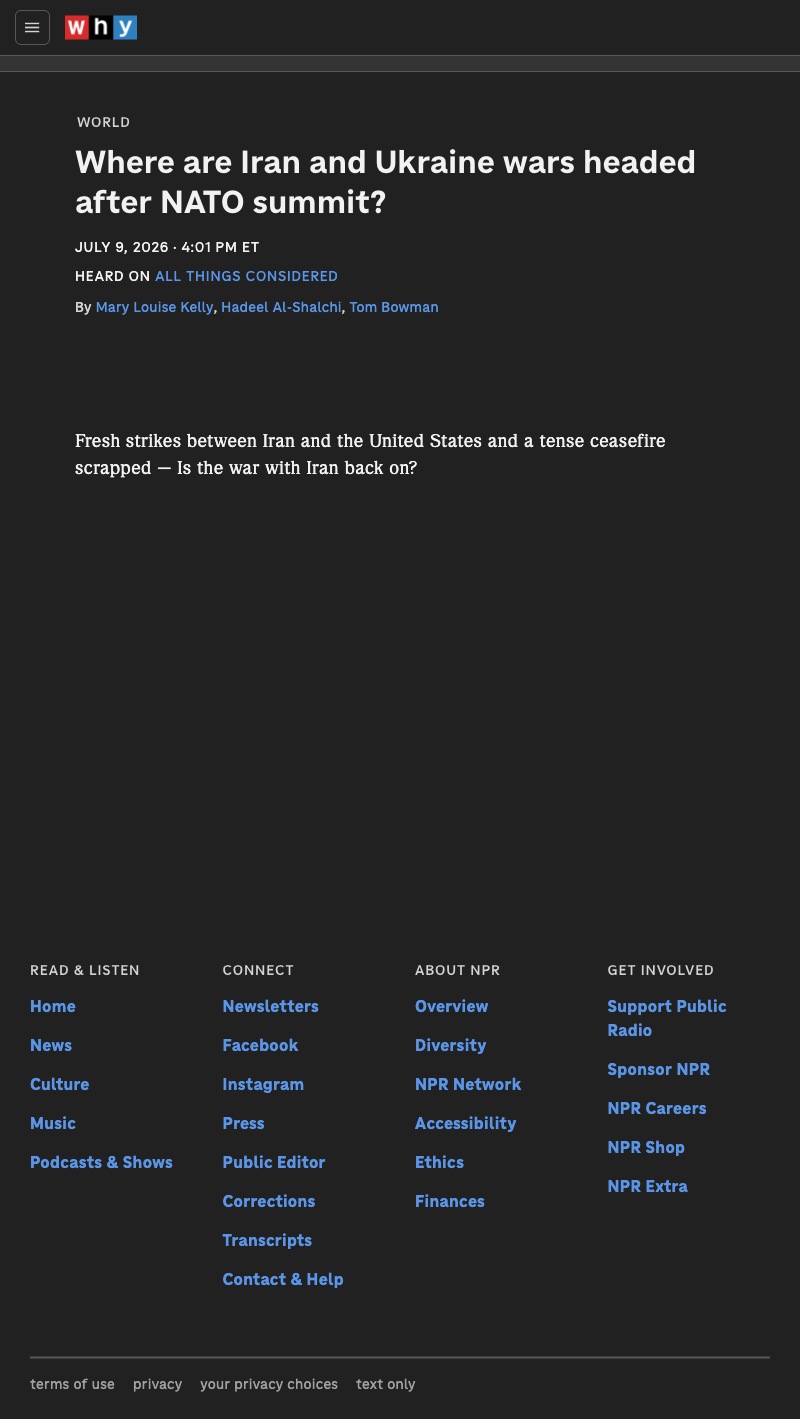
| tl;dr | The article discusses recent developments in the conflicts involving Iran and Ukraine following a NATO summit, highlighting renewed clashes between Iran and the United States as a ceasefire falters. | ||||
| deeper: | The article appears to be a factual report based on current events, focusing on developments in international conflicts without displaying significant bias. NPR is generally known for balanced reporting. The quality is high due to the involvement of experienced journalists. | ||||
media: | |||||
You made it to the bottom. Now dance!


owned and operated by: RPN Omnigalactic Insitutution as of: 2026/10/15: 18:03 in 0 ms
Enter Code
Login with Account