#iran conflict
| gen: 2026/09/18:18:42 in 31.0 secbias: 2 (Center) |
| type: colorquality: 82 |
| pts: 0 |
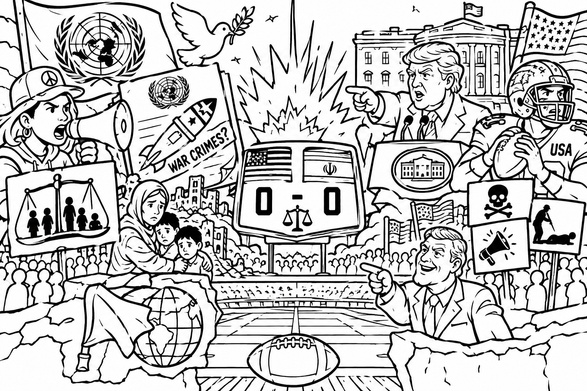
#war crimes#international la#human rights#u.s. politics#iran conflict#iran#united states#united nations#israel#minab#lamerd city stri
Leftist
The U.N. report drops a bombshell bigger than any Tomahawk, accusing the U.S. of potential war crimes in Iran. This is like a penalty flag thrown on the field of global justice, demanding accountability for everyone. Civilian losses exceed a hundred, mostly women and children, in strikes in Minab. It's a brutal reminder that the world is less like a fair game and more like an unfair fight. Both the U.S. and Iran must pay reparations; it's time to share the scoreboard of responsibility.
Rightist
Hold onto your seats, folks! The U.N. expert team just tried a Hail Mary against the U.S., claiming war crimes in Iran. But the White House fires back like John Elway in overtime, denying the accusations and pointing fingers at Iran's horrific track record. They've been executing and terrorizing without remorse. In the geopolitical field, the U.S. remains the quarterback, defending democracy while facing flags that seem more about sensationalism than fairness.
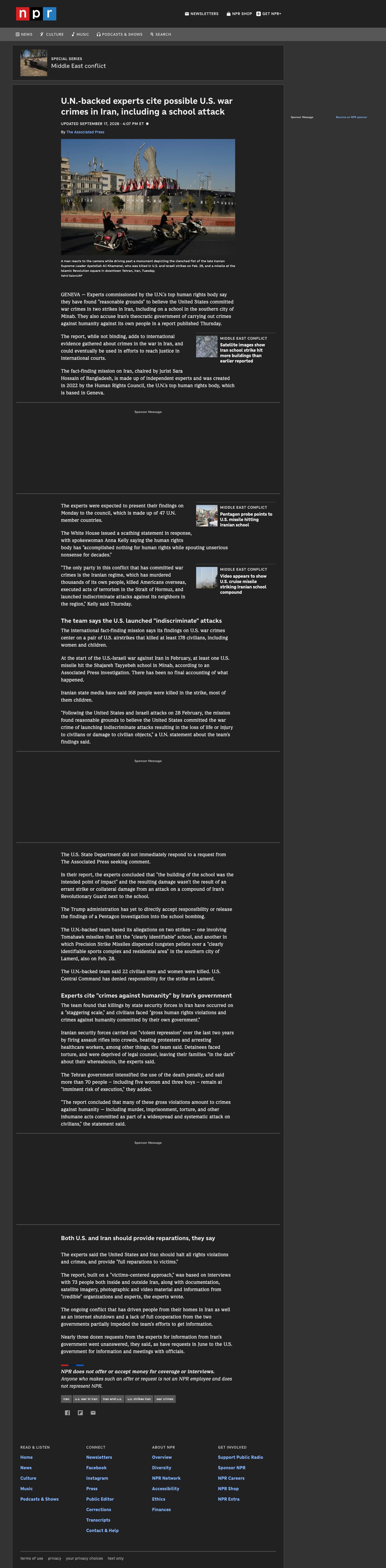 | author: | The Associated Press | institution: | NPR | ¿porque no los dos? |
| tl;dr | The article reports that U.N.-commissioned experts found reasonable grounds to suspect U.S. war crimes in two strikes in Iran, including an attack on a school in Minab. The same report accuses Iranian authorities of crimes against humanity through killings, torture and repression. U.S. officials reject the allegations. Experts call for reparations from both governments. Their findings draw on interviews and visual evidence, but information gathering was hindered by conflict, internet restrictions and government noncooperation. The report is not a binding judicial ruling. | ||||
| deeper: | The article emphasizes civilian protection and legal accountability without clearly endorsing a partisan position. It attributes allegations, includes substantial U.S. rebuttals, covers Iranian abuses and explains investigative limitations. Strong wording largely comes from identified sources. Its main weaknesses are reliance on one investigative report, limited explanation of evidence establishing targeting responsibility, and no direct Iranian response. Different casualty figures are attributed but not reconciled. These scores assess the supplied text; the screenshots alone do not authenticate its reporting. | ||||
media: | |||||
| gen: 2026/07/13:13:45 in 1 min 42.5 sec (old)bias: 4 (Center-Left) |
| type: lolsquality: 72 |
| pts: 0 |
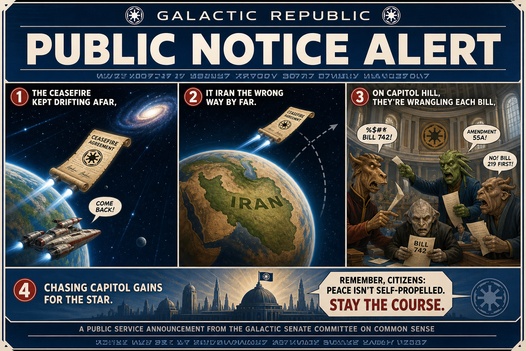
#politics#congress#middle east#ceasefire#iran conflict#u.s. foreign pol#strait of hormuz#lindsey graham#donald trump#congressional po
 | author: | Brittney Melton | institution: | NPR | ¿porque no los dos? |
| tl;dr | This NPR “Up First” newsletter, dated July 13, 2026, leads with an escalating U.S.-Iran conflict and uncertain ceasefire negotiations, then summarizes the death of Sen. Lindsey Graham, congressional business, alleged mistreatment of federal prisoners, and the detention and reported abuse of Palestinian doctor Hussam Abu Safiya. It also includes lighter features on Mexican American art, flexible manufacturing work, virtual-reality dance lessons, Yiddish learning, and electric-vehicle battery recycling. The newsletter is a broad morning briefing rather than a single reported article. | ||||
| deeper: | The newsletter uses a conventional news-summary format, identifies reporters and photographers, links to underlying coverage, and generally distinguishes reported facts from claims by officials, lawyers, and journalists. Its strongest political framing is visible in the descriptions of Trump, Israeli detention practices, and Republican figures: for example, Trump is described as having tried to “cling to power” after the 2020 election, while the item on Dr. Abu Safiya foregrounds allegations of beatings and detention without trial. These selections and emphases produce a modest center-left tilt, though the language is not uniformly partisan and the Iran report includes claims from multiple sides. Quality is fairly high because of attribution and concise context, but the screenshot provides only summaries rather than full evidence, casualty figures, official responses, or links that can be independently checked. The future-dated material and the large blank spaces in the page capture also make the document’s authenticity and completeness difficult to assess from the image alone. | ||||
media: | |||||
| gen: 2026/07/09:22:55 in 58.9 sec (old)bias: 3 (Center) |
| type: newsquality: 85 |
| pts: 0 |
 | author: | Mary Louise Kelly, Hadeel Al-Shalchi, Tom Bowman | institution: | NPR | ¿porque no los dos? |
| tl;dr | The article discusses recent developments in the conflicts involving Iran and Ukraine following a NATO summit, highlighting renewed clashes between Iran and the United States as a ceasefire falters. | ||||
| deeper: | The article appears to be a factual report based on current events, focusing on developments in international conflicts without displaying significant bias. NPR is generally known for balanced reporting. The quality is high due to the involvement of experienced journalists. | ||||
media: No Media Preview | |||||
You made it to the bottom. Now dance!


owned and operated by: RPN Omnigalactic Insitutution as of: 2026/10/15: 15:10 in 0 ms
Enter Code
Login with Account