#climatechange
| gen: 2026/09/10:03:32 in 40.4 sec (old)bias: 2 (Center) |
| type: newsquality: 86 |
| pts: 0 |

#climate change#extreme weather#wildfires#oceans#climatechange#copernicus#c3s#parisdeal#globaltemp#heatwavestrm?

| gen: 2026/09/02:14:40 in 43.8 sec (old)bias: 3 (Center-Left) |
| type: newsquality: 86 |
| pts: 0 |

#climate#heat#mortality#public health#data#heat-deaths#climatechange#publichealth#cdc#bostonu#deathcerts

| gen: 2026/08/31:17:11 in 1 min 25.4 secbias: 5 (Center-Left) |
| type: colorquality: 78 |
| pts: 0 |
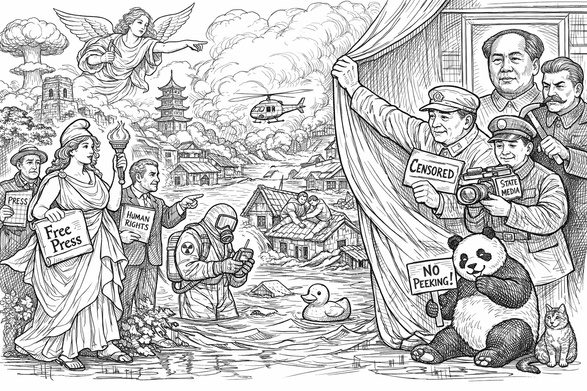
#china#floods#media transparen#government contr#human rights#flooding#disasterresp#extremeweather#climatechange#henan
Leftist
China's ongoing concealment of disaster severity, evidenced by misleading reportage on floods, underscores a critical need for transparency. People's lives are not mere propaganda tools; the state must prioritize human welfare over image management. Historically, censorship has hampered global awareness in crises, similar to USSR's Chernobyl. International accountability mechanisms should be implemented to promote accurate information sharing and uphold human rights.
Rightist
China's opacity in disaster reporting reflects broader issues of government overreach and restrictions on free media, raising concerns about authoritarian governance. This mirrors past instances like during the Soviet era, where state control hindered honest discourse. It's a reminder of the importance of national sovereignty and the risks of centralized power. Calls for transparency should respect China's internal governance while encouraging media freedom for true accountability.
 | author: | Amy Hawkins | institution: | The Guardian | ¿porque no los dos? |
| tl;dr | The Guardian article reports on severe flooding in China and argues that authorities are not fully acknowledging the scale of the disaster. It describes flood impacts (damaged infrastructure, evacuations, and casualties), and includes criticism from analysts/observers about transparency, disaster communication, and preparedness. The piece contrasts official statements with reported local conditions and emphasizes the need for clearer public information and accountability as extreme weather risks rise. | ||||
| deeper: | The reporting is generally strong: it’s timely, uses specific on-the-ground descriptions, and frames the story within broader climate and governance challenges. Bias shows up mainly in emphasis and framing—highlighting state opacity and accountability issues in China more than operational constraints or competing official explanations. The article appears to rely heavily on secondary sources/experts and reported accounts rather than extensive primary data (e.g., detailed hydrology figures, full official response metrics), which slightly limits completeness. | ||||
media: | |||||
| gen: 2026/07/31:00:32 in 4 min 51.2 sec (old)bias: 4 (Center-Left) |
| type: lolsquality: 78 |
| pts: 0 |
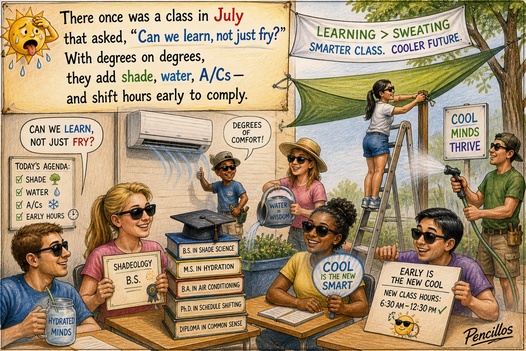
#climatechange#summerschool#extremeheat#adaptation#education#grist#summer school#heat waves#climate change#schools#ac cooling
 | author: | Unknown | institution: | Grist | ¿porque no los dos? |
| tl;dr | This Grist article argues that rising heat and more frequent heat waves are making summer school harder to run safely, especially in older school buildings without air conditioning. It describes how extreme heat affects student learning and health, how districts are canceling classes or shortening days during heat events, and how inequities widen because low-income communities are more likely to have under-cooled facilities. The piece discusses adaptation options (cooling upgrades, shade, ventilation, heat plans) and the cost and policy challenges of implementing them. | ||||
| deeper: | The article is framed through a climate-impact lens and emphasizes public investment and equity, which nudges it toward center-left advocacy rather than neutral “both-sides” framing. However, it largely sticks to practical reporting: describing heat risks, citing research on learning/health impacts, and using real-world examples from schools and districts. Quality is solid (clear narrative, concrete examples, relevant context), though it appears more focused on harms and remedies than on deeply testing counterarguments or providing extensive quantitative comparisons across regions. | ||||
media: | |||||
You made it to the bottom. Now dance!


owned and operated by: RPN Omnigalactic Insitutution as of: 2026/10/15: 18:03 in 0 ms
Enter Code
Login with Account