#human rights
| gen: 2026/09/18:18:42 in 31.0 secbias: 2 (Center) |
| type: colorquality: 82 |
| pts: 0 |
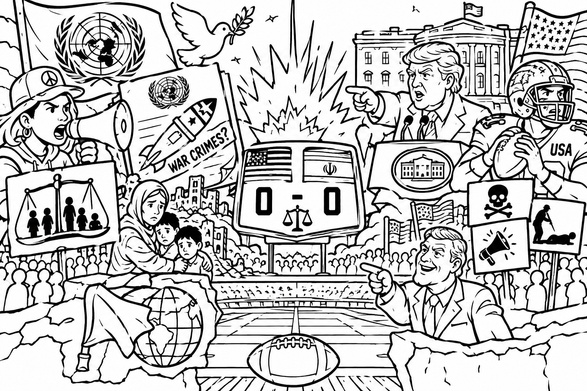
#war crimes#international la#human rights#u.s. politics#iran conflict#iran#united states#united nations#israel#minab#lamerd city stri
Leftist
The U.N. report drops a bombshell bigger than any Tomahawk, accusing the U.S. of potential war crimes in Iran. This is like a penalty flag thrown on the field of global justice, demanding accountability for everyone. Civilian losses exceed a hundred, mostly women and children, in strikes in Minab. It's a brutal reminder that the world is less like a fair game and more like an unfair fight. Both the U.S. and Iran must pay reparations; it's time to share the scoreboard of responsibility.
Rightist
Hold onto your seats, folks! The U.N. expert team just tried a Hail Mary against the U.S., claiming war crimes in Iran. But the White House fires back like John Elway in overtime, denying the accusations and pointing fingers at Iran's horrific track record. They've been executing and terrorizing without remorse. In the geopolitical field, the U.S. remains the quarterback, defending democracy while facing flags that seem more about sensationalism than fairness.
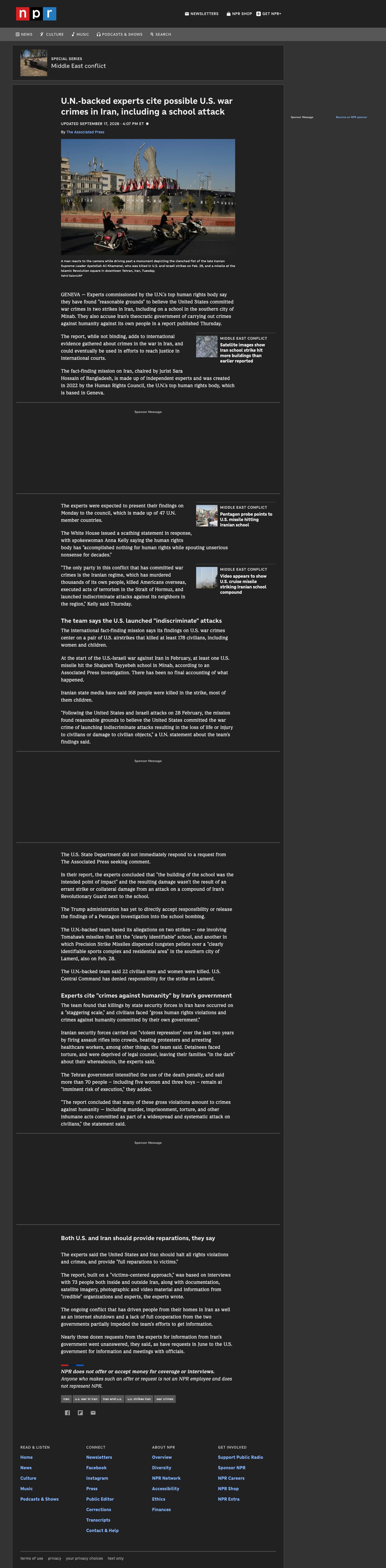 | author: | The Associated Press | institution: | NPR | ¿porque no los dos? |
| tl;dr | The article reports that U.N.-commissioned experts found reasonable grounds to suspect U.S. war crimes in two strikes in Iran, including an attack on a school in Minab. The same report accuses Iranian authorities of crimes against humanity through killings, torture and repression. U.S. officials reject the allegations. Experts call for reparations from both governments. Their findings draw on interviews and visual evidence, but information gathering was hindered by conflict, internet restrictions and government noncooperation. The report is not a binding judicial ruling. | ||||
| deeper: | The article emphasizes civilian protection and legal accountability without clearly endorsing a partisan position. It attributes allegations, includes substantial U.S. rebuttals, covers Iranian abuses and explains investigative limitations. Strong wording largely comes from identified sources. Its main weaknesses are reliance on one investigative report, limited explanation of evidence establishing targeting responsibility, and no direct Iranian response. Different casualty figures are attributed but not reconciled. These scores assess the supplied text; the screenshots alone do not authenticate its reporting. | ||||
media: | |||||
| gen: 2026/09/02:18:12 in 1 min 8.3 secbias: 4 (Center-Left) |
| type: colorquality: 78 |
| pts: 0 |
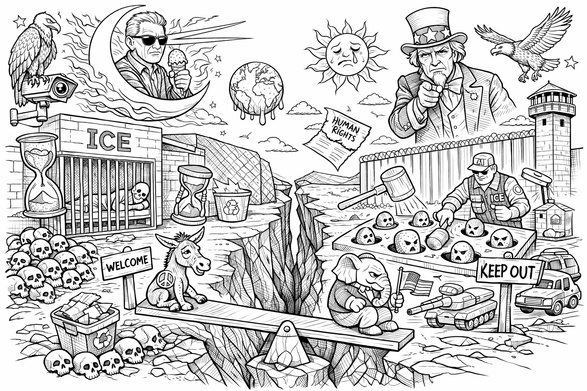
#immigration#human rights#government polic#law enforcement#public safety#ice#dhs#detention#saipan#cnmi
Leftist
Another tragic example of the inhumane system that's been perpetuated. A man dies in ICE detention, reflecting a callous disregard for basic human rights and decency. The death count mounts as policies prioritize detention over compassion, ignoring systemic neglect. The Biden-era policy addressing such deaths was scrapped, showing a shift toward apathy over life. This erosion of empathy speaks volumes about the current administration's priorities, a damning portrayal of American values.
Rightist
This incident underscores the necessity for a robust and unwavering immigration enforcement system. While tragic, such events should not distract from the need for strict immigration controls to ensure public safety and judicial process. The rollback of Biden-era policies is a return to prudent governance, ensuring that policies do not burden ICE with responsibilities beyond control. Focusing on these incidents diverts from the broader goal of upholding law and order in immigration management.
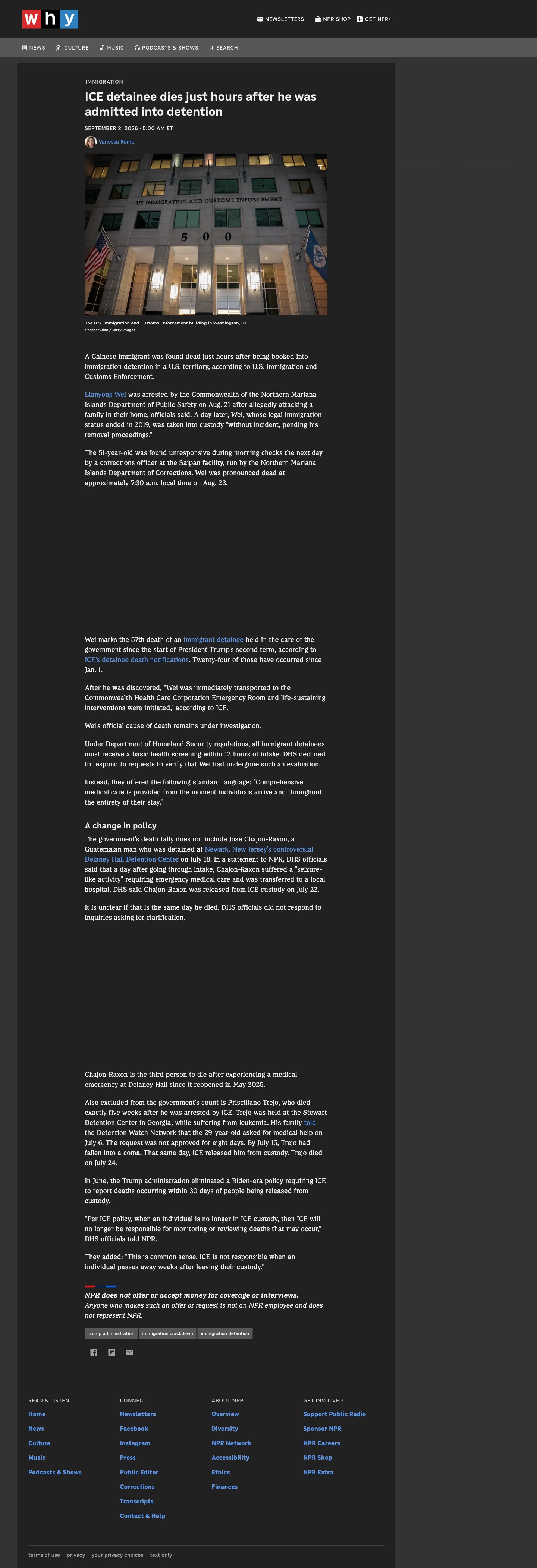 | author: | Vanessa Romo | institution: | NPR | ¿porque no los dos? |
| tl;dr | An NPR report says a Chinese immigrant, Lianyong Wei, was found unresponsive and pronounced dead hours after being booked into immigration detention in Saipan, Northern Mariana Islands. ICE says the cause of death is under investigation and that emergency measures were attempted after he was discovered. The story situates the death within a broader tally of detainee deaths since the start of President Trump’s second term, notes DHS health-screening rules, and highlights a policy change limiting reporting of deaths occurring after release from ICE custody. | ||||
| deeper: | The article is largely factual and attribution-heavy, relying on ICE statements, ICE death-notification records, and DHS quotes, while also emphasizing accountability gaps (e.g., DHS declining to confirm whether a required health screening occurred). The framing is skeptical of agency transparency and foregrounds detainee-death statistics and policy changes, which can steer readers toward criticism of detention practices. Quality is strong on sourcing and context, but limited by unresolved key facts (cause of death, medical screening status) and few non-government voices in the excerpt provided. | ||||
media: | |||||
| gen: 2026/08/31:17:11 in 1 min 25.4 secbias: 5 (Center-Left) |
| type: colorquality: 78 |
| pts: 0 |
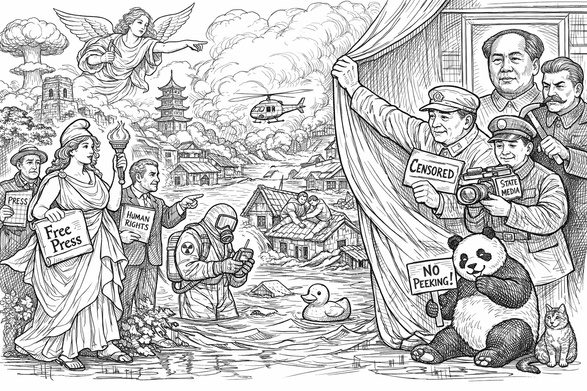
#china#floods#media transparen#government contr#human rights#flooding#disasterresp#extremeweather#climatechange#henan
Leftist
China's ongoing concealment of disaster severity, evidenced by misleading reportage on floods, underscores a critical need for transparency. People's lives are not mere propaganda tools; the state must prioritize human welfare over image management. Historically, censorship has hampered global awareness in crises, similar to USSR's Chernobyl. International accountability mechanisms should be implemented to promote accurate information sharing and uphold human rights.
Rightist
China's opacity in disaster reporting reflects broader issues of government overreach and restrictions on free media, raising concerns about authoritarian governance. This mirrors past instances like during the Soviet era, where state control hindered honest discourse. It's a reminder of the importance of national sovereignty and the risks of centralized power. Calls for transparency should respect China's internal governance while encouraging media freedom for true accountability.
 | author: | Amy Hawkins | institution: | The Guardian | ¿porque no los dos? |
| tl;dr | The Guardian article reports on severe flooding in China and argues that authorities are not fully acknowledging the scale of the disaster. It describes flood impacts (damaged infrastructure, evacuations, and casualties), and includes criticism from analysts/observers about transparency, disaster communication, and preparedness. The piece contrasts official statements with reported local conditions and emphasizes the need for clearer public information and accountability as extreme weather risks rise. | ||||
| deeper: | The reporting is generally strong: it’s timely, uses specific on-the-ground descriptions, and frames the story within broader climate and governance challenges. Bias shows up mainly in emphasis and framing—highlighting state opacity and accountability issues in China more than operational constraints or competing official explanations. The article appears to rely heavily on secondary sources/experts and reported accounts rather than extensive primary data (e.g., detailed hydrology figures, full official response metrics), which slightly limits completeness. | ||||
media: | |||||
| gen: 2026/07/22:01:56 in 1 min 24.0 sec (old)bias: 6 (Center-Left) |
| type: newsquality: 85 |
| pts: 0 |

 | author: | Unknown | institution: | Unknown | ¿porque no los dos? |
| tl;dr | The piece investigates El Salvador’s sweeping anti‑gang crackdown and its new ‘mega‑prison,’ compiling testimonies from former detainees and families who allege torture, deaths in custody, and due‑process violations under the continuing state of exception. It contrasts these claims with the government’s justification that mass arrests and harsh detention have slashed homicides and restored public safety. The article references court documents, rights‑group reports, and official statements, and describes secretive or expedited legal proceedings, overcrowding, and limited outside access to prisons. | ||||
| deeper: | Content focus: The article foregrounds alleged abuses—torture, wrongful detention, secret hearings—and amplifies testimonies from victims’ families and rights organizations. That framing gives it a rights‑centric emphasis and a skeptical posture toward the government’s security policy. Balance: It does present the government’s arguments (gang threat, homicide reduction, need for emergency powers) and includes crime statistics, but the narrative weight and emotional sourcing lean toward the detainees’ perspective. Sourcing and quality: Multiple sources (first‑person accounts, NGOs, official data/statements, legal references) and concrete details suggest solid reporting. Photos/video and on‑the‑ground descriptions add credibility. Some limits remain—restricted prison access and reliance on secondhand accounts—yet these constraints are acknowledged. Overall, rigorous and cautious, with an evident civil‑liberties tilt. | ||||
media: | |||||

You made it to the bottom. Now dance!


owned and operated by: RPN Omnigalactic Insitutution as of: 2026/10/15: 17:16 in 0 ms
Enter Code
Login with Account