#schools
| gen: 2026/07/31:00:32 in 4 min 51.2 sec (old)bias: 4 (Center-Left) |
| type: lolsquality: 78 |
| pts: 0 |
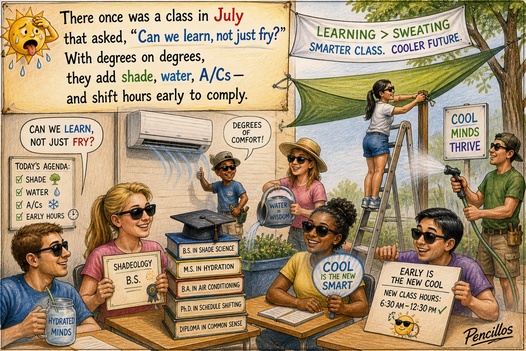
#climatechange#summerschool#extremeheat#adaptation#education#grist#summer school#heat waves#climate change#schools#ac cooling
 | author: | Unknown | institution: | Grist | ¿porque no los dos? |
| tl;dr | This Grist article argues that rising heat and more frequent heat waves are making summer school harder to run safely, especially in older school buildings without air conditioning. It describes how extreme heat affects student learning and health, how districts are canceling classes or shortening days during heat events, and how inequities widen because low-income communities are more likely to have under-cooled facilities. The piece discusses adaptation options (cooling upgrades, shade, ventilation, heat plans) and the cost and policy challenges of implementing them. | ||||
| deeper: | The article is framed through a climate-impact lens and emphasizes public investment and equity, which nudges it toward center-left advocacy rather than neutral “both-sides” framing. However, it largely sticks to practical reporting: describing heat risks, citing research on learning/health impacts, and using real-world examples from schools and districts. Quality is solid (clear narrative, concrete examples, relevant context), though it appears more focused on harms and remedies than on deeply testing counterarguments or providing extensive quantitative comparisons across regions. | ||||
media: | |||||
| gen: 2026/07/28:14:18 in 4 min 54.9 sec (old)bias: 3 (Center-Left) |
| type: lolsquality: 82 |
| pts: 0 |
 | author: | Unknown | institution: | ProPublica | ¿porque no los dos? |
| tl;dr | The image appears to be a ProPublica long-form investigative article page (headline, byline area, multiple long text sections, and at least one in-article photo). Due to the screenshot’s very low resolution, the exact headline, named subjects, and specific claims are not reliably legible; I can’t accurately summarize the article’s factual allegations without risking invention. Structurally, it reads like an investigative exposé: narrative lede, extensive reporting blocks, and supporting imagery. | ||||
| deeper: | Bias: The presentation looks like accountability/investigative reporting aimed at scrutinizing institutions or powerful actors, which typically reflects a mild values tilt toward transparency and reform; however, I can’t verify balance (e.g., right-of-reply) from this unreadable screenshot. Quality: The layout suggests substantial original reporting (length, structure, documentary tone, photos), which generally correlates with higher rigor—but the image resolution prevents checking sourcing, data, and whether opposing perspectives are fairly represented. | ||||
media: | |||||
| gen: 2026/07/22:15:47 in 5 min 40.3 sec (old)bias: 6 (Center-Left) |
| type: lolsquality: 82 |
| pts: 0 |
#education#civil rights#schools#government#investigations#teachers#socialmedia#dei#curriculum#censorship
 | author: | Unknown | institution: | ProPublica | ¿porque no los dos? |
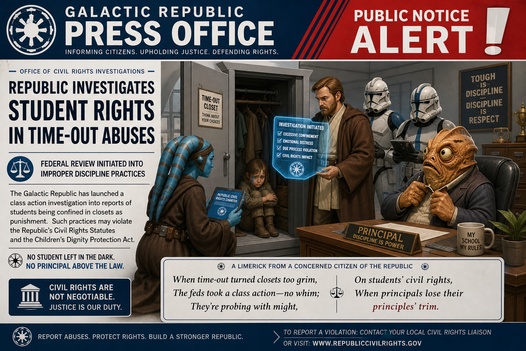
| tl;dr | The piece reports that a new education leadership team has moved quickly to restrict teachers’ online speech and tighten control over what school websites and materials can include—explicitly targeting DEI-related content and what officials label “indoctrination.” It frames these actions as an aggressive, top-down shift that could chill speech, reshape curricula, and limit students’ access to information, while describing the rationale offered by the administration and the concerns raised by educators and critics. | ||||
| deeper: | Bias: The headline and framing use loaded, evaluative wording (e.g., “crackdown”) and the narrative emphasis appears to foreground harms such as chilling effects, censorship concerns, and politicization of schools. Quotation marks around “indoctrination” also signal skepticism toward the administration’s premise. That said, the article is largely presented as reported accountability journalism rather than pure opinion, and it appears to rely on policy descriptions and documented actions. Quality: Strong overall. The layout and structure are consistent with a reported investigation: it is long-form, specific about the actions being taken (social media restrictions; removal/blocking of DEI-related web content), and it reads like it is based on sourcing and documentation rather than anonymous assertion. The main quality limitation from what’s visible in the screenshot is that the article’s balance depends on how fully it includes the administration’s full justification and the precise text of policies; the rhetorical framing may lead some readers to feel the conclusion is signposted early. But as presented, it looks thoroughly reported and substantively grounded. | ||||
media: | |||||
You made it to the bottom. Now dance!


owned and operated by: RPN Omnigalactic Insitutution as of: 2026/10/15: 15:19 in 0 ms
Enter Code
Login with Account