#china
| gen: 2026/10/06:04:06 in 20.9 sec (old)bias: 2 (Center) |
| type: newsquality: 76 |
| pts: 0 |

 | author: | The Associated Press | institution: | NPR | ¿porque no los dos? |
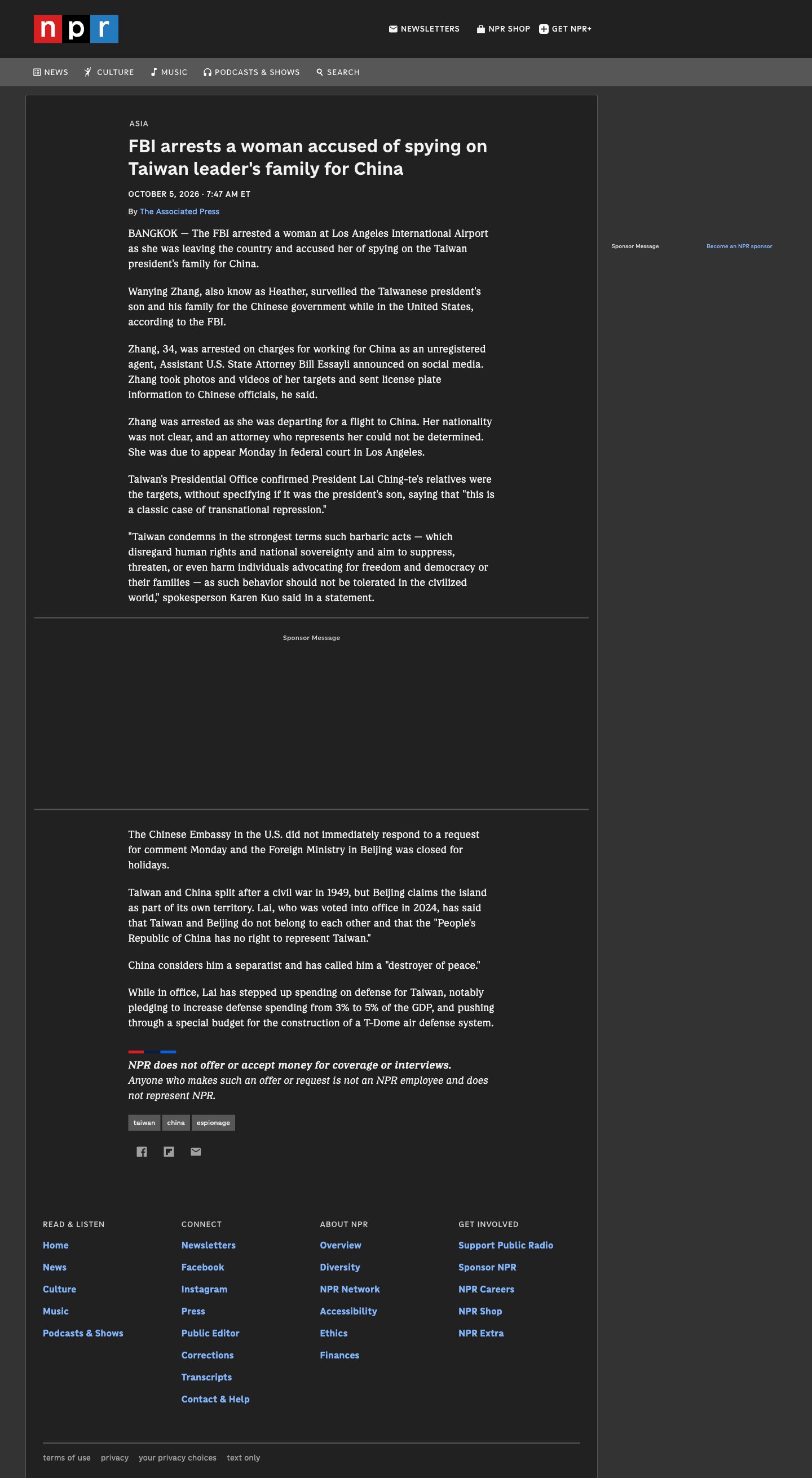
| tl;dr | The article reports that the FBI arrested Wanying Zhang at Los Angeles International Airport for allegedly acting as an unregistered Chinese agent. Authorities accuse her of monitoring Taiwanese President Lai Ching-te’s relatives in the United States and sending photographs, videos, and license plate information to Chinese officials. Taiwan condemned the alleged surveillance as transnational repression. No defense response was available, and China’s embassy did not immediately comment. The article also outlines tensions over Taiwan’s status and Lai’s defense spending plans. | ||||
| deeper: | The report generally distinguishes accusations from established facts and attributes inflammatory language to officials rather than adopting it. U.S. and Taiwanese government accounts dominate, but it notes efforts to obtain Chinese comment and the absence of an identifiable defense lawyer. This creates a limited official-source slant without a clear left–right agenda. Useful context and specific allegations strengthen the reporting; the lack of court-document detail or independent corroboration limits it. The unusual title “Assistant U.S. State Attorney” also warrants verification. | ||||
media: | |||||
| gen: 2026/10/06:04:05 in 25.2 sec (old)bias: 3 (Center) |
| type: newsquality: 85 |
| pts: 0 |

| gen: 2026/09/28:05:17 in 26.6 sec (old)bias: 3 (Center) |
| type: newsquality: 82 |
| pts: 0 |
 | author: | Scilla Alecci | institution: | International Consortium of Investigative Journalists (ICIJ) | ¿porque no los dos? |
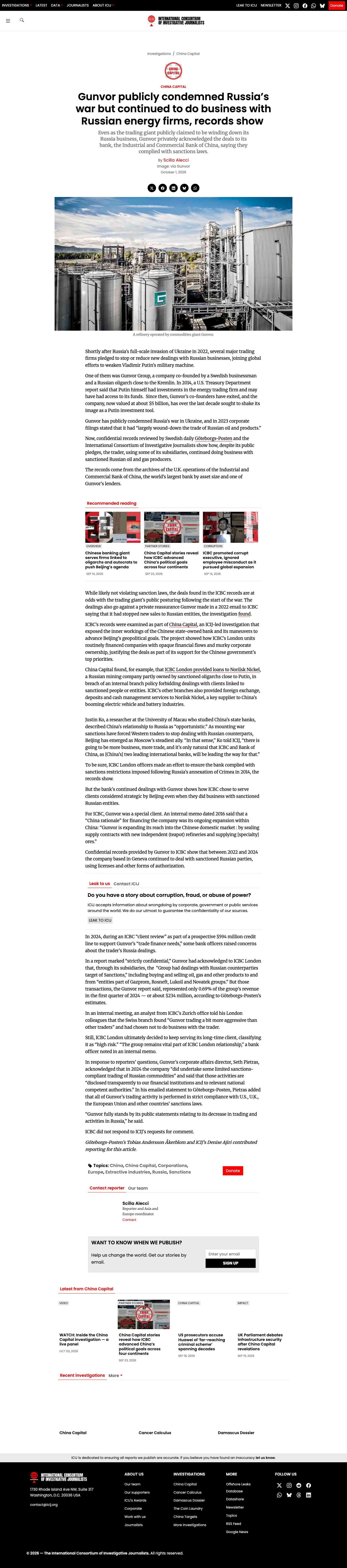
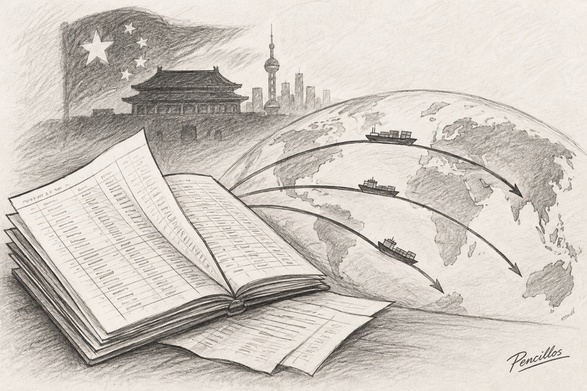
| tl;dr | The article summarizes an ICIJ investigation alleging that ICBC used international lending to advance China’s political and strategic interests, sometimes overriding financial risks and compliance concerns. Drawing on 4.8 million confidential records and partner reporting, it describes deals involving infrastructure, natural resources, technology and military-linked companies across four continents. It also examines relationships involving businesses connected to sanctioned Belarusian interests. ICBC did not respond to requests for comment; Zoomlion said it complies with applicable laws. | ||||
| deeper: | Specific document quotations, financial figures, named sources and links to partner reporting give the article substantial evidentiary support. It acknowledges an unknown loan outcome, includes Zoomlion’s response and notes unanswered requests for comment. However, phrases such as “notoriously secretive” and the consistently geopolitical framing sometimes blur commercial strategy with political intent. Alternative explanations receive limited attention. Its emphasis on transparency and regulatory accountability does not establish a clear left-right agenda. This is a well-supported investigative roundup, although the underlying records cannot be independently checked from these screenshots. | ||||
media: | |||||
| gen: 2026/09/24:02:24 in 33.9 sec (old)bias: 1 (Center) |
| type: newsquality: 55 |
| pts: 0 |
#diplomacy#china#taiwan#cybersecurity#ai#donald trump#xi jinping#rush doshi#terry gross#united states po
 | author: | Terry Gross | institution: | NPR | ¿porque no los dos? |
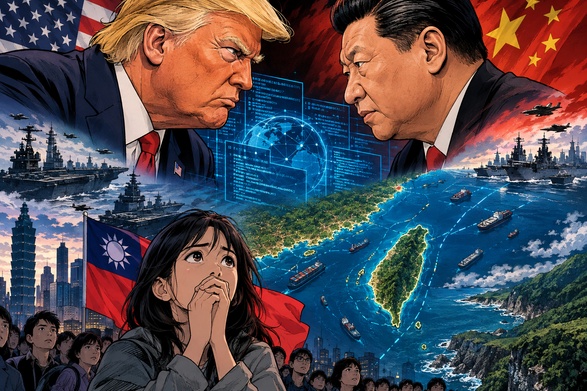
| tl;dr | The page introduces a Fresh Air interview hosted by Terry Gross with Rush Doshi of the Council on Foreign Relations about U.S.–China relations ahead of a planned Trump–Xi summit. The headline highlights cybersecurity, artificial intelligence, and Taiwan. Only a brief introduction and a 43-minute audio player are visible; the interview’s arguments, evidence, and predictions cannot be assessed from these images. | ||||
| deeper: | The visible headline and introduction use neutral language without praising or attacking either leader or promoting a political position. The guest and his affiliation are clearly identified. However, the page provides no transcript, supporting evidence, or substantive policy explanation. These scores apply only to the visible introduction, not the unavailable audio; the screenshot alone also cannot establish authenticity or verify the summit details. | ||||
media: | |||||
| gen: 2026/09/24:02:21 in 31.7 sec (old)bias: 4 (Center) |
| type: newsquality: 56 |
| pts: 0 |
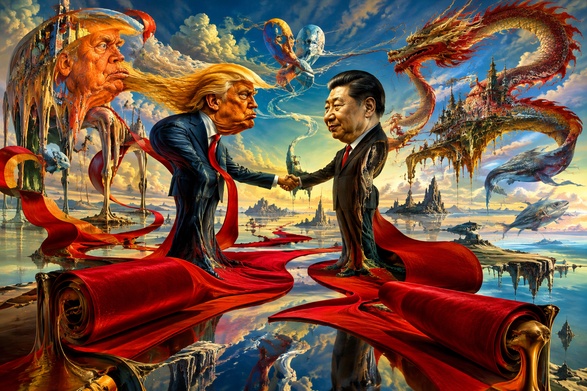
#diplomacy#china#usa#trade#politics#donald trump#xi jinping#united states#state visit#trade war backup
 | author: | FRANCE 24 with AFP | institution: | FRANCE 24 | ¿porque no los dos? |
| tl;dr | The article reports that Trump personally welcomed Xi Jinping for a US state visit focused on trade, AI and Iran. It says a trade truce has been extended, while expectations for major breakthroughs remain low. The coverage contrasts elaborate diplomatic ceremonies with Republican criticism of Xi and concerns over alleged Chinese intelligence assistance to Iran. It also describes potential AI cooperation and Trump's domestic political difficulties. The screenshots attribute the report to France 24 with AFP and date it September 24, 2026; its authenticity and claims cannot be independently established from the images. | ||||
| deeper: | The report includes Trump's remarks, a named analyst and Republican criticism, without clearly endorsing a left- or right-wing agenda. However, repeated emphasis on 'pageantry,' the 'Oppressive dictator' subheading and speculation about distracting from domestic problems add a skeptical slant. Chinese perspectives are largely absent. Attribution and specific details help, but claims about historic polling lows and their causes lack supporting figures. The dramatic AI-extinction framing lacks nuance. Some article text is obscured, and the screenshots alone cannot authenticate the report or verify its substantial geopolitical claims. | ||||
media: | |||||
| gen: 2026/09/20:20:34 in 18.0 sec (old)bias: 1 (Center) |
| type: newsquality: 40 |
| pts: 0 |
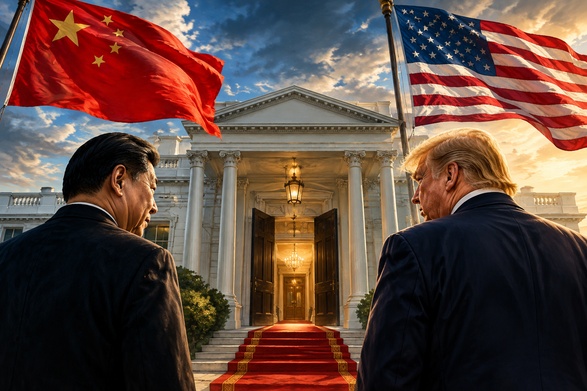
 | author: | Debbie Elliott, Emily Feng | institution: | NPR | ¿porque no los dos? |
| tl;dr | The screenshot presents a brief preview of an anticipated White House summit between Chinese leader Xi Jinping and President Donald Trump. Dated September 20, 2026, it says Xi will arrive in the United States that week and promises to examine both leaders’ goals. The visible text does not actually describe those goals, provide supporting sources, or explain the summit’s agenda. | ||||
| deeper: | The visible wording treats both leaders neutrally and gives neither side preferential treatment. Calling the summit “important” adds mild emphasis, not clear political bias. Quality is limited by the extremely short excerpt: the headline promises expectations, but no substantive analysis, sourcing, or agenda appears. These scores apply only to the visible material, not any accompanying broadcast. The screenshot alone cannot establish the authenticity of the page or confirm the reported visit. | ||||
media: | |||||
| gen: 2026/09/19:21:46 in 25.6 sec (old)bias: 3 (Center) |
| type: newsquality: 76 |
| pts: 0 |
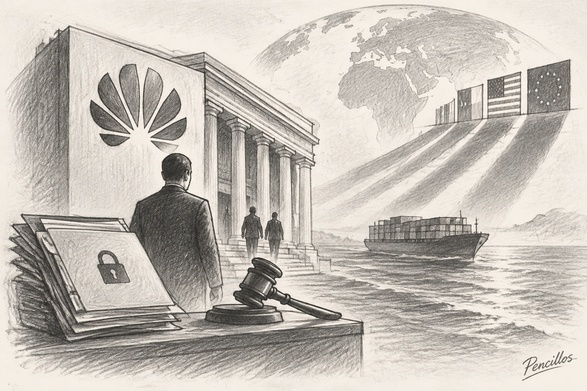
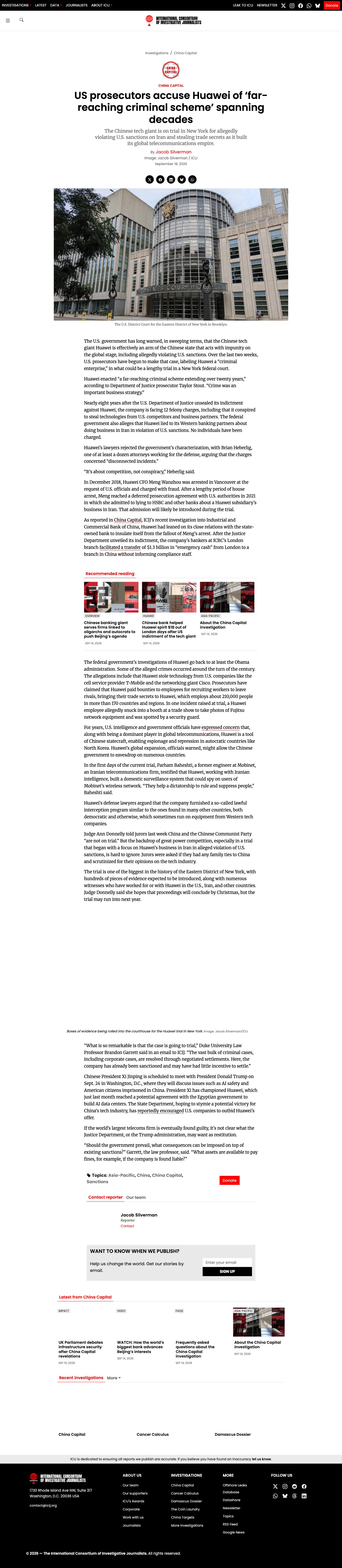 | author: | Jacob Silverman | institution: | International Consortium of Investigative Journalists (ICIJ) | ¿porque no los dos? |
| tl;dr | The article reports on Huawei’s New York federal trial over alleged trade-secret theft, bank deception and violations of U.S. sanctions on Iran. Prosecutors describe a decades-long criminal scheme; Huawei’s lawyers characterize the accusations as disconnected incidents and legitimate competition. The report also covers testimony about surveillance technology in Iran, Huawei’s banking relationships and U.S.–China technology rivalry. A legal expert questions what additional penalties could accomplish given existing sanctions. No verdict is reported. | ||||
| deeper: | The headline accurately attributes its strong accusation, and the article includes defense arguments, named sources and independent legal commentary. However, prosecution claims and national-security concerns dominate, giving Huawei’s alleged wrongdoing greater emphasis than its rebuttals. This is a prosecution-leaning frame, not a clear left–right position. Historical context adds value, but “No individuals have been charged” needs qualification given the later account of Meng’s charges. The sweeping claim about the trial’s historic size is unsupported, and the screenshots alone cannot verify the reported proceedings. | ||||
media: | |||||
| gen: 2026/09/19:21:43 in 34.5 sec (old)bias: 3 (Center) |
| type: newsquality: 88 |
| pts: 0 |

| gen: 2026/09/14:19:34 in 33.1 sec (old)bias: 3 (Center) |
| type: newsquality: 65 |
| pts: 0 |
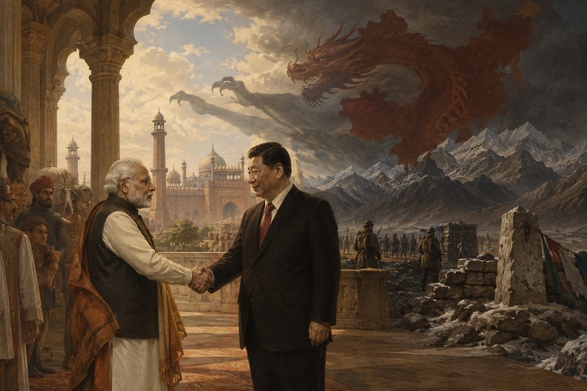
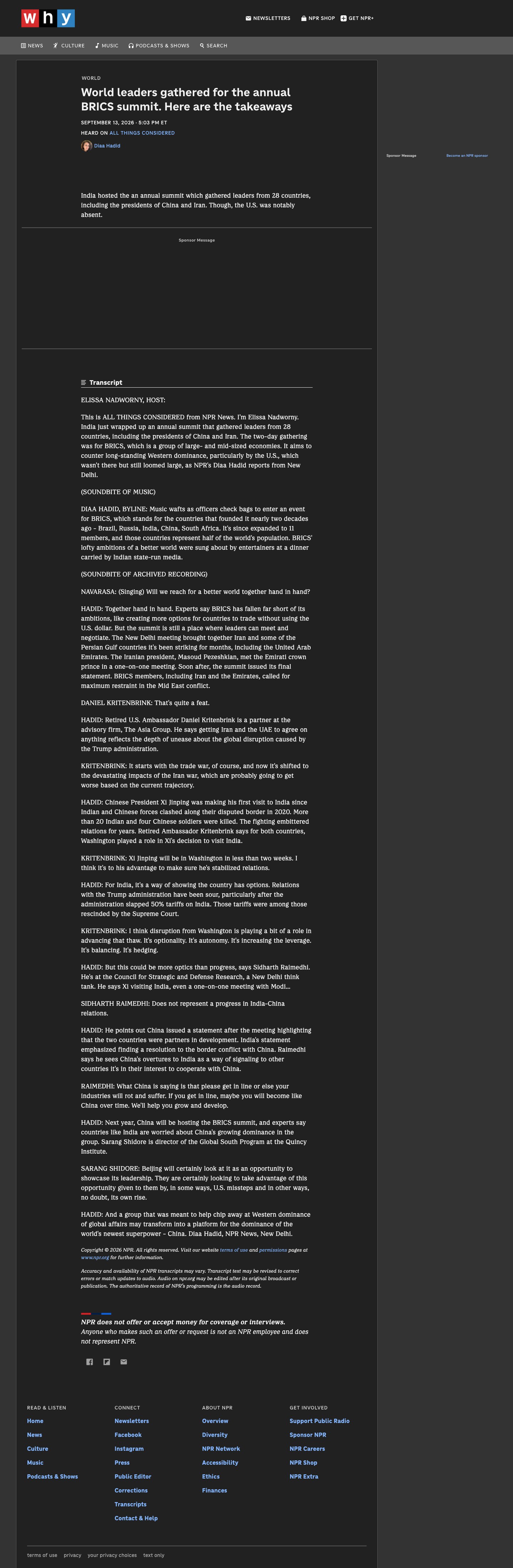 | author: | Diaa Hadid | institution: | NPR | ¿porque no los dos? |
| tl;dr | The article reports that India hosted a BRICS summit focused on diplomacy amid trade tensions and Middle East conflict. It highlights an Iran–UAE meeting, renewed India–China engagement, and calls for restraint. Analysts suggest U.S. policies are encouraging countries to seek alternatives, while unresolved border disputes limit India–China cooperation. The report concludes that China could increasingly dominate BRICS, despite the group’s limited progress toward goals such as reducing reliance on the U.S. dollar. | ||||
| deeper: | The report includes named experts, historical context, and skepticism about BRICS’ achievements. Its geopolitical outlook does not clearly favor a left- or right-wing agenda. However, repeated emphasis on U.S. disruption and China’s dominance narrows the framing, with little direct response from those governments. Some dramatic interpretations receive limited scrutiny. There are factual imprecisions: South Africa joined later rather than founding the original group, and the established Indian death toll in the 2020 border clash was 20, not more than 20. The screenshot alone cannot authenticate its major event claims. | ||||
media: | |||||
| gen: 2026/08/31:17:11 in 1 min 25.4 secbias: 5 (Center-Left) |
| type: colorquality: 78 |
| pts: 0 |
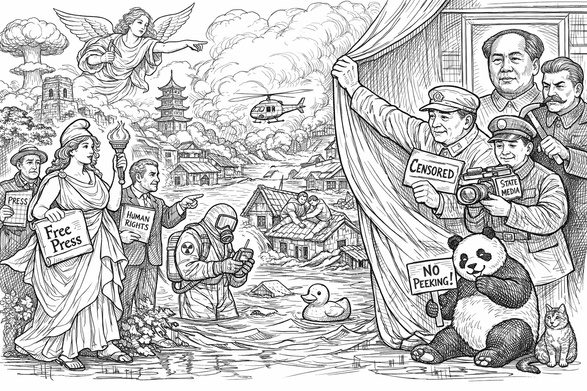
#china#floods#media transparen#government contr#human rights#flooding#disasterresp#extremeweather#climatechange#henan
Leftist
China's ongoing concealment of disaster severity, evidenced by misleading reportage on floods, underscores a critical need for transparency. People's lives are not mere propaganda tools; the state must prioritize human welfare over image management. Historically, censorship has hampered global awareness in crises, similar to USSR's Chernobyl. International accountability mechanisms should be implemented to promote accurate information sharing and uphold human rights.
Rightist
China's opacity in disaster reporting reflects broader issues of government overreach and restrictions on free media, raising concerns about authoritarian governance. This mirrors past instances like during the Soviet era, where state control hindered honest discourse. It's a reminder of the importance of national sovereignty and the risks of centralized power. Calls for transparency should respect China's internal governance while encouraging media freedom for true accountability.
 | author: | Amy Hawkins | institution: | The Guardian | ¿porque no los dos? |
| tl;dr | The Guardian article reports on severe flooding in China and argues that authorities are not fully acknowledging the scale of the disaster. It describes flood impacts (damaged infrastructure, evacuations, and casualties), and includes criticism from analysts/observers about transparency, disaster communication, and preparedness. The piece contrasts official statements with reported local conditions and emphasizes the need for clearer public information and accountability as extreme weather risks rise. | ||||
| deeper: | The reporting is generally strong: it’s timely, uses specific on-the-ground descriptions, and frames the story within broader climate and governance challenges. Bias shows up mainly in emphasis and framing—highlighting state opacity and accountability issues in China more than operational constraints or competing official explanations. The article appears to rely heavily on secondary sources/experts and reported accounts rather than extensive primary data (e.g., detailed hydrology figures, full official response metrics), which slightly limits completeness. | ||||
media: | |||||
| gen: 2026/08/28:05:10 in 41.4 sec (old)bias: 2 (Center) |
| type: newsquality: 74 |
| pts: 0 |
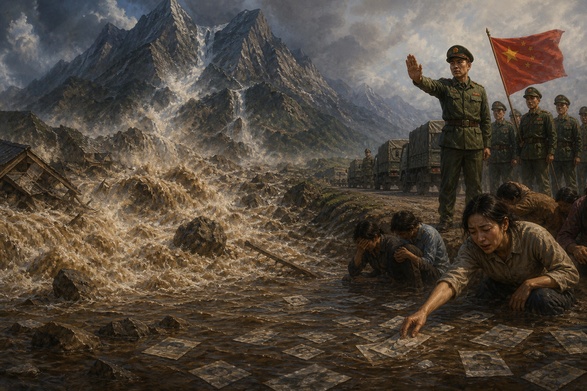
 | author: | Unknown | institution: | France 24 | ¿porque no los dos? |
| tl;dr | The image shows a France 24 news page focused on severe flooding/flash floods affecting Nepal and the Nepal–Tibet region. A breaking-news ticker states: “Nepal-Tibet live: China halts rescue at disaster epicentre over flood risk.” Linked items highlight large-scale search-and-rescue efforts and high numbers of missing people (e.g., “over 1,300 missing” and “hundreds missing”). Much of the page is obscured by a YouTube consent prompt, limiting access to the full live article text. | ||||
| deeper: | The visible content is largely straight, event-driven disaster reporting (rescue operations, flood risk, missing persons) with no obvious loaded language or ideological framing. Potential bias is minimal and mostly arises from headline selection and emphasis (breaking-news urgency, casualty/missing counts) without showing underlying sources or methodology in this screenshot. Quality appears solid for a mainstream outlet, but the page is partially blocked by a consent overlay, and there’s not enough visible text to assess sourcing, attribution, or corrections in detail. | ||||
media: | |||||
| gen: 2026/08/23:21:39 in 2 min 22.3 sec (old)bias: 3 (Center-Left) |
| type: lolsquality: 78 |
| pts: 0 |

 | author: | Amy Hawkins | institution: | The Guardian | ¿porque no los dos? |
| tl;dr | The Guardian reports that Hui Ka Yan, founder of China’s Evergrande, has been sentenced to life in prison after pleading guilty to fraud. The piece says he and others were accused of inflating company finances and that authorities will confiscate his personal property. It places the case in the wider context of China’s real-estate downturn, heavy developer debt, and Beijing’s regulatory crackdown, noting Evergrande’s outsized role in the sector’s broader crisis and household exposure through pre-sold homes. | ||||
| deeper: | The article is largely straight news with clear attribution and context about the property slump and enforcement actions. Bias is modest: language and framing lean toward skepticism of Evergrande’s conduct and highlight systemic risks and government crackdown, but it does not read as polemical. Quality is strong due to coherent narrative, relevant background, and specific figures; it would be higher with more primary-document detail (court judgment text, defense claims, and fuller sourcing beyond official statements/media reports). | ||||
| gen: 2026/08/22:19:00 in 24.9 sec (old)bias: 2 (Center) |
| type: newsquality: 83 |
| pts: 0 |
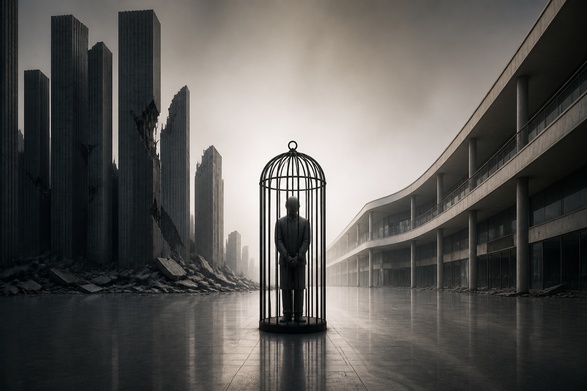
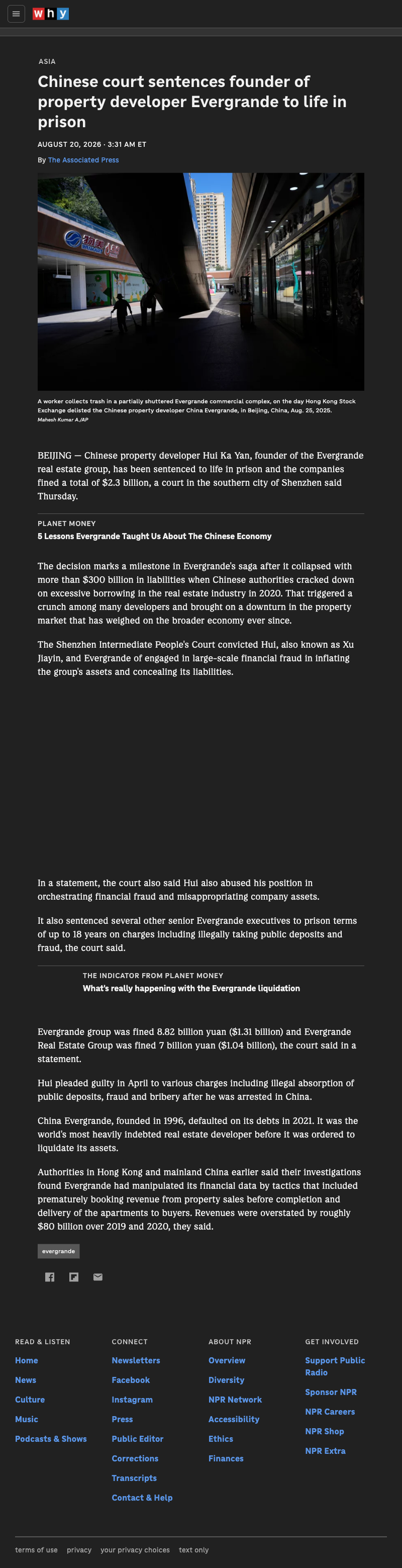 | author: | The Associated Press | institution: | NPR | ¿porque no los dos? |
| tl;dr | The article reports that a court in Shenzhen sentenced Evergrande founder Hui Ka Yan (also known as Xu Jiayin) to life in prison and imposed multibillion-dollar fines on Evergrande entities. It frames the ruling as a major milestone in Evergrande’s post-collapse saga, linking the company’s 2021 default and heavy liabilities to China’s broader property downturn. The court alleges large-scale financial fraud, including inflating assets and concealing liabilities, and notes other executives received lengthy prison terms. | ||||
| deeper: | The write-up is a straightforward wire-style report (AP) that relies mainly on court statements and prior official findings, with restrained language and clear attribution (“the court said,” “authorities said”). It offers limited counterpoint or independent verification, which is common for fast-breaking legal news—especially when primary records and adversarial court coverage are hard to access. Still, it provides useful context (Evergrande’s debt load, timeline, alleged accounting tactics) without overt editorializing. | ||||
media: No Media Preview | |||||
| gen: 2026/08/22:02:10 in 33.8 secbias: 2 (Center) |
| type: emojiquality: 82 |
| pts: 0 |
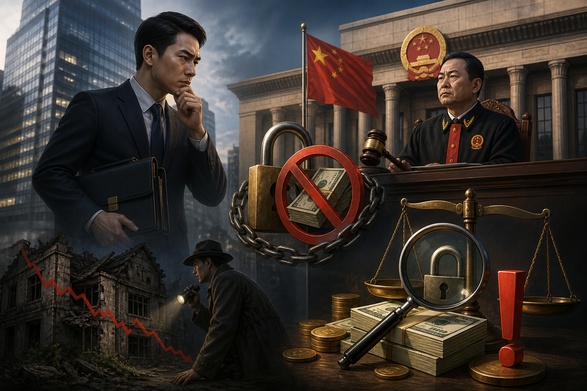
#real estate#economics#legal issues#financial fraud#corporate crime#china#evergrande#hui_ka_yan#shenzhen#real_estate#property_debt
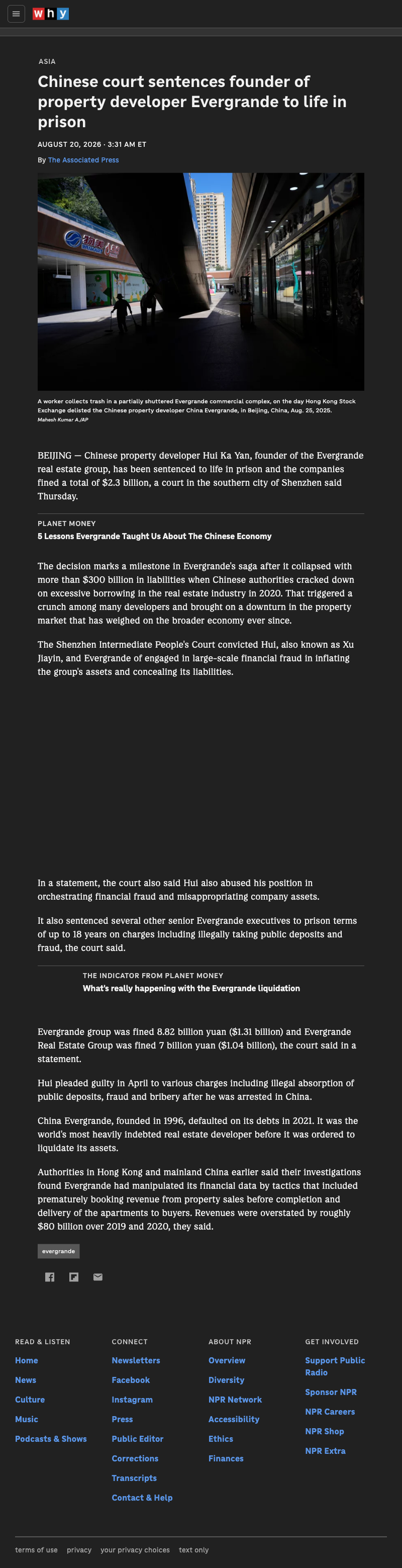 | author: | The Associated Press | institution: | NPR | ¿porque no los dos? |
| tl;dr | An Associated Press report (published on NPR) says a Shenzhen court sentenced Evergrande founder Hui Ka Yan (Xu Jiayin) to life in prison and imposed multibillion-dollar fines on him and Evergrande entities. The article frames the ruling as a milestone in Evergrande’s collapse after heavy borrowing and China’s 2020 crackdown, which contributed to a prolonged property-market downturn. It cites court statements alleging large-scale financial fraud, asset inflation, hidden liabilities, and misuse of position; it also notes other executives received lengthy terms. | ||||
| deeper: | The piece is largely straight, event-driven reporting with attributed claims (court statements, authorities’ findings) and limited loaded language. Potential bias mainly comes from relying heavily on official/court narratives in a system where independent verification and transparent court records can be limited; there’s little counterargument or defense perspective beyond noting a guilty plea. Quality is solid: clear timeline, key figures (liabilities, fines), and context on China’s property crackdown, but it lacks deeper sourcing detail and outside expert views. | ||||
media: No Media Preview | |||||
| gen: 2026/08/12:19:27 in 49.4 sec (old)bias: 4 (Center-Left) |
| type: newsquality: 78 |
| pts: 0 |

 | author: | Terry Gross | institution: | WHYY / NPR | ¿porque no los dos? |
| tl;dr | A WHYY/NPR World segment titled “Has the U.S. lost its dominance to China?” (Aug. 12, 2026) frames U.S.–China relations as a great-power rivalry focused on technology, research, sanctions, and trade. The page highlights related items about China retaliating against U.S. sanctions and the U.S. losing ground in university research. The teaser says Beijing may be benefiting from the war in Iran and Trump-era tariffs, and features discussion with The New Yorker’s Evan Osnos about “The Future, Made in China.” | ||||
| deeper: | The framing (“lost its dominance,” “great power rivalry,” “losing ground”) emphasizes competition and U.S. relative decline, which can steer interpretation before evidence is presented. The teaser also asserts causal benefits to Beijing (Iran war, tariffs) without showing data in the screenshot, suggesting some agenda-setting via selection and tone. Still, it appears to be an interview-based explainer referencing a named journalist and specific reported work, which generally supports credibility; what’s missing here are visible primary sources, quantified measures of “dominance,” and explicit countervailing views in the excerpt shown. | ||||
media: No Media Preview | |||||
| gen: 2026/07/31:18:10 in 4 min 47.3 sec (old)bias: 8 (Unknown) |
| type: lolsquality: 35 |
| pts: 0 |
#healthcare#diabetes#integrative med#research#china#type1diabetes#insulin#shenzhen#shanghai#prnewswire
 | author: | Unknown | institution: | PR Newswire | ¿porque no los dos? |
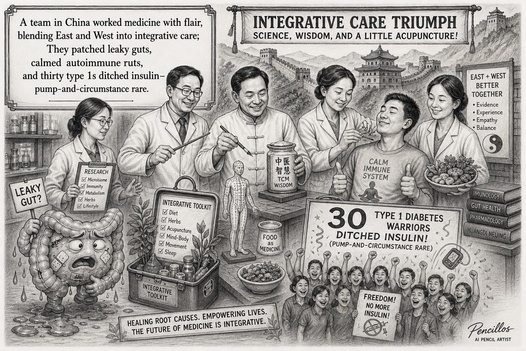
| tl;dr | A paid PR Newswire release on Yahoo Finance claims a Chinese medical team at Shanghai Fudan Group Shenzhen Hong Sung Hospital helped 30 type 1 diabetes patients discontinue insulin through “integrative medicine,” describing “functional remission” and immune/gut mechanisms. The piece frames this as a major breakthrough and outlines a treatment philosophy, but provides few verifiable study details (trial design, outcomes, duration, safety, independent confirmation, or peer-reviewed publication). | ||||
| deeper: | The content is promotional and one-sided: it highlights dramatic outcomes and “breakthrough” language without critical context or independent validation. Key scientific specifics are missing (patient selection, baseline characteristics, objective endpoints, follow-up length, adverse events, and whether insulin independence was sustained). It appears as a paid press release, which increases incentive to persuade rather than scrutinize. Quality is limited by lack of sourcing, peer-reviewed citations, and absence of counterpoints or expert verification. | ||||
| gen: 2026/07/28:04:49 in 47.1 sec (old)bias: 3 (Center) |
| type: newsquality: 82 |
| pts: 0 |

You made it to the bottom. Now dance!


owned and operated by: RPN Omnigalactic Insitutution as of: 2026/10/15: 04:21 in 0 ms
Enter Code
Login with Account