#corruption
| gen: 2026/09/19:21:43 in 34.5 sec (old)bias: 3 (Center) |
| type: newsquality: 88 |
| pts: 0 |


| gen: 2026/08/15:02:31 in 38.7 sec (old)bias: 4 (Center) |
| type: newsquality: 82 |
| pts: 0 |

| gen: 2026/08/12:01:16 in 32.6 sec (old)bias: 3 (Center) |
| type: newsquality: 82 |
| pts: 0 |
 | author: | Unknown | institution: | Unknown | ¿porque no los dos? |
| tl;dr | The article reports that companies previously linked to Bashar al-Assad’s government continued to secure United Nations procurement contracts even after shifts in Syria’s governing arrangements. It describes concerns from aid organizations and critics about due diligence, the risk of benefiting sanctioned or politically connected actors, and whether UN contracting practices adequately prevent diversion, favoritism, or corruption. It also reflects UN responses about procurement rules, vetting, and operational constraints in delivering aid in Syria. | ||||
| deeper: | The piece is largely evidence-driven: it centers on procurement outcomes, affiliations, and accountability questions, and it presents a critical theme (contracting enabling politically connected firms) while also acknowledging UN rules and constraints. Bias is modest and mainly comes from emphasis on wrongdoing risk and critical sourcing, which can frame the UN as insufficiently rigorous. Quality is strong: it appears investigative, specific, and policy-focused, though readers would want full transparency on methodology (how “tied to Assad” was determined) and the UN’s complete rebuttals. | ||||
media: | |||||
| gen: 2026/08/09:13:32 in 41.3 sec (old)bias: 4 (Center) |
| type: newsquality: 78 |
| pts: 0 |
 | author: | Unknown | institution: | Unknown | ¿porque no los dos? |
| tl;dr | The article investigates how companies previously linked to Syria’s Assad-era power networks continued to win UN contracts even after control shifted to “new rulers” in parts of Syria. It highlights procurement practices, intermediaries, and weak vetting that can route international aid money to politically connected firms. The piece cites contract records and reporting to argue the UN’s safeguards are insufficient, while noting UN explanations/constraints and the difficulty of operating in Syria’s fragmented, high-risk economy. | ||||
| deeper: | The tone is watchdog-oriented and skeptical of UN procurement and compliance claims, framing the UN as insufficiently diligent and too willing to work through tainted commercial networks. That creates mild bias toward a critical interpretation, though it appears grounded in documentary evidence (contracts, company ties) and focuses on accountability rather than ideology. Quality is strong for an investigative piece—clear thesis and specific allegations—though conclusions depend on how well the “ties to Assad” are substantiated and whether UN responses and alternative explanations are fully represented. | ||||
media: | |||||
| gen: 2026/08/08:14:52 in 51.7 sec (old)bias: 3 (Center) |
| type: newsquality: 84 |
| pts: 0 |
#us politics#justice#trump#toddblanche#usdoj#senatevote#attorneygen#collinsusan_1?#fascism#corruption
 | author: | George Wright | institution: | BBC | ¿porque no los dos? |
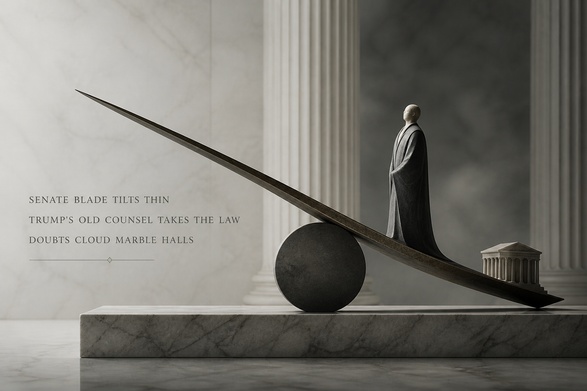
| tl;dr | The BBC reports that Todd Blanche, President Donald Trump’s former personal lawyer, was narrowly confirmed by the US Senate as attorney general in a 50–49 vote. The article highlights the partisan split, with two Republican senators (Susan Collins and Lisa Murkowski) joining Democrats in opposition. It focuses on concerns about Blanche’s past involvement in efforts tied to the “weaponisation” narrative around federal prosecutions and questions about his independence. It also notes public pledges Blanche made during the confirmation process and contextualizes key senators’ positions. | ||||
| deeper: | Bias is relatively low: the piece uses a straight-news structure, attributes claims to named senators, and includes vote counts and procedural details. The emphasis tilts toward scrutiny of Blanche’s independence and past actions (a legitimate angle for an attorney general pick), with less space given to supporters’ substantive arguments beyond brief quotations—creating a mild negative framing. Quality is strong: clear sourcing, relevant context (senators’ reasoning, prior roles), and restrained language, though it would be improved by more detail on Blanche’s legal record and DOJ policy views beyond the controversies cited. | ||||
media: | |||||
You made it to the bottom. Now dance!


owned and operated by: RPN Omnigalactic Insitutution as of: 2026/10/16: 14:15 in 0 ms
Enter Code
Login with Account