#journalism
| gen: 2026/09/28:05:17 in 26.6 sec (old)bias: 3 (Center) |
| type: newsquality: 82 |
| pts: 0 |

 | author: | Scilla Alecci | institution: | International Consortium of Investigative Journalists (ICIJ) | ¿porque no los dos? |
| tl;dr | The article summarizes an ICIJ investigation alleging that ICBC used international lending to advance China’s political and strategic interests, sometimes overriding financial risks and compliance concerns. Drawing on 4.8 million confidential records and partner reporting, it describes deals involving infrastructure, natural resources, technology and military-linked companies across four continents. It also examines relationships involving businesses connected to sanctioned Belarusian interests. ICBC did not respond to requests for comment; Zoomlion said it complies with applicable laws. | ||||
| deeper: | Specific document quotations, financial figures, named sources and links to partner reporting give the article substantial evidentiary support. It acknowledges an unknown loan outcome, includes Zoomlion’s response and notes unanswered requests for comment. However, phrases such as “notoriously secretive” and the consistently geopolitical framing sometimes blur commercial strategy with political intent. Alternative explanations receive limited attention. Its emphasis on transparency and regulatory accountability does not establish a clear left-right agenda. This is a well-supported investigative roundup, although the underlying records cannot be independently checked from these screenshots. | ||||
media: | |||||
| gen: 2026/09/27:03:01 in 28.5 sec (old)bias: 4 (Center) |
| type: newsquality: 56 |
| pts: 0 |
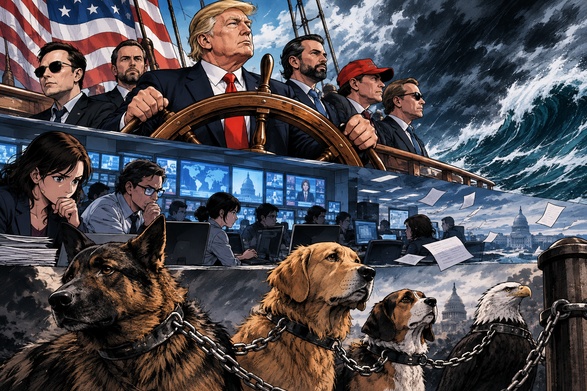
#media#politics#journalism#ownership#cnn#cbs news#paramount#warner bros#donald trump#david ellison no
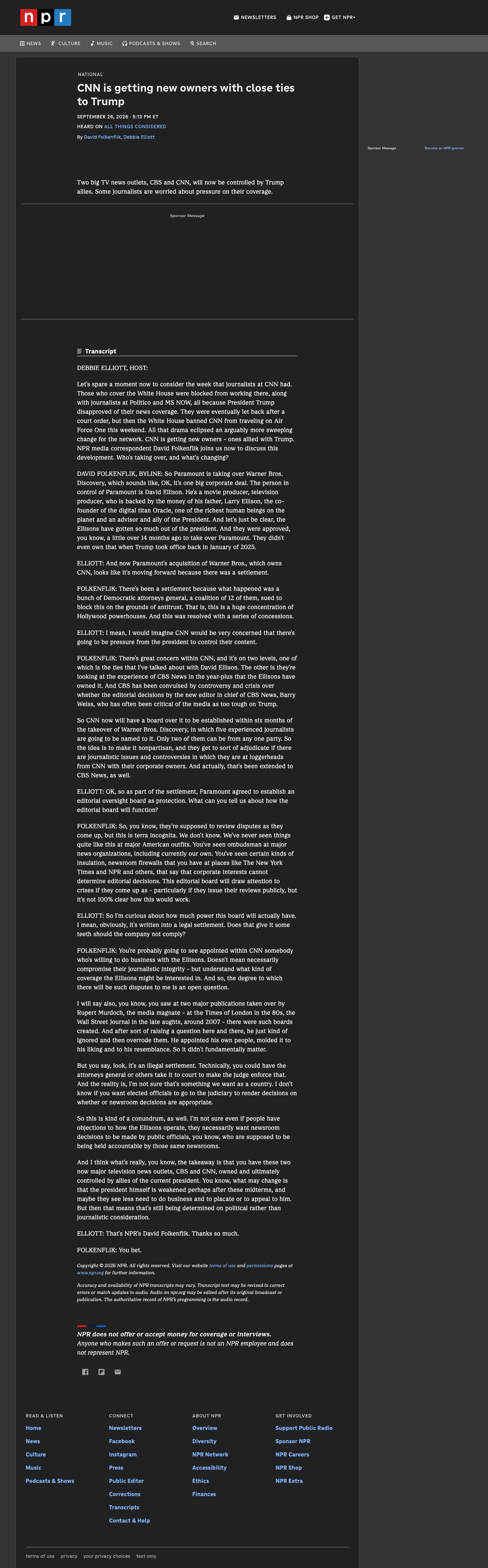 | author: | David Folkenflik, Debbie Elliott | institution: | NPR | ¿porque no los dos? |
| tl;dr | The document says Paramount’s acquisition of Warner Bros. Discovery would put CNN and CBS under owners tied to President Trump. It describes a settlement requiring editorial oversight boards and questions whether those boards could protect newsroom independence. The discussion highlights potential owner influence while also warning that court enforcement could give government officials inappropriate influence over journalism. The acquisition, settlement, and access restrictions described are claims in the supplied screenshots, not independently verified facts. | ||||
| deeper: | The article favors independent journalism and accountability rather than an explicit partisan platform. However, leading questions, dramatic wording, and speculation about owners’ motives create a skeptical, one-sided frame. No responses from Paramount, the Ellisons, or the White House appear. Useful explanations of oversight and government-interference risks add nuance, but major legal claims lack identifiable supporting documents. Apparent transcription errors—including “Barry Weiss” and “illegal settlement”—reduce precision. The screenshots alone cannot establish authenticity or verify the reported events. | ||||
media: | |||||
| gen: 2026/09/09:15:30 in 34.9 sec (old)bias: 3 (Center) |
| type: newsquality: 86 |
| pts: 0 |

 | author: | Sebastian Vandermeersch | institution: | Bellingcat | ¿porque no los dos? |
| tl;dr | Bellingcat reports it has verified open-source footage showing Shahed-136–type one-way attack drones used in two July 2026 strikes in northern Mali (Inafarak on July 12; Talahandak on July 17). The investigation geolocates videos with satellite imagery, compares pre/post-strike images, and cites experts who say debris (including an MD-550 engine) matches Shahed-136 family components. The report argues the deployment likely reflects Russian support to Mali via the Africa Corps, and warns the system’s lower precision raises civilian-harm risks. | ||||
| deeper: | The piece is evidence-forward and method-heavy (geolocation coordinates, satellite comparisons, annotated imagery, component identification, and named expert input), which supports credibility. Bias is present mainly in framing and attribution: language like “Kremlin-controlled” and emphasis on Russia-linked networks (Africa Corps/Wagner channels) can steer interpretation, and the manufacturing attribution remains probabilistic (“quite likely”). It is careful about limits (variant not definitively identified) and grounds key claims in verifiable visuals and cross-checks. | ||||
media: | |||||
| gen: 2026/08/02:23:36 in 2 min 17.4 sec (old)bias: 4 (Center-Left) |
| type: lolsquality: 78 |
| pts: 0 |

#education#schoolboard#civics#journalism#investigation#texas#legislature#specialsession#publicschool#policy
 | author: | Unknown | institution: | ProPublica | ¿porque no los dos? |
| tl;dr | The image appears to be a ProPublica investigative-style article page focused on a Texas “special session” and education policy, with emphasis on political maneuvering and the consequences for public schooling. The layout and accompanying photo suggest reporting on lawmakers, power brokers, and policy outcomes (likely a contested education initiative) rather than a straight breaking-news brief. The text is too small in this screenshot to reliably extract precise claims, names, or figures without risk of misquoting. | ||||
| deeper: | The article presentation and outlet indicate accountability journalism: it appears to scrutinize government actions, highlight impacts on public institutions, and foreground power dynamics—an approach that can create a mild-to-moderate leaning toward reform/oversight framing. ProPublica generally uses document-heavy, narrative investigations and emphasizes public-interest harms, which supports a strong quality score. However, this specific screenshot is not legible enough to verify the exact sourcing, counterarguments, or key details, so the quality score is tempered. | ||||
media: | |||||
| gen: 2026/07/28:14:18 in 4 min 54.9 sec (old)bias: 3 (Center-Left) |
| type: lolsquality: 82 |
| pts: 0 |
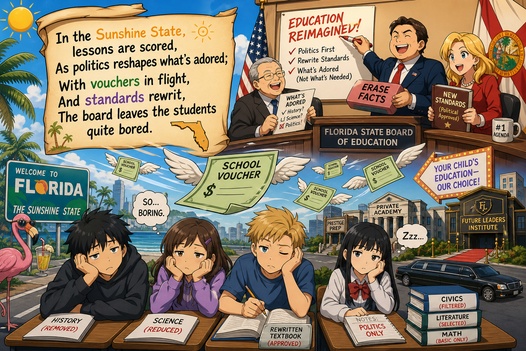
 | author: | Unknown | institution: | ProPublica | ¿porque no los dos? |
| tl;dr | The image appears to be a ProPublica long-form investigative article page (headline, byline area, multiple long text sections, and at least one in-article photo). Due to the screenshot’s very low resolution, the exact headline, named subjects, and specific claims are not reliably legible; I can’t accurately summarize the article’s factual allegations without risking invention. Structurally, it reads like an investigative exposé: narrative lede, extensive reporting blocks, and supporting imagery. | ||||
| deeper: | Bias: The presentation looks like accountability/investigative reporting aimed at scrutinizing institutions or powerful actors, which typically reflects a mild values tilt toward transparency and reform; however, I can’t verify balance (e.g., right-of-reply) from this unreadable screenshot. Quality: The layout suggests substantial original reporting (length, structure, documentary tone, photos), which generally correlates with higher rigor—but the image resolution prevents checking sourcing, data, and whether opposing perspectives are fairly represented. | ||||
media: | |||||
| gen: 2026/07/28:04:49 in 47.1 sec (old)bias: 3 (Center) |
| type: newsquality: 82 |
| pts: 0 |

| gen: 2026/07/22:15:44 in 3 min 42.9 sec (old)bias: 4 (Center-Left) |
| type: lolsquality: 82 |
| pts: 0 |
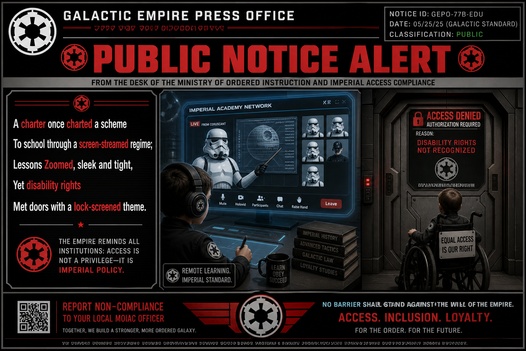
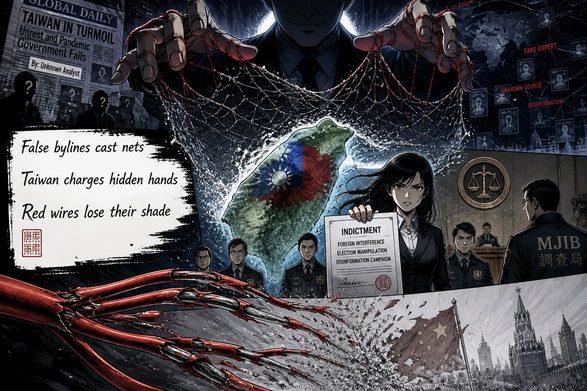
#education#charter schools#virtual learning#accessibility#journalism#schoolboard#elections#advocacy#donors#funding
 | author: | Unknown | institution: | ProPublica | ¿porque no los dos? |
| tl;dr | This is a ProPublica long-form investigative piece in the Education section. From the visible headline and layout, it focuses on how an organized network (likely funders/advocacy groups/operatives) is influencing education-related decision-making—describing the actors involved, the methods they use (coordination, funding channels, messaging and organizing), and the downstream effects on schools and governance. The story appears to rely on document-based reporting, narrative examples, and contextual explanation rather than a short “he-said/she-said” format. | ||||
| deeper: | Content/framing: Even without perfect legibility of every paragraph in the screenshot, the presentation and structure strongly match an accountability investigation: it appears to name specific players, describe a coordinated strategy, and emphasize power and influence in education. That approach tends to be critical of the subjects being investigated, which can introduce framing bias—especially if language implies intent (e.g., “network,” “helping,” “hijack/reshape,” etc.) rather than sticking strictly to verifiable actions. Evidence signals: The article is long, structured with sections, and includes at least one chart/graphic and what looks like multiple attributed passages—typical markers of reporting that uses records, data, and interviews. That generally supports a higher quality score. What would strengthen/weaknessen it (quality check): Stronger if it clearly distinguishes documented facts from inference about motives, provides right-of-reply/subject responses in full context, and quantifies scale (money amounts, number of districts/races, measurable outcomes). Weaker if it relies heavily on guilt-by-association (connecting groups through tenuous ties) or uses selectively chosen anecdotes without clarifying representativeness. Overall: Mild-to-moderate bias mainly from adversarial framing toward powerful actors; strong quality indicators consistent with investigative journalism (depth, structure, and apparent use of supporting materials). | ||||
media: | |||||
| gen: 2026/07/18:02:20 in 1 min 9.8 sec (old)bias: 4 (Center-Left) |
| type: newsquality: 85 |
| pts: 0 |
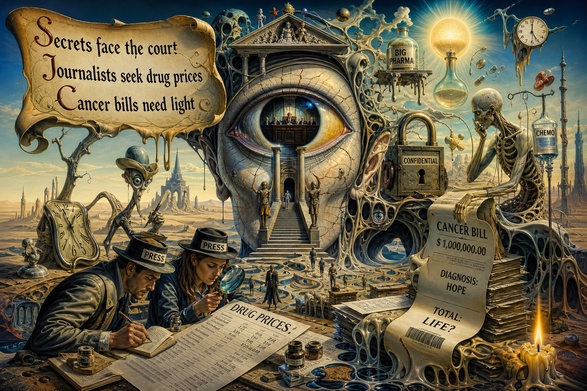
 | author: | Unknown | institution: | The Bureau of Investigative Journalism | ¿porque no los dos? |
| tl;dr | Investigative report on a legal fight in Austria over whether the net price (after confidential rebates) of Merck’s blockbuster cancer drug Keytruda must be disclosed. After information requests by journalists, a lower authority moved toward release; Merck has now taken the case to Austria’s Constitutional Court to stop publication, arguing trade‑secret protection and harm to competition. Transparency advocates and journalists argue secrecy obscures public spending and weakens negotiating power. The case could set an EU‑relevant precedent for price transparency of high‑cost medicines. | ||||
| deeper: | The article is rigorous and specific: it names the court venue, describes the legal pathway, explains what information is sought (net price/discounts for Keytruda), and places the case in the broader debate over drug‑price transparency. It cites positions from both sides—Merck’s trade‑secret argument and journalists’/public interest transparency claims—and connects the stakes to health‑system budgets and precedent value. Tone and framing clearly favor transparency and skepticism of pharma secrecy, which introduces a modest pro‑disclosure bias, but the piece avoids emotive language and sticks largely to verifiable facts and legal context. Potential gaps: limited exploration of how confidentiality can sometimes secure lower public prices, and few independent legal experts quoted to assess the likelihood of Merck’s claims. Overall, solid investigative quality with minor slant toward transparency advocacy. | ||||
media: | |||||
You made it to the bottom. Now dance!


owned and operated by: RPN Omnigalactic Insitutution as of: 2026/10/15: 11:40 in 0 ms
Enter Code
Login with Account