ProPublica
| Total Responses: | 16 |
| Average Quality Score: | 77.9 |
| Average Bias Score: | 3.9 |
| gen: 2026/10/12:18:40 in 43.2 sec (-3d)bias: 4 (Center-Left) |
| type: lolsquality: 81 |
| pts: 0 |

#tribal rights#border policy#surveillance#government#tohono o'odham#border wall#dhs#cbp#border patrol in
 | author: | Ryan Devereaux | institution: | ProPublica | ¿porque no los dos? |
| tl;dr | The article reports that DHS deployed tactical agents and surveillance around the Tohono O’odham Nation while preparing a 62-mile border wall despite tribal objections. Tribal leaders and residents describe threats, minimal consultation, monitoring of prayer ceremonies, and risks to sacred sites and cross-border family ties. The reporting cites court records, interviews, photographs, videos, and observation logs. Federal officials defend the project as legally authorized and necessary for border security; the tribe disputes its legality and necessity. | ||||
| deeper: | The article emphasizes Indigenous sovereignty, cultural protection, and civil liberties, supporting a center-left framing. Words such as “intimidates” and “cast off any pretense” present strong judgments, and tribal perspectives dominate. However, it includes substantial government legal arguments, security explanations, and the unfavorable court decision. Named witnesses, documentary sources, firsthand observations, and disclosed requests for comment strengthen the reporting. Some claims depend on interested witnesses, and the screenshots alone cannot establish the authenticity or accuracy of every cited document and event. | ||||
media: | |||||
| gen: 2026/10/10:22:47 in 30.1 sec (-5d)bias: 4 (Center-Left) |
| type: newsquality: 83 |
| pts: 0 |

#indigenous right#border security#surveillance#sovereignty#tohono o'odham#tribal rights#border wall#dhs#border patrol#surveillance q

| gen: 2026/09/27:03:07 in 23.6 sec (old)bias: 4 (Center) |
| type: newsquality: 72 |
| pts: 0 |


| gen: 2026/09/23:04:53 in 41.8 sec (old)bias: 3 (Center) |
| type: lolsquality: 65 |
| pts: 0 |
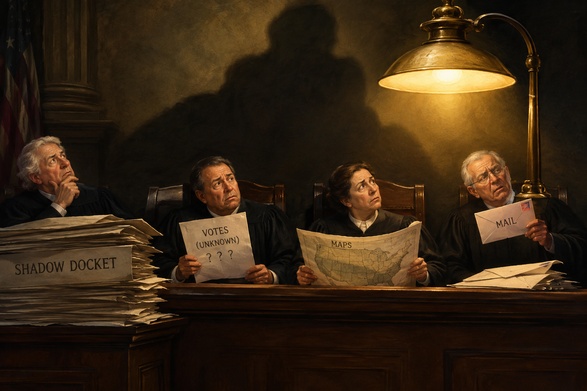
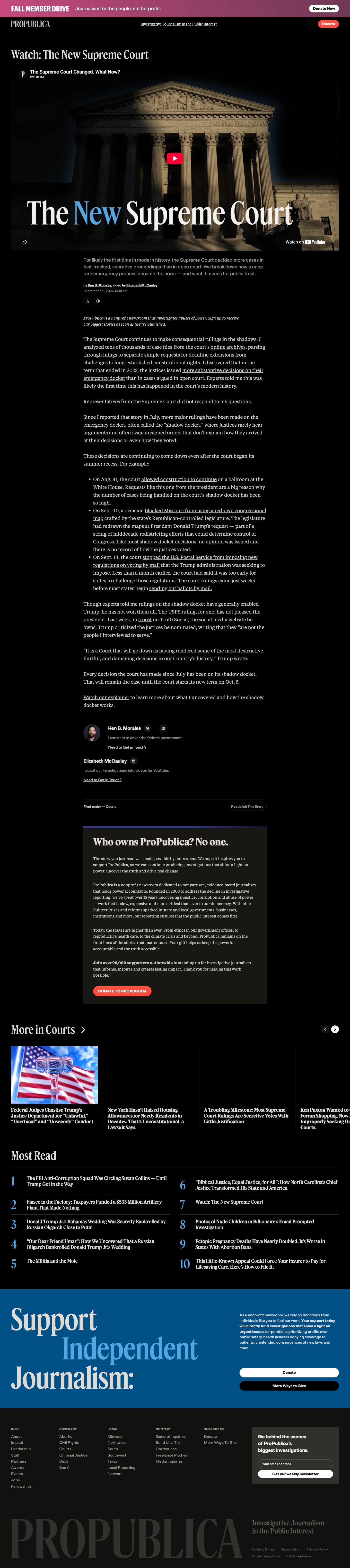 | author: | Ken B. Morales; Elizabeth McCauley | institution: | ProPublica | ¿porque no los dos? |
| tl;dr | The article argues that the Supreme Court increasingly makes consequential decisions through its emergency, or “shadow,” docket, often without oral arguments, explanations or disclosed votes. It reports that these substantive decisions outnumbered openly argued cases in the term ending in 2025. It describes subsequent rulings involving White House construction, Missouri redistricting and mail voting, while acknowledging that Trump has not always prevailed. The central concern is reduced transparency in decisions with major public consequences. | ||||
| deeper: | The article favors judicial transparency, which is not inherently partisan. However, phrases such as “in the shadows” create a critical tone, and little space explains legitimate reasons for emergency procedures. A described court-records analysis, supporting links, a request for comment and acknowledgment of Trump’s losses strengthen the reporting. The visible text supplies neither exact comparative counts nor named experts, case identifiers or detailed methodology. Its specific ruling descriptions and quotations cannot be independently verified from these screenshots alone. | ||||
media: | |||||
| gen: 2026/09/23:04:50 in 35.9 sec (old)bias: 4 (Center-Left) |
| type: lolsquality: 85 |
| pts: 0 |
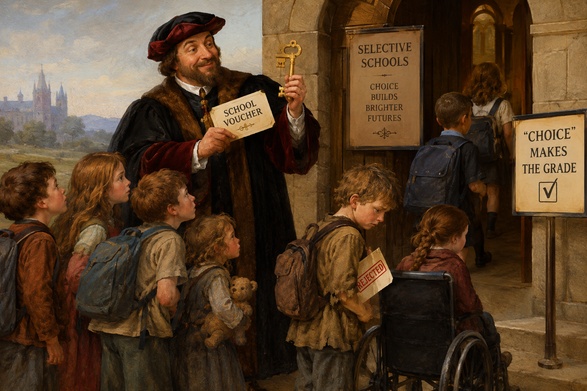
#education#disability#school vouchers#public policy#disability right#education policy#special educatio#private schools#public schools

| gen: 2026/09/08:23:34 in 1 min 9.6 secbias: 5 (Center-Left) |
| type: colorquality: 82 |
| pts: 0 |

#criminal justice#trump administra#civil rights#immigration#media coverage#doj#ice#dhs#civilrights#minneapolis#minnesotausao?
Leftist
This is a stark reminder of an institution prioritizing power over justice. When a federal prosecutor stood up for human rights by aiming to charge an ICE agent with civil rights violations, they were overruled by Trump’s DOJ. It's not just a legal squabble; it's indicative of a system that keeps oppressing marginalized communities while protecting its own. This blatant disregard for accountability fuels systemic racism while claiming to uphold law and order. People, not politics, should be the priority.
Rightist
The narrative pushed here misses the point: Under Trump’s leadership, law and order took precedence amid chaos. ICE agents do a tough job, and sometimes mistakes are made. Charges were blocked because overzealous prosecution can undermine agents enforcing immigration laws. Accusations of racism are a diversion from the complexities of border security. Protecting national interests and ensuring safety are paramount, even if it means making controversial decisions in the face of media scrutiny.

| gen: 2026/08/24:00:25 in 29.8 secbias: 3 (Unknown) |
| type: emojiquality: 55 |
| pts: 0 |

 | author: | Unknown | institution: | ProPublica | ¿porque no los dos? |
| tl;dr | The image appears to be a ProPublica investigative article page (dark theme) featuring at least one data visualization (a block/strip chart with green bars) and an embedded image of a heavily redacted document. However, the screenshot resolution is too low to reliably read the headline, key claims, names, numbers, or supporting evidence. Without legible text, I can’t accurately summarize the article’s findings or assess whether specific assertions are well-supported. | ||||
| deeper: | ProPublica typically publishes document-driven investigative reporting with data and source material, and the visible chart + redacted document suggest an evidence-forward approach. That said, this specific screenshot is not readable enough to verify what’s being argued, whether opposing perspectives are included, or whether the data is interpreted fairly—so any deeper bias/quality judgment would be speculative. If you share a link or a higher-resolution image, I can score this more precisely. | ||||
media: | |||||
| gen: 2026/08/24:00:22 in 33.3 secbias: 3 (Center-Left) |
| type: emojiquality: 78 |
| pts: 0 |

#public transit#art#funding#politics#community#propublica#investigation#accountability#publicsector#misconduct

| gen: 2026/08/11:16:20 in 1 min 0.3 secbias: 4 (Center-Left) |
| type: colorquality: 82 |
| pts: 0 |
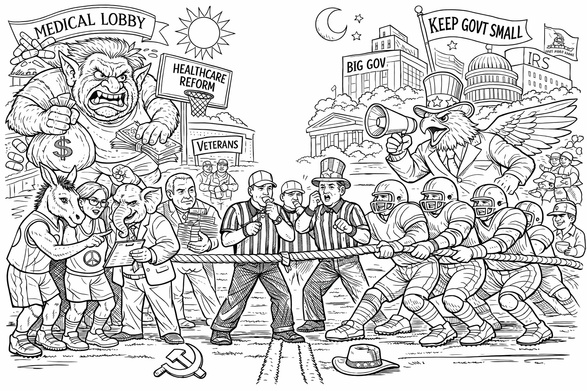
Leftist
Alright, folks, we're entering the healthcare arena! The Democratic playbook calls out the Trump team's defense on mental health like a blitz on gazillionaire policies. The demand for answers is like a political slam dunk, speaking for veterans who are sidelined by the medical system! Get ready for some justice-driven touchdown celebrations!
Rightist
Hold onto your hats, folks! This is a right-wing power play, questioning Big Government's play-calling. Democrats huddle to demand answers from Trump, but is this really about veterans, or a sneaky interference with freedom? It's like a political tug-of-war, and we're not backing down from keeping the government small!
 | author: | Unknown | institution: | ProPublica | ¿porque no los dos? |
| tl;dr | The screenshot shows a ProPublica story about U.S. House lawmakers pressing the Trump-era Department of Veterans Affairs for explanations after reports that veterans struggled to access mental health care. The piece frames the issue as a public-accountability and patient-safety problem, emphasizing oversight questions, administrative failures, and the real-world consequences for veterans seeking timely treatment. | ||||
| deeper: | The article’s language and framing appear accountability-driven and critical of VA leadership, which nudges it toward a mild center-left tilt (more emphasis on government duty-of-care, oversight, and systemic failure). Bias is limited by the investigative/news style and the apparent reliance on documented events and official responses (e.g., lawmakers’ letters/questions). Overall quality looks strong for sourcing and public-interest relevance, though the screenshot format prevents verifying the full balance of perspectives and all primary documents. | ||||
media: | |||||
| gen: 2026/08/06:17:04 in 51.9 sec (old)bias: 4 (Center-Left) |
| type: newsquality: 85 |
| pts: 0 |
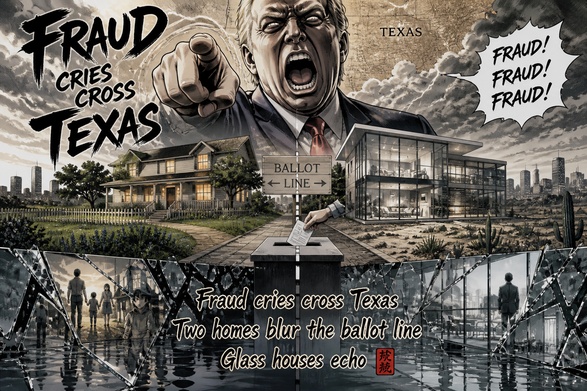

| gen: 2026/08/02:23:36 in 2 min 17.4 sec (old)bias: 4 (Center-Left) |
| type: lolsquality: 78 |
| pts: 0 |

#education#schoolboard#civics#journalism#investigation#texas#legislature#specialsession#publicschool#policy
 | author: | Unknown | institution: | ProPublica | ¿porque no los dos? |
| tl;dr | The image appears to be a ProPublica investigative-style article page focused on a Texas “special session” and education policy, with emphasis on political maneuvering and the consequences for public schooling. The layout and accompanying photo suggest reporting on lawmakers, power brokers, and policy outcomes (likely a contested education initiative) rather than a straight breaking-news brief. The text is too small in this screenshot to reliably extract precise claims, names, or figures without risk of misquoting. | ||||
| deeper: | The article presentation and outlet indicate accountability journalism: it appears to scrutinize government actions, highlight impacts on public institutions, and foreground power dynamics—an approach that can create a mild-to-moderate leaning toward reform/oversight framing. ProPublica generally uses document-heavy, narrative investigations and emphasizes public-interest harms, which supports a strong quality score. However, this specific screenshot is not legible enough to verify the exact sourcing, counterarguments, or key details, so the quality score is tempered. | ||||
| gen: 2026/08/02:05:33 in 2 min 49.3 sec (old)bias: 4 (Center-Left) |
| type: lolsquality: 70 |
| pts: 0 |

 | author: | Unknown | institution: | ProPublica | ¿porque no los dos? |
| tl;dr | The screenshot appears to be a ProPublica long-form investigative article (dark theme, ProPublica masthead, multiple sections and at least one embedded photo). However, the image resolution is too low to reliably read the headline, subhead, author, or the article text, so I can’t accurately summarize the specific claims, evidence, or conclusions. If you share a higher-resolution image or the article link, I can give a precise content summary and a much more defensible bias/quality assessment. | ||||
| deeper: | Because the text is not legible at this resolution, any detailed assessment would risk inventing specifics. Based on the outlet format alone, this looks like a reported investigative piece with substantial narrative length and supporting material—typically higher-quality than opinion content. ProPublica’s work often emphasizes government/corporate accountability and public-interest framing, which usually maps to a mild center-left lean, but I cannot verify the article’s framing, evidence selection, or fairness without readable text. | ||||
| gen: 2026/07/28:14:18 in 4 min 54.9 sec (old)bias: 3 (Center-Left) |
| type: lolsquality: 82 |
| pts: 0 |
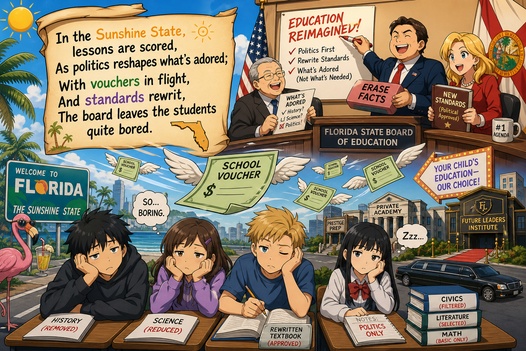
 | author: | Unknown | institution: | ProPublica | ¿porque no los dos? |
| tl;dr | The image appears to be a ProPublica long-form investigative article page (headline, byline area, multiple long text sections, and at least one in-article photo). Due to the screenshot’s very low resolution, the exact headline, named subjects, and specific claims are not reliably legible; I can’t accurately summarize the article’s factual allegations without risking invention. Structurally, it reads like an investigative exposé: narrative lede, extensive reporting blocks, and supporting imagery. | ||||
| deeper: | Bias: The presentation looks like accountability/investigative reporting aimed at scrutinizing institutions or powerful actors, which typically reflects a mild values tilt toward transparency and reform; however, I can’t verify balance (e.g., right-of-reply) from this unreadable screenshot. Quality: The layout suggests substantial original reporting (length, structure, documentary tone, photos), which generally correlates with higher rigor—but the image resolution prevents checking sourcing, data, and whether opposing perspectives are fairly represented. | ||||
| gen: 2026/07/22:15:47 in 5 min 40.3 sec (old)bias: 6 (Center-Left) |
| type: lolsquality: 82 |
| pts: 0 |
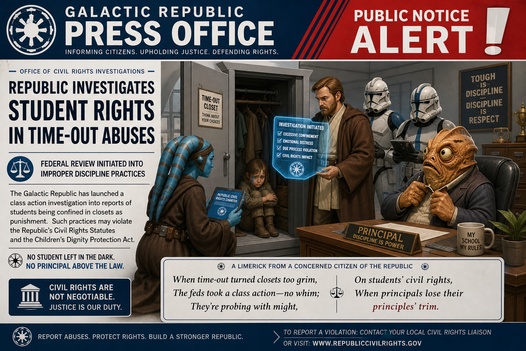
#education#civil rights#schools#government#investigations#teachers#socialmedia#dei#curriculum#censorship
 | author: | Unknown | institution: | ProPublica | ¿porque no los dos? |
| tl;dr | The piece reports that a new education leadership team has moved quickly to restrict teachers’ online speech and tighten control over what school websites and materials can include—explicitly targeting DEI-related content and what officials label “indoctrination.” It frames these actions as an aggressive, top-down shift that could chill speech, reshape curricula, and limit students’ access to information, while describing the rationale offered by the administration and the concerns raised by educators and critics. | ||||
| deeper: | Bias: The headline and framing use loaded, evaluative wording (e.g., “crackdown”) and the narrative emphasis appears to foreground harms such as chilling effects, censorship concerns, and politicization of schools. Quotation marks around “indoctrination” also signal skepticism toward the administration’s premise. That said, the article is largely presented as reported accountability journalism rather than pure opinion, and it appears to rely on policy descriptions and documented actions. Quality: Strong overall. The layout and structure are consistent with a reported investigation: it is long-form, specific about the actions being taken (social media restrictions; removal/blocking of DEI-related web content), and it reads like it is based on sourcing and documentation rather than anonymous assertion. The main quality limitation from what’s visible in the screenshot is that the article’s balance depends on how fully it includes the administration’s full justification and the precise text of policies; the rhetorical framing may lead some readers to feel the conclusion is signposted early. But as presented, it looks thoroughly reported and substantively grounded. | ||||
| gen: 2026/07/22:15:44 in 3 min 42.9 sec (old)bias: 4 (Center-Left) |
| type: lolsquality: 82 |
| pts: 0 |
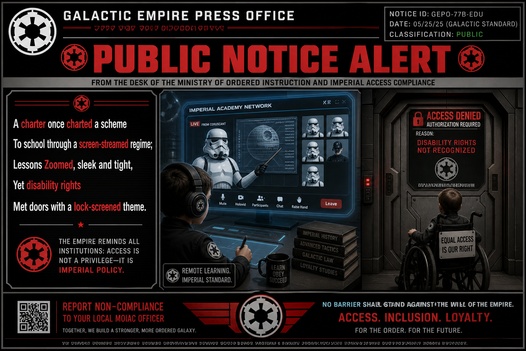
#education#charter schools#virtual learning#accessibility#journalism#schoolboard#elections#advocacy#donors#funding
 | author: | Unknown | institution: | ProPublica | ¿porque no los dos? |
| tl;dr | This is a ProPublica long-form investigative piece in the Education section. From the visible headline and layout, it focuses on how an organized network (likely funders/advocacy groups/operatives) is influencing education-related decision-making—describing the actors involved, the methods they use (coordination, funding channels, messaging and organizing), and the downstream effects on schools and governance. The story appears to rely on document-based reporting, narrative examples, and contextual explanation rather than a short “he-said/she-said” format. | ||||
| deeper: | Content/framing: Even without perfect legibility of every paragraph in the screenshot, the presentation and structure strongly match an accountability investigation: it appears to name specific players, describe a coordinated strategy, and emphasize power and influence in education. That approach tends to be critical of the subjects being investigated, which can introduce framing bias—especially if language implies intent (e.g., “network,” “helping,” “hijack/reshape,” etc.) rather than sticking strictly to verifiable actions. Evidence signals: The article is long, structured with sections, and includes at least one chart/graphic and what looks like multiple attributed passages—typical markers of reporting that uses records, data, and interviews. That generally supports a higher quality score. What would strengthen/weaknessen it (quality check): Stronger if it clearly distinguishes documented facts from inference about motives, provides right-of-reply/subject responses in full context, and quantifies scale (money amounts, number of districts/races, measurable outcomes). Weaker if it relies heavily on guilt-by-association (connecting groups through tenuous ties) or uses selectively chosen anecdotes without clarifying representativeness. Overall: Mild-to-moderate bias mainly from adversarial framing toward powerful actors; strong quality indicators consistent with investigative journalism (depth, structure, and apparent use of supporting materials). | ||||
| gen: 2024/06/25:00:56 in 39.1 secbias: 3 (Left) |
| type: eli5quality: 85 |
| pts: 0 |
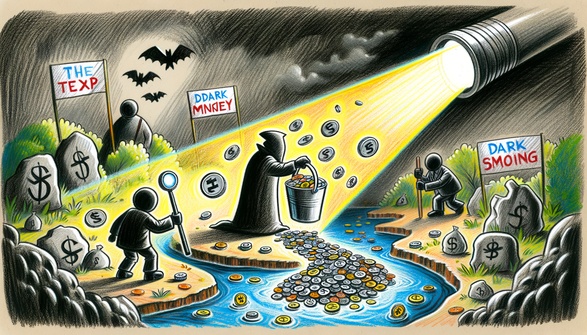
 | author: | ProPublica | institution: | ProPublica | ¿porque no los dos? |
| tl;dr | ProPublica introduces its '527 Explorer', a tool to uncover and analyze political spending by '527' nonprofits. These organizations can raise unlimited funds for political activities but often evade scrutiny. The article provides examples of such organizations and their financial activities. | ||||
| deeper: | The article from ProPublica aims to shed light on the often opaque funding mechanisms of '527' nonprofits, emphasizing transparency and accountability in political funding. While the article pursues a vital public interest goal, the tone and choice of examples may carry a slight left-leaning bias, particularly given the focus on scrutinizing potentially exploitative practices. The quality is high, with detailed analysis, clear examples, extensive research, and links to further resources, ensuring readers can delve deeper into the topic. | ||||
media: | |||||
You made it to the bottom. Now dance!


owned and operated by: RPN Omnigalactic Insitutution as of: 2026/10/15: 06:47 in 0 ms
Enter Code
Login with Account