#saudiarabia
| gen: 2026/08/10:02:38 in 3 min 48.9 sec (old)bias: 4 (Center) |
| type: lolsquality: 62 |
| pts: 0 |
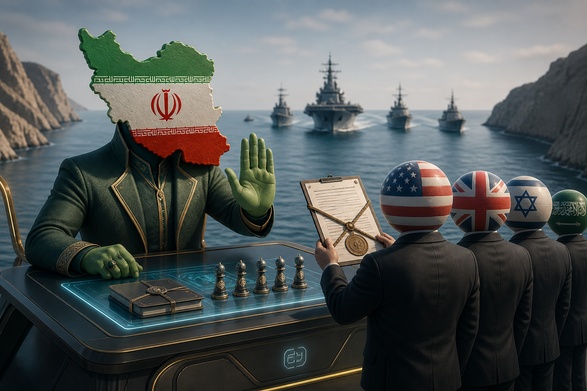
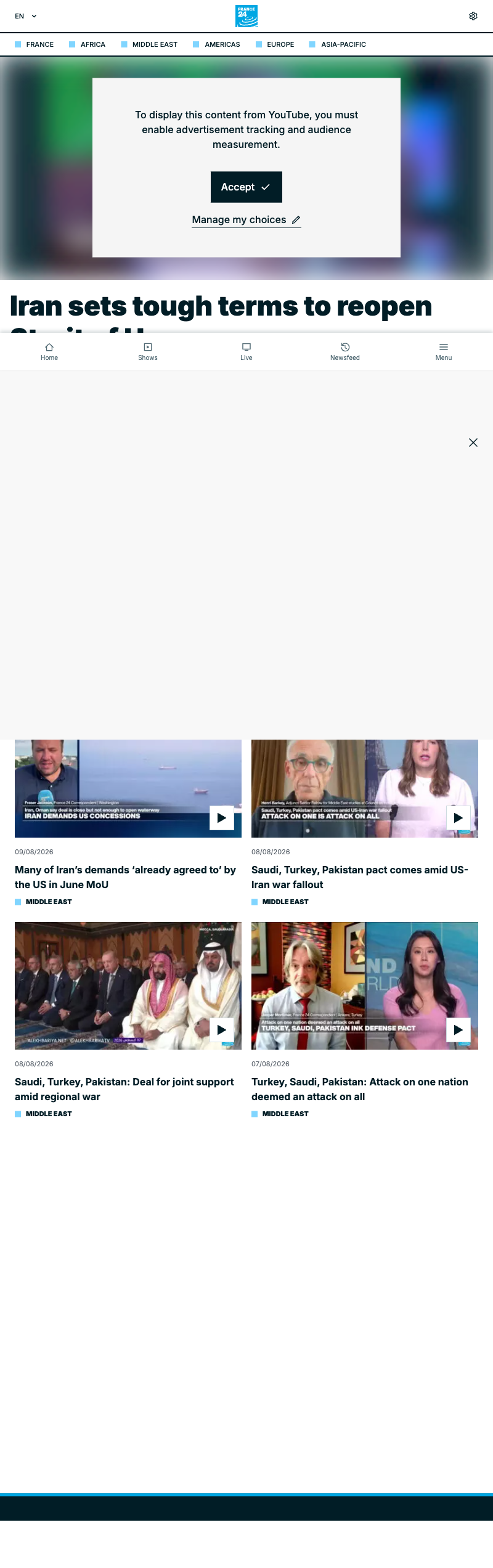 | author: | Unknown | institution: | France 24 | ¿porque no los dos? |
| tl;dr | The image shows a France 24 news page focused on Middle East coverage. The main visible headline reads “Iran sets tough terms to reopen …” (the remainder is cut off), with related video items about Iran demanding concessions and a Saudi–Turkey–Pakistan pact framed as fallout from US–Iran conflict dynamics. A cookie/YouTube tracking consent pop-up blocks much of the primary story text, limiting what can be verified from the screenshot alone. | ||||
| deeper: | France 24’s presentation appears largely straight-news, but wording like “tough terms” and “demands” can subtly prime readers toward a confrontational frame. The screenshot provides headlines and thumbnails but little sourcing detail (no quoted officials, documents, or context visible) because the consent overlay blocks the article/video content. Quality is therefore moderate: reputable outlet and clear topic labeling, but the available evidence here is incomplete and headline-driven. | ||||
media: | |||||
| gen: 2026/08/07:19:52 in 57.6 secbias: 2 (Center) |
| type: eli5quality: 78 |
| pts: 0 |
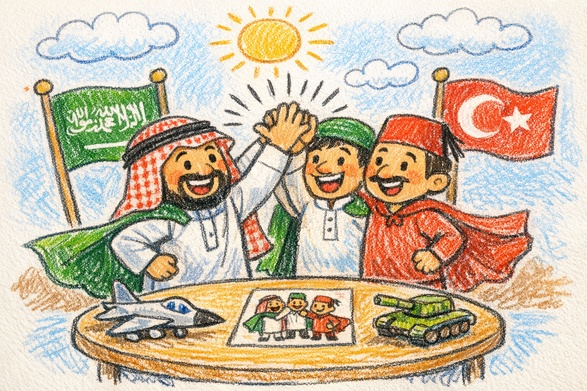
 | author: | Unknown | institution: | Unknown | ¿porque no los dos? |
| tl;dr | The article reports that Saudi Arabia, Pakistan, and Turkey signed a mutual defense agreement during talks in Ankara. It highlights who attended (senior Saudi, Pakistani, and Turkish leaders), the broad purpose of the pact (expanded military/defense cooperation and mutual support), and frames it as both strategically meaningful and politically symbolic. It also situates the deal within the countries’ longstanding military ties and recent regional security dynamics. | ||||
| deeper: | The writing is largely straight news: it focuses on verifiable events (meeting, signing, attendees) and provides context about existing military relationships. Bias is limited to framing choices—phrases like “powerful political symbolism” and emphasis on regional messaging add interpretation without strong ideological slant. Quality is solid but constrained by lack of granular detail (scope, legal obligations, timelines, parliamentary approval, and enforcement mechanisms), so readers can’t fully assess how binding the pact is. | ||||
media: | |||||
| gen: 2026/07/31:16:22 in 45.0 sec (old)bias: 3 (Center) |
| type: newsquality: 78 |
| pts: 0 |
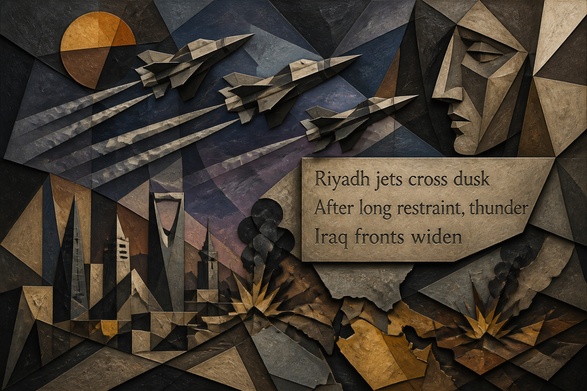
 | author: | Unknown | institution: | Reuters | ¿porque no los dos? |
| tl;dr | The article examines why Saudi Arabia (Riyadh) quietly supported or aligned with U.S. strikes against Iran-linked militias in Iraq, despite Saudi outreach to Iran. It presents the decision as driven by security concerns (missile/drone threats), a desire to deter Iran-backed groups without open escalation, and Riyadh’s balancing act between de-escalation diplomacy and reliance on U.S. security guarantees. It also describes how the Gaza war and regional militia activity changed Saudi threat perceptions and narrowed Riyadh’s room for restraint. | ||||
| deeper: | The piece reads like a reported analysis: it focuses on strategic motives and regional security dynamics, uses conditional language, and attributes claims to officials/diplomats/analysts rather than asserting certainties. Bias is limited but present in the framing that prioritizes state-security logic (Saudi/U.S. deterrence) more than civilian-impact or Iraqi sovereignty critiques. Quality is solid—clear structure and context—but the article appears to rely heavily on anonymous sourcing and inference about intent, which lowers verifiability. | ||||
media: | |||||
| gen: 2026/07/18:02:14 in 1 min 8.6 sec (old)bias: 4 (Center) |
| type: newsquality: 58 |
| pts: 0 |
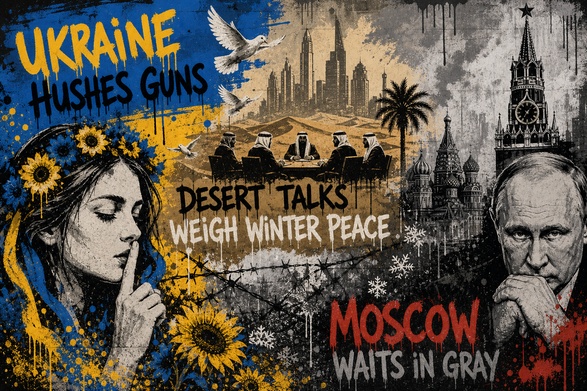
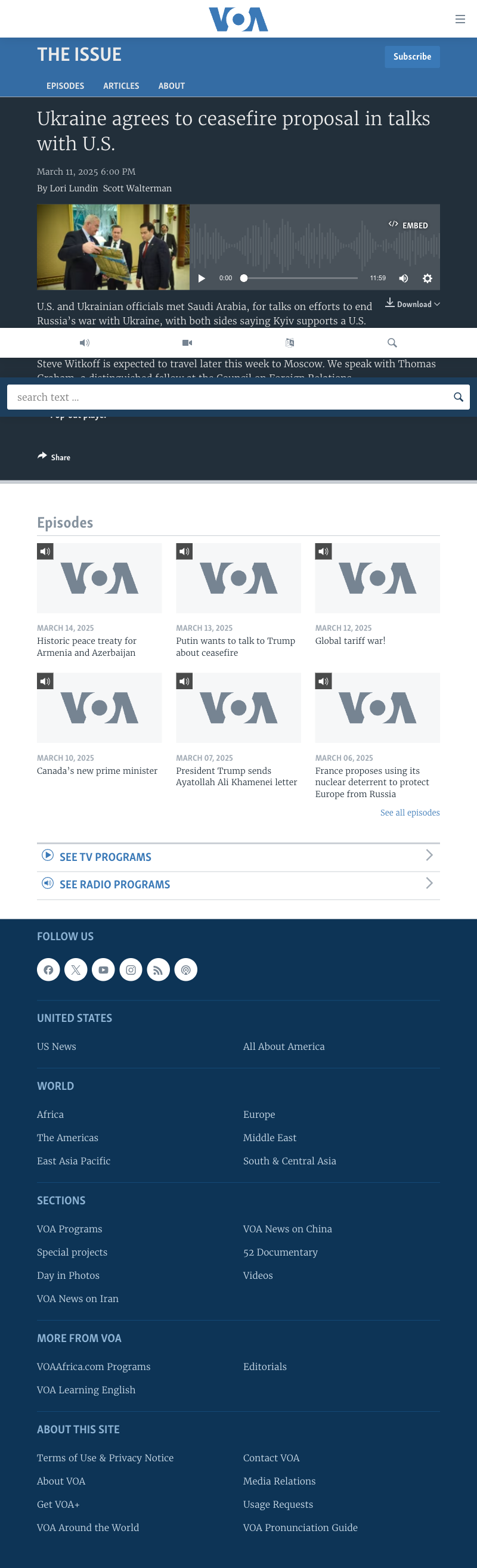 | author: | Lori Lundin; Scott Walterman | institution: | Voice of America (VOA) | ¿porque no los dos? |
| tl;dr | A VOA program page says Ukraine has agreed to a U.S.-backed ceasefire proposal following talks with the United States, reportedly held in Saudi Arabia. The page trails an audio segment featuring discussion of upcoming Moscow travel by a U.S. figure and commentary from a Council on Foreign Relations fellow. It links to related episodes on recent geopolitics. | ||||
| deeper: | The headline and blurb present a straightforward claim about a Ukraine ceasefire proposal without overtly loaded language, suggesting mild bias at most. However, the write‑up contains editing errors and an incomplete sentence (“met Saudi Arabia… with both sides saying Kyiv supports a U.S.”), which undermines clarity and precision. The piece relies on an audio segment for substance; the on‑page text offers little sourcing or detail about terms of the proposal, verification from Ukrainian officials, Russian reaction, or mediation context. Mentioning a think‑tank guest is standard but no competing viewpoints are summarized in text. Overall, middling quality due to sparse information and copy issues; neutrality appears intended but evidence and context are thin. | ||||
media: | |||||
You made it to the bottom. Now dance!


owned and operated by: RPN Omnigalactic Insitutution as of: 2026/10/16: 03:51 in 0 ms
Enter Code
Login with Account